Dear Partner,
Welcome to the month of June.
As Nigeria marks Democracy Day on 12 June, attention once again turns to 27 years of uninterrupted civilian rule. Yet beyond commemoration, the moment invites a deeper reflection: what has democracy meant in practice for citizens?
Democracy is often measured through elections and political transitions. It’s true test, however, lies in the everyday realities of governance: whether citizens feel safe, whether public institutions are responsive, whether information flows freely, and whether those entrusted with power remain accountable.
Nigeria’s democratic journey has recorded important milestones, but it has also been marked by persistent challenges. Insecurity continues to disrupt lives and livelihoods across many parts of the country. The recent abduction of 39 schoolchildren and seven teachers from three schools in Oyo State, which sparked public outrage and protests, is a stark reminder of the human consequences of insecurity and the responsibility of leadership to respond effectively.
At the Wole Soyinka Centre for Investigative Journalism (WSCIJ), our engagements over two decades have consistently explored factors that shape democratic life. Through the Wole Soyinka Centre Media Lecture Series and other accountability-focused interventions, conversations on local governance, civic space, misinformation, and surveillance have pointed to a recurring reality: democratic transitions reveal the strength or weakness of a country’s information environment.
Moments of uncertainty often make this reality clearer. They reveal how information is produced; how public narratives are shaped and how effectively accountability mechanism’s function when citizens seek answers.
Our 2023 Journalism and Civic Space Status Report, Hushed Voices in an Election Year, documented 134 civic space infringements during the election period and subsequent off-cycle polls. The findings highlighted how easily civic freedoms and accountability structures can come under pressure during periods that should strengthen public participation.
As Nigeria marks Democracy Day, the task ahead extends beyond preserving democratic rule. It includes strengthening accountability, protecting civic space, improving governance, and ensuring citizens have access to credible information. Across every democratic transition, journalism remains part of that responsibility.
Motunrayo Alaka
Executive Director/CEO, WSCIJ
Opportunities for Journalists
WSCIJ Opens Applications for CMEDIA Masterclass on Funding, Partnerships and Newsroom Resilience – Deadline: 8 June 2026
Applications are now open for CJID’s storytelling fellowship for environmental journalists – Deadline: 8 June 2026
Journalists can learn how to track ships and monitor maritime activity using #OSINT, apply now – Deadline: 9 June 2026
Freelancers & Local Reporters Can Now Apply for the Kurt Schork Memorial Fund 2026 Awards – Deadline: 14 June 2026
Submissions are now open for the 2026 DIG Awards – Deadline: 15 June 2026
Bloomberg News is hiring a Breaking News Editor for Sub-Saharan Africa – Deadline: 16 June 2026
Apply Now: INMA 2026 30 Under 30 Awards Open for Young Media Professionals – Deadline 19 June 2026
AWiM Launches Pitch Zone Accelerator for Women-Led Early-Stage Media and Creative Startups – Deadline: 30 June 2026
Now Open: 2027 Sir Harry Evans Global Fellowship for Journalists – Deadline: 10 July 2026
Independent journalists can apply for the AAAS Kavli Science Journalism Awards – Deadline: 1 August 2026
The Whistler Newspaper is looking for a journalist to join its newsroom as a Judiciary Correspondent – Deadline: Rolling
Writers in Innovation and Development Journalism Can Apply for $2,000 Features – Deadline: Rolling
Apply for the Position of Communications Manager at Paga Nigeria – Deadline: Rolling
Apply for Development Writing Jobs for $ 2000 per article – Deadline: Rolling
Submission are now open for AI Accountability Fellowships at Pulitzer Center – Deadline: 12 July 2026
Apply for Grant at The Fund for Investigative Journalism – Deadline September 14, 2026
Coming Next at WSCIJ
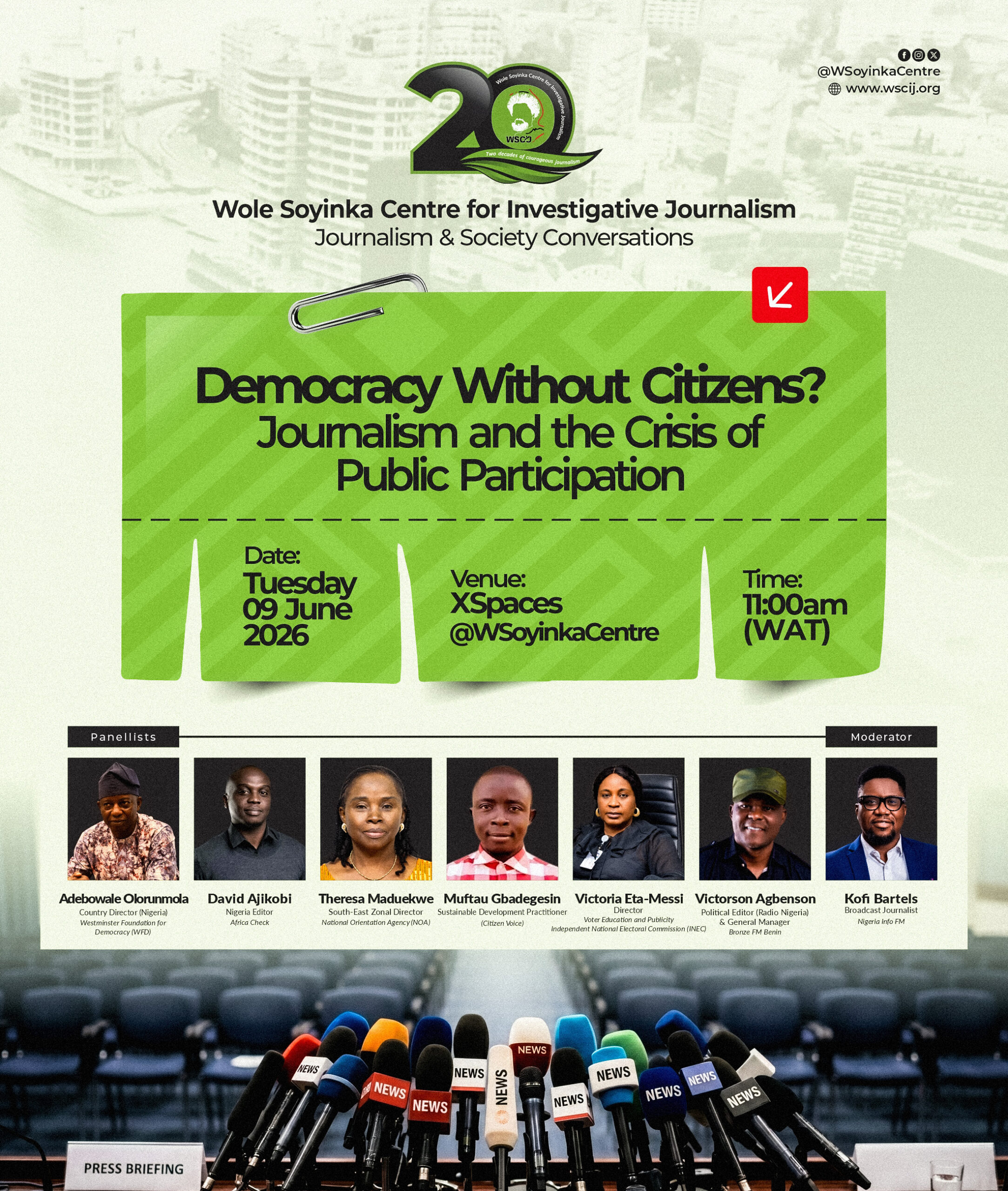
Join the conversation: Democracy Without Citizens? Journalism and the Crisis of Public Participation
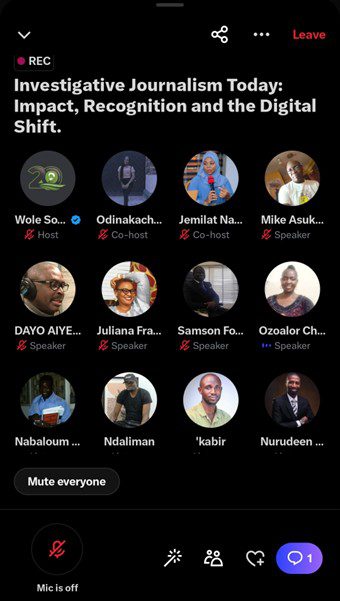
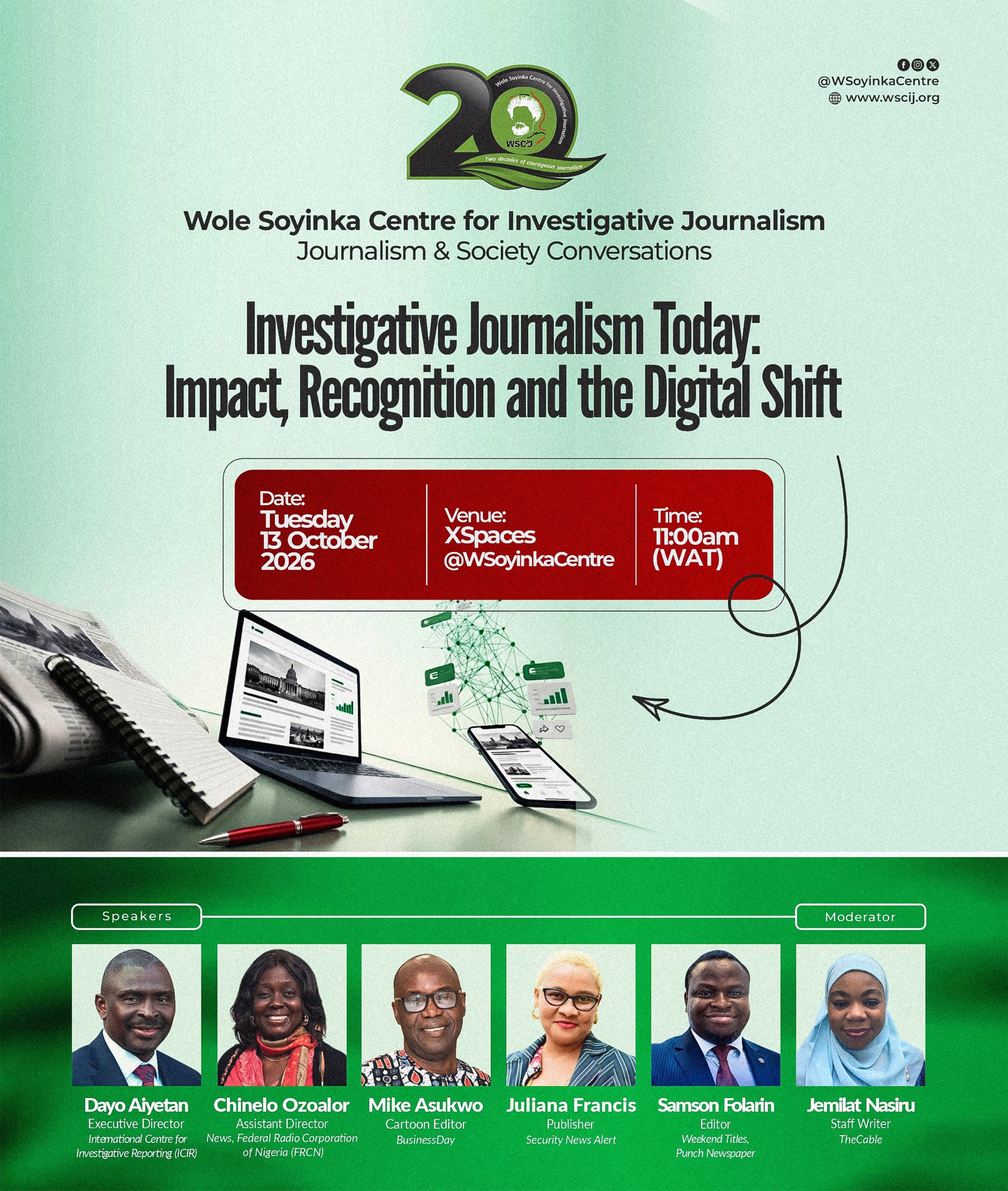
Join us for the June edition of our Journalism & Society Conversations on Tuesday 9 June 2026 at 11:00am (WAT) on X Spaces via WSCIJ’s X handle.
We will examine the theme, ‘Democracy Without Citizens? Journalism and the Crisis of Public Participation,’ against the backdrop of growing voter apathy, democratic disillusionment, and declining public trust in governance in Nigeria. Bringing together media professionals, civic actors, and governance stakeholders, the session will interrogate how accountability journalism, grassroots reporting, civic education, and digital mobilisation can strengthen informed citizen participation and reconnect Nigerians to democratic processes beyond election cycles.
WSCIJ to Train Student Journalists on Ethics and Modern Tools
This upcoming Pro Engage training will convene journalism students from Nigeria’s South-East region for a practical session focused on bridging classroom learning with the realities of modern journalism practice.
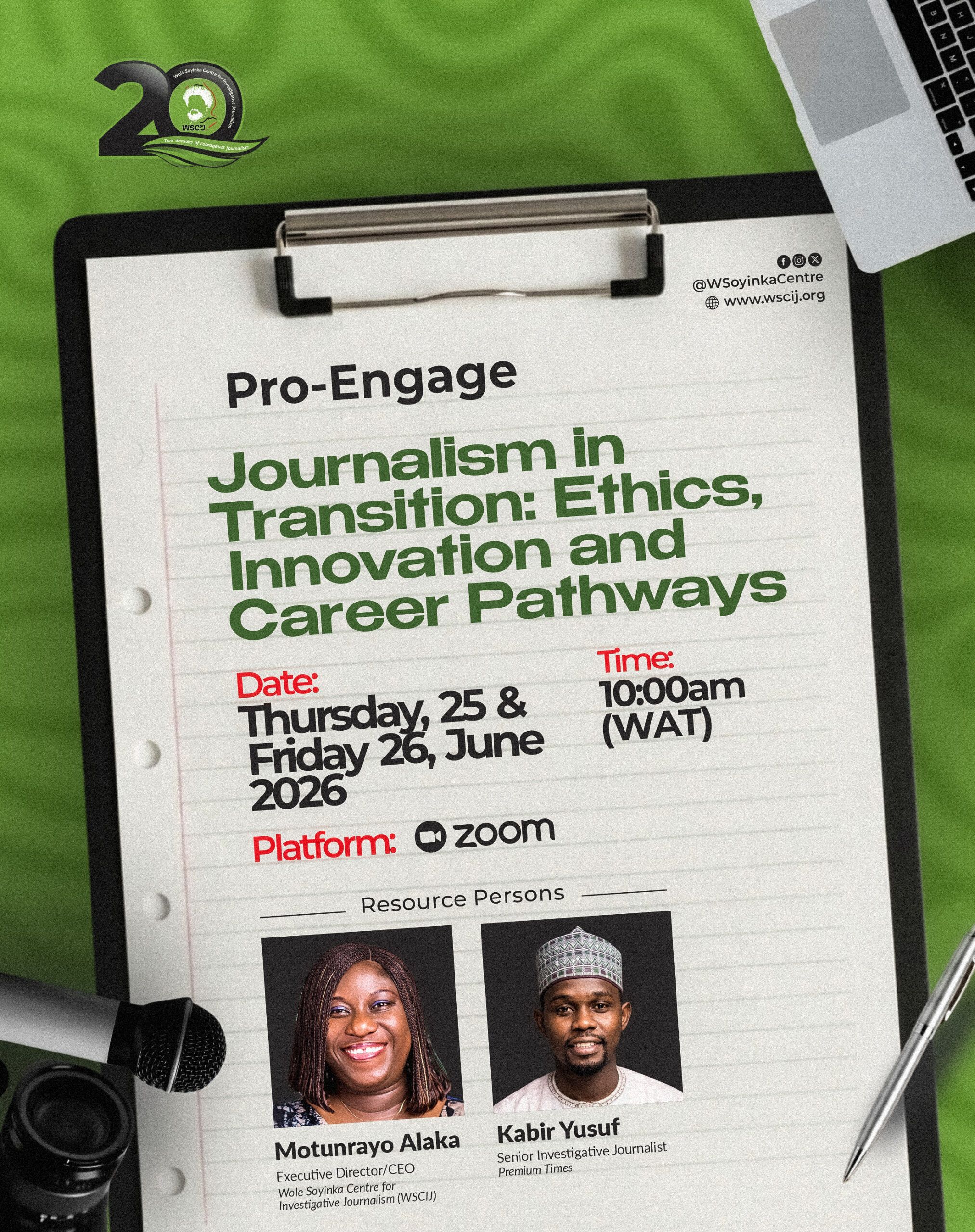
The upcoming training, themed ‘Journalism in Transition: Ethics, Innovation and Career Pathways’, will focus on core ethical principles on the first day and modern storytelling techniques on the second. It aims to equip journalism students with the practical skills needed to navigate evolving newsroom demands, produce impactful public-interest stories, and contribute meaningfully to accountability journalism.
WSCIJ to Host CMEDIA Masterclass on Newsroom Sustainability for Local Editors
WSCIJ will hold a Collaborative Media Engagement for Development, Inclusivity and Accountability (CMEDIA) Masterclass for Local Journalism Editors. The masterclass will bring together newsroom leaders for a practical conversation on strengthening the sustainability and resilience of investigative and public-interest journalism.
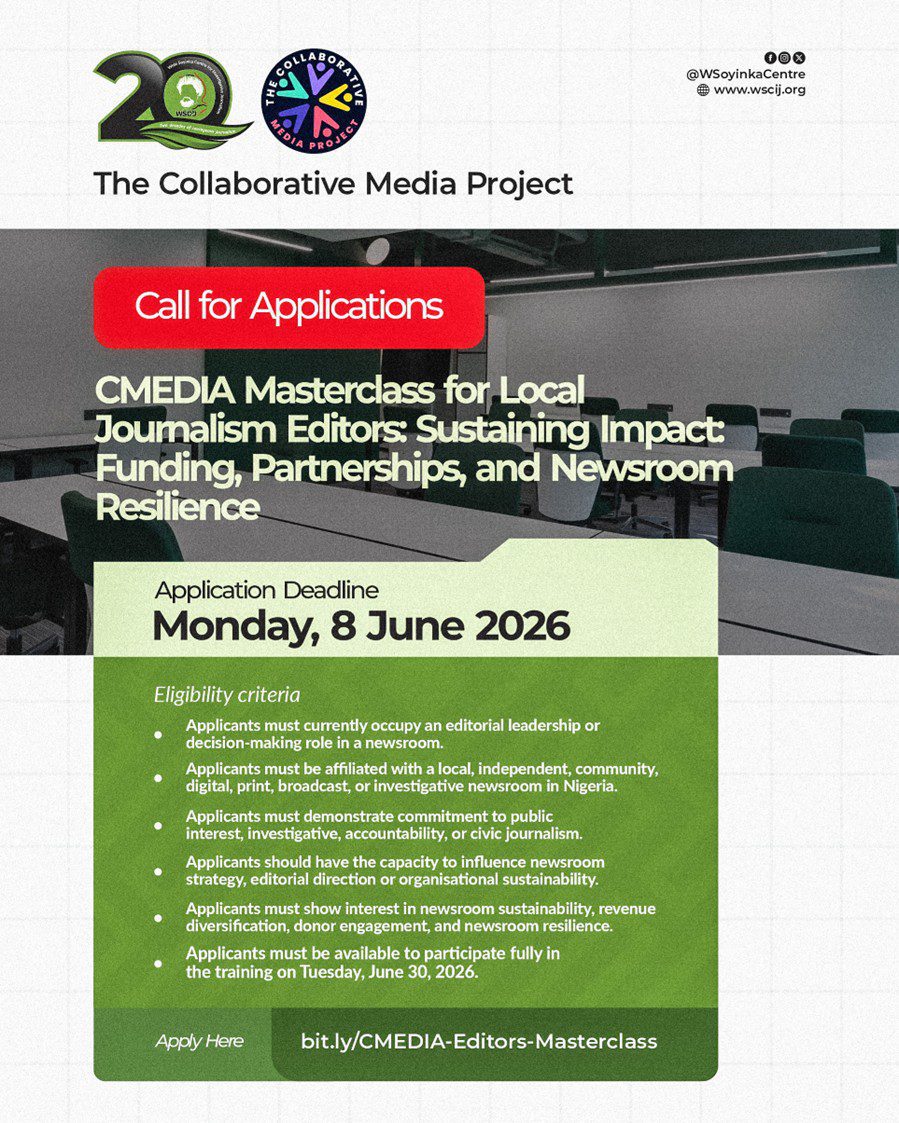
Under the theme, ‘Sustaining Impact: Funding, Partnerships, and Newsroom Resilience’, the session which will be held on Tuesday, 30 June will explore funding strategies, revenue diversification, and partnership approaches that can help local newsrooms sustain impactful reporting and navigate the evolving media landscape.
Call for Applications: Holistic Safety Workshop for Investigative Reporters
The Wole Soyinka Centre for Investigative Journalism (WSCIJ) is calling for applications from senior investigative journalists and editors based in Nigeria for its Civic Space Guard Holistic Safety Workshop, scheduled for June 18–19, 2026.
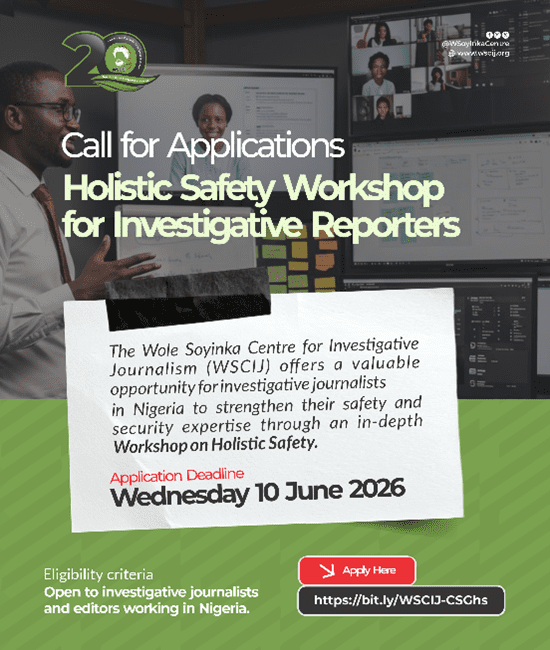
Designed to address the evolving risks associated with high-impact accountability reporting, this two-day intensive workshop will equip participants with practical safety knowledge and tools to protect themselves, their sources, and their work. The training features expert-led sessions tailored to the complex realities of modern journalism. Eligible candidates with a demonstrable track record in public-interest reporting must apply on or before Wednesday, June 10, 2026.
The 18th edition of the Wole Soyinka Centre Media Lecture Series will convene journalists, academics, policymakers, civic actors, and citizens for a high-level conversation on the future of democracy and the role of journalism in safeguarding electoral integrity, public trust, and democratic accountability.
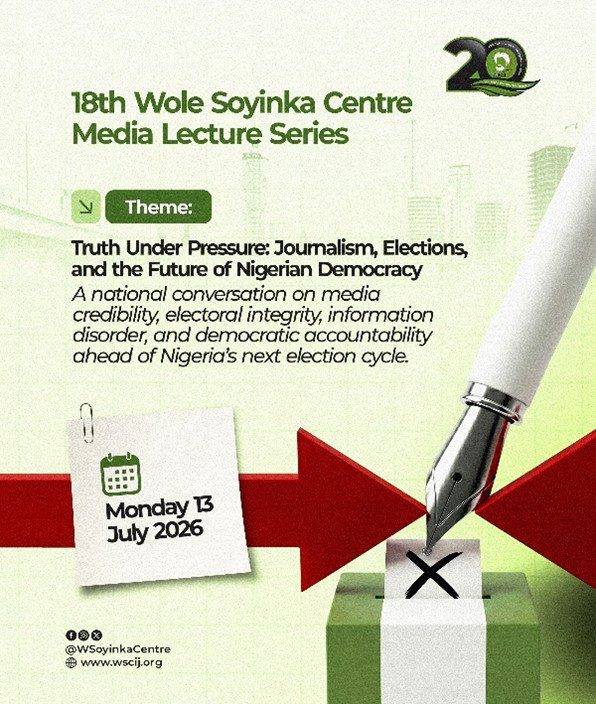
Under the theme, ‘Truth Under Pressure: Journalism, Elections, and the Future of Democracy’, the lecture will examine the growing pressures confronting journalism and democratic participation in an era increasingly shaped by disinformation, political influence, technological disruption, and shrinking civic space ahead of Nigeria’s 2027 general elections.
Launching the 2025 Journalism & Civic Space Status Report: Day Two of WSCIJ Media Lecture
Sequel to the broader conversations on democracy and accountability, the second day of the Wole Soyinka Media Lecture will feature the public presentation of WSCIJ’s 2025 Journalism & Civic Space Status Report on Tuesday, July 14, 2026. This builds on previous editions which have documented developments in Nigeria’s civic space over time, including Hushed Voices and the Media’s Defence of Civic Space (2022), Hushed Voices in an Election Year (2023) and Shrinking Freedoms (2025). The session will provide reflections on the state of civic space, media freedom, and democratic accountability in Nigeria while creating space for dialogue on the challenges and opportunities shaping citizen participation, institutional transparency, and the future of Nigeria’s Civic Space.…
Inside WSCIJ
WSCIJ Hosts Journalists’ Timeout to Strengthen Press Freedom
The Journalists’ Timeout was convened under the Civic Space Guard project on Tuesday, May 26, 2026. The Wole Soyinka Centre for Investigative Journalism (WSCIJ) gathered media professionals to step away from newsroom routines and confront the pressures of a shrinking civic space. The engagement, themed ‘Press Freedom Then and Now: What Journalists Must Understand, Defend and Do,’ saw participants describe the local media landscape as everything from “tasking” to “caged” as they debated the delicate balance between national security and the public’s right to know. Motunrayo Alaka, Executive Director/CEO WSCIJ, opened the session by stressing that while Nigeria is not a completely closed environment, access to information and systemic intimidation remain severe challenges that require deep professional solidarity rather than isolated resilience. Reinforcing this message, Richard Akinnola, Executive Director of the Centre for Free Speech, cautioned that reporters must not to let proximity to political power dilute their critical oversight or compromise media ethics.
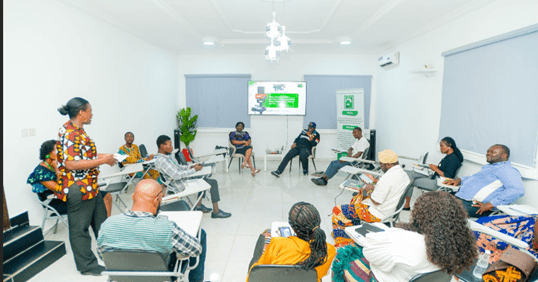
A cross section of participants at the Journalists’ timeout
WSCIJ Celebrates Motunrayo Alaka at 45
As we rounded off the month of May, we celebrated Motunrayo Alaka, Executive Director/CEO, WSCIJ on her 45th birthday. The WSCIJ team had an intimate in-office celebration to mark her 45th birthday on Monday, May 25, honoring her decades of dedication to media advocacy and development. This deep appreciation seamlessly extended into the broader journalism ecosystem the next day during the Journalists’ Timeout engagement, where the participants and speakers gathered to cut a second cake, beautifully fusing the spirit of structural resilience with the warmth of professional community that she has long championed.
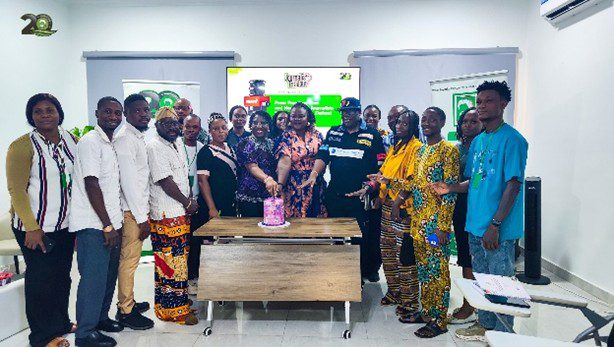
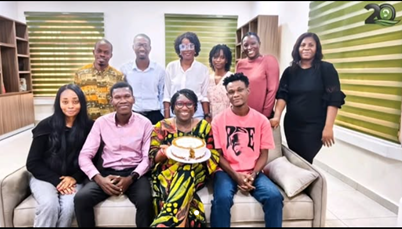
Celebration of Motunrayo Alaka’s birthday at the Journalist Timeout and among the WSCIJ Team
WSCIJ Equips Journalists with Frameworks for Impact-Driven Collaborative Investigations
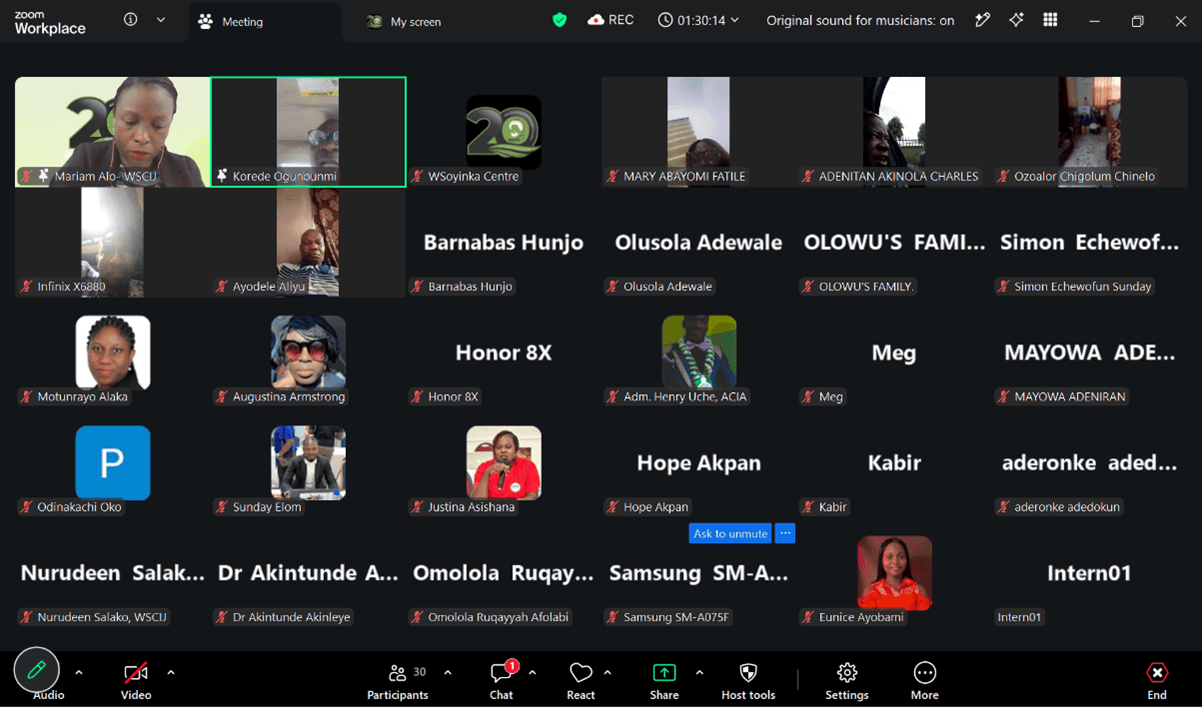
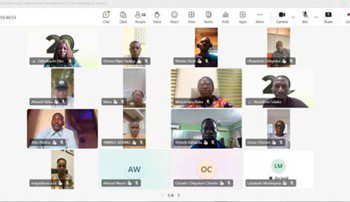
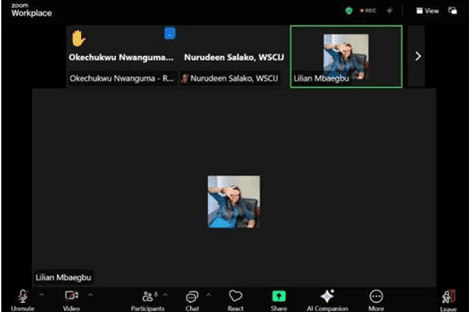
The Wole Soyinka Centre for Investigative Journalism (WSCIJ), under its Collaborative Media Engagement for Development, Inclusivity, and Accountability (CMEDIA) project, on Thursday 21 May, convened a virtual training themed ‘Designing and Delivering Collaborative Investigations: From Strategy to Impact’, gathering journalists from across Nigeria, Ghana, and The Gambia to strengthen sub-national and cross-border accountability frameworks. Facilitating the sessions, Motunrayo Alaka, Executive Director/CEO of WSCIJ, and Haruna Mohammed, Publisher of WikkiTimes, collectively charged participants to view investigative collaboration not as a casual partnership but as a highly structured, networked ecosystem. Emphasising that “the future of investigative journalism is networked,” the training culminated in practical breakout sessions where journalists designed concrete execution plans, with Motunrayo reinforcing that impactful, change-driven storytelling requires an intentional shift away from industry competition toward deep ethical alignment, shared public-interest values, and robust trust infrastructures.
WSCIJ, CSOs, other stakeholders demand accountability over Effurun police killing
At a strategic consultation organised by the Shehu Musa Yar’Adua Foundation on May 13, 2026, the Wole Soyinka Centre for Investigative Journalism (WSCIJ) and various civil society, media, and policy stakeholders gathered to demand accountability for the recent police killing of an unarmed civilian, Mene Ogidi, in Delta State. To combat the broader issue of extrajudicial killings and a shrinking civic space in Nigeria, attendees proposed a coordinated six-month action plan combining media advocacy, collaborative data-sharing, and digital campaigns. Key strategies discussed included utilising the “Report Until Something Happens” (RUSH) framework for continuous journalistic coverage, launching strategic litigation and class-action lawsuits to support victims’ families collectively, and engaging directly with authorities to pressure security agencies into institutional reform.
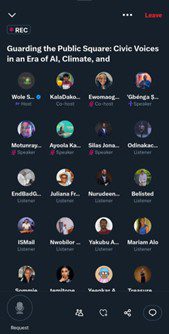
During the May 2026 edition of our Journalism & Society Conversations, media experts and civic actors called for the urgent protection of Nigeria’s digital rights, press freedom, and civic space against emerging democratic threats. Panellists highlighted how artificial intelligence complicates the information ecosystem through deepfakes and allows public officials “plausible deniability” to evade accountability, while also noting that state pressure, everyday intimidation, and the misapplication of laws like the Cybercrime Act fuel self-censorship. Additionally, the discussion addressed how climate change acts as a challenge multiplier and how infrastructure gaps isolate rural communities from civic participation. The session concluded with recommendations for stronger journalist protection mechanisms, enhanced digital literacy, judicial reforms to counter economic barriers to justice, and deeper collaboration between civil society and state institutions.
WSCIJ celebrates with Netherlands Consulate at 2026 King’s Day in Lagos
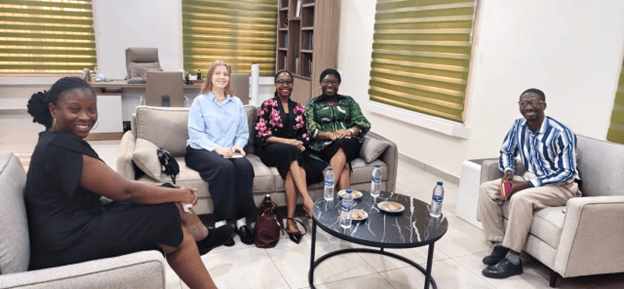
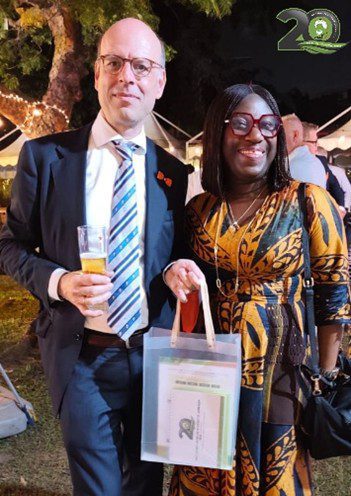
WSCIJ joined the Consulate-General of the Kingdom of the Netherlands in Lagos to celebrate the 2026 King’s Day, marking the official birthday of King Willem-Alexander. The annual event served as a strategic platform to reinforce diplomatic, trade, and development ties between Nigeria and the Netherlands, building upon the sustained collaboration between WSCIJ and the Dutch government on shared governance and accountability priorities. During the reception, Michel Deelen, the Consul General of the Kingdom of the Netherlands in Lagos, announced his upcoming transition to a new diplomatic role as the Dutch Ambassador to Malaysia later in the year. To honor the long-term alliance and support for media development, WSCIJ Executive Director and CEO, Motunrayo Alaka, presented a special parting souvenir to Consul General Deelen, reaffirming the Centre’s commitment to building strong international coalitions that advance transparency and investigative journalism.
Journalism Today:
Journalism and Democracy Ahead of Nigeria’s 2027 Elections
As Nigeria approaches the 2027 general elections, the role of journalism in safeguarding democratic accountability is becoming increasingly significant. In periods of political transition, journalism serves not only as a channel for information but also as a mechanism for transparency and public accountability.
The 2027 elections are expected to present a different media and information environment from previous electoral cycles. While journalists have historically contended with challenges such as political pressure, economic pressure, misinformation, intimidation, and restrictions on access to information, emerging developments within the digital ecosystem are reshaping how elections are reported, consumed, and contested. These pressures create additional difficulties for election reporting, which requires time, verification, field presence, and sustained editorial oversight.
The growing influence of social media actors, political influencers, and non-traditional information channels also presents new challenges for professional journalism. Information now moves faster and reaches wider audiences before verification processes are completed, increasing the risks of misinformation during politically sensitive periods. Journalists are therefore expected to balance immediacy with accuracy while operating in environments that may be politically charged or digitally manipulated.
Despite these challenges, the role of journalism in democratic processes remains critical. Investigative and accountability reporting can help track campaign promises, monitor political financing, examine governance records, and document electoral conduct before, during, and after elections. Collaborative journalism models are also becoming increasingly important within this context.
As preparations for the elections intensify, the evolving media landscape highlights both the importance of journalism and the pressures confronting it. The effectiveness of election reporting in 2027 may depend not only on journalists’ professional capacity, but also on the broader civic environment that enables independent reporting, access to information, public trust, and the protection of press freedom.
Investigative Stories
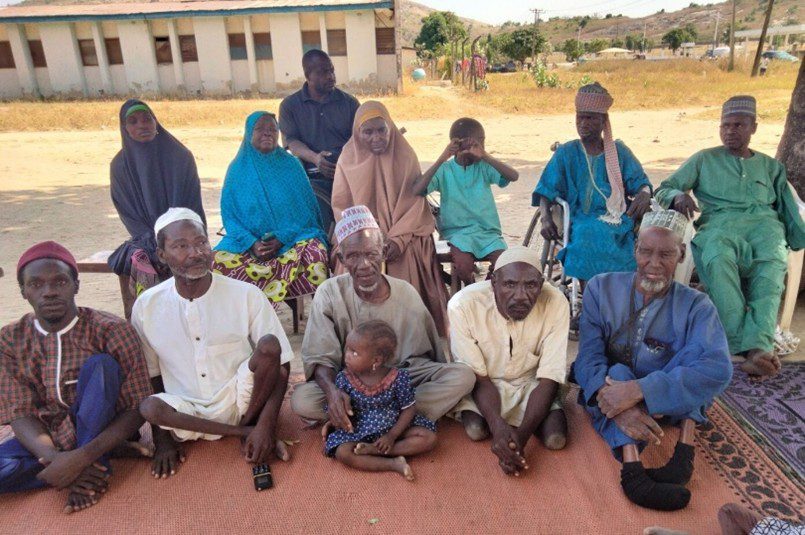
Democracy on the Margins: How Systemic Exclusion is Leaving Nigeria’s PWDs Behind
Can a democracy truly claim to be inclusive when millions of its citizens are systematically locked out of the ballot box? In this sobering WikkiTimes investigation supported by WSCIJ under the Collaborative Media Engagement for Development Inclusivity and Accountability (CMEDIA) project, journalist Hamzat Ibrahim Abaga exposes the severe disconnect between progressive federal laws and reality on the ground. Despite the landmark 2019 Disability Prohibition Act and explicit mandates in the Electoral Act requiring braille materials, sign language interpreters, and physical aid infrastructure, findings from Niger State ahead of the general elections reveal an umpire turning a blind eye. From broken equipment and abortive registration attempts at a disabled-populated F-layout community to state local polls conducted with zero inclusive infrastructure, vulnerable populations face steep institutional barriers and official neglect.
Read the full investigation here.
Voices from the Field
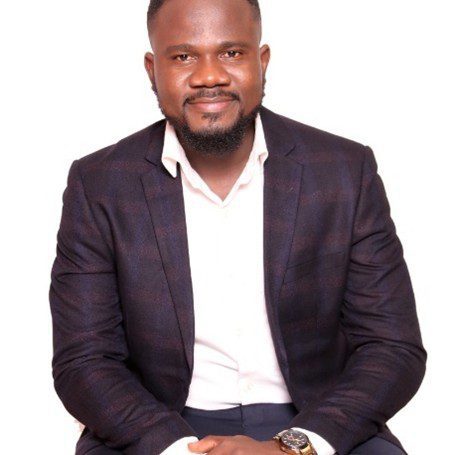
Olanrewaju Oyedeji
Olanrewaju Oyedeji is a Nigerian investigative journalist renowned for his commitment to justice, accountability, and fighting corruption through impactful data-driven reporting. His notable stories include “All Roar and No Bite: Exposing Nigeria’s Paper Tiger Election Laws”, which delves into the widespread electoral violence and irregularities during Nigeria’s 2023 presidential election, highlighting the shooting of election workers by the Nigerian Army and their subsequent recognition for bravery. Also, his story “Show While Serving, now honoured,” which focuses on Paul Obaji and Chibuzor Oliaku, two election workers who were shot by soldiers during the election, survived, and were later honored with national awards for their courage and service.
His works have consistently ranked among the top stories worldwide, earning him prestigious honors such as awards from the Wole Soyinka Centre for Investigative Journalism.
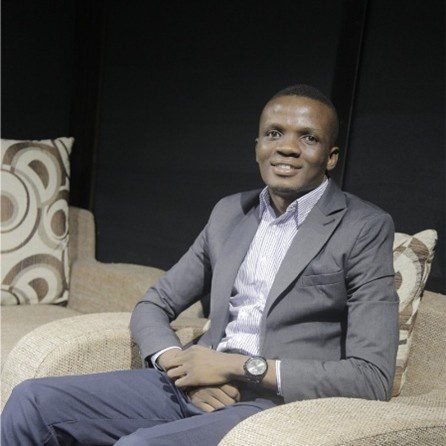
Arinze Chijioke: Uncovering the Truth Behind Nigeria’s 2023 Election Misinformation
Arinze Chijioke is an investigative journalist whose recent work sheds critical light on the complex web of false information that surrounded Nigeria’s 2023 presidential election. His in-depth investigation exposes how misinformation undermined the legitimacy of the electoral process and contributed to Nigeria’s record-low voter turnout.
Through meticulous research, Arinze uncovered false claims ranging from unsubstantiated coup plots and manipulated images to fake election results and conspiracy theories. His report reveals how social media influencers and political figures circulated millions of views of misleading content, often with little consequence from authorities or social media platforms. His work highlights the challenges faced by Nigeria’s electoral body, INEC, in countering this misinformation and the broader implications for democracy in Nigeria.
Arinze has shared his insights during one of the Journalism & Society Conversations, inspiring aspiring journalists to pursue accountability and transparency. His recent investigative focus on the 2023 Nigerian elections underscores his dedication to strengthening democracy through truth and rigorous inquiry.
AI in Journalism

Maltego is an Open-Source Intelligence (OSINT) tool used for investigations and relationship mapping. It helps journalists collect and connect publicly available information about people, organisations, websites, emails, domains, social media accounts, and online networks.
How to use it:
- Enter a known detail, such as a name, organisation, email, website, domain, phone number, or social media handle.
- Run a search to find publicly available connections linked to that detail.
- Review the visual graph showing relationships between people, organisations, websites, and online accounts.
- Use the results as leads for further investigation.
- Verify all findings from trusted sources before using them in a report.
Why your support to WSCIJ Matters
In an increasingly volatile global environment, the intersection between geopolitics and everyday economic realities is becoming more pronounced. For countries like Nigeria, shifts in global energy dynamics have immediate and profound implications for citizens’ livelihoods. Yet, the systems that translate global developments into local outcomes remain opaque. The Wole Soyinka Centre for Investigative Journalism is uniquely positioned to strengthen accountability at this intersection. Through capacity building, investigative reporting support, and civic engagement, WSCIJ enables journalists to:
Interrogate complex economic systems
Track public and private sector accountability
Bridge global developments with local realities
Investment in WSCIJ is an investment in clarity, accountability, and the public’s right to know.