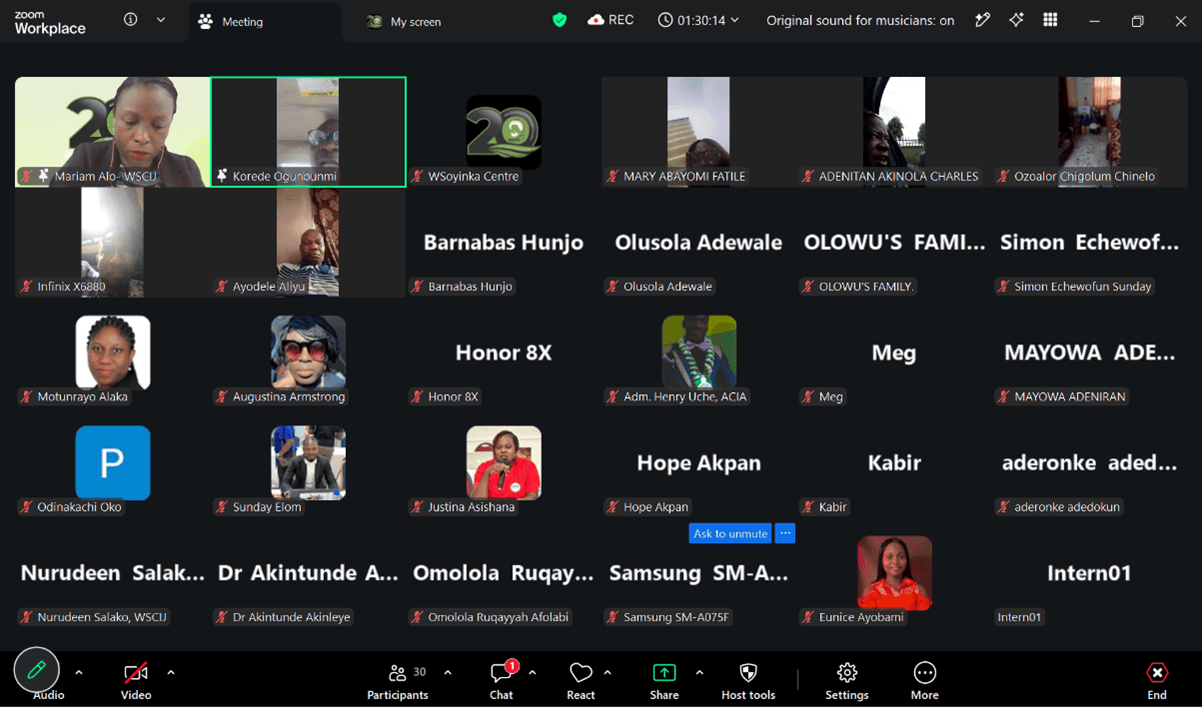
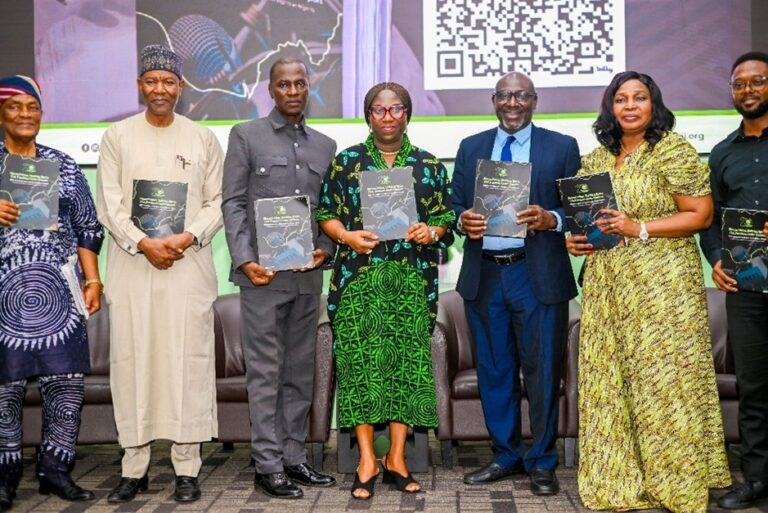
The Wole Soyinka Centre for Investigative Journalism (WSCIJ) on Monday, 13 July 2026, presented its 2025 Journalism & Civic Space Status Report, Silenced Voices, Shrinking Space: Civic Freedoms Under Pressure, during the 18th Wole Soyinka Centre Media Lecture Series held at The Providence Hotel, Ikeja GRA, Lagos. The report reveals persistent pressures on civic freedoms, journalism and democratic accountability in Nigeria, documenting emerging patterns of civic space infringements and their implications for freedom of expression, civic participation and public accountability.
The fourth edition in WSCIJ’s longitudinal documentation of civic space, the report provides an evidence-based assessment of developments that shaped Nigeria’s civic environment between January and December 2025. Drawing on systematic media monitoring of reports published by 54 media organisations, it documents 245 civic space incidents referenced across 570 media reports, providing insights into the trends, actors and issues influencing the country’s civic landscape.
Before its public presentation, the report underwent rigorous review sessions by a panel of experts including Ernest Ereke, Professor of Political Economy and Development Studies, University of Abuja; Austin Iwar, Assistant Inspector-General of Police (Rtd); Lekan Otufodunrin, Executive Director, Media Career Development Network; Juliana Francis, Publisher, Security News Alert; Theophilus Abbah, Executive Director, Daily Trust Foundation; Victoria Ibezim-Ohaeri, Executive Director, Spaces for Change (S4C); and Motunrayo Alaka, Executive Director & CEO, WSCIJ.
During the public presentation, Lekan Otufodunrin, Executive Director, Media Career Development Network, reviewed the report, noting that Abuja and Lagos emerged as major hotspots for documented civic space violations. He observed that the findings point to persistent challenges confronting journalism and civic participation despite Nigeria’s democratic governance.
According to the report, Nigeria’s civic space remains under significant pressure despite continued democratic governance and constitutional guarantees of fundamental rights. The findings highlight a notable shift involving a sharp increase in incidents affecting ordinary citizens, suggesting that restrictions are increasingly extending beyond newsrooms to broader forms of public participation, dissent, and democratic engagement.
The report also shows that while physical attacks remain a serious concern, a growing proportion of incidents, 145 cases (59.2%), now involve non-violent administrative, legal, and institutional measures. State actors were involved in 219 incidents (89.4%), with the Nigeria Police Force identified in 118 of those cases.

Following the presentation, a dialogue moderated by Ayo Mairo-Ese, Arise News anchor featured panellists including Professor Umaru Pate, Professor of Communications at Bayero University, Kano; Lekan Otufodunrin, Executive Director, Media Career Development Network; Lanre Arogundade, Executive Director, International Press Centre; Bernard Akede, Head of Reportorial, News Central TV; Mariam Alo, Programme Officer, WSCIJ and Khadijah El-Usman, Senior Programme Officer, Angolophone West Africa, Paradigm Initiative.
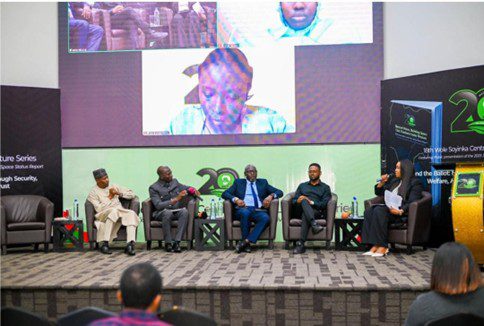
The panellists highlighted that despite ongoing reports on journalist safety, there has been no significant improvement in the democratic atmosphere, with journalists facing persistent threats from state actors, politicians, and party agents, often while media houses and professional bodies remain complicit or passive due to economic dependency and fragmentation. They emphasised that journalists are frequently handicapped by precarious working conditions, including low pay, lack of full-time employment, and, in some cases, being on state government payrolls, which creates a culture of silence and survival that forces some into unethical practices.
To drive actionable change, the panellists called for serious advocacy and enlightenment for policymakers, better legal protections, and a collective effort from media bodies to hold employers accountable for poor treatment. They further stressed the need to modernise journalism education by aligning curricula with emerging technologies and global realities, while simultaneously urging for a shift in the orientation of university lecturers who often remain rooted in outdated practices, ensuring the next generation is better prepared to navigate the evolving economic and digital landscape of the profession.
In the report’s executive summary, Motunrayo Alaka, Executive Director/CEO of WSCIJ, emphasised that the centre monitors civic space because investigative journalism can only thrive when citizens and the media are free to operate without fear. She further stated that the report is intended to serve as a call to action for a society where fundamental freedoms are protected and democratic institutions remain accountable.
By utilising systematic media monitoring and incident verification, WSCIJ aims to foster dialogue, encourage institutional reforms, and strengthen advocacy efforts to protect democratic resilience and fundamental freedoms. This report builds upon insights from previous editions, including Hushed Voices and the Media’s Defence of Civic Space (2012-2022), Hushed Voices in an Election Year (2023), and Shrinking Freedoms (2024), to provide a deeper understanding of emerging patterns and trends.
Click here to download the 2025 Journalism and Civic Space Status Report, Silenced voices, Shrinking Spaces; Civic Freedoms Under Pressure.