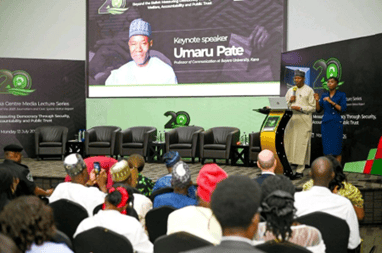
Citizens will evaluate democracy not through constitutional provisions but through their lived experiences. That was the central message from Professor Umaru Pate, Professor of Communication at Bayero University, Kano, as he challenged policymakers, institutions and citizens to rethink how democracy is measured while delivering the keynote address at the 18th Wole Soyinka Centre Media Lecture Series organised by the Wole Soyinka Centre for Investigative Journalism (WSCIJ).
Held on Monday, 13 July 2026, at The Providence Hotel, Ikeja GRA, Lagos, under the theme, Beyond the Ballot: Measuring Democracy Through Security, Welfare, Accountability and Public Trust, the Lecture brought together journalists, academics, election managers, law enforcement representatives, government officials, civil society actors, development partners and student journalists to examine what democracy should deliver beyond periodic elections.
Declaring the Lecture open, Professor Repo Sekoni, immediate past Board Chair of WSCIJ, observed that there could hardly be a more fitting time to reflect on what happens before and beyond the ballot, noting that the conversation was both timely and necessary as Nigeria continues its democratic journey.
In his keynote address, Professor Pate distinguished between procedural and substantive democracy, arguing that while elections remain an essential component of democratic governance, they are not sufficient on their own. He noted that citizens ultimately judge democracy by whether it improves their daily lives through security, economic opportunity, access to healthcare, education, accountability and public trust.
Questioning conventional measures of democratic progress, he asked, “Can a nation be considered democratic simply because elections are conducted periodically?” According to him, democracy must be assessed by the extent to which it delivers meaningful outcomes for citizens’ lives through security, economic opportunity, access to healthcare, education, accountability and public trust rather than by electoral processes alone. He also cautioned against the growing challenge of misinformation, noting that, “Today, the problem is not the absence of information in our democracy, but the abundance of information, much of it inaccurate, and the scarcity of attention.”
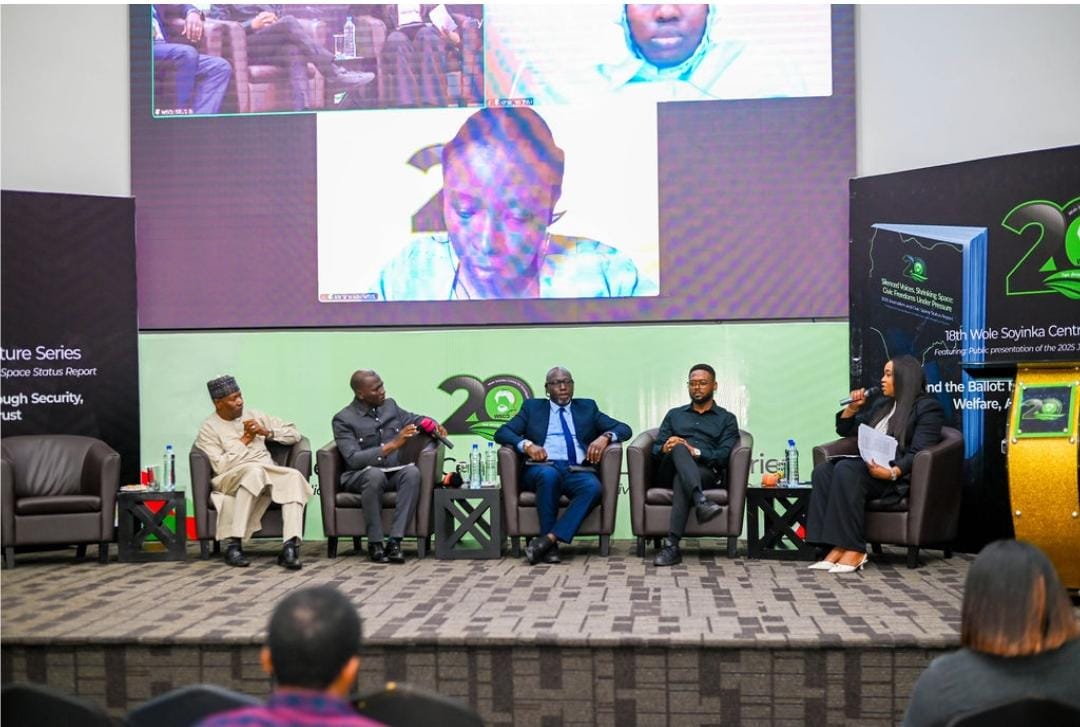
The keynote address was followed by the Democracy Delivery Conversation, moderated by Deji Badmus, Founder and Editor-in-Chief of TV360 Nigeria. The panel featured Professor Umaru Pate; Taiwo Gbadegesin, Deputy Director and Head of the Department of Voter Education, Publicity, Gender and Civil Society, Independent National Electoral Commission (INEC), Lagos State; Nabilah Usman, General Manager, Radio Now 95.3FM; Muftau Gbadegesin, public affairs commentator and sustainable development practitioner, who joined virtually; and DCP Anthony Placid, Deputy Commissioner of Police, Department of Finance and Administration.
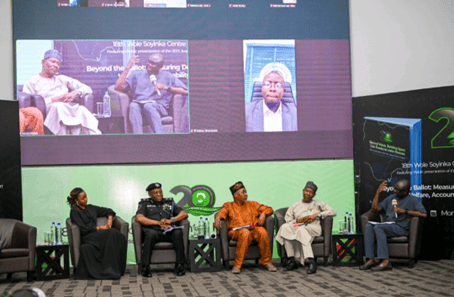
The discussion examined the interconnected roles of government institutions, electoral management bodies, security agencies, the media and citizens in strengthening democratic governance beyond election cycles. Panellists emphasised the need for greater accountability, responsible information management, credible elections and sustained public engagement. Professor Umaru Pate emphasised that strengthening democracy begins at the community level. According to him, rebuilding the community spirit provides the foundation for stronger engagement at the state and national levels.
Addressing the decline in voter turnout in recent presidential and even grassroot elections, Taiwo Gbadegesin stated that the political class must contribute to voter turnout by keeping promises made. He added that while INEC and the press have been carrying out their duty in educating voters, the bulk of the challenge is the political class must also contribute to getting the people enlightened.
While speaking, Anthony Placid admitted the trust deficit of Nigerians, but also stated that in the last general elections, the law enforcement agencies were exonerated. He stated that to solve the challenge, the public must partner with security agencies.
A major highlight of the event was the public review of the 2025 Journalism & Civic Space Status Report by Lekan Otufodunrin, Executive Director, Media Career Development Network, ahead of its public presentation. He highlighted the findings of the media monitoring conducted between January and December 2025, which documented trends, patterns and incidents affecting journalism, civic space and democratic accountability in Nigeria. The report documented 245 civic space incidents across 570 media reports published by 54 media organisations, revealing persistent pressures on freedom of expression, access to information, peaceful assembly, association, and broader civic participation.
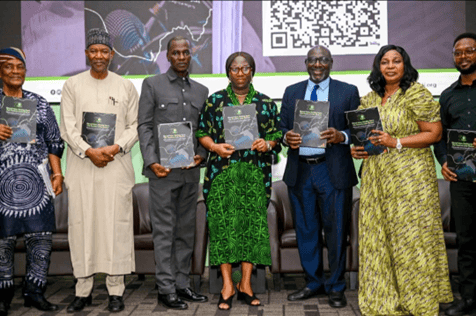
Following the report review, a Stakeholder Dialogue on the State of Journalism, Civic Space, Democratic Accountability and Public Trust, moderated by Ayo Mairo-Ese, Anchor, Arise News brought together Professor Umaru Pate, Lanre Arogundade, Executive Director, International Press Centre; Bernard Akede, Head of Reportorial and International Correspondent, News Central TV; Mariam Alo, Programme Officer, WSCIJ and Khadijah El-Usman, Senior Programmes Officer, Anglophone West Africa, Paradigm Initiative to reflect on the report’s findings and examine practical pathways for strengthening media freedom, civic participation and institutional accountability.
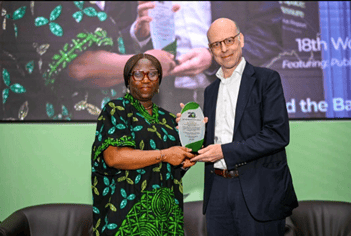
The event also featured a special farewell side chat between Motunrayo Alaka, Executive Director/CEO of WSCIJ, and Michel Deelen, Consul General of the Kingdom of the Netherlands in Lagos, as he concludes his diplomatic assignment in Nigeria. Their conversation reflected on Nigeria’s 27-year democratic journey and the importance of sustained international partnerships in strengthening investigative journalism and democratic accountability. In recognition of his enduring support for the WSCIJ, his commitment to investigative journalism and his dedicated service to Nigeria, Michel Deelen was presented with an award of appreciation by WSCIJ.
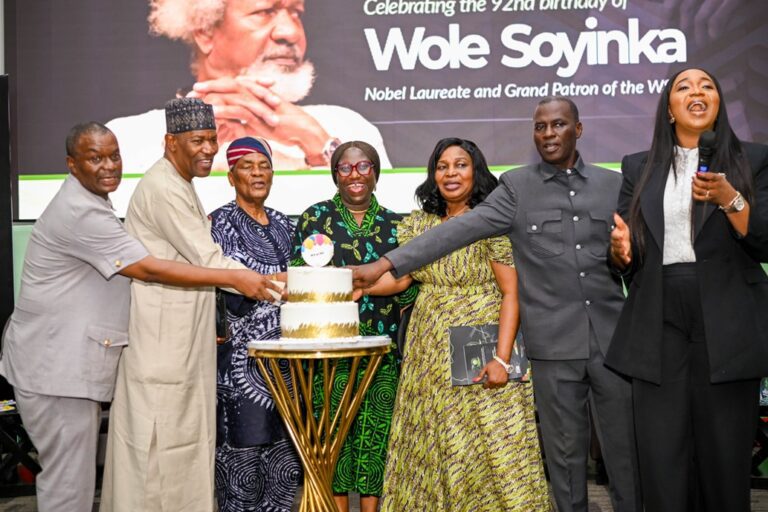
The 18th Wole Soyinka Centre Media Lecture Series concluded with the cutting of a birthday cake in celebration of the 92nd birthday of Professor Wole Soyinka, Nobel Laureate and Grand Patron of WSCIJ. The moment honoured his enduring legacy and lifelong commitment to truth, justice, democracy and public-interest journalism while bringing the day’s conversations to a fitting close.
Click here to download the 2025 Journalism and Civic Space Status Report.
Click here to watch the farewell chat with Michel Deelen and Motunrayo Alaka at the 18th Wole Soyinka Annual Media Lecture.
Signed,
WSCIJ Team