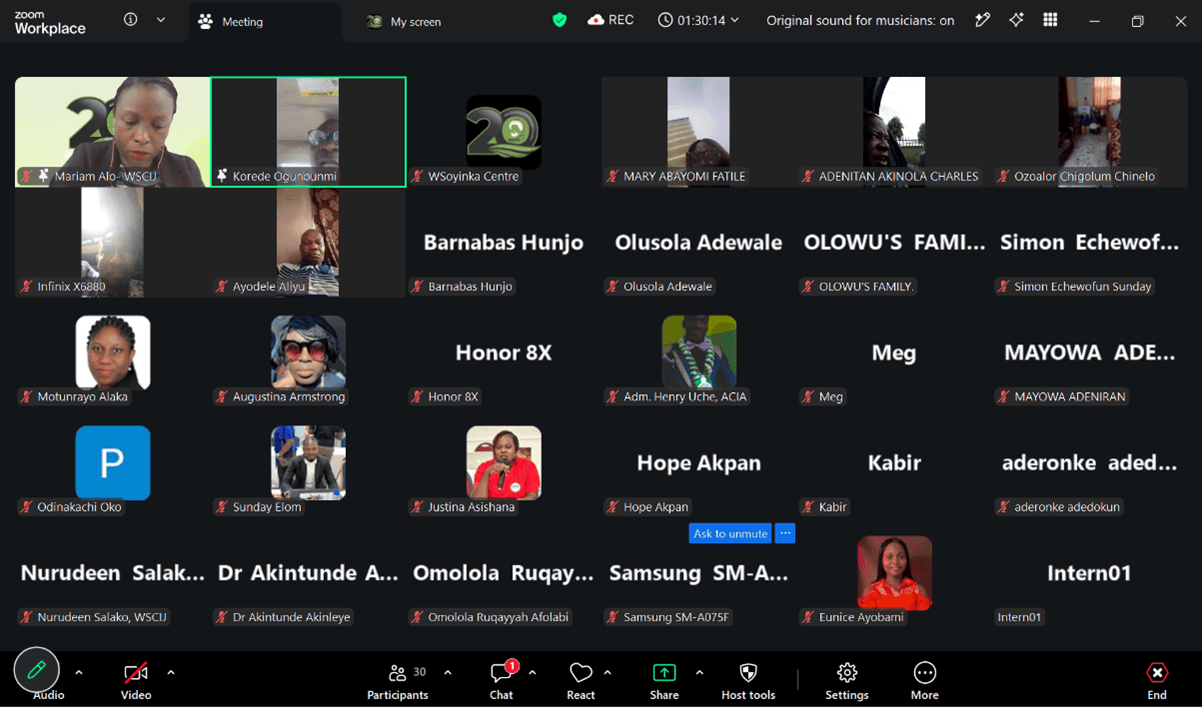
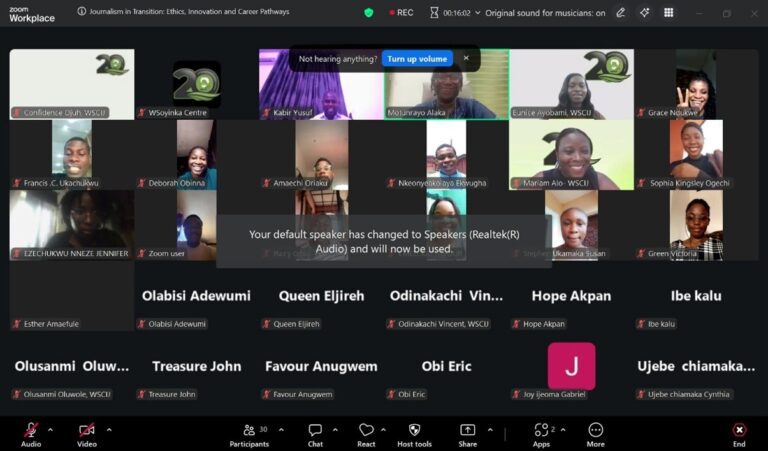
The Wole Soyinka Centre for Investigative Journalism (WSCIJ) has concluded the South-East edition of Pro-Engage, its flagship student journalism training program, held on Thursday, June 25, and Friday, June 26, 2026. The two-day virtual training gathered students from across the South-East region, representing Nnamdi Azikiwe University (UNIZIK), Amadeus University, Renaissance University, Alex Ekwueme Federal University, Ebonyi State University, and Abia State University. The sessions were facilitated by Motunrayo Alaka, Executive Director/CEO of WSCIJ, and Kabir Yusuf, a renowned investigative journalist.
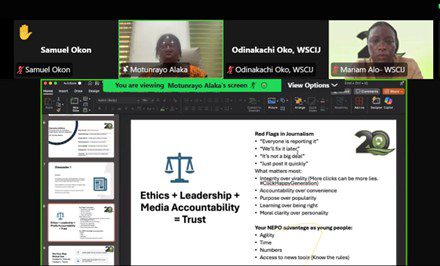
The first day focused on “Ethics and Social Responsibility of the Press,” led by Alaka, who emphasized that “at the heart of ethics are accountability and responsibility,” calling ethics the very foundation of journalism. The session also introduced the students to Herbert J. Taylor’s Four-Way Test, a framework used to examine the ethical implications of reporting. In closing, Alaka urged the student journalists to always aim for the highest ethical and editorial standards, noting that while perfection is impossible, a commitment to excellence is non-negotiable.
During the first day of the session, participants engaged in breakout group discussions that culminated in a rigorous debate. The students examined the ethical dilemma surrounding photojournalist Kevin Carter’s iconic, Pulitzer Prize-winning photograph of a starving Sudanese child and a vulture. Working in teams, they argued for and against Kevin Carter’s decision to capture the image, applying the newly learned principles of media ethics and social responsibility.
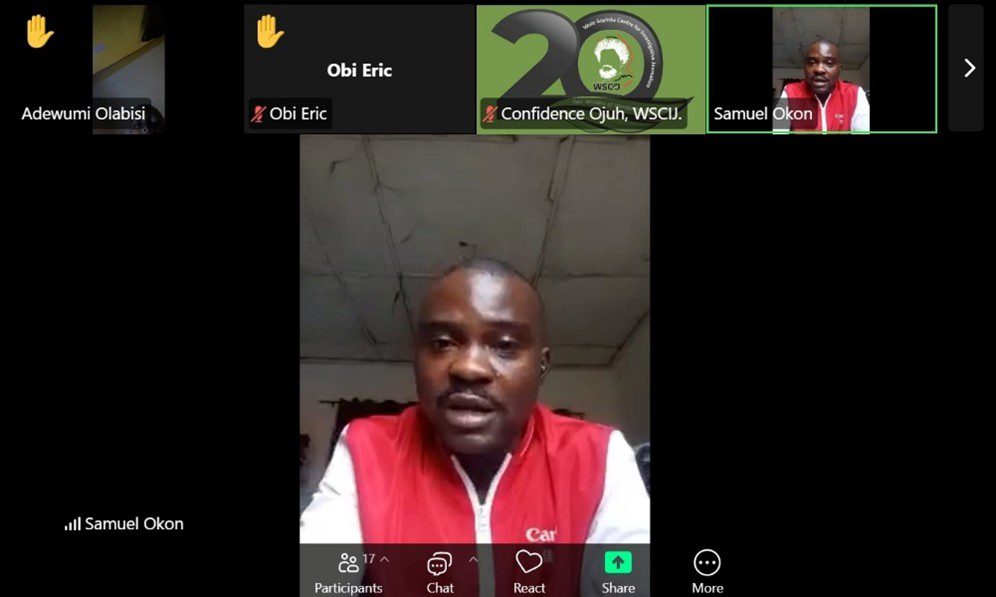
The second day of the training shifted focus to “Introduction to Digital Tools in Investigative Journalism,” led by Kabir Yusuf. Yusuf emphasised that core investigative reporting still relies on foundational skills: talking to people, asking the right questions, remaining persistent, collaborating with peers, and gathering physical evidence on the ground.
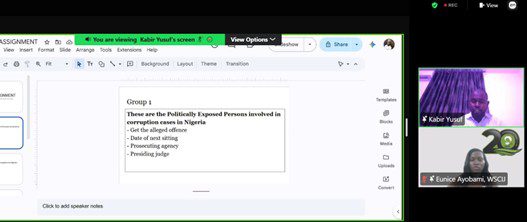
To complement these traditional methods, Yusuf introduced the students to advanced open-source intelligence (OSINT) and data-gathering platforms. He demonstrated how to use DocumentCloud to upload, analyse, and embed documents for public scrutiny, and illustrated the practical investigative uses of other global platforms, including OpenCorporates, Investigative Dashboard, and OCCRP Aleph. Following the lecture, students participated in hands-on group practicals, using these specific digital tools to track data and uncover evidence for hypothetical investigations.
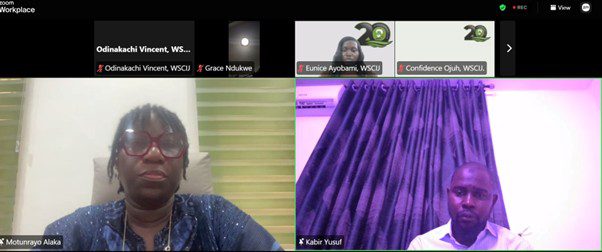
The training culminated in an interactive career chat led by both Alaka and Yusuf, offering the students professional insights on how to build sustainable careers in the media industry. Responding to student inquiries about skill-building and securing opportunities, Alaka encouraged the participants to develop deep self-awareness by understanding their unique strengths and weaknesses. She advised them to find their niche, commit to continuous growth, and remain strategic and conscious of shifting industry trends. Rounding out the advice, Yusuf challenged the students to look beyond the four walls of the classroom as a personal commitment to their professional development, urging them to aggressively leverage free online courses and global media opportunities to add value to their portfolios.
The pro-engage student training is aimed at addressing the gnawing knowledge and mentoring gap between student journalists and seasoned professionals in Nigeria. This South-East edition of WSCIJ’s flagship student engagement initiative, Pro-Engage, marks another deliberate step toward securing the future of the Nigerian press. The sustainability of journalism is dependent on the next generation of storytellers, a reality the Wole Soyinka Centre for Investigative Journalism (WSCIJ) is actively addressing.