“Interesting.” “Risky.” “Caged.” “Tasking.”
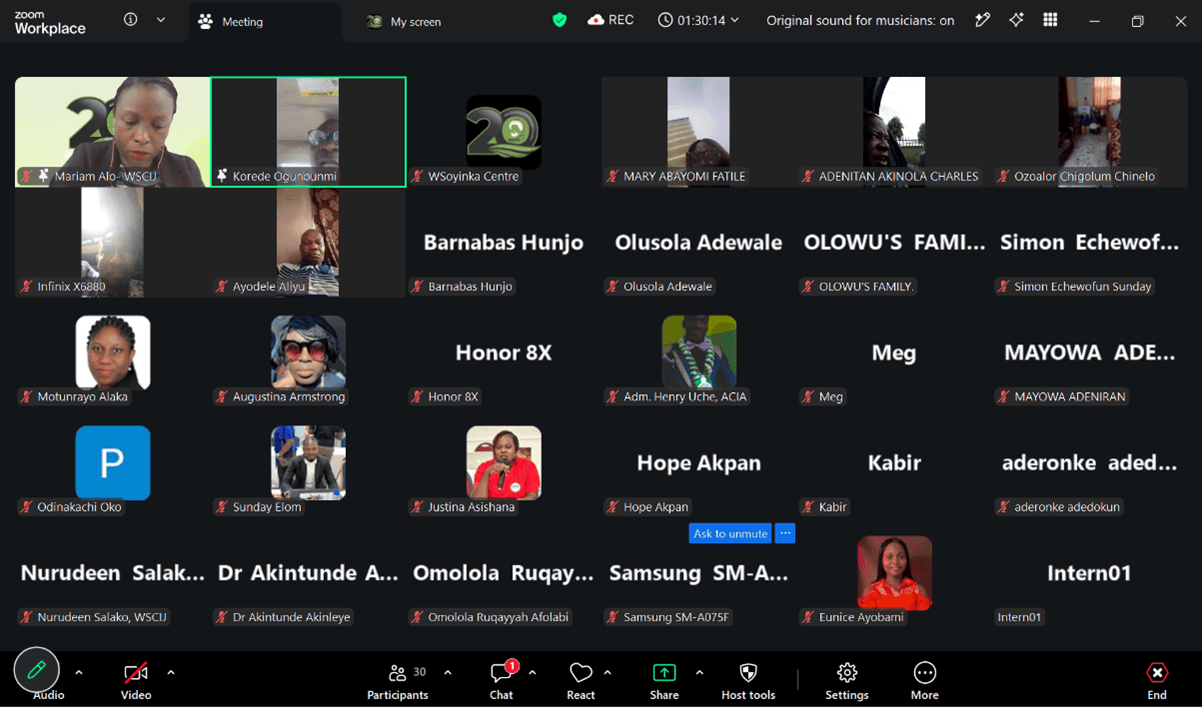
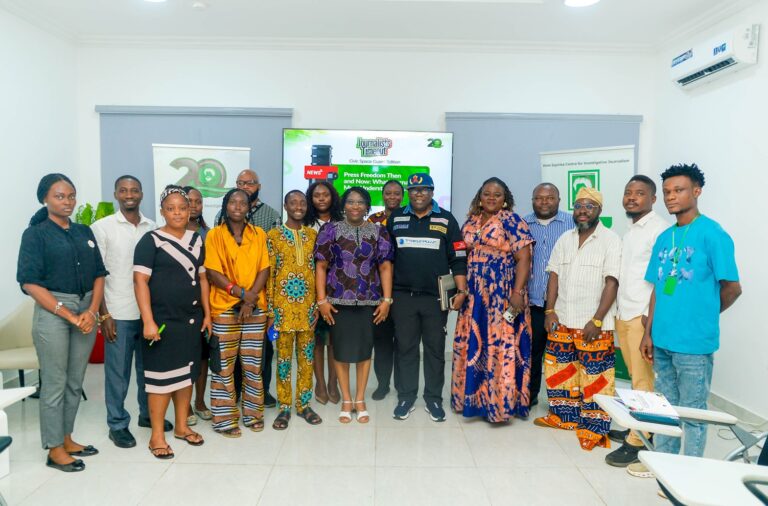
These were some of the words journalists used to describe the reality of practicing journalism in Nigeria during a special edition of Journalists’ Timeout convened by the Wole Soyinka Centre for Investigative Journalism (WSCIJ) in Lagos hosted under its Civic Space Guard (CSG) project on Tuesday, 26 May 2026.
The engagement themed; ‘Press Freedom Then and Now: What Journalists Must Understand, Defend and Do,’ created room for journalists to pause from the demands of the newsroom and openly discuss the pressures shaping media practice in Nigeria today while also examining the state of journalism and the shrinking civic space in Nigeria.
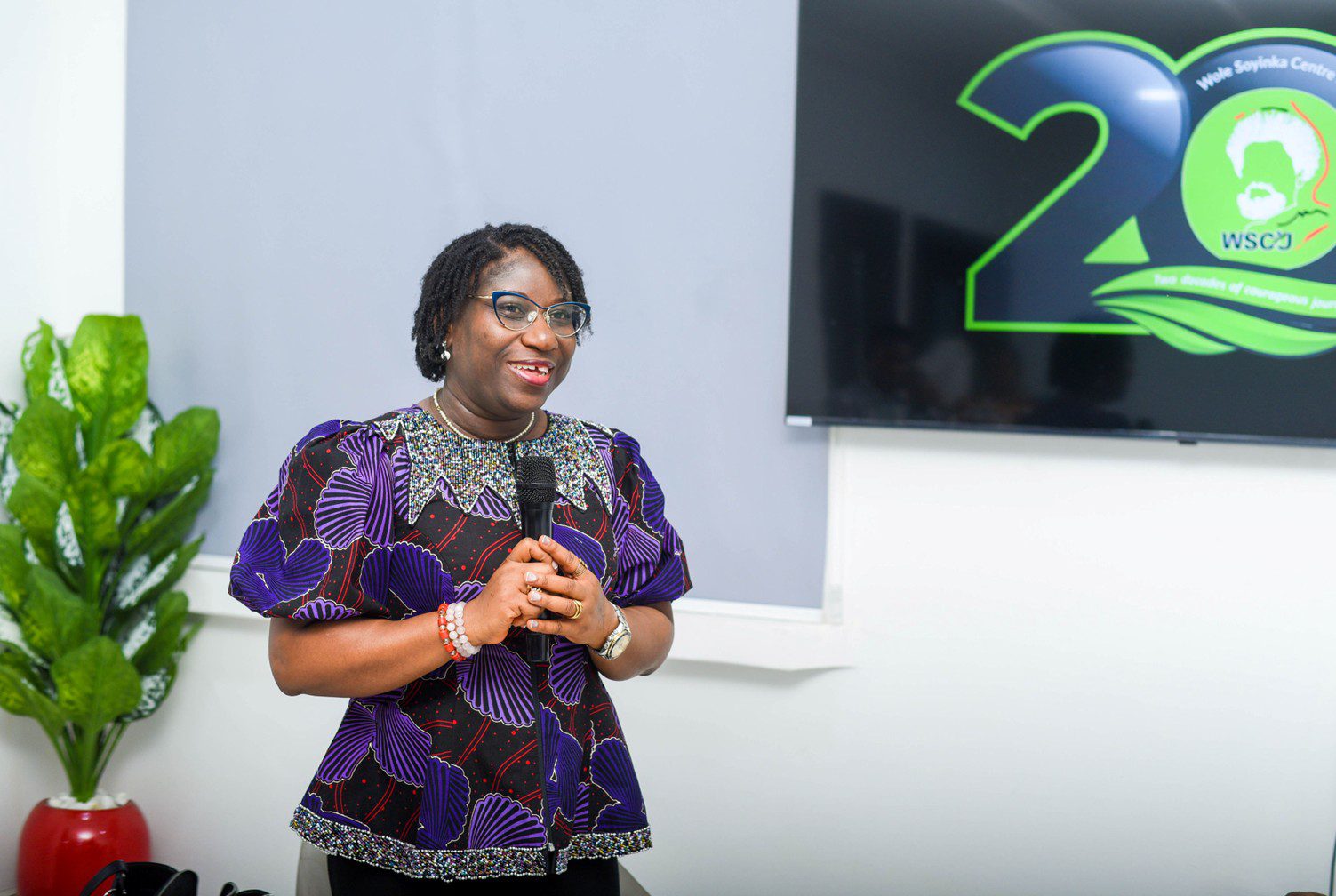
Opening the session, Motunrayo Alaka, Executive Director/CEO, WSCIJ, said the initiative was designed to provide journalists with a safe environment to discuss professional realities beyond the pressure of deadlines and daily newsroom routines. She linked the conversation to WSCIJ’s Civic Space Guard initiative, which monitors and responds to threats against civic freedoms and media rights in Nigeria.
According to her, while Nigeria may not operate a completely closed civic environment, access to information and institutional accountability remain major challenges for journalists. She stressed the importance of solidarity among journalists, warning against professional isolation in an increasingly difficult media landscape.
Alaka noted that the different interventions under the CSG project reflect growing concerns around restrictions, intimidation and barriers that continue to affect journalists and citizens alike. She explained that the timeout was deliberately framed to encourage reflection on the changing realities of press freedom, the evolving threats confronting the media, and the collective responsibility of journalists to defend ethical, independent and public-interest journalism.
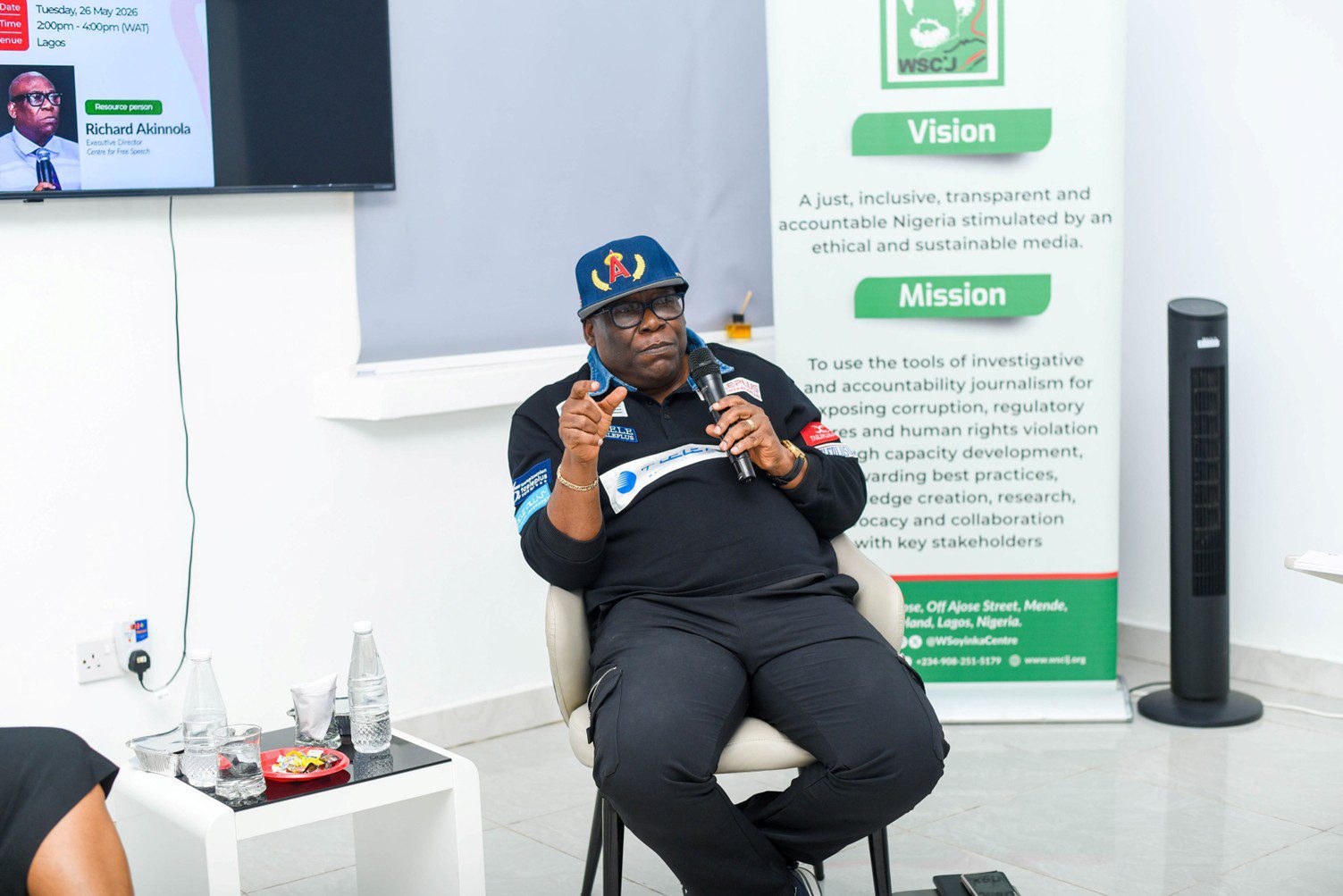
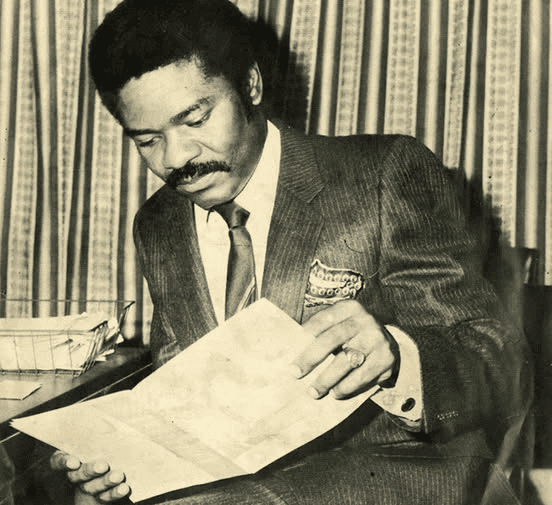
The engagement featured Richard Akinnola, Executive Director, Centre for Free Speech, alongside journalists from broadcast, print and digital newsrooms, who shared experiences of censorship, intimidation, legal harassment and ethical dilemmas confronting the profession.
Akinnola described the current environment as deeply concerning, arguing that despite democratic rule, journalists continue to face intimidation, pressure and restrictions that undermine independent reporting.
He also warned journalists against compromising professional ethics through overly close relationships with political actors, noting that access to power should not weaken accountability reporting. “You can maintain relationships and still remain critical when necessary,” he said during the conversation.
“Journalism is war,” Akinnola said during the discussion, urging journalists to recognise the realities and risks attached to the profession while remaining committed to ethical reporting.
The interactive session featured several questions from participants who raised concerns about balancing national security with the public’s right to know, navigating proprietorial interference in newsrooms, handling online platform restrictions and sustaining professional integrity while building relationships with sources and public officials.
The conversation further explored mental health and burnout in journalism, with speakers acknowledging the emotional toll of constantly working under pressure and uncertainty. Participants agreed on the need for stronger institutional support, mentorship and professional solidarity across the media industry.
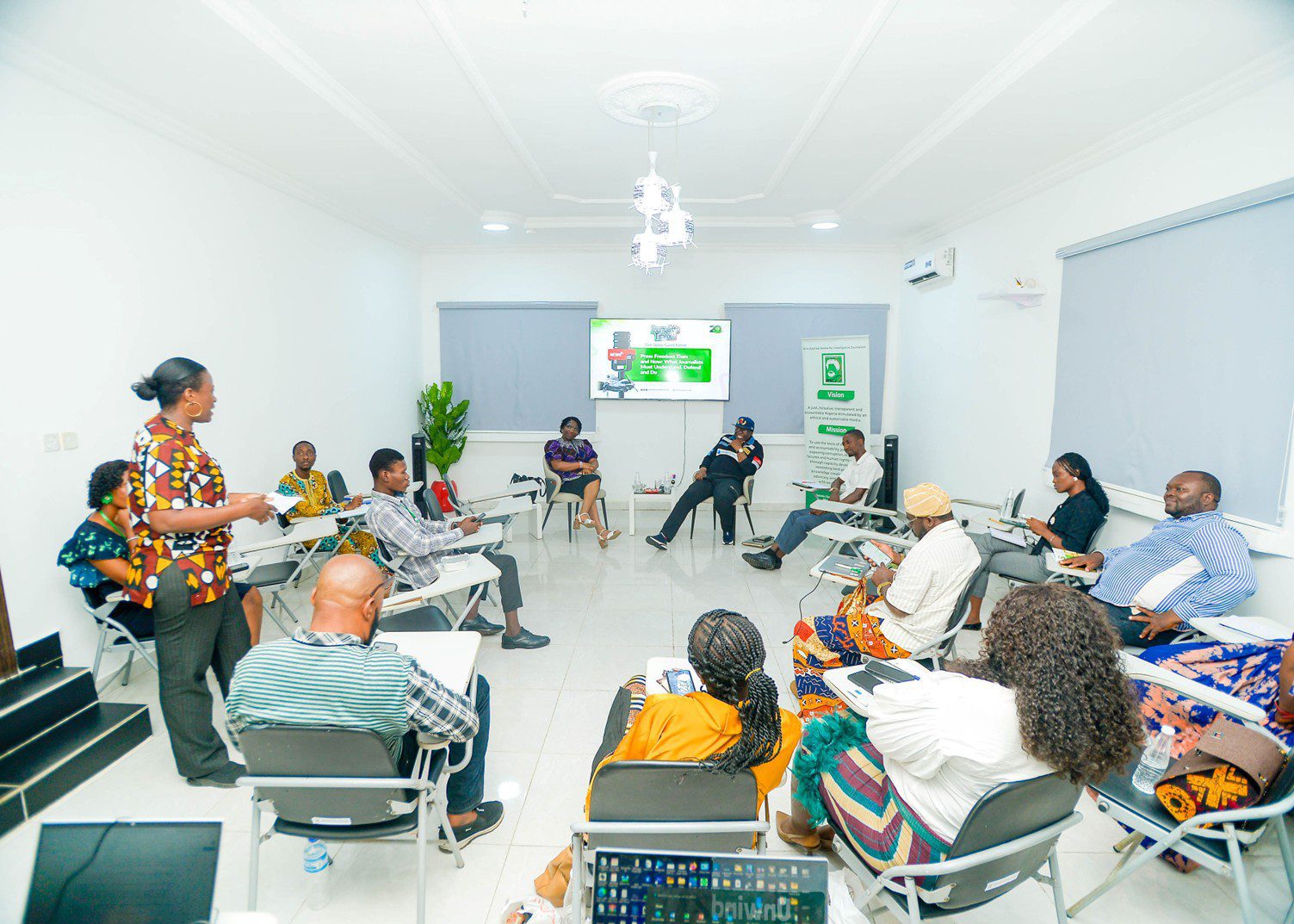
The session ended with a shared reflection on resilience, ethics and the responsibility of journalists to continue defending public-interest reporting despite mounting challenges.
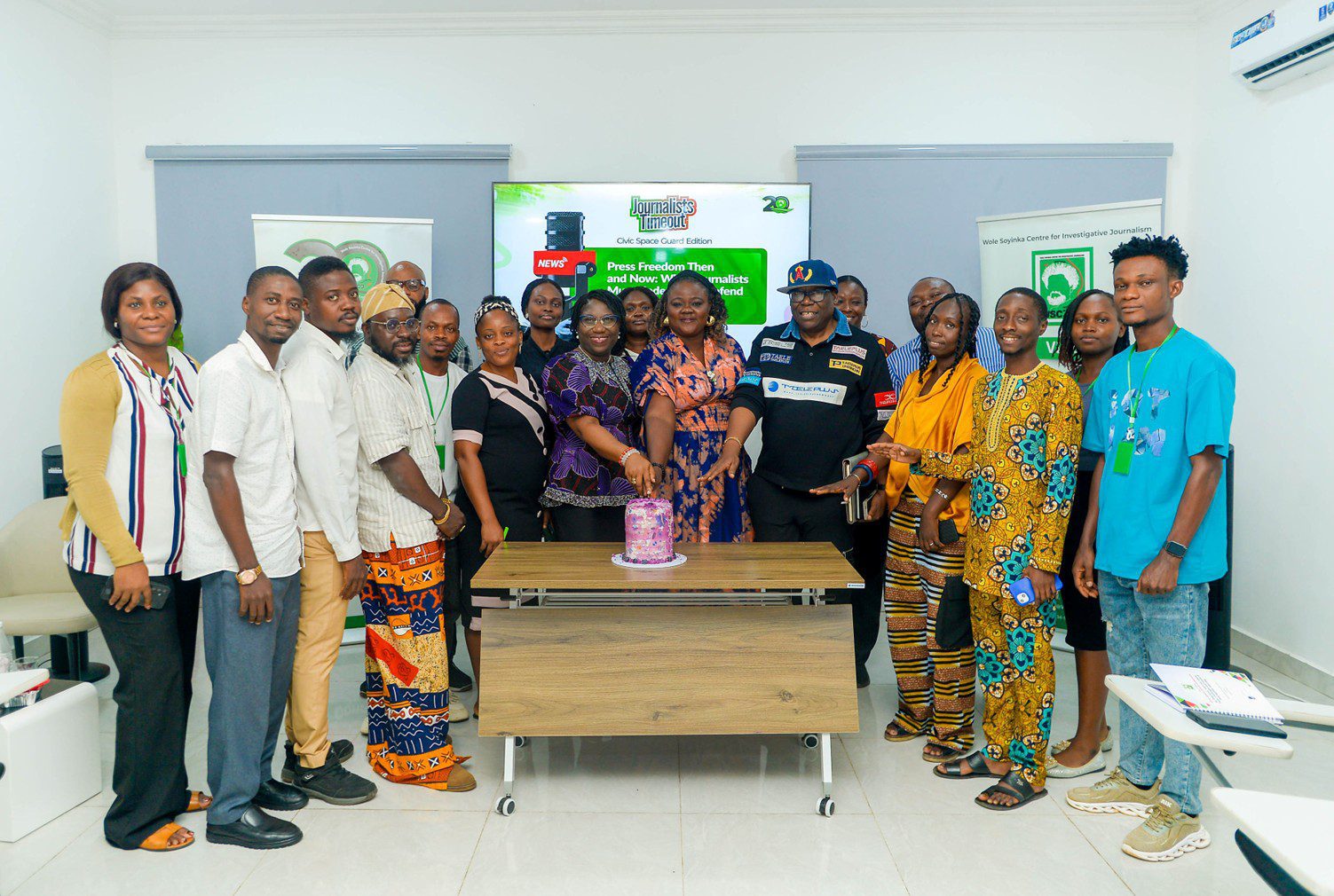
The engagement ended on a celebratory note as participants joined the WSCIJ team to mark the birthday of Motunrayo Alaka. The moment, marked by the cutting of a cake, provided an opportunity for further bonding and informal conversations after the intensive discussions on press freedom, civic space and the realities of journalism in Nigeria.
By hosting initiatives such as the Journalists’ Timeout, WSCIJ continues to strengthen conversations around media freedom, journalist safety and civic space protection in Nigeria.