Dear Partner,
Welcome to the August edition of our newsletter.
This month, I invite you to reflect on the findings of WSCIJ’s 2025 Journalism & Civic Space Status Report, Silenced Voices, Shrinking Space: Civic Freedoms Under Pressure. Presented at the recently concluded 18th Wole Soyinka Centre Media Lecture Series, the report goes beyond documenting civic space infractions to reveal the changing realities of civic freedoms in Nigeria and what they mean for our democracy.
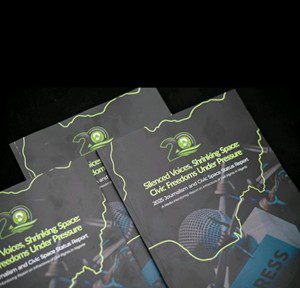
The report reminds us that the true measure of democracy extends beyond elections. It is reflected in whether citizens can speak freely, organise peaceful protests, access information, and hold public institutions accountable without fear. Across 2025, WSCIJ documented 245 verified civic space infractions referenced in 570 media reports published by 54 media organisations. While these figures are significant, the real story lies in what they reveal. Civic space restrictions are no longer limited to high-profile attacks on journalists or the violent dispersal of protests. Increasingly, they are taking quieter forms through arbitrary arrests, prolonged detentions, legal actions, overly restrictive regulatory measures, and other administrative processes that discourage citizens from exercising rights guaranteed by the Constitution.
The report brings these trends to life in incidents documented across the country. It highlights the arrests of online critics, the detention of Daniel Ojukwu, a journalist with the Foundation for Investigative Journalism (FIJ), the implications of the declaration of a state of emergency in Rivers State, and the repeated deployment of tear gas against peaceful demonstrators, including citizens demanding electoral reforms near the National Assembly in Abuja and several other infractions. While each incident reflects a different circumstance, together they reveal a civic environment where constitutional rights are increasingly constrained, and democratic participation comes at a growing cost.
Strengthening civic space requires institutions that uphold the rule of law, demonstrate accountability and respect human rights. It calls for laws that protect rather than inhibit legitimate expression, sustained and responsible reporting by the media, stronger collaboration across civil society, and continued support for reforms that reinforce democratic accountability. Protecting civic space is a shared responsibility, one that requires commitment from institutions, the media and citizens alike.
At WSCIJ, we believe evidence should inspire action. Through the Civic Space Guard project, the Journalism & Civic Space Status Report seeks not only to document trends but also to support informed dialogue, encourage institutional reform, and strengthen democratic accountability.
I encourage you to read the 2025 Journalism & Civic Status Report in full. Beyond the statistics are stories that challenge us to reflect on the kind of democracy we are building and the collective responsibility we share in protecting the civic space that makes it possible.
Motunrayo Alaka
Executive Director/CEO
Wole Soyinka Centre for Investigative Journalism
Opportunities for Journalists
Apply for Managing Editor Role at Nigerian NewsDirect – Deadline Rolling
Entries open for Thomson’s Young Journalist Award 2026 | Thomson Foundation – Deadline August 9, 2026
Apply for the Fund for Investigative Journalism Grant – Deadline September 14, 2026
Apply for Information Radcliffe Institute Fellowship at Harvard University – Deadline: September 10 and October 1, 2026
Apply Now for the 2026 Fetisov Journalism Awards (FJA) – Deadline, September 15, 2026
Apply for News Central as Producer, Presenter – Deadline Rolling
Apply for Managing Editor Africa at Mongabay – Deadline Rolling
Apply for Social Media Manger Role at Hope for HIV/AIDS International – Deadline, November 26, 2026
AIPS Sport Media Awards 2026 Now Open – Apply for $5,000 Prizes – Deadline, November 4, 2026
Apply Now for Save Children Global Media Awards – Deadline, August 31, 2026
Inside WSCIJ
WSCIJ Hosts 18th Annual Media Lecture: Stakeholders Call for Substantive Democracy Beyond the Ballot
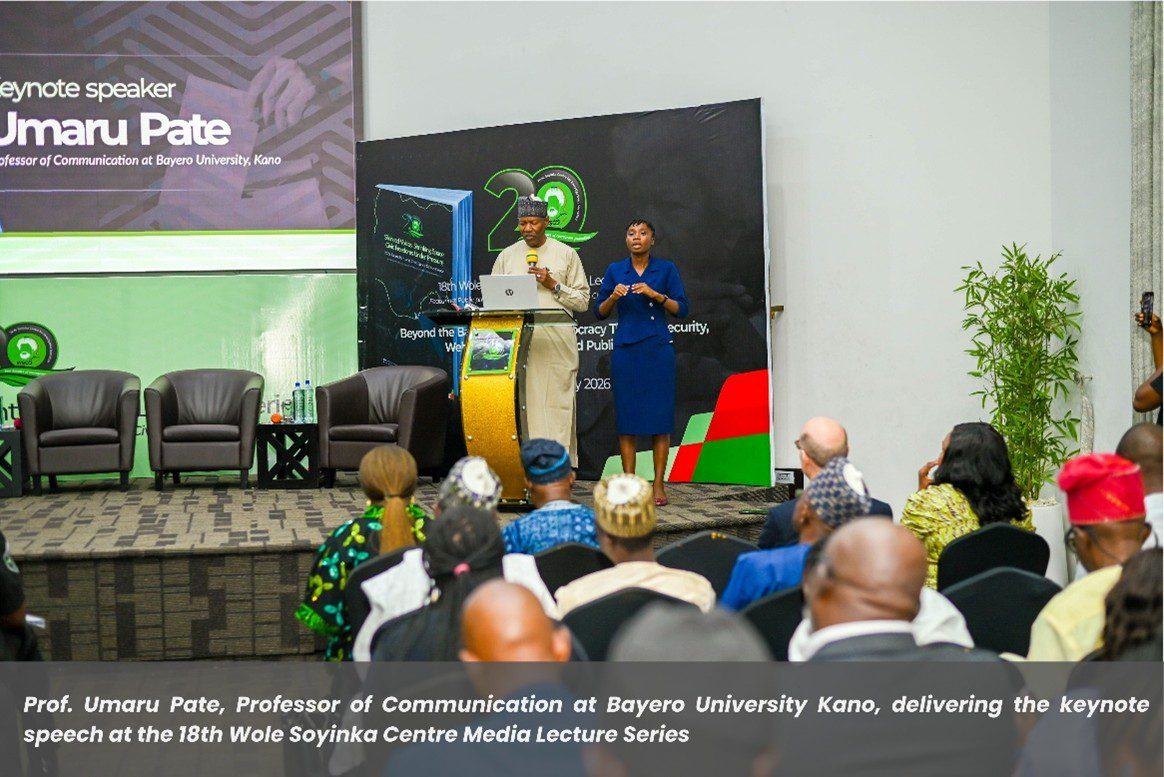
In the 92nd birthday honour of Professor Wole Soyinka, Nobel Laurete and Grand Patron of the Wole Soyinka Centre for Investigative Journalism, we held the 18th Wole Soyinka Centre Media Lecture Series in Lagos under the theme, Beyond the Ballot: Measuring Democracy Through Security, Welfare, Accountability and Public Trust.
In his keynote speech, Professor Umaru Pate, Professor of Communication, Bayero University, Kano, urged Nigeria to move beyond procedural elections and measure democracy by its substantive impact on citizens’ daily lives, warning that with 41.8% of the population in poverty and 18.3 million youth out of school, electoral processes alone cannot sustain public trust.
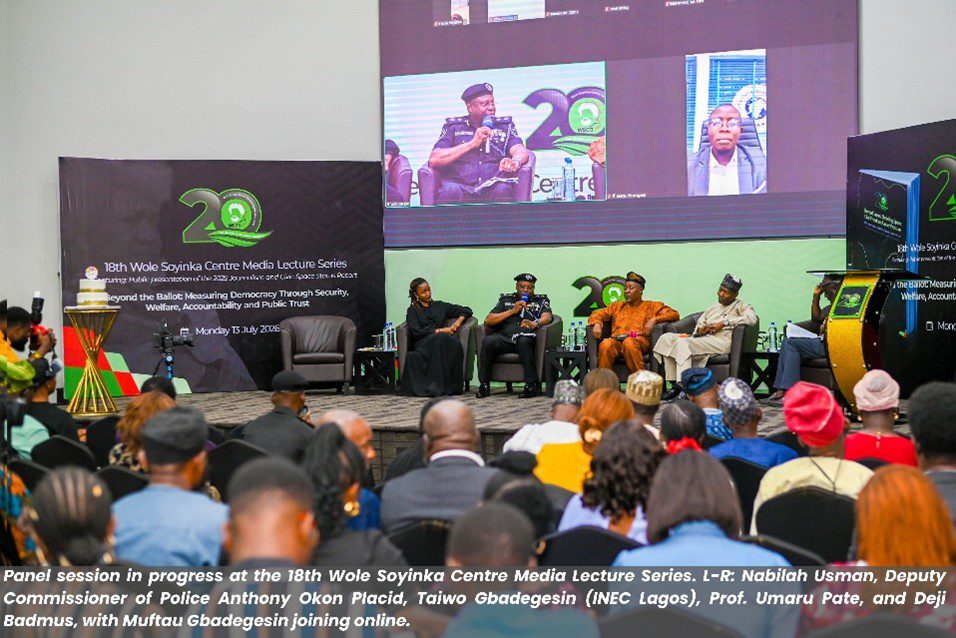
Unpacking these insights during the subsequent Democracy Delivery Conversation moderated by Deji Badmus, Founder and Editor-in-Chief of TV360 Nigeria, along with Pate, were panellists Taiwo Gbadegesin, Deputy Director and Head of the Department of Voter Education, Publicity, Gender and Civil Society, Independent National Electoral Commission (INEC), Lagos State; Nabilah Usman, General Manager, Radio Now 95.3FM; Muftau Gbadegesin, public affairs commentator and sustainable development practitioner, who joined virtually; and Anthony Placid, Deputy Commissioner of Police, Department of Finance and Administration.
WSCIJ Launches 2025 Journalism and Civic Space Status Report
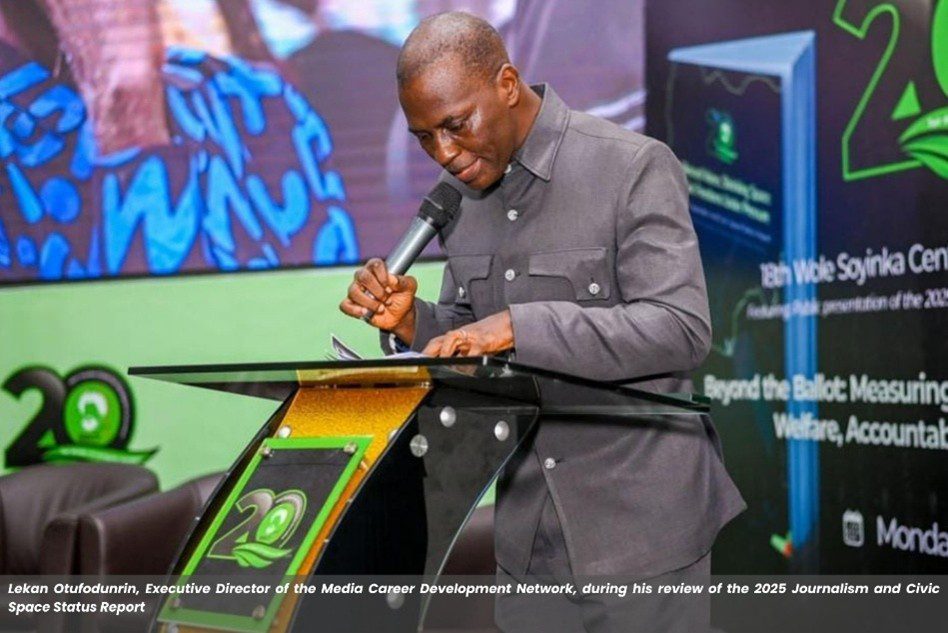
During the 18th Media Lecture Series on July 13, 2026, WSCIJ presented its 2025 Journalism and Civic Space Status Report, Silenced Voices, Shrinking Space: Civic Freedoms Under Pressure. Reviewed by Lekan Otufodunrin, Executive Director of the Media Career Development Network, the Report draws on media monitoring of 54 news outlets to document 245 civic space incidents referenced across 570 reports, with Abuja and Lagos identified as primary hotspots. He highlighted a concerning shift toward administrative and legal restrictions, which accounted for 145 cases (59.2%), extending suppression beyond newsrooms to everyday citizens, while state actors were implicated in 219 incidents (89.4%), led by the Nigeria Police Force in 118 cases.
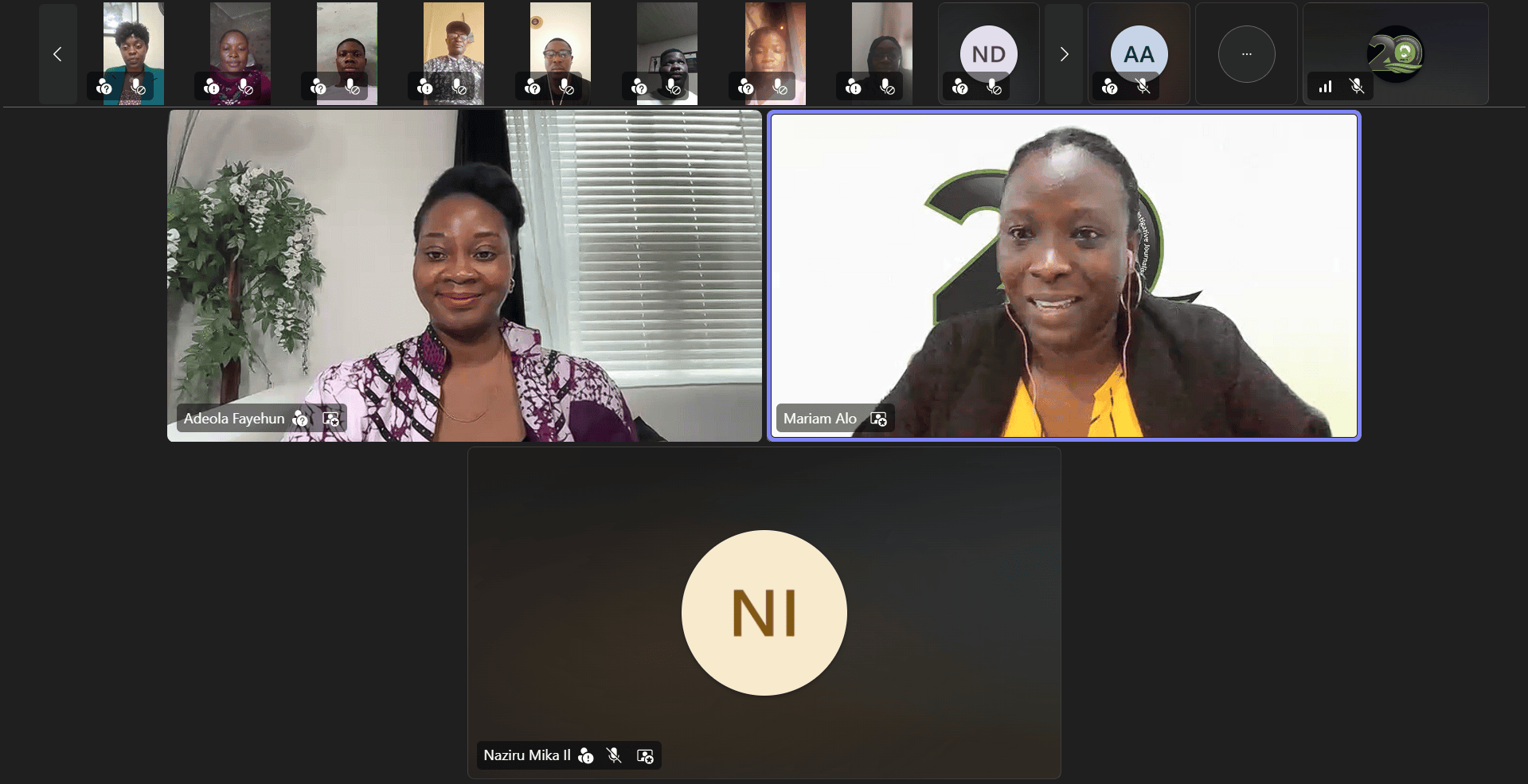
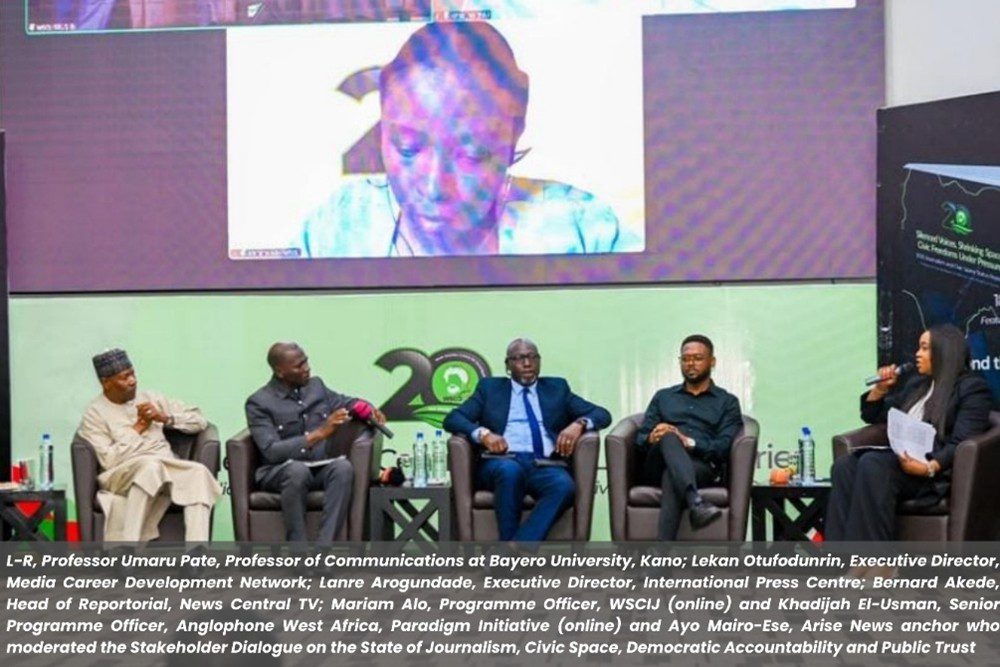
Following the presentation, a stakeholder dialogue moderated by Ayo Mairo-Ese, Arise News anchor featured panellists Professor Umaru Pate, Professor of Communications at Bayero University, Kano; Lekan Otufodunrin, Executive Director, Media Career Development Network; Lanre Arogundade, Executive Director, International Press Centre, Bernard Akede, Head of Reportorial, News Central TV, Mariam Alo, Programme Officer, WSCIJ, and Khadijah El-Usman, Senior Programme Officer, Anglophone West Africa, Paradigm. The discussion exposed how precarious working conditions, low pay, and state government payrolls leave journalists vulnerable, forcing compliance and self-censorship while media bodies remain fragmented. To safeguard democratic accountability, the panel urged immediate policy advocacy, stronger legal protection for journalists, institutional accountability for media employers, and a modernised university journalism curriculum aligned with emerging digital realities.
WSCIJ Honours Outgoing Dutch Consul General Michel Deelen for Commitment to Media Freedom
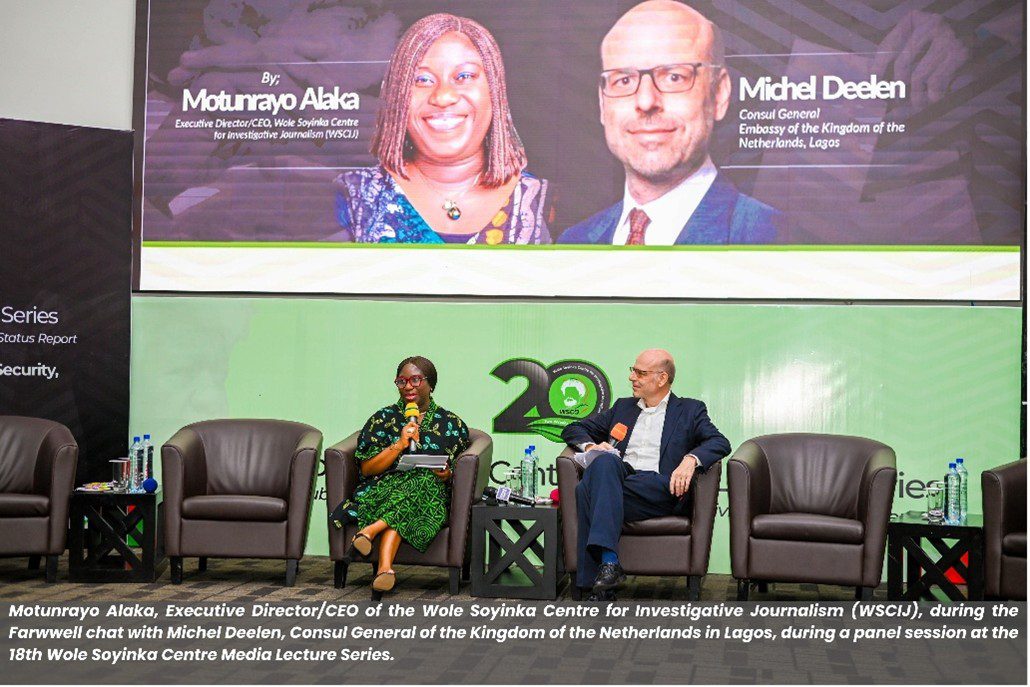
During a special farewell chat at the 18th Wole Soyinka Centre Media Lecture Series, Motunrayo Alaka, Executive Director/CEO engaged outgoing Consul General of the Kingdom of the Netherlands in Lagos, Michel Deelen, in a reflection on his tenure in Nigeria since the dawn of the Fourth Republic in 1999. Deelen praised Nigeria’s 27 years of uninterrupted democracy and expressed deep admiration for the energy, resilience, and entrepreneurial spirit of its citizens. Pointing to systemic solutions to national challenges, he highlighted quality education as the cornerstone for addressing poverty and insecurity, while urging media organisations to foster cross-border journalistic collaboration to strengthen accountability across the continent.
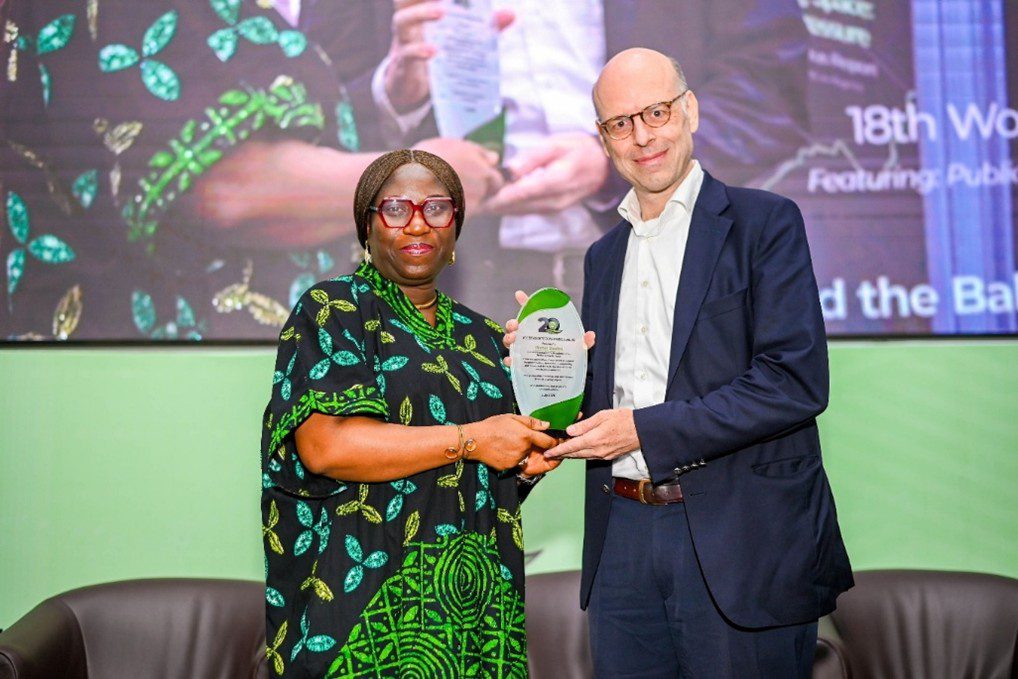
Following their conversation, Motunrayo presented Deelen with an award of appreciation to honour his dedicated service to Nigeria and his steadfast support for investigative journalism. The presentation underscored a vital, multi-year partnership between the Netherlands Embassy and WSCIJ under the Civic Space Guard initiative, a collaboration that produced key publications including Hushed Voices in an Election Year (2023) and Shrinking Freedoms (2024). As Deelen prepares for his next diplomatic posting to Malaysia, the Centre expressed deep gratitude for his lasting contributions to press freedom and media development.
WSCIJ Hosts Journalists’ Timeout, Urges Collective Action Against Surging Civic Space Violations
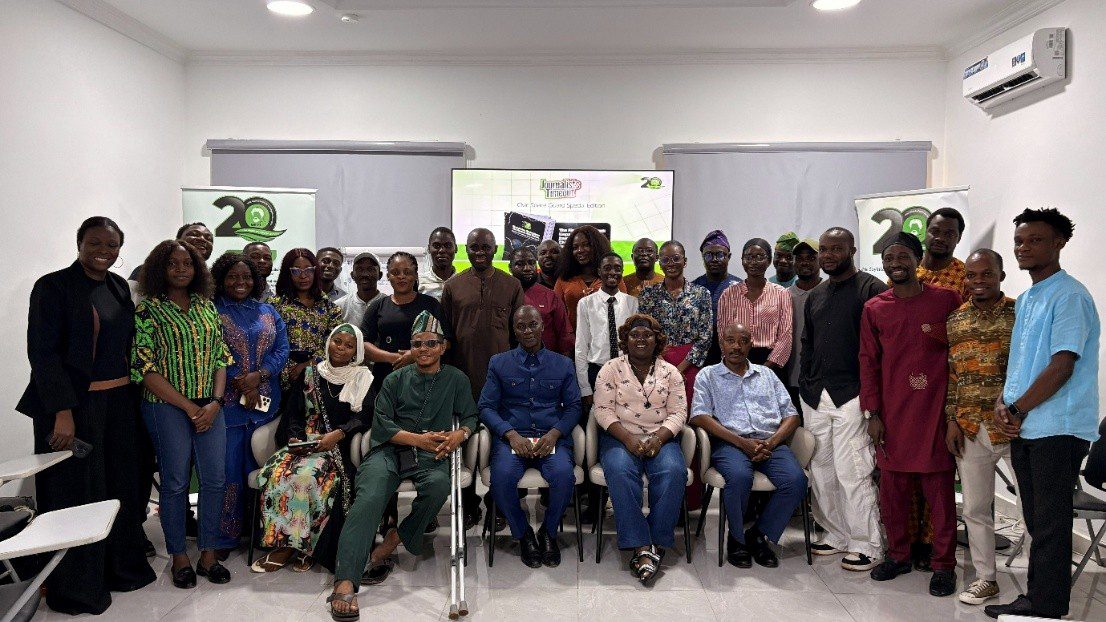
On Thursday, July 30, 2026, the Wole Soyinka Centre for Investigative Journalism (WSCIJ) convened its Civic Space Guard edition of the Journalists’ Timeout, rallying media professionals to confront the alarming surge in civic space infractions documented in our latest report, Silenced Voices, Shrinking Space: Civic Freedoms Under Pressure. Presenting data from 570 media reports across 54 platforms, WSCIJ revealed that civic space violations more than doubled to 245 incidents in 2025, up from 124 in 2023 and 103 in 2024, with freedom of expression emerging as the most frequently abused right. The conversation included insights from key experts like Lekan Otufodunrin, Executive Director Media Career Development Network and Ayode Longe, Deputy Executive Director, Media Rights Agenda among others, who urged stakeholders to turn these sobering metrics into collective, urgent action. The session concluded with a unified call for media houses, civil society, and lawmakers to institutionalise civic space reporting, review restrictive legislation like the Cybercrimes Act, and forge stronger solidarity to protect press freedom and safeguard Nigeria’s democracy.
WSCIJ Holds Staff Retreat to Align Strategy and Strengthen Impact for the Second Half of 2026
Following an impactful first half of 2026, marked by reaching 5,240 participants across all Nigerian states, and 15 other countries in Africa and Asia, as well as convening the 18th Annual Media Lecture and launching the 2025 Journalism and Civic Space Status Report, the Wole Soyinka Centre for Investigative Journalism (WSCIJ) held a one-day staff retreat on Wednesday, 29 July 2026. Highlighting institutional growth since 2008 when the Centre ran two flagship initiatives, Motunrayo Alaka, Executive Director/CEO emphasised the Centre’s strategic alignment of all its operations, as the team reviewed its achievements, including enhanced digital security, continued statutory audit compliance, among other strides. The retreat ended with the WSCIJ Team committing to ensuring the building of resilient systems, advancing investigative reporting, and holding power accountable to strengthen democracy in the second half of 2026.
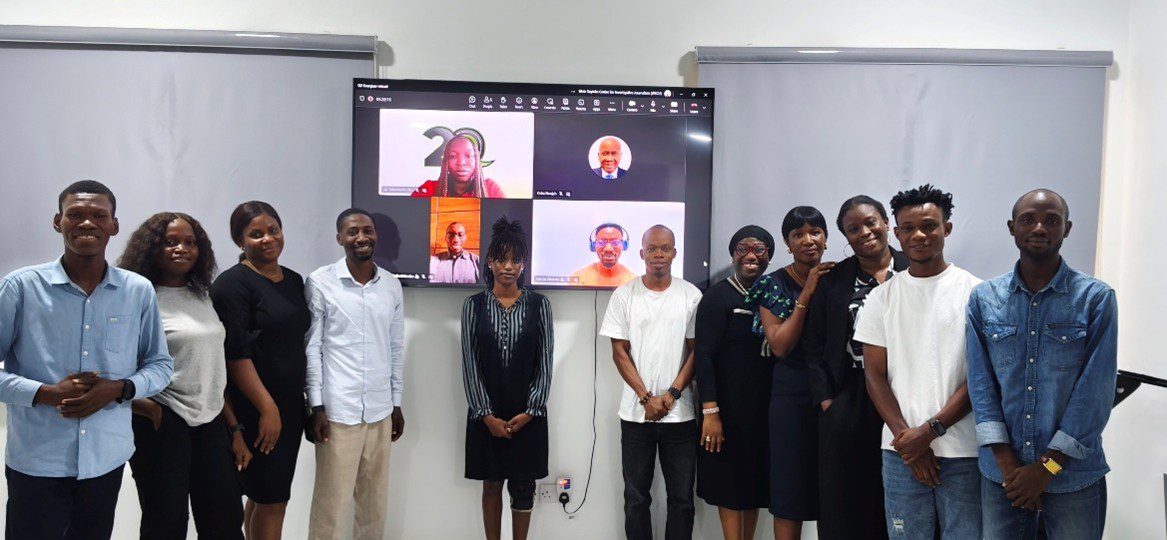
WSCIJ Participates as ANEEJ Trains CSOs and Media on Combating Illicit Financial Flows
Representing the Wole Soyinka Centre for Investigative Journalism (WSCIJ), Nurudeen Salako, Programme Officer led a group presentation on tracking money laundering and illicit financial flows (IFFs) in the education sector during a two-day capacity-building workshop organised by the Africa Network for Environment and Economic Justice (ANEEJ) in Lagos on Tuesday, 21 July and Wednesday, July 22, 2026. Nurudeen’s session emphasised practical approaches to spending oversight, reinforcing WSCIJ’s commitment to leveraging investigative journalism, public expenditure monitoring, and inter-agency collaboration to curb financial leakages and promote accountability in Nigeria.
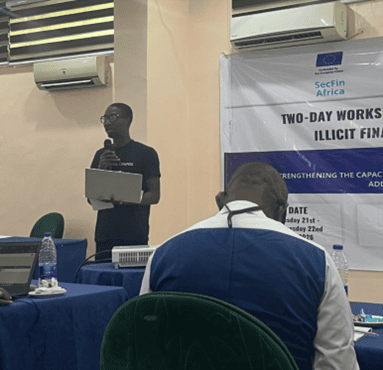
WSCIJ Celebrates Partners and Soyinka Laureates Honoured at BudgIT Active Citizens Awards
The Wole Soyinka Centre for Investigative Journalism (WSCIJ) joined civil society stakeholders at the Civic Centre in Lagos as BudgIT Foundation hosted the 2026 Active Citizens Awards. Representing WSCIJ Executive Director/CEO Motunrayo Alaka, Confidence Ojuh, Communications Officer attended the ceremony, which celebrates everyday individuals driving systemic change across Nigeria. The event featured major wins for the Centre’s extended network: Yinka Olaito, Executive Director of the Centre for Disability and Development Initiatives and a partner under WSCIJ’s Collaborative Media Engagement for Development, Inclusivity and Accountability (CMEDIA) project, won the Award for Inclusion & Diversity. Additionally, Fisayo Soyombo, founder of the Foundation for Investigative Journalism (FIJ) and WSCIJ Soyinka Laureate, three-time winner of the online category and one time and 2016 Investigative Journalist of the year, received the flagship Active Citizen of the Year award in recognition of his courageous undercover reporting. WSCIJ congratulates both honourees for their unwavering commitment to civic activism, social justice, and investigative accountability.
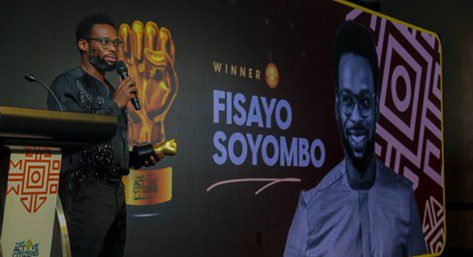

Motunrayo Alaka Named NAWOJ Lagos ‘Iconic Woman of the Month’ for June 2026
The Nigeria Association of Women Journalists (NAWOJ), Lagos State Chapter, named Motunrayo Alaka, Executive Director and CEO of the Wole Soyinka Centre for Investigative Journalism (WSCIJ), as its ‘Iconic Woman of the Month’ for June 2026. Announced by, Jumoke Falayi Johnson, NAWOJ Lagos Chairperson, and Anu M. Thomas, Secretary NAWOJ Lagos, the monthly spotlight initiative celebrates exceptional women driving positive change across Nigeria. Motunrayo was selected for her advocacy for press freedom and her commitment to advancing gender equity, particularly through WSCIJ’s flagship Report Women! Initiative and its Female Reporters Leadership Programme (FRLP), which have empowered female journalists to take on leadership roles across Africa. Joining a distinguished roster of past honourees including Prof. Abigail Ogwezzy-Ndisika and the late Kudirat Olayinka Abiola, this recognition adds to her growing list of accolades in media development, with the entire WSCIJ team proudly celebrating her continued impact.
Coming next at WSCIJ
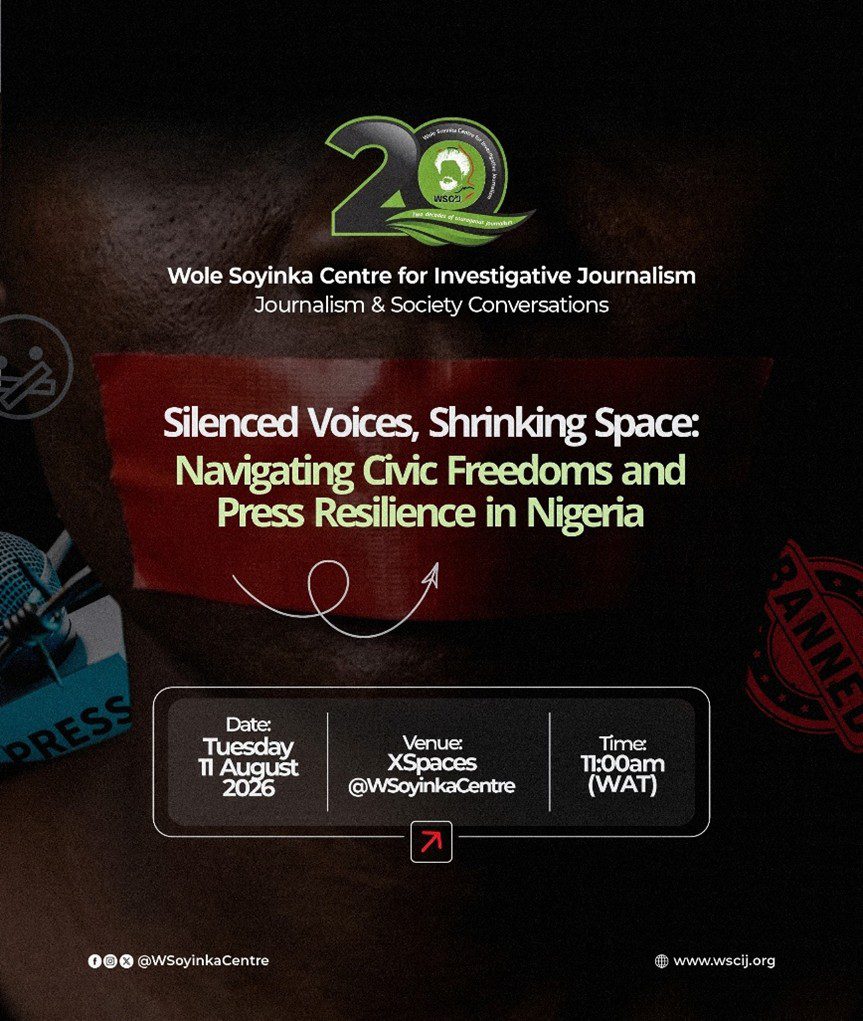
WSCIJ to Continue Conversations on Civic Space Infractions in August Journalism and Society Conversations
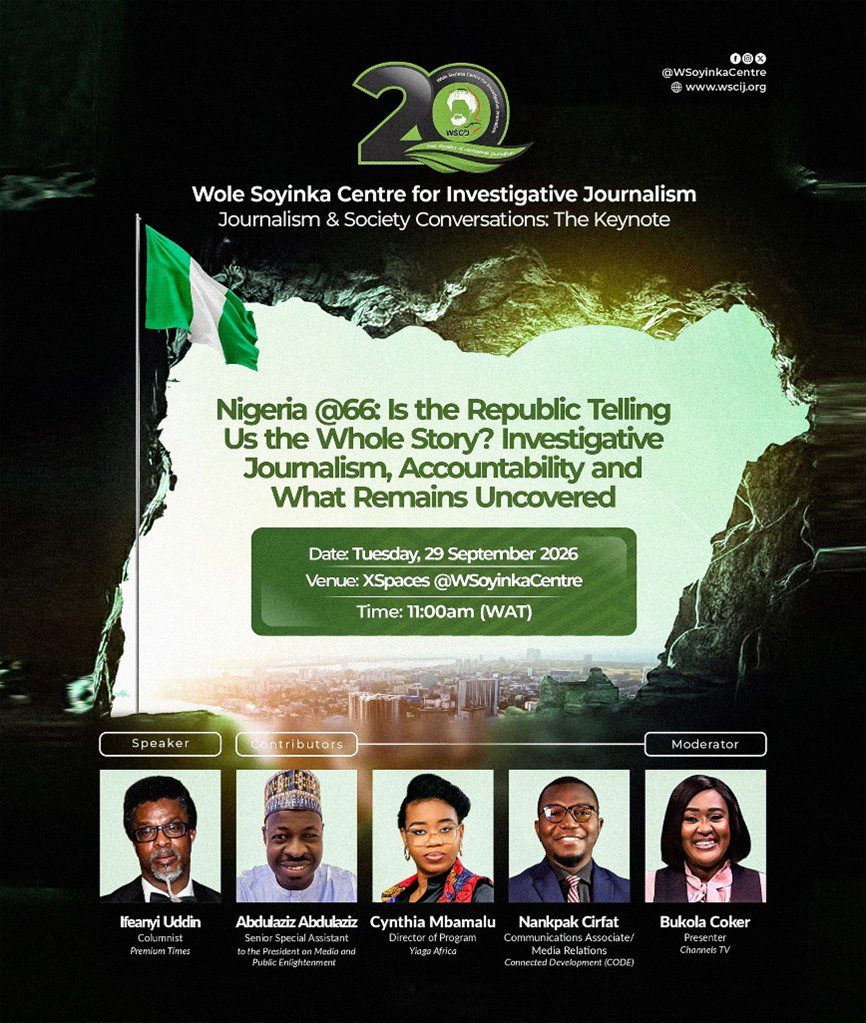
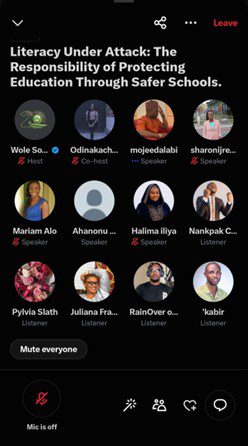
Building on the findings of its 2025 Status Report, Silenced Voices, Shrinking Space: Civic Freedoms Under Pressure, WSCIJ will host the August edition of its Journalism & Society Conversations to address mounting threats to constitutional freedoms guaranteed under Sections 22 and 39 of Nigeria’s 1999 Constitution. The virtual session which will take place on X via WSCIJ’s official X handle, will convene frontline journalists, civil society leaders, legal experts, affected citizens, and regulatory bodies to unpack the 245 documented civic infractions, examine the weaponisation of laws like the Cybercrimes Act, and address how newsroom precarity impacts media independence. By bridging data with multi-stakeholder dialogue, the event aims to chart actionable strategies to counter administrative harassment, defend digital rights, and build collective resilience for press freedom across Nigeria.
Journalism Today
When Civic Space Moves Online, So Does Suppression
Journalism has always evolved alongside society, and today that evolution is increasingly driven by technology. News gathering, storytelling, citizen engagement, and public accountability now take place as much on digital platforms as in traditional newsrooms. Social media, messaging applications, podcasts, blogs, and digital news platforms have expanded opportunities for citizens and journalists to exchange information, question authority, and participate in public discourse.
However, as civic engagement has increasingly shifted online, so too have attempts to restrict it.
The digital space has become Nigeria’s new public square. It is where citizens organise, journalists break stories, activists mobilise support, and public officials are held accountable in real time. Yet, it is also becoming a space where expression is increasingly monitored, regulated, and, in some cases, suppressed through legal, administrative, and technological means.
This trend is reflected in the 2025 Journalism and Civic Space Status Report, Silenced Voices, Shrinking Space: Civic Freedoms Under Pressure. While physical attacks on journalists and protesters remain a serious concern, the report identifies a growing reliance on non-violent forms of restriction, including arrests, summons, legal actions, regulatory sanctions, and other administrative measures. These approaches increasingly target expression without necessarily relying on physical force.
For journalists, the implications are significant. Stories published online can attract legal threats, takedown demands, investigations, or arrests. Citizens expressing opinions on governance, corruption, or public policy through digital platforms may also find themselves facing similar pressures. The result is an environment where self-censorship can become as powerful as direct censorship.
The Report also notes a significant shift in those affected by civic space restrictions. While journalists have traditionally been primary targets, ordinary citizens are increasingly experiencing restrictions because of their online and offline expression. This reflects the reality that digital platforms have blurred the line between professional journalism and citizen participation. Anyone with a smartphone can contribute to public discourse and, increasingly, may also face the risks associated with doing so.
As governments at national and sub-national levels continue to respond to the challenges of misinformation, digital security, and online harm, legitimate regulation must be carefully balanced with the protection of fundamental rights. Measures intended to improve online safety should not become tools for restricting lawful expression or limiting public scrutiny of those in power.
The future of journalism will be increasingly digital, and so will the struggle to protect press freedom and civic space. Safeguarding online expression is therefore not simply a technological issue; it is essential to preserve democratic accountability, public trust, and citizens’ right to participate freely in public life.
As journalism continues to evolve, protecting civic space must evolve with it. Ensuring that digital platforms remain spaces for free expression, independent journalism, and informed public debate is critical to the future of democracy in Nigeria.
Investigative Stories
When Online Speech Becomes a Criminal Offence
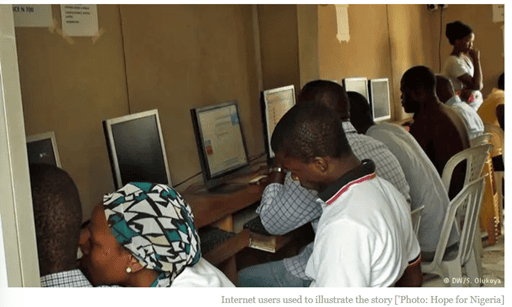
As more public conversations move online, the laws governing digital spaces increasingly shape how citizens exercise their right to freedom of expression. This Premium Times’ investigation, “Special Report: Nigerian Law Suppressing Citizens’ Freedom on the Internet,” examines how Nigeria’s Cybercrimes Act has evolved beyond addressing cybercrime to become a tool frequently invoked against journalists, bloggers, activists, and ordinary citizens for expressing opinions online.
Drawing on documented cases across the country, the investigation reveals how vaguely worded legal provisions have been used to prosecute online speech, creating a climate of fear and self-censorship within Nigeria’s digital public sphere. It raises important questions about the balance between regulating harmful online behaviour and protecting the constitutional rights of citizens to freely access, receive, and share information.
Exposing Exploitation on Online Platforms

As digital platforms become central to communication and social interaction, they also present new challenges for protecting privacy, dignity, and digital rights. This investigation, “NUDES FOR SALE: Inside Telegram Groups Where You Can Get ‘Any Girl’s Nudes If You Can Pay’,” published by Foundation for Investigative Journalism (FIJ) and supported by WSCIJ under the Collaborative Media Engagement for Development, Inclusivity and Accountability (CMEDIA) project, exposes how encrypted messaging platforms are exploited to facilitate the non-consensual distribution and commercialisation of intimate images.
Through undercover reporting, the investigation uncovered organised online communities where explicit images of women were bought, sold, and shared with no regard for consent, accountability, or victims’ rights. Beyond exposing individual perpetrators, the story highlights broader concerns about platform governance, digital safety, and the responsibility of technology companies to prevent abuse within their ecosystems. It demonstrates that protecting freedom of expression in the digital public sphere also requires safeguarding citizens from technology-enabled exploitation, ensuring that online spaces remain safe, rights-respecting environments where expression can flourish without enabling harm.
Voices from the Field
Edetaen Ojo
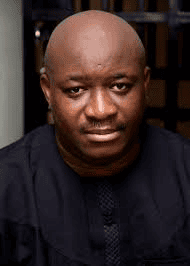
Edetaen Ojo is a Nigerian media freedom advocate and Executive Director of Media Rights Agenda (MRA), one of the country’s foremost organisations championing freedom of expression, access to information, and digital rights. For over three decades, he has been at the forefront of efforts to strengthen legal and policy frameworks that protect journalists, civic actors, and citizens’ rights to seek, receive, and impart information, both offline and online.
Through his leadership at MRA, Ojo has played a pivotal role in advancing advocacy around Nigeria’s Freedom of Information Act, internet governance, digital rights, and reforms to legislation affecting online expression, including the Cybercrime Act. His work has consistently highlighted how poorly designed or broadly interpreted regulations can be used to restrict civic participation, silence dissenting voices, and undermine media freedom in an increasingly digital society.
In recognition of his lifelong commitment to advancing press freedom and strengthening Nigeria’s media landscape, the Wole Soyinka Centre for Investigative Journalism (WSCIJ) honoured Ojo in 2017 with its Lifetime Award for Journalistic Excellence. The award celebrated his enduring contributions to defending media independence, expanding access to information, and building institutions that continue to promote transparency and civic participation.
Beyond policy advocacy, Ojo has become one of the country’s most influential voices on the intersection of technology, governance, and human rights. By engaging government institutions, civil society, regional bodies, and international stakeholders, he has consistently advocated for a digital public sphere where freedom of expression is protected, accountability is strengthened, and regulations serve the public interest rather than limit democratic participation. His work continues to shape conversations on safeguarding civic space as Nigeria navigates the evolving challenges of digital governance.
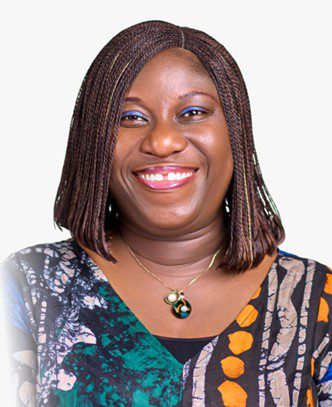
Kemi Busari
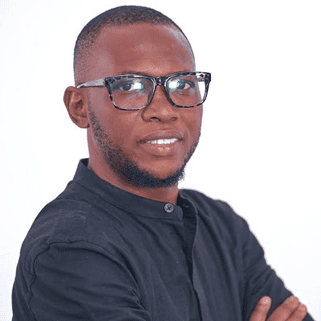
Kemi Busari is a Nigerian investigative journalist, editor, and digital verification expert whose work sits at the intersection of investigative journalism, technology, and information integrity. An Editor of DUBAWA, West Africa’s leading fact-checking and verification platform, and a recipient of the 18th Wole Soyinka Award for Investigative Reporting, Busari has built a career exposing misinformation, interrogating public institutions, and strengthening accountability through evidence-based journalism.
Busari has become a recognised voice on combating digital misinformation and strengthening information integrity across Africa. Through his work in factchecking, media innovation, and digital verification. His work underscores the critical role of investigative journalism in defending truth, promoting informed public discourse, and preserving civic space in the digital age.
Among his notable investigations is “Investigation: ‘Baba Aisha Herbal Medicine’: The Deadly Concoction Consumed by Many Nigerians,” which earned him the Online Category prize at the 18th Wole Soyinka Award for Investigative Reporting. The investigation uncovered the widespread sale and consumption of an unregulated herbal mixture linked to severe health risks, demonstrating how rigorous investigative reporting can protect the public by challenging harmful narratives and exposing regulatory failures.
AI in Investigative Journalism
Aleph
Aleph is an investigative Open Source Intelligence (OSINT) platform developed by the Organised Crime and Corruption Reporting Project (OCCRP). It helps journalists search millions of public records, company registries, court documents, sanctions lists, and leaked datasets to uncover connections between people, companies, and organisations.
How to Use Aleph
Visit https://aleph.occrp.org/Visit https://aleph.occrp.org/
Enter a person’s name, company, organisation, or keyword in the search bar.
Browse the available public records and documents.
Explore linked entities to discover relationships and patterns.
Cross-check and verify the information with trusted sources before publishing.
Why Your Support to WSCIJ Matters
In an increasingly volatile global environment, the intersection between geopolitics and everyday economic realities is becoming more pronounced. For countries like Nigeria, shifts in global energy dynamics have immediate and profound implications for citizens’ livelihoods. Yet, the systems that translate global developments into local outcomes remain opaque. The Wole Soyinka Centre for Investigative Journalism is uniquely positioned to strengthen accountability at this intersection. Through capacity building, investigative reporting support, and civic engagement, WSCIJ enables journalists to:
Interrogate complex economic systems
Track public and private sector accountability
Bridge global developments with local realities
Investment in WSCIJ is an investment in clarity, accountability, and the public’s right to know.
“Investigative reporting is the vital force for the restoration of human dignity.”
Wole Soyinka