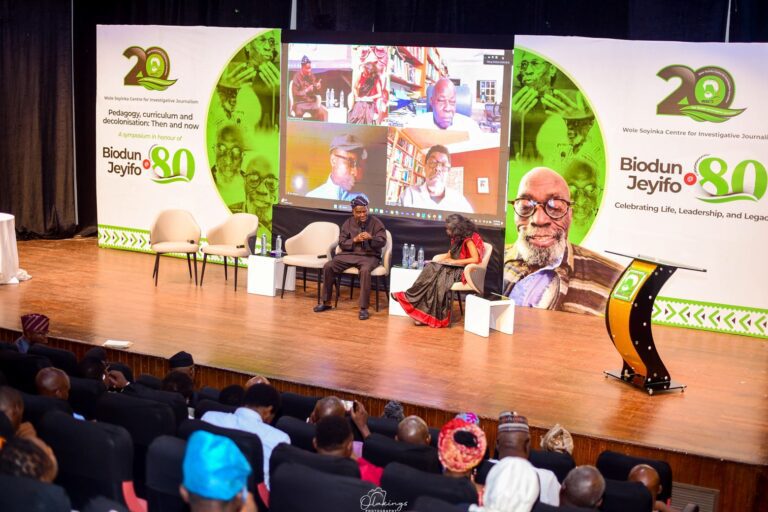
A symposium celebrating the 80th birthday of Biodun Jeyifo was held on Monday at the MUSON Centre, Onikan, Lagos. The event, organised by the Wole Soyinka Centre for Investigative Journalism and themed “Pedagogy, curriculum and decolonisation: Then and now,” brought together leading figures from academia, writing, and journalism, reflecting Professor Jeyifo’s lifelong work on power, culture, knowledge, and social transformation.
Delivering the keynote lecture was Priyamvada Gopal, Professor of Postcolonial Studies at the University of Cambridge. In an expansive and deeply reflective address, Gopal examined the historical promises and contemporary arrest of decolonisation, linking pedagogy, culture, resistance, and global political struggles. Drawing from anti-colonial thought, liberationist traditions, and present-day crises, she underscored decolonisation as an unfinished project demanding renewed intellectual and political commitment.
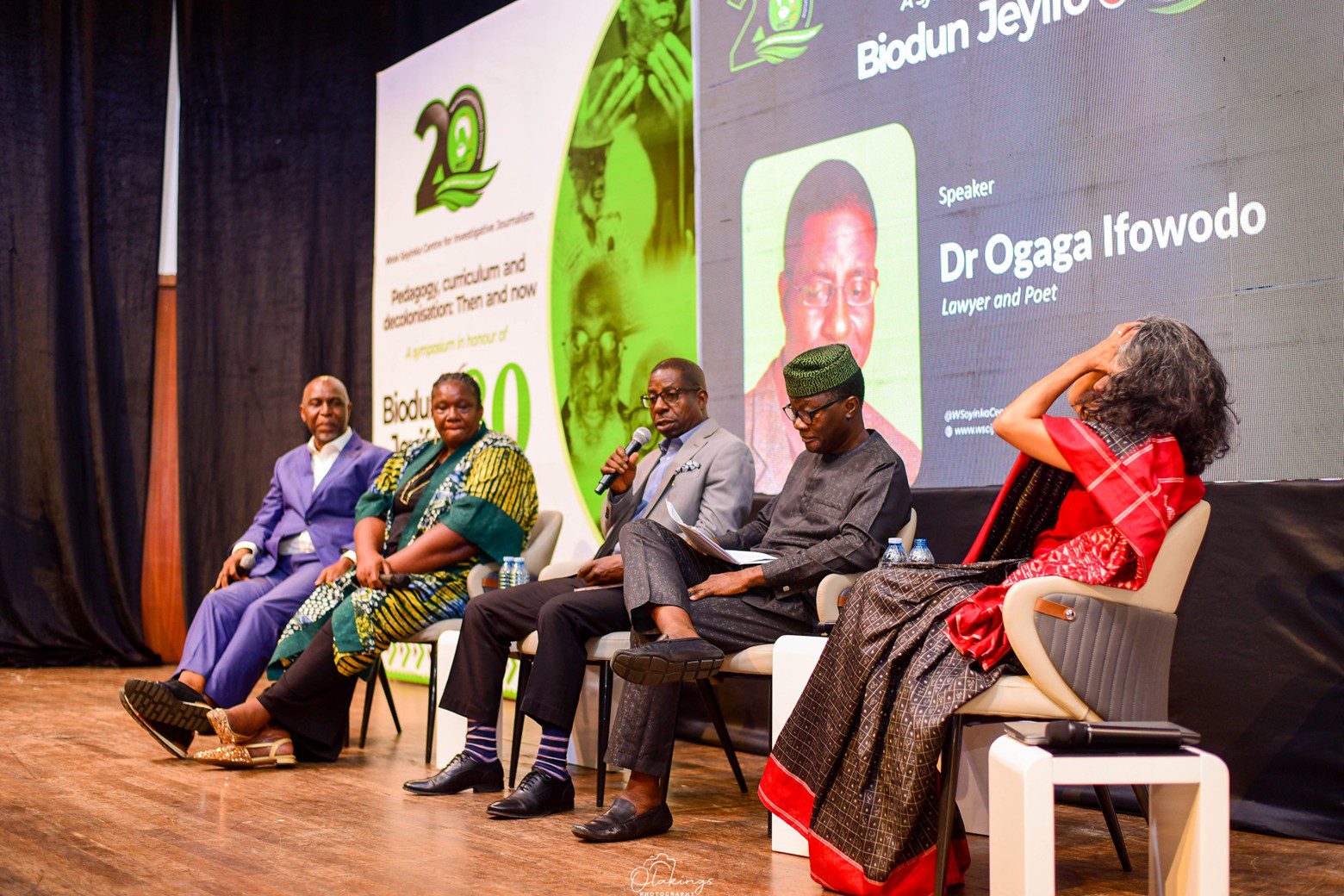
Cross section of panellist during the second panel session
The event was chaired by Yemi Ogunbiyi, a longtime friend and collaborator of the celebrant, who reflected on Professor Jeyifo’s enduring influence as a teacher, critic, and public intellectual whose work continues to challenge complacency and orthodoxies within and beyond the academy.
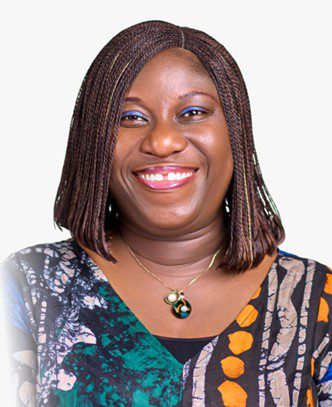
In her welcome address, Motunrayo Alaka, Executive Director/CEO of the Wole Soyinka Centre for Investigative Journalism, described the symposium as both a celebration and a call to reflection. She noted that Professor Jeyifo’s scholarship insists on asking difficult questions about who produces knowledge, who benefits from it, and who is excluded, questions that resonate strongly with the Centre’s mission of accountability, ethical engagement, and public responsibility.
The programme featured two panel sessions. The first panel offered scholarly responses to the keynote lecture, with contributions from Professor Jibrin Ibrahim (Chairperson Editorial, Board Premium Times), and Professor Akin Adesokan (Department of Comparative Literature Indiana University, Bloomington, USA), moderated by Professor Ropo Sekoni (Immediate past Chair WSCIJ and Professor of Literature in English).
The second panel, titled “Pedagogy for liberation: Then and now,” brought together former students and mentees of Professor Jeyifo. This includes Kunle Ajibade (Co-founder TheNEWS and PM NEWS), Dr Bisi Anyadike (Proprietress Sunshine Nursery & Primary School, Ile-Ife, Nigeria), and Dr Ogaga Ifowodo(Lawyer and Poet), in a reflective conversation moderated by Sam Omatseye(Chairperson Editorial Board, The Nation). The session explored Professor Jeyifo’s influence on teaching, intellectual courage, and the role of education in struggles for freedom across generations.
In his remarks as the celebrant, Professor Jeyifo reflected on curriculum, society, and revolution, situating his own generation’s struggles within broader histories of resistance and intellectual responsibility. The session concluded with audience responses and a vote of thanks by Tunde Babawale.
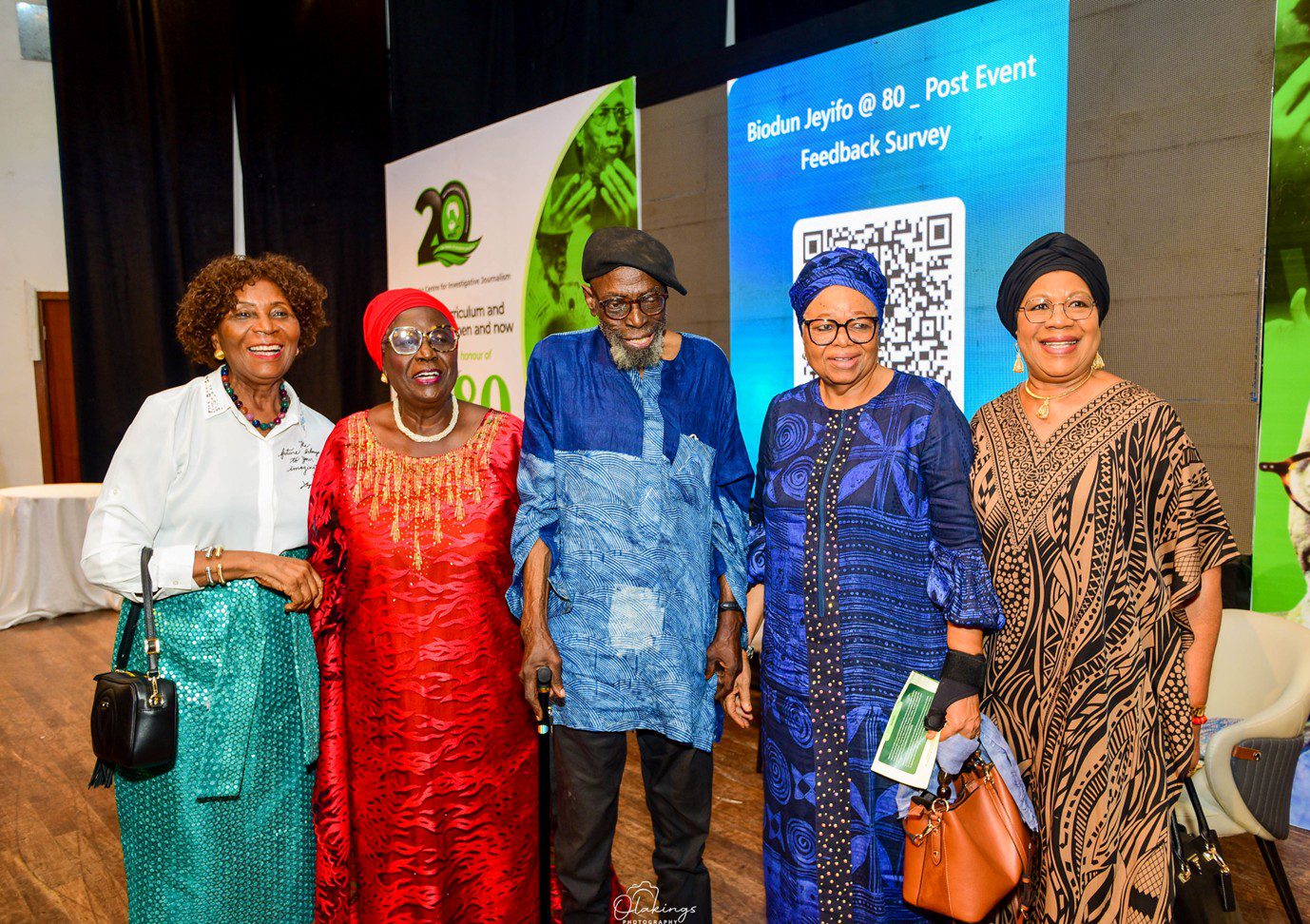
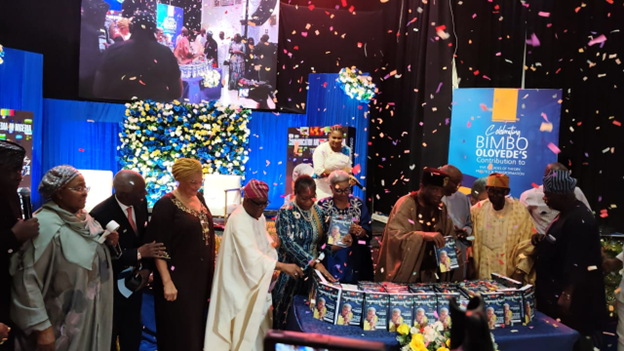
Professor Biodun Jeyifo flanked with friends and well-wishers
Professor Biodun Jeyifo, Professor Emeritus of English at Cornell University and of Comparative Literature and African and African American Studies at Harvard University, is widely regarded as one of Africa’s most influential literary critics. His work on African literature, drama, and critical theory; including foundational scholarship on Wole Soyinka, has shaped generations of students and thinkers across the world. The symposium underscores his enduring legacy as a scholar who insists that knowledge must serve society, confront power, and remain open to constant interrogation.