The tensions between Iran, Israel, and the United States are no longer distant conflicts; they are shaping economic realities far beyond their borders, including here in Nigeria. At the centre of it all is crude oil.
Escalating military exchanges, sanctions, and shifting alliances are driving volatility in global oil markets, increasing shipping costs, and disrupting trade routes. For Nigeria, an oil-dependent economy already grappling with weak resource governance, a failing refinery system, inflation, and extreme poverty, the impact is immediate. Fluctuating crude prices distort government revenues, while rising import costs continue to squeeze households and small businesses.
For everyday Nigerians, these global shifts translate into lived realities. Transport fares and food prices rise unpredictably with fuel price changes. All the instability is immediately passed on to consumers, many of whom are poor. The distance between global decisions and the local marketplace is closing rapidly, and people need clear, credible information to make sense of it.
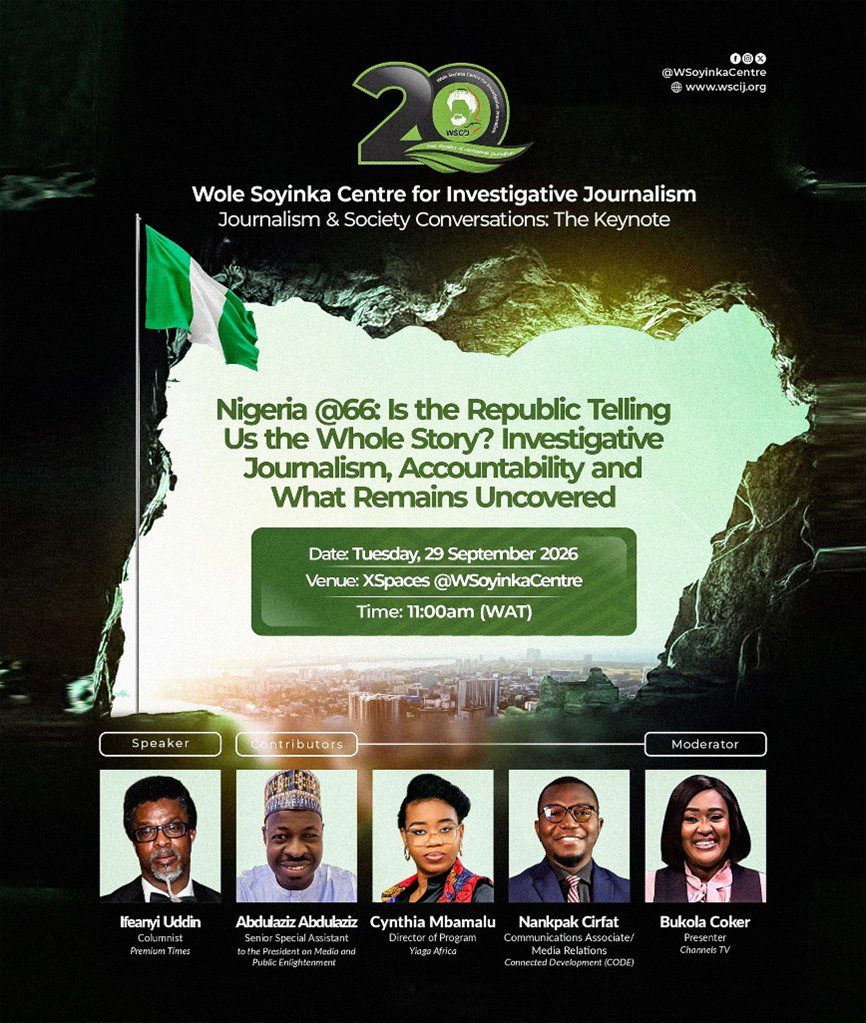
This is where journalism proves its value. Journalism does more than report events; it connects to the dots. It traces consequences, interrogates claims, and makes complex global dynamics intelligible at the local level. At the Wole Soyinka Centre for Investigative Journalism (WSCIJ), this intersection continues to shape our work. In February, through our Journalism and Society Conversations, we examined global diplomacy and its implications for peace and accountability, with a clear takeaway: decisions made at the highest levels are felt most deeply by ordinary citizens.
This moment demands more from journalism. It requires going beyond headlines, following the ripple effects of power and policy, and delivering reporting that informs, clarifies, and empowers the people. It calls for deeper collaboration across newsrooms, stronger verification, and an unwavering commitment to public-interest journalism.
When global tensions rise, democracy is tested. So too is journalism, and its responsibility to help societies understand, respond, and hold power to account.
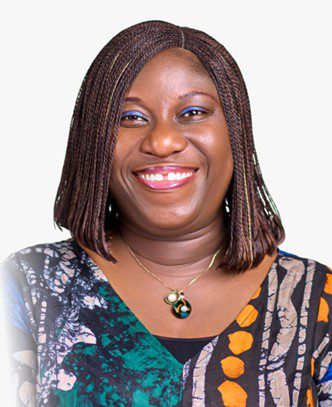
Motunrayo Alaka
Executive Director/CEO, WSCIJ
Opportunities for Journalists
- Apply for the Carter Center Mental Health and Climate Change Fellowship
- Reporting on Business and the Economy? Apply for the 2026 McGraw Fellowship
- Are you a journalist aged 22–35? Here’s your chance to report from the UN: Apply for the Reham Al-Farra Fellowship.
- Apply for the 2026 Taz Panter Foundation Journalism Training Programme
- Shape Stories That Matter: Apply for Communications Manager Role at Chance for Childhood
- Apply for the 2027 Elizabeth Neuffer Fellowship for Women Journalists
- Tell Stories That Matter: Apply for the Feminist Storytelling Grant
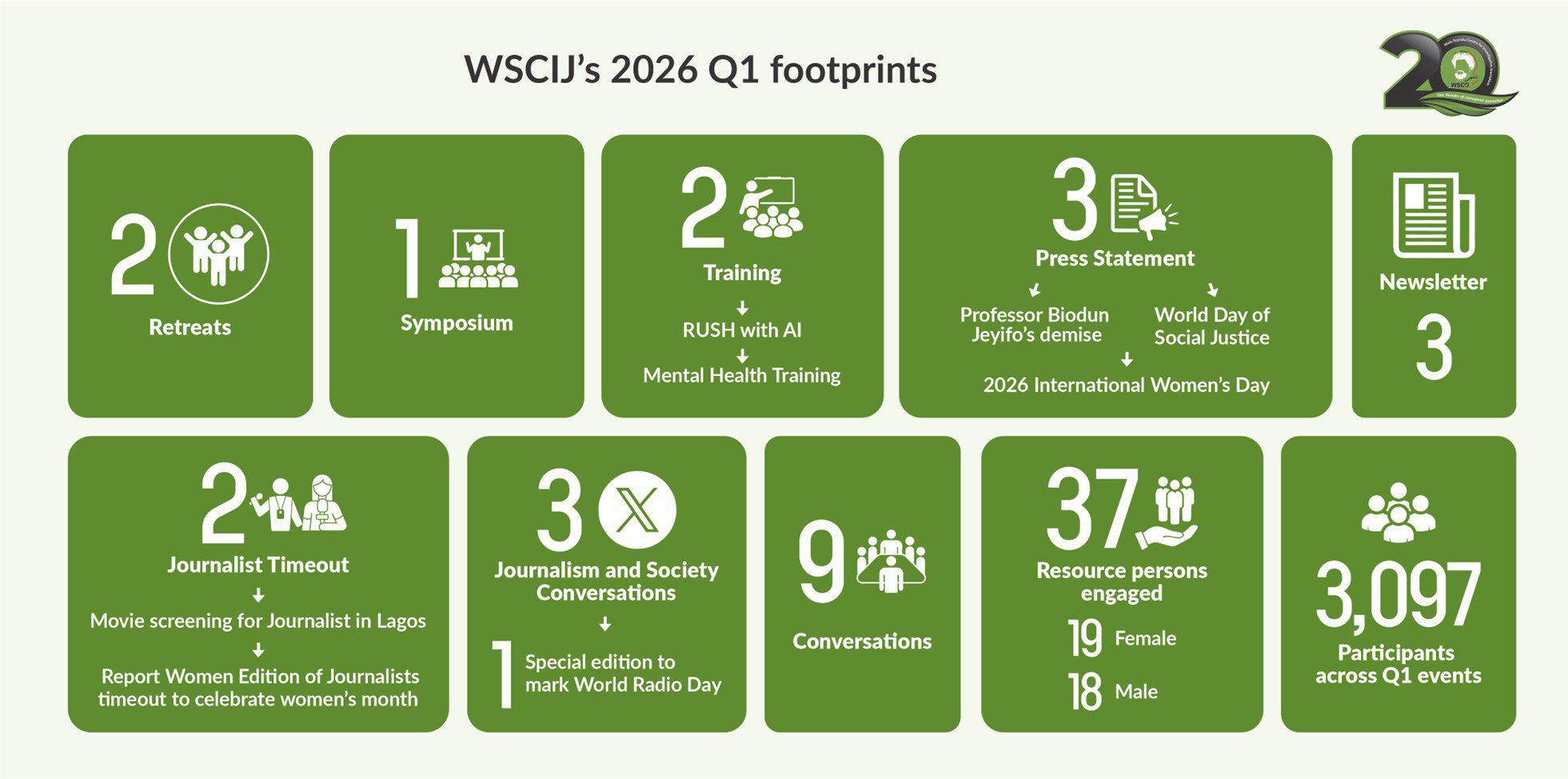
WSCIJ’s Q1 Impact Numbers
The first quarter of 2026 has been nothing short of impactful for us at WSCIJ. We began the year with a symposium in honour of the late Biodun Jeyifo on Monday, 5 January 2026 as he marked his 80th birthday.
In the months that followed, we convened conversations, strengthened collaborations, and advanced ongoing programmes focused on accountability journalism, in February, we unveiled the maiden edition of “The Keynote”; a special edition of Journalism and Society Conversations in celebration of world radio day in February, before wrapping the first quarter with an energiser retreat on Thursday 26 March 2026 for staff of WSCIJ.
Coming Next at WSCIJ
Journalism & Society Conversation
Join our Journalism & Society Conversation this April on WSCIJ’s X handle on Tuesday, 14 April, as we bring together every voice that matter to scrutinise journalism’s role in addressing the local implications of global tensions and local actions on Nigeria’s electricity sector. Building on WSCIJ’s ongoing work and Nigeria’s current electricity challenges, the conversation examines what journalism has uncovered and what still needs to be exposed about the country’s power sector to ensure steady power supply which Nigerians need and deserve.
Training and story support for local journalism
This April, WSCIJ advances its commitment to strengthening local accountability journalism through targeted training and story support for local journalists. As part of WSCIJ’s Collaborative Media Engagement for Development, Inclusivity and Accountability (CMEDIA) project, our focus is on equipping investigative desks with the tools and structures needed to sustain reporting beyond publication.
Training and story support for journalism students
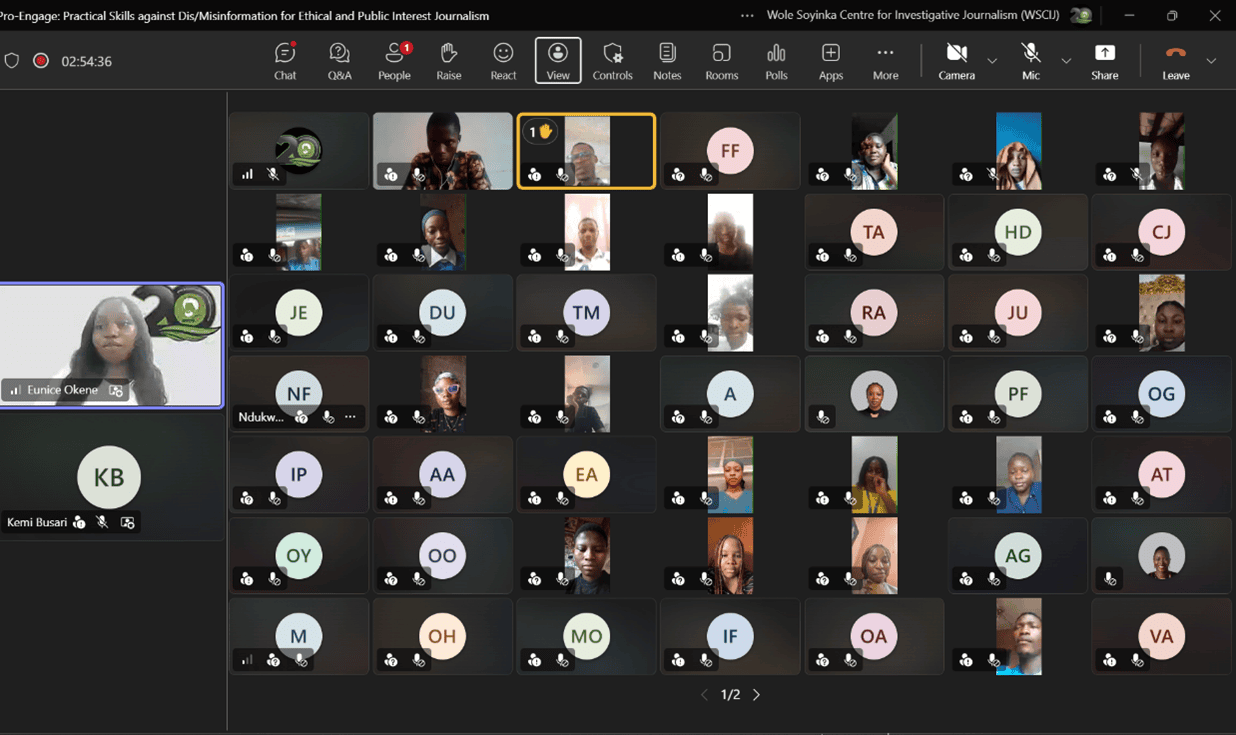
This April, WSCIJ extends its capacity-building efforts to the next generation of journalists through training and story support for journalism students in tertiary institutions. Designed to bridge the gap between classroom learning and real-world reporting, the initiative equips students with practical skills in accountability journalism, investigative thinking, and public interest storytelling.
Inside WSCIJ
WSCIJ Team Reconnects and Realigns at Energiser Retreat
In a bid to chart a clearer path for the months ahead and amplify our collective impact, we took a pause from routine work to convene an energiser retreat on Thursday, 26 March 2026, at our office. The one-day session brought together team members across programmes, communications, finance, and admin for a moment of reflection, learning, and realignment.
Through engaging discussions, interactive exercises, and honest conversations, the retreat provided an opportunity to review our first-quarter activities, refine strategic priorities, and reconnect around a shared vision. It reinforced our commitment to stronger collaboration, sharper focus, and a renewed drive to deliver impactful journalism programmes in 2026 and beyond.
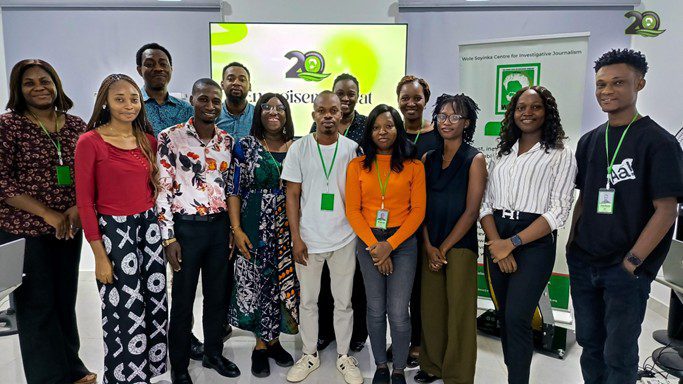
Women Journalists Pause to Take the Timeout They Deserve
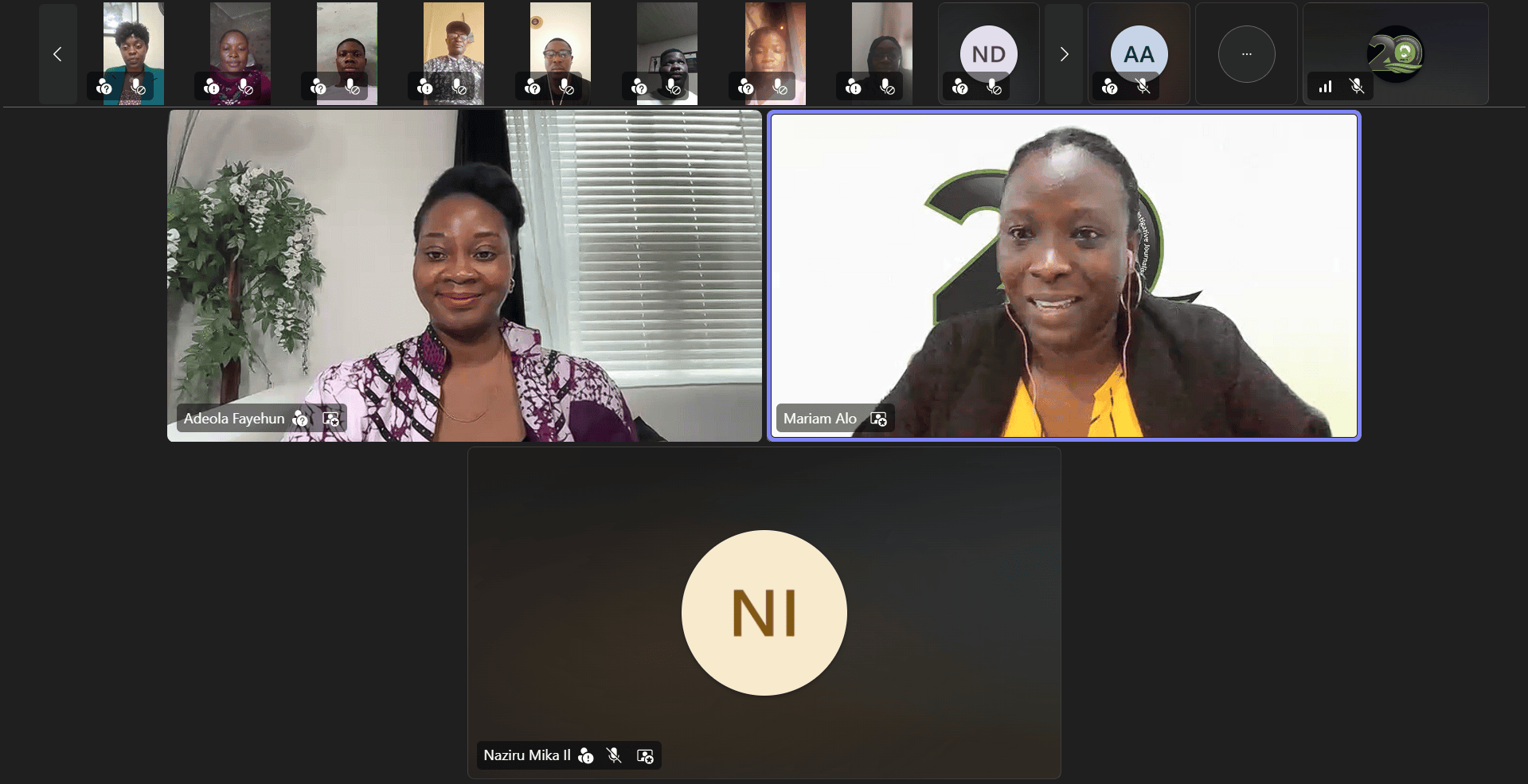
To amplify the importance of rest, reflection, and community for journalists, WSCIJ hosted a special Journalists’ Timeout under its ReportWomen! initiative on Tuesday, 24 March 2026, in Lagos. The gathering brought together female journalists, editors, and newsroom leaders for an engaging session marked by candid conversations, shared experiences, and an interactive “Ask Me Anything” with industry veterans, who shared their experiencs and emphasised adaptability, mentorship, ethical reporting, and continuous learning. The session also reinforced WSCIJ’s commitment to supporting women in navigating both the professional and personal demands of the media landscape.
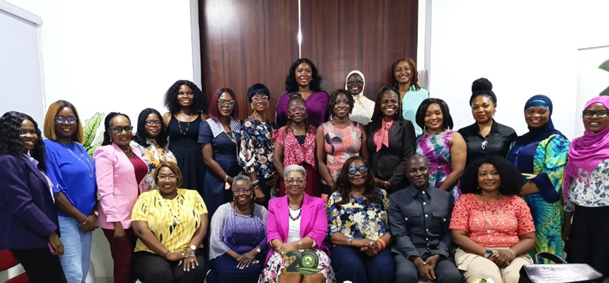
Albarka Radio’s Journey from Startup to Stability
As part of its ongoing commitment to strengthening local media, WSCIJ leadership, led by Founder Dapo Olorunyomi and Executive Director Motunrayo Alaka, visited Albarka Radio 89.9FM in Ilorin, Kwara State, on 24 March 2026. A partner under the CMEDIA project, the station is among 26 media organisations supported between 2022 and 2024 to enhance accountability reporting and operational capacity. The visit highlighted Albarka Radio’s transformation from a developing startup into a more stable, well-equipped newsroom, with improved infrastructure, including solar-powered energy and upgraded production facilities. The engagement reaffirmed the impact of sustained media support in strengthening local journalism, enabling community-focused reporting, and advancing accountability at the grassroots level.

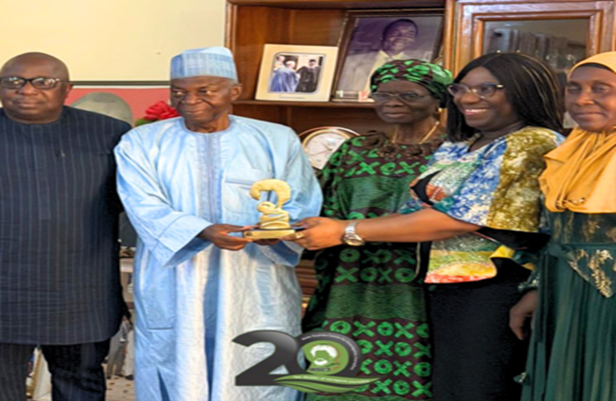
Honouring Integrity: WSCIJ Presents Justice Ayo Salami His Award
As part of its 20th anniversary activities, WSCIJ formally presented the Human Rights Defender Honorary Award to former President of the Court of Appeal, Justice Ayo Salami, at his residence in Ilorin, Kwara State, on 24 March 2026. Led by WSCIJ Founder Dapo Olorunyomi and Executive Director Motunrayo Alaka, the visit recognised Justice Salami’s unwavering commitment to justice, judicial independence, and public accountability, underscoring the vital link between the rule of law and investigative journalism. The honour reflects WSCIJ’s broader commitment to celebrating individuals whose work strengthens civic space and supports accountability.
Protecting journalists, sustaining journalism
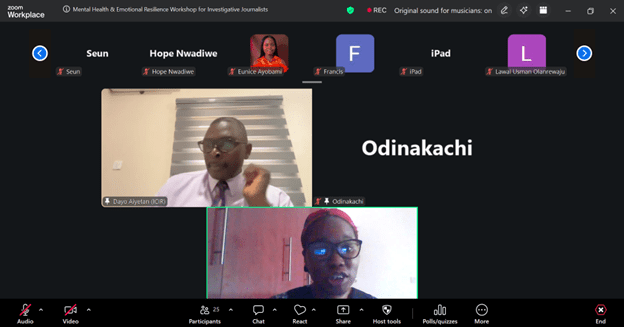
In a major step towards improving investigative journalists’ mental health, we convened an exclusive virtual mental health training under the Civic Space Guard project, bringing together experts including Dayo Aiyetan of the International Centre for Investigative Reporting and Dr. Esther Oyebola Adekoya to spotlight the often overlooked psychological toll of the profession; with global findings showing that up to 95% of journalists are exposed to traumatic events, the session equipped participants with practical tools to manage stress, recognise burnout, and build resilience, reinforcing that sustaining journalism begins with protecting journalists themselves.
Media Commitments Need Action
On Tuesday, 13 March 2026, following President Bola Tinubu’s commitment to removing barriers that threaten the sustainability of journalism, the Wole Soyinka Centre for Investigative Journalism urged President Bola Tinubu to back his statement with action.
The administration’s promise to review tariff exemptions on essential media inputs, alongside broader efforts to address media sustainability, signals a positive step toward recognising the foundations of press freedom which aligns with WSCIJ’s longstanding advocacy, advanced through its awards, lectures, Civic Space Guard programme, and collaborations with partners working to strengthen media freedom and sustainability.
When Citizens Are Displaced: A Call for Stronger Collaboration to Address Injustice
“Collaboration is essential if we are to truly understand and address housing injustice in our cities.” That was the highlight of the screening of the documentary Mother City, which held on Wednesday, 11 March 2026 by Heinrich Böll Foundation, Abuja in collaboration with the University of Lagos, Centre for Housing and Sustainable Development, Rethinking Cities and the African Cities Research Consortium.
Anchored by the documentary’s portrayal of housing struggles in Cape Town, the conversation drew parallels with Nigerian cities such as Lagos. Participants emphasised the role of sustained journalism in documenting these experiences and amplifying affected voices.
Inclusive Newsrooms for a Stronger Democracy
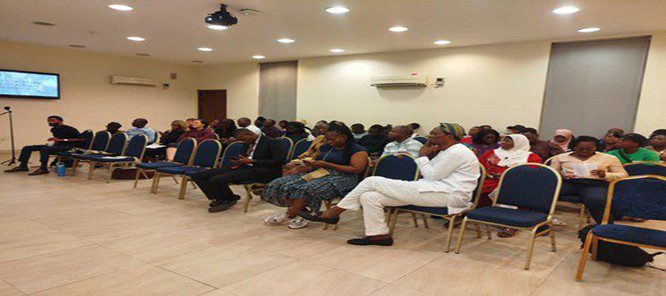
In today’s media landscape, the question is no longer just how journalism evolves, but whether it is truly inclusive. At WSCIJ’s Journalism & Society Conversations on Tuesday, 10 March 2026, this question took centre stage as participants examined the gap in women’s representation in newsroom leadership in Nigeria. The discussion highlighted how structural barriers limit women’s advancement and why deliberate action is needed to create more inclusive and supportive media environments.
Advancing Women’s Rights Beyond Policies
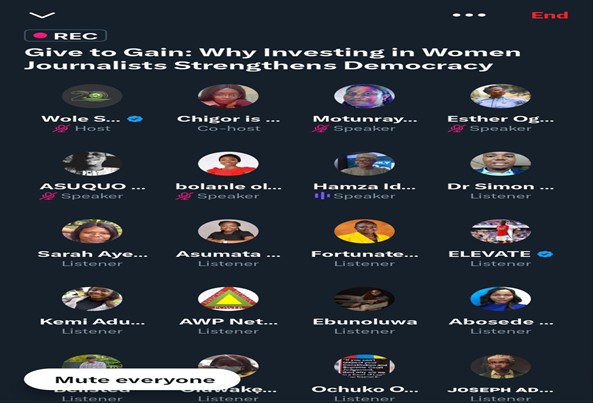
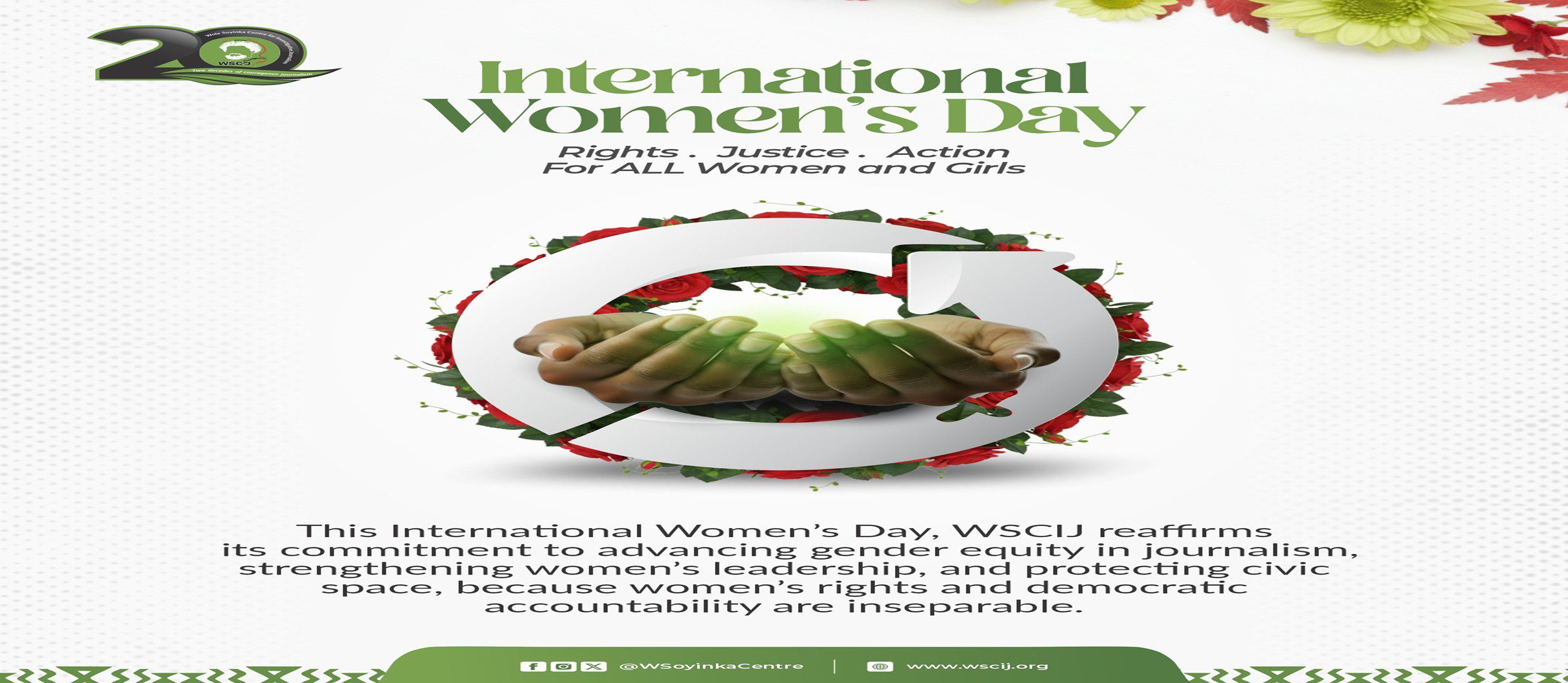
This year’s International Women’s Day 2026 was a reminder that while commitments to gender equality continue to be made, many women and girls in Nigeria still experience a gap between what is promised and what is lived. WSCIJ used the moment to draw attention to the everyday realities women face, from limited access to opportunities and leadership to ongoing exposure to violence and exclusion from spaces where decisions are made.
Through its ongoing work, the WSCIJ continues to support efforts that highlight these challenges, elevate women’s voices, and push for a society where inclusion is made possible in practice.
Journalism Today
Global press freedom is shrinking and self-censorship is rising
As global tensions intensify, the battle for information is no longer just about access; it is about control. In Iran, authorities reportedly shut down internet access as military strikes began, sharply limiting independent reporting while expanding state propaganda. This marks a sharp departure from earlier moments like the Arab Spring, when open internet access was widely seen as a catalyst for democratic mobilisation It also signals a shift: governments are not only restricting journalists, but they are also actively shaping entire information environments. For investigative and accountability journalism, the implications are stark. Reporting gaps will widen during crises, access to sources will shrink, and self-censorship may rise as risks increase. At home, Nigeria reflects similar pressures. As we continue our civic space documentation in preparation for the publication of our 2025 Civic Space Guard Report, we are observing persistent violations against journalists and civic actors, particularly in relation to governance and accountability reporting. In response to this, the WSCIJ keeps providing training and initiatives to ensure that even in constrained environments, critical public-interest reporting continues.
Voices from the field
Nigeria’s electricity sector continues to reflect persistent gaps between infrastructure, policy, and actual service delivery. Across the country, journalists document these realities by highlighting frequent grid collapses, power outages, and the everyday impact of unreliable electricity on citizens and businesses.
This focus aligns with WSCIJ’s photobook on the power sector, Living in Darkness, which examines the state of electricity infrastructure through visual storytelling and on-the-ground documentation. This work was driven by a group of journalists whose reporting and visual documentation helped bring these realities to light and that is why they are April’s voices from the field:
- Gbile Oshadipe served as the photojournalism expert for this project. In 2021, he was a participant/instructor of the first ever United Nations Children’s Fund (UNICEF) training for photojournalists in Nigeria.
- Olaijide Adelana is a development-focused journalist whose experience in investigative reporting contributed to uncovering systemic gaps in infrastructure use.
- Kunle Ajayi is an award-winning photo editor whose visual storytelling captures the state of electricity infrastructure and its impact on public service delivery.
- Akindotun Akintomide is an editor and writer whose work supports the documentation of policy and infrastructure challenges within the power sector.
- Justina Asishana is a ReportWomen! Fellow whose reporting connects national issues to local realities, helping situate electricity challenges within community contexts.
- Olanrewaju Elegbede is a freelance journalist and photographer whose imagery captures everyday interactions with underutilised infrastructure.
- Saheed Olugbon is an award-winning photojournalist whose work highlights the human and structural dimensions of electricity access and service gaps.
Together, their contributions provide a deeper look into Nigeria’s power sector, reinforcing the role of journalism in making visible what often goes unseen and in pushing for greater accountability.
AI in Investigative Journalism
Still scrambling to keep up with notes during meetings?
Otter.ai is designed to take that pressure off. Developed by independent AI company Otter.ai, Inc., this AI-powered meeting assistant records, transcribes, and summarises conversations in real time, so you can stay present and focused.

Accountability journalism requires sustained investment.
Why your support to WSCIJ Matters
In an increasingly volatile global environment, the intersection between geopolitics and everyday economic realities is becoming more pronounced. For countries like Nigeria, shifts in global energy dynamics have immediate and profound implications for citizens’ livelihoods. Yet, the systems that translate global developments into local outcomes remain opaque.
The Wole Soyinka Centre for Investigative Journalism is uniquely positioned to strengthen accountability at this intersection. Through capacity building, investigative reporting support, and civic engagement, WSCIJ enables journalists to:
Interrogate complex economic systems
Track public and private sector accountability
Bridge global developments with local realities
Investment in WSCIJ is an investment in clarity, accountability, and the public’s right to know.
As pressures on the media continue to evolve globally, sustaining investigative journalism is becoming both more difficult and more necessary. From shrinking newsroom budgets to increasing political and economic interference, the conditions required for in-depth, accountability reporting are steadily eroding.
Collaborative projects such as the work of the International Consortium of Investigative Journalists, which led the Pandora Papers investigation, demonstrate how cross-border partnerships can overcome resource and access limitations while producing impactful, large-scale investigations.
In many parts of Africa, however, investigative journalism continues to face structural challenges. These constraints often push newsrooms toward more immediate, less resource-intensive reporting with critical accountability gaps. Collaborative and structured approaches have become essential.
Through its CMEDIA project, the Wole Soyinka Centre for Investigative Journalism (WSCIJ) is strengthening investigative reporting by promoting cross-newsroom collaboration, capacity building, and targeted story support. This initiative not only reduces the burden on individual reporters but also improves the depth and reach of investigations.
Central to sustaining this momentum is the Report Until Something Happen, RUSH Model which underscores the importance of RUSH model for journalists and editors within the newsrooms. A call for persistence in following stories through impact. RUSH model reinforces the need for continuity, encouraging journalists to stay with stories beyond publication, track outcomes, and ensure that reporting drives tangible change.