As Nigeria joins the rest of the world to mark World Press Freedom Day on 3 May 2026, this moment offers more than symbolic reflection. It is a critical checkpoint on the state of press freedom and the conditions that sustain journalism in public interest.
Earlier, we issued a press statement calling for the establishment of a National Framework for Media Sustainability, Independence, and Protection. That call remains urgent as media systems continue to face structural economic pressures, safety risks, and shrinking operational space.
This edition of Investigative Insight builds on that intervention, situating it within the wider realities shaping journalism today. The 2026 global theme, ‘Shaping a Future at Peace: Journalism in the Face of the Environmental Crisis and Digital Transformation’, reflects a rapidly shifting media environment defined by technological disruption, environmental pressures, economic instability, and evolving civic space constraints.
In Nigeria, these challenges are deeply interconnected. Media organisations continue to grapple with financial fragility and limited capacity for innovation, while journalists face persistent welfare concerns, safety threats and constraints that weaken accountability reporting. Recent attacks on journalists, alongside findings from our 2024 Journalism and Civic Space Status Report – Shrinking Freedoms, further shows these risks.
Against this backdrop, press freedom cannot be sustained by rhetoric alone. It requires coordinated action to build a viable and independent media ecosystem that supports ethical, resilient, and impactful journalism.
As you engage with this edition, we invite you to reflect on what it will take, deliberately and collectively, to secure the future of journalism in the public interest.
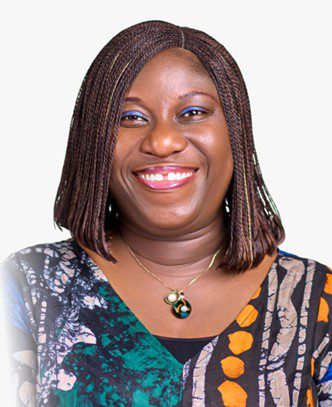
Motunrayo Alaka
Executive Director/CEO, WSCIJ
Opportunities for Journalists
- Apply for WSCIJ’s CMEDIA Investigative Journalism Training – Deadline: 12 May 2026
- Fellowship programme for people of African descent – Deadline: 15 May 2026
- Are You a Student Journalist? Apply for the Usmanu Danfodiyo University, Sokoto Next-Gen Fact-Check & OSINT Fellowship – Deadline: 15 May 2026
- Join the Team at the Committee to Protect Journalists as a Communications Associate – Deadline 18 May 2026
- Apply for InteRussia Fellowship for Journalists from Africa – Deadline: 19 May 2026
- Apply Canon Fellowship for Female Photojournalist – Deadline 19 May 2026
- Submit Proposals for Grants on Climate Resilience Solutions – Deadline: 25 May 2026
- Apply for David McClure Public Interest Journalism Fellowship – Deadline: May 31 2026
- Broadcast Journalists Can Apply for 2026 AIBS Awards – Deadline: 3 July 2026
- Join the National Agency for Science and Engineering Infrastructure (NASENI) as a Media & Communications Lead – Rolling
- Apply Pulitzer Center Global Reporting Grants – Deadline: Rolling
- Don’t miss this AI Grant Reporting – Deadline: Rolling
- Submit Underreported Stories Proposal for Funding – Deadline: Rolling
- Transparency governance reporting grants for Journalists – Deadline: Rolling
- Call for Story Support for Journalists – Deadline: Rolling
- Join Glow FM 99.1FM Akure as a Studio Manager – Deadline: Rolling
Coming next at WSCIJ
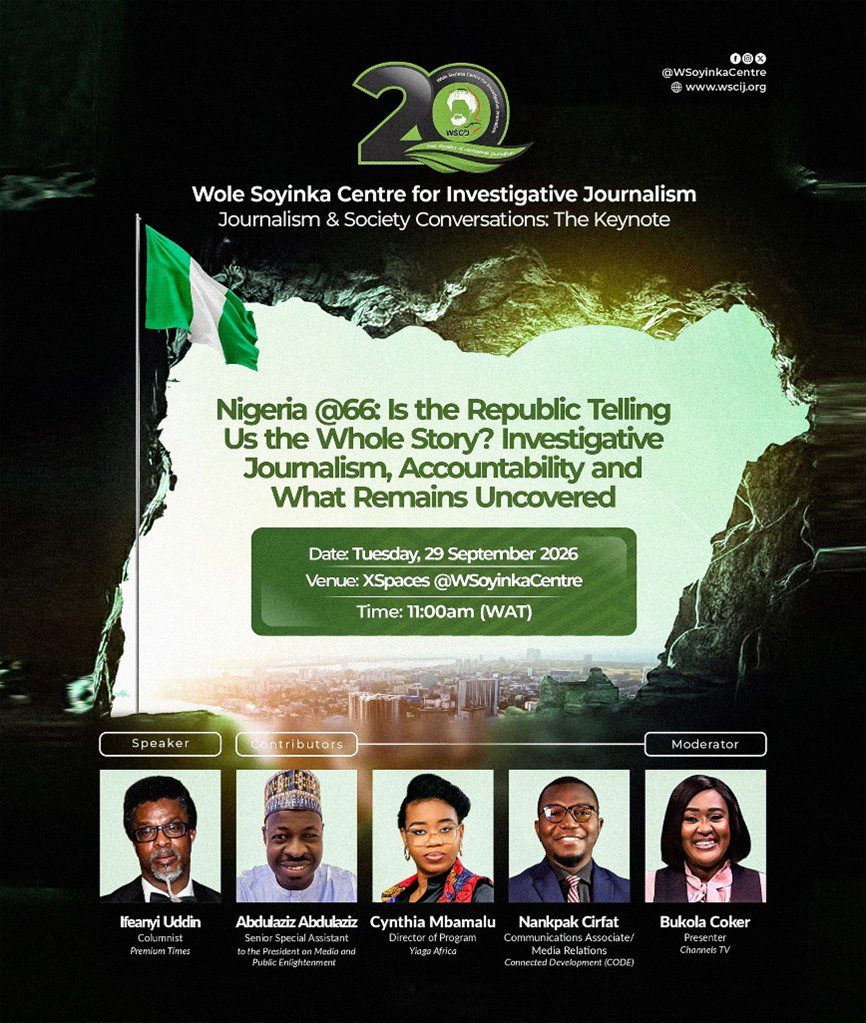
Join the Conversation: Guarding the Public Square in an Era of AI, Climate, and Democratic Strain”
Join our Journalism & Society Conversation on Tuesday, 12 May 2026 at 11:00am on WSCIJ’s X handle as we bring together critical voices to examine the urgent realities shaping civic space in today’s rapidly changing world. With the theme, Guarding the Public Square: Civic Voices in an Era of AI, Climate, and Democratic Strain, the conversation will explore how emerging technologies, climate pressures, and growing democratic tensions are redefining public participation, freedom of expression, and civic engagement.

Global Minds, Local Impact: Powering Collaborative Investigative Reporting
This upcoming virtual training equips local journalists and media professionals with the tools to plan, execute, and deliver high-impact collaborative investigations. Participants will learn how to build cross-border partnerships, align editorial goals, manage data securely, and navigate legal and ethical challenges. Coming up on 20 May 2026, the session also focuses on translating complex findings into compelling stories that drive public engagement and policy change. By bridging strategy and execution, the training is set to empower participants to harness the strength of collaboration, expanding reach, deepening impact, and strengthening accountability journalism in an increasingly interconnected globe.
Where Press Freedom Meets Purpose: A Timeout for Today’s Journalist
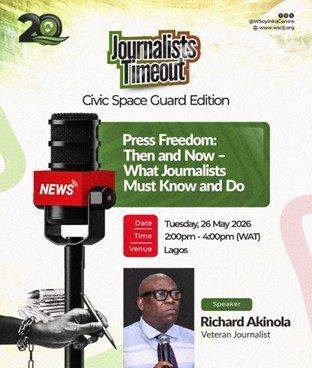
On Tuesday, 26 May 2026, WSCIJ will host the Civic Space Guard Edition of the Journalists’ Timeout themed “Press Freedom: Then and Now – What Journalists Must Know and Do”. Led by veteran Richard Akinnola, the session bridges historical resilience with modern challenges through reflection and expert insight. Designed for solidarity, it provides a space for early and mid-career professionals to exchange ideas and seek guidance. Ultimately, the gathering reinforces that safeguarding press freedom is a collective, ongoing commitment rather than a solitary task.
Inside WSCIJ
WSCIJ, CSOs, Journalists Brainstorm and Network in Lagos
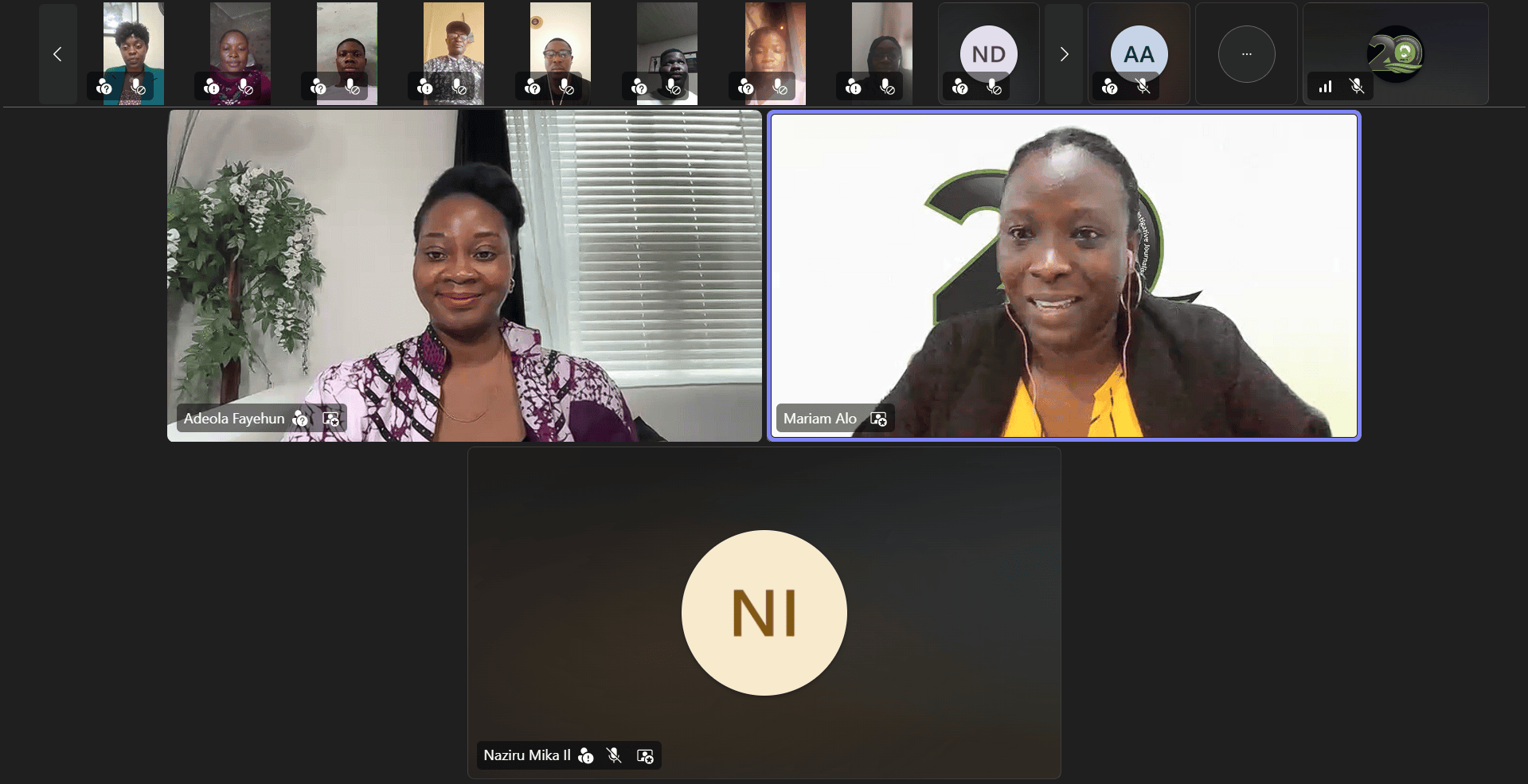
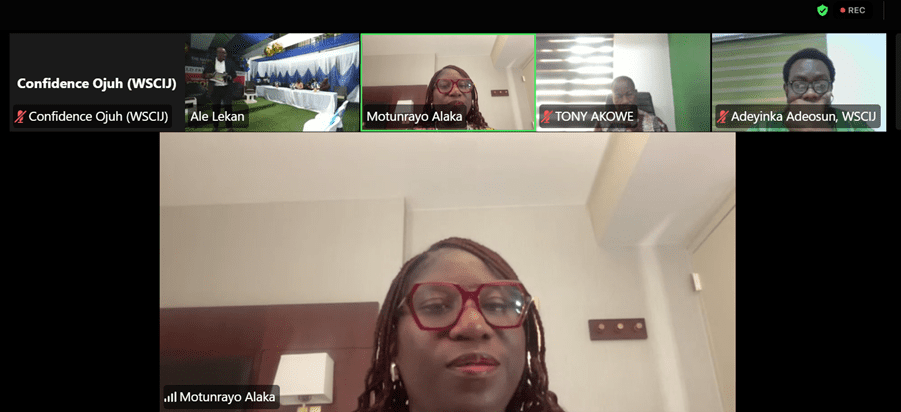
On 5 May 2026, the Wole Soyinka Centre for Investigative Journalism (WSCIJ), represented by Mariam Alo, Programme Officer, attended a housing justice brainstorming and networking session convened by the Heinrich Böll Foundation in Lagos.
The session brought together civil society actors, journalists, and community stakeholders to explore the role of the media in advancing advocacy for affordable housing for urban poor communities. Discussions broadly highlighted the importance of responsible reporting, inclusive narratives, and strengthened collaboration between media and civil society.
WSCIJ’s participation reinforced its commitment to shaping journalism that not only informs but also supports social justice and policy conversations that affect vulnerable communities.
WSCIJ Proposes National Framework for Media Sustainability on World Press Freedom Day
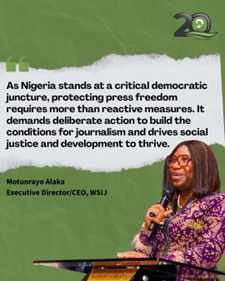
In celebrating the World Press Freedom Day 2026 the Wole Soyinka Centre for Investigative Journalism (WSCIJ) called for the establishment of a national framework for media sustainability, independence and protection through Motunrayo Alaka, Executive Director/Chief Executive Officer of the Wole Soyinka Centre for Investigative Journalism (WSCIJ). In a statement, she said press freedom must be understood beyond protection from physical attacks, noting that this year’s theme reflects a media environment that is increasingly shaped by economic strain, environmental pressures, security risks, digital disruption and shrinking civic space.
From Press Freedom to People’s Freedom: WSCIJ Advocates Press Freedom as a State Duty
At the 2026 World Press Freedom Day event organised by The Nation Journalism Foundation on 4 May 2026 in Lagos, the Wole Soyinka Centre for Investigative Journalism (WSCIJ) reinforced the urgency of protecting press freedom as a fundamental state responsibility.
Delivering the keynote address, Motunrayo Alaka, Executive Director/CEO of WSCIJ, highlighted the growing pressures confronting journalism, noting that safeguarding the media is essential to democratic participation, accountability, and national security. Drawing on both global trends and local data, she pointed to persistent threats, including legal restrictions, political interference, and attacks on journalists.
Central to her message was a clear reframing of press freedom, not as a privilege for journalists, but as a public good that enables citizens to act on information. She called for deliberate action from government, media, and civic actors to create an enabling environment for independent journalism.
This engagement reflects WSCIJ’s continued commitment to strengthening investigative reporting and advancing accountability.
Beyond the Classroom: How WSCIJ Is Shaping Nigeria’s Next Generation of Accountability Journalists
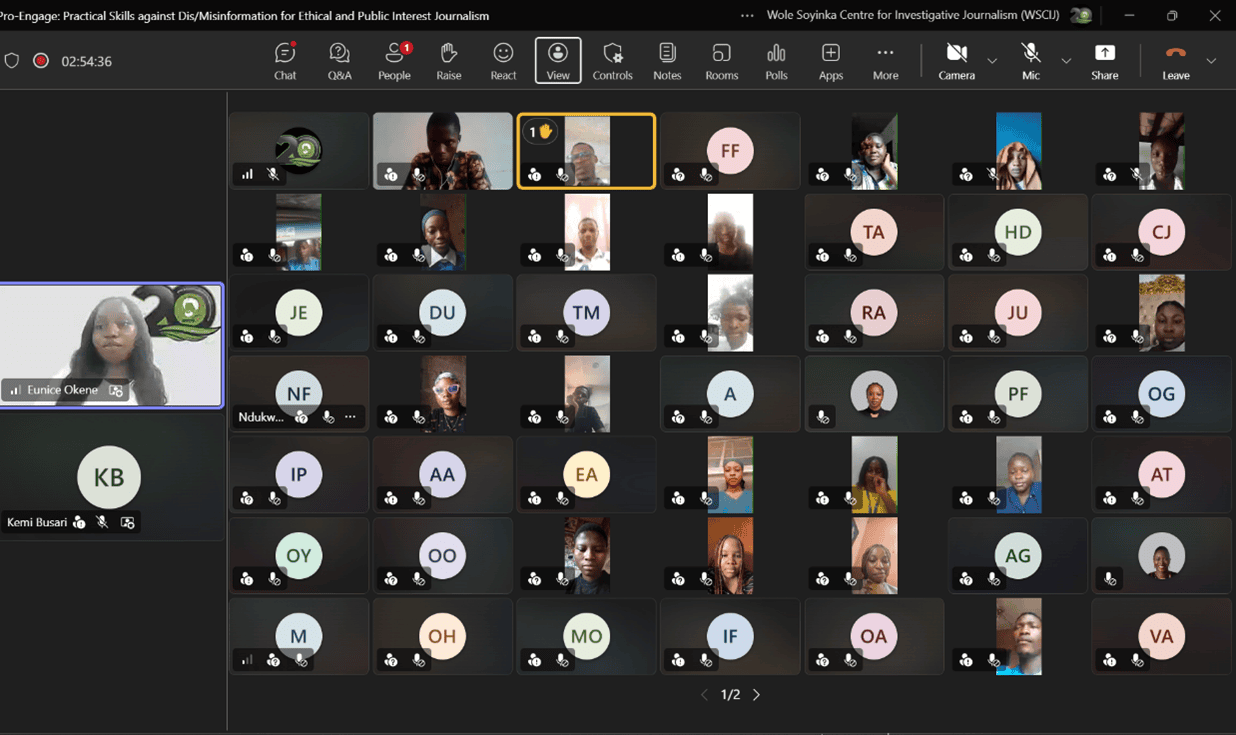
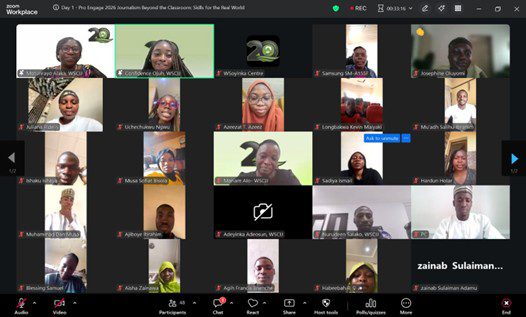
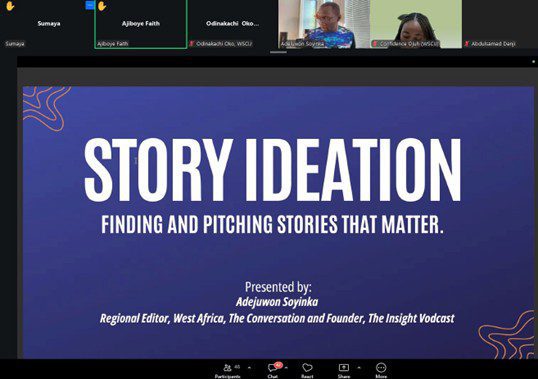
The Wole Soyinka Centre for Investigative Journalism (WSCIJ) hosted the Pro-Engage programme on 22 and 23 April 2026 to bridge the gap between academic theory and investigative practice. Themed “Beyond the Classroom: Investigative Skills for Emerging Journalists,” the virtual sessions engaged over 62 students and lecturers in rigorous ethical debates facilitated by Motunrayo Alaka and Adejuwon Soyinka. A key highlight was the pitching workshop, where participants developed investigative story ideas on governance and health. This initiative continues to nurture a new generation of journalists equipped with the technical skills and ethical grounding needed to hold power to account.
From Stories to Change: How WSCIJ Is Powering Grassroot Accountability
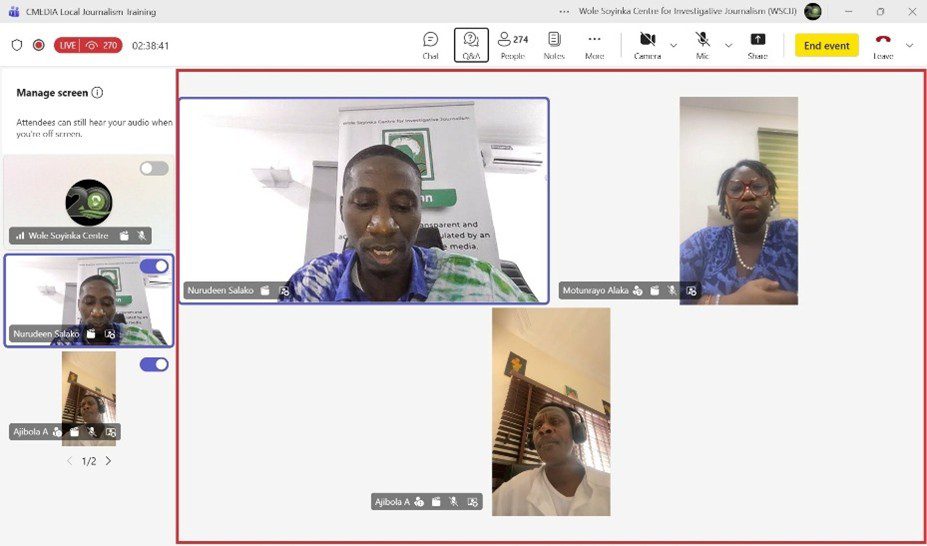
On April 16, 2026, the Wole Soyinka Centre for Investigative Journalism (WSCIJ) trained 276 local journalists under its Collaborative Media Project—redefining grassroots reporting as a tool for measurable change.
Facilitated by Ajibola Amzat, Africa Editor at the Centre for Collaborative Investigative Journalism (CCIJ) and Motunrayo Alaka, the session introduced the Report Until Something Happens (RUSH) model, which emphasises persistence until stories drive real outcomes.
The results are already evident. Reports produced using the RUSH approach have moved beyond publication to action, prompting government responses and infrastructure reconstruction in communities that were often overlooked.
By shifting focus from storytelling to impact, WSCIJ is equipping journalists not just to inform the public, but to influence systems, turning local reporting into a catalyst for accountability and change.
WSCIJ Drives Momentum For Data-Driven Energy Reporting in Nigeria
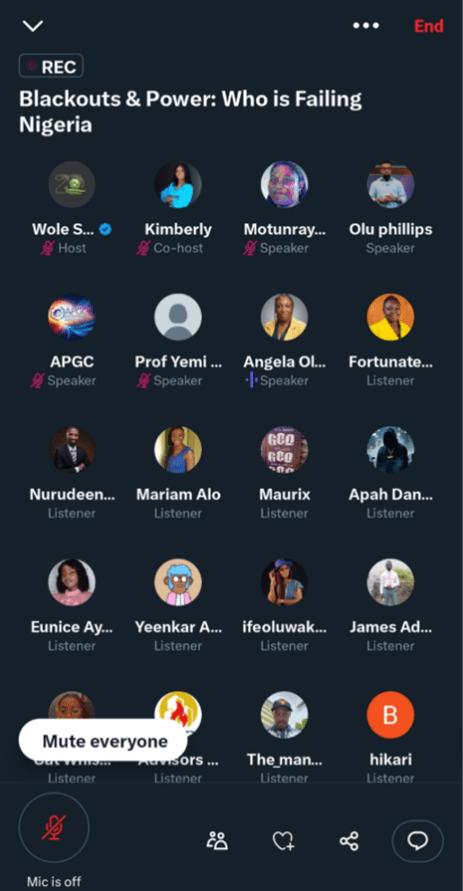
At the April 2026 Journalism & Society Conversations, experts and journalists shifted focus from Nigeria’s 13,000MW capacity to the deeper issues behind persistent blackouts. With insights from Joy Ogaji, Chief Executive Officer of the Association of Power Generation Companies, Angela Olanrewaju, Coordinating Head of Corporate Services at Ibadan Electricity Distribution Company (IBEDC), and Olu Phillips, Senior Correspondent at Channels Television and Head of the Energy Desk, the discussion unpacked the sector’s ₦3.3 trillion debt and the technical realities of the grid, challenging simplistic narratives.
More importantly, the session marked a turning point for energy reporting, emphasising the need for journalists to move beyond surface coverage to data-driven, technically informed analysis.
For Motunrayo Alaka, Executive Director/CEO of WSCIJ, her closing call captured this momentum: journalists must build expertise and sustain pressure on the power sector. The conversation’s lasting impact lies in this shift, positioning media professionals not just as observers, but as critical drivers of accountability and progress in Nigeria’s electricity landscape.
Staff Milestone: Odinakachi Oko Ties Nuptial Knot with Vincent Osi
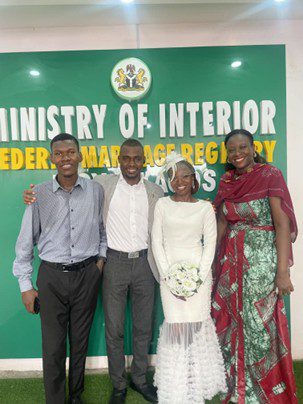
In a vibrant celebration of culture and community, the WSCIJ family joined in celebrating the wedding of Odinakachi Oko, our Communications Assistant, to Vincent Chinecherem Osi. The couple held their traditional ceremony in Abia State, followed by a court wedding later in the month. Staff members Mariam Alo and Oluwaseun Adeniyi were present at the court wedding to celebrate with the couple as they formalised their union. As a people-first organisation, the Centre takes immense pride in celebrating the personal milestones of its team members, who are the pillars of our mission. Management and staff extend their warmest congratulations to the new Mrs. Odinakachi Vincent Osi. We wish the couple a lifetime of marital bliss and shared success.

Journalism Today
Sustained Investigative Reporting is a Prerequisite for Keeping Accountability Alive
As pressures on the media continue to evolve globally, sustaining investigative journalism is becoming more difficult and more necessary. From shrinking newsroom budgets to increasing political and economic interference, the conditions required for in-depth accountability reporting are steadily eroding.
Collaborative projects such as the work of the International Consortium of Investigative Journalists, which led the Pandora Papers investigation, demonstrate how cross-border partnerships can overcome limitations and access resources while producing impactful, large-scale investigations.
In many parts of Africa, however, investigative journalism continues to face structural challenges. These constraints often push newsrooms toward more immediate, less resource-intensive reporting with critical accountability gaps. Collaborative and structured approaches have become essential.
Through its CMEDIA project, the Wole Soyinka Centre for Investigative Journalism (WSCIJ) is strengthening investigative reporting by promoting cross-newsroom collaboration, capacity building, and targeted story support. This initiative not only reduces the burden on individual reporters but also improves the depth and reach of investigations.
Central to sustaining this momentum is the Report Until Something Happens (RUSH) Model which underscores the importance of sustained follow-up by journalists and editors within the newsrooms until a tangible institutional change or social accountability is achieved. A call for persistence in following stories through impact. The RUSH model reinforces the need for continuity, encouraging journalists to stay with stories beyond publication, track outcomes, and ensure that reporting drives tangible change. The model reinforces the need for continuity, encouraging journalists to stay with stories beyond publication, track outcomes, and ensures that reporting drives tangible change.
Investigative stories
As part of the Collaborative Media Engagement for Development, Inclusivity and Accountability (CMEDIA) project, WSCIJ supported 844 accountability stories that reflect the growing pressure on sustained accountability journalism in Nigeria.
One investigation examined how a wastewater treatment plant in Lagos discharged toxic effluents into the Odo Iya Alaro River, exposing serious environmental and regulatory failures with direct implications for public health. Another investigation highlighted how years of ignored security warnings and institutional lapses culminated in the abduction of 137 schoolchildren in Kuriga, Kaduna State, revealing systemic failures in prevention and response. It underscored how accountability often depends on journalists returning to stories long after the initial report.
These investigations were not one-off reports. They required sustained field reporting, evidence gathering, and verification over time, demonstrating the level of effort needed to uncover structural failures that are often hidden from public view.
Together, they highlight a broader reality: as newsroom resources shrink and pressures on the media intensify, the conditions required for deep, sustained investigative journalism are increasingly difficult to maintain.
Voices from the Field
As pressures on the media intensify in Nigeria, journalists face a reality where investigative reporting is met with persistent legal and physical retaliation. Haruna Mohammed, publisher of WikkiTimes, has become a symbol of this struggle, navigating a system that often uses the law as a weapon of silence. During the 2023 general elections, Mohammed was arrested while covering a protest in Bauchi State and charged with “inciting disturbance of public peace,” leading to several days of imprisonment.
His experience reflects a wider, more aggressive pattern of repression. Beyond arbitrary detentions, Mohammed and his team have been targeted by at least nine Strategic Lawsuits Against Public Participation (SLAPPs), designed to drain the resources of newsrooms reporting on corruption and illegal mining. He has also documented instances of physical assault while in police custody, highlighting that even under official supervision, safety is never guaranteed. These incidents do more than disrupt reporting; they represent a systemic effort to hush voices that hold power to account.
This trend of institutionalised intimidation is not a new phenomenon; it echoes the long-standing use of state power to suppress critical reportage. In January 2017, Evelyn Okakwu, then a judiciary correspondent for Premium Times, was arrested alongside Dapo Olorunyomi, her publisher and founder of WSCIJ, after the newspaper refused an army demand to retract stories regarding military operations. The arrest, reportedly prompted by a complaint from the Chief of Army Staff, saw police operatives search their offices before the duo was eventually released following intervention from the Presidency.
For many journalists, this has become a lived reality: navigating judicial harassment and threats while continuing to report despite the risks. The case of Muhammad Sani Adamu of Albarka Radio, who was brutally beaten by police officers while covering Eid celebrations in Bauchi in March 2026, highlights the critical role of the press in maintaining a transparent democracy.
At a time when press freedom is increasingly strained, these stories underscore the urgent need to protect journalists through concrete actions that end the criminalisation of information. Ensuring media practitioners can work safely is not just a policy goal; it is a necessity for national security and public accountability.
Artificial Intelligence in Investigative Journalism
PixCrypt is a free, browser-based tool that allows users to encrypt files securely. It uses strong AES-256 encryption and works entirely on your device, meaning your files are never uploaded to any server. The process is simple-upload a file, set a password, and download the encrypted version—making it a fast and private way to protect sensitive data
Donate. Accountability journalism requires sustained investment.
Why your support to WSCIJ Matters
In an increasingly volatile global environment, the intersection between geopolitics and everyday economic realities is becoming more pronounced. For countries like Nigeria, shifts in global energy dynamics have immediate and profound implications for citizens’ livelihoods. Yet, the systems that translate global developments into local outcomes remain opaque. The Wole Soyinka Centre for Investigative Journalism is uniquely positioned to strengthen accountability at this intersection. Through capacity building, investigative reporting support, and civic engagement, WSCIJ enables journalists to:
Interrogate complex economic systems
Track public and private sector accountability
Bridge global developments with local realities
Investment in WSCIJ is an investment in clarity, accountability, and the public’s right to know.