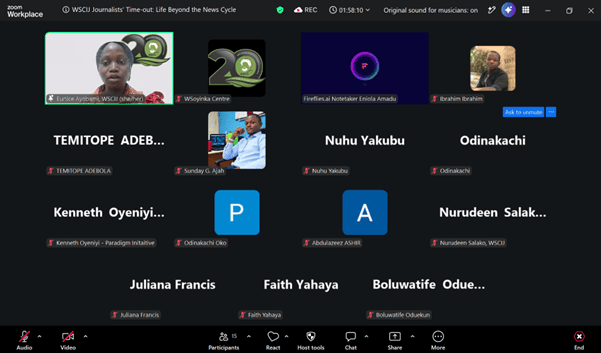
The Wole Soyinka Centre for Investigative Journalism (WSCIJ), in collaboration with Paradigm Initiative, has held its first virtual Journalists’ Time-out, creating an opportunity for journalists to step away from the demands of the newsroom, unwind and connect with colleagues beyond their professional responsibilities.
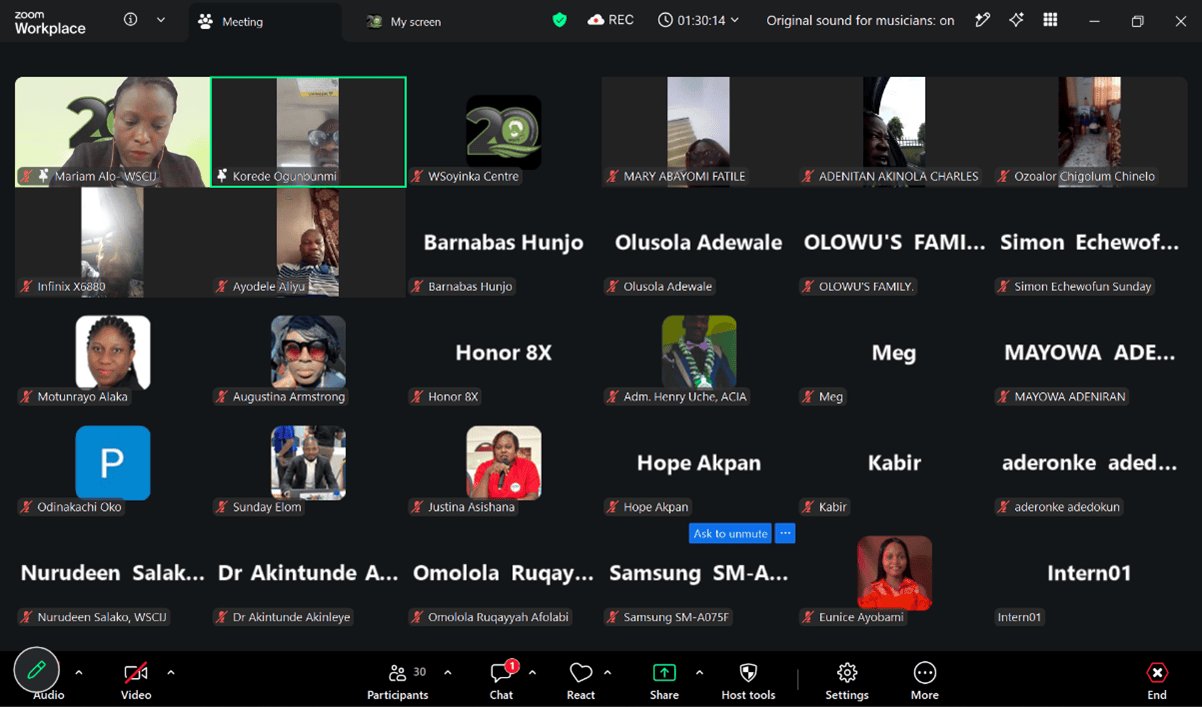
Held on Wednesday, 21 October 2026, the engagement was themed “Life Beyond the News Cycle” and brought together 27 early to mid-career technology and digital journalists from different states across Nigeria and countries including Zimbabwe, Kenya, Cameroon, India, Ghana and Malawi for an afternoon of film, games, informal conversations and reflection.
The October edition combined a technology-themed quiz, a screening of Undersight, a drawing and guessing game, and peer conversations to encourage participation and strengthen informal connections among attendees.
Speaking on the importance of creating opportunities for journalists to connect beyond work, Eunice Okene, Programmmes Assistant at WSCIJ said journalism can be demanding, with deadlines and the constant pressure to keep up with the news. She also noted that journalists need time to relax, connect with colleagues and enjoy experiences outside work. Journalists’ Time-out creates that space, reminding media practitioners that there is life beyond the news cycle and value in knowing one another beyond their professional roles.
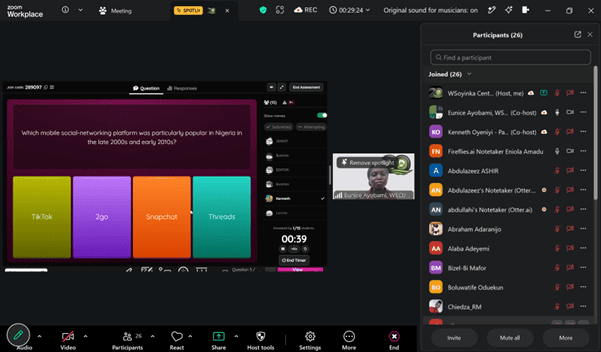
The session opened with a Naija Tech Throwback quiz hosted by Eunice Okene, which invited participants to revisit familiar experiences from Nigeria’s technology journey. The activity encouraged participants to share memories of the technologies and digital experiences that shaped their interactions before the widespread use of today’s smartphones and platforms.
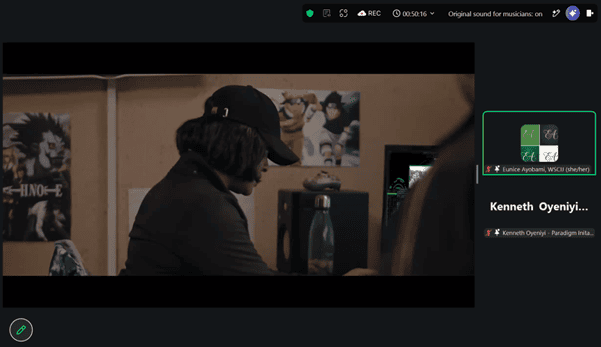
Participants subsequently watched Undersight, a short film by Paradigm Initiative, following introductory remarks by Kenneth Oyeniyi, Senior Communications Officer at Paradigm Initiative. The screening offered participants a shared viewing experience before a brief reflection session in which they discussed moments, themes and ideas that stood out to them.
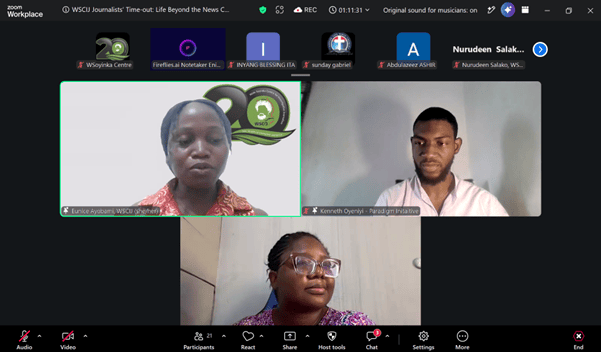
Boluwatife Bolanle Oduekun, Digital News Editor at BankyTV Media in Ibadan, highlighted the need for journalists to remain alert to cyberattack threats following the film screening. She emphasised the importance of cyber hygiene and awareness in protecting journalists in digital space.
The programme continued with an interactive game of BombParty, an explosive word game that tested participants’ vocabulary. Participants competed in breakout rooms during the first round, before three finalists returned to the main room for the final challenge. The game added a playful touch to the gathering, encouraging participants to engage with one another beyond their usual work routines.
A peer conversation and informal networking session followed, giving participants an opportunity to discuss their interests, how they unwind and what they enjoy beyond journalism. Guided by Nurudeen Salako, Programme Officer at WSCIJ, the discussion explored the people behind the professional roles, with participants sharing personal interests, alternative career paths and ways they disconnect from work.
Speaking about their interests outside journalism, Nuhu Yakubu, a blogger at Street News in Greater Accra, Ghana, spoke about his love for poetry and attending poetry shows. Boluwatife Oduekun shared her interest in sales and engaging people on products and services. She also enjoys travelling and meeting people from different backgrounds to experience other cultures.
For Juliana Francis, Deputy Editor at Eagle Online in Lagos, visiting the beach offers an opportunity to relax and regain her calm, particularly when she has time away from work. The conversation also explored alternative career paths participants might have pursued. Sunday Ajah, a digital journalist from Otukpo, Benue State, said he might have ventured into business, while Yakubu identified music as another passion he could have pursued.
The engagement concluded with a feedback session, allowing participants to share their impressions of the experience and suggest activities for future editions.
The October edition reinforced the value of creating spaces where journalists can step away from the constant demands of the news cycle and engage with one another through shared experiences.
WSCIJ’s Journalists’ Time-out is an initiative that supports journalists and strengthens the media community by creating opportunities for them to relax, reflect, interact and build relationships beyond their professional roles. Through shared experiences and informal engagement, the Centre recognises the importance of connecting outside newsroom demands, and continues to create spaces for journalists to unwind and engage with interests beyond their daily work.