Dear Partner,
Welcome to the November edition of our newsletter.
What happens to a democracy when truth becomes contested, power escapes scrutiny and citizens struggle to exercise their rights? These are questions journalism cannot afford to leave unanswered, particularly at a time when digital technologies are reshaping the information landscape, and public trust remains essential to democratic life.
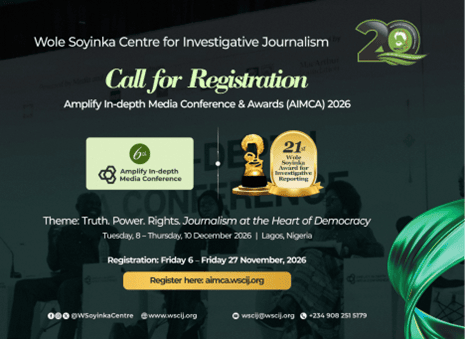
They are also central to the conversations we will have at the sixth Amplify In-depth Media Conference & Award (AIMCA) 2026, taking place from Tuesday, 8 to Thursday, 10 December 2026 in Lagos, alongside the 21st Wole Soyinka Award for Investigative Reporting (WSAIR).
This year’s theme, “Truth. Power. Rights. Journalism at the Heart of Democracy,” reflects the connections between access to reliable information, the scrutiny of power and the protection of human dignity. Across three days, AIMCA will examine these relationships through three questions’ microscopes: Whose Truth? Journalism, Information and the Battle for Reality; Whose Power? Journalism, Corruption and Accountability; and Whose Rights? Journalism, Democracy and Human Dignity.
These are not abstract debates. Artificial intelligence and digital technologies are changing how information is produced and circulated, creating opportunities for journalism, while complicating verification and public trust. Meanwhile, corruption, threats to civic space, risks to journalists and failures of institutional accountability continue to demand rigorous public-interest reporting.
AIMCA creates space for journalists, academics, civil society organisations, policymakers and other stakeholders to interrogate these challenges, exchange knowledge and consider practical responses. Through keynote addresses, panel discussions, investigative journalism showcases and hands-on masterclasses, participants will engage with issues ranging from digital verification and open-source intelligence to newsroom safety, legal risks and security reporting.
The conference also shares a purpose with the WSAIR, which recognises investigative journalism that uncovers wrongdoing, scrutinises the use of power and serves the public interest. Together, the conference and the awards create room both to examine the conditions journalism operates in and to recognise works that demonstrate its value.
Registration for AIMCA 2026 is open from Friday 6 November to Friday 27 November 2026. Journalists, academics, civil society representatives, government officials and members of the public are invited to register at aimca.wscij.org and join the conversations.
At WSCIJ, we believe journalism’s democratic value depends on its capacity to pursue truth, question power and keep citizens’ rights in view. AIMCA 2026 provides an opportunity to examine what that responsibility requires of the media and the wider society it serves.
We look forward to welcoming you to the conversation.
Motunrayo Alaka
Executive Director/CEO, WSCIJ
Opportunities for Journalists
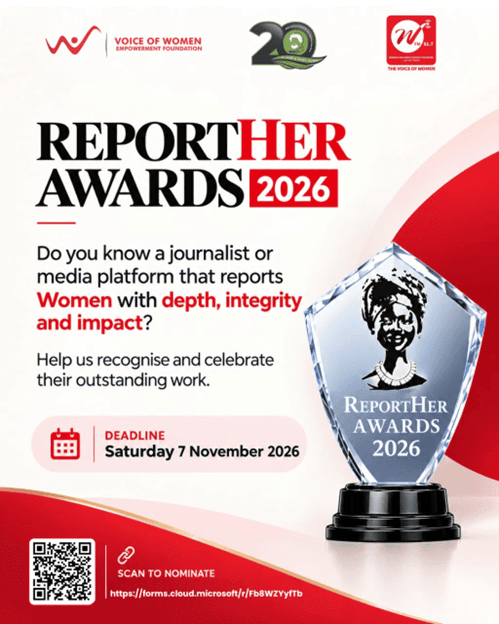
Apply for ReportHer Award 2026 Deadline, November 7, 2026
Apply for Managing Editor Africa at Mongabay – Deadline Rolling
Apply for the Equality Fund Global Journalism Fellowship 2026 – Deadline, November 8, 2026
Apply for Associate Editor at Minority Africa – Deadline, November 8, 2026
Apply for Managing Editor at Minority Africa – Deadline, November 8, 2026
Tarbell Center for AI Journalism Fellowship – Deadline, November 22, 2026
Asharami Energy Reporting Fellowship – Deadline, November 30, 2026.
Apply for Pulitzer Center Global Reporting Grants – Deadline Rolling
John S. Knight Journalism Fellowships Now Open – Deadline, December 2, 2026
2027 FASPE Journalism Programme Open for Applications – Deadline, January 3, 2027
Coming Next
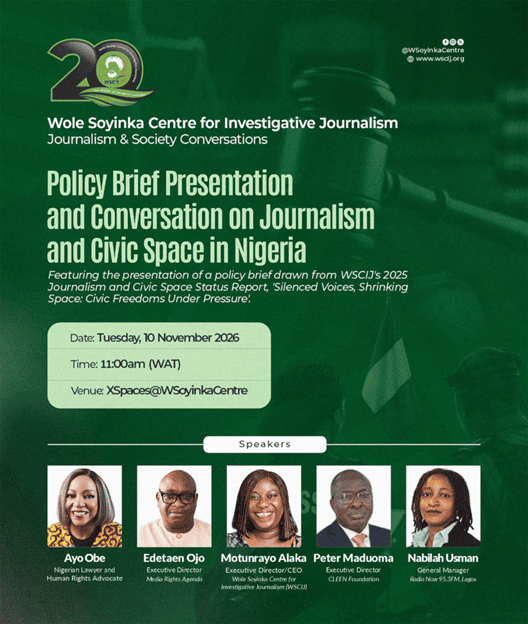
WSCIJ to Launch Policy Brief on Journalism, Civic Space in Nigeria November 10
The Wole Soyinka Centre for Investigative Journalism (WSCIJ) will on Tuesday, November 10, 2026, launch its 2025 Journalism and Civic Space Status Report Policy Brief at its virtual November edition of Journalism & Society conversation, examining institutional accountability and the protection of journalists and civic freedoms in Nigeria.
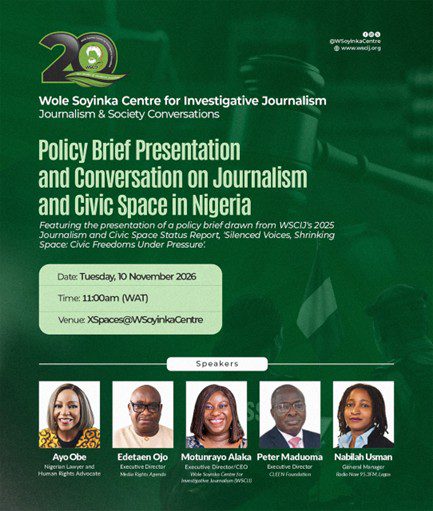
The conversation, scheduled for 11:00 a.m. West African Time (WAT) on WSCIJ’s X-Space, will bring together representatives of security and law enforcement institutions, media, civil society and the human rights community to discuss measures for strengthening institutional responses to violations against journalists and other civic actors.
The Wole Soyinka Centre for Investigative Journalism (WSCIJ) has opened registration for the 2026 Amplify In-depth Media Conference & Award (AIMCA), planned for Tuesday, 8 to Thursday, 10 December 2026 in Lagos, with the theme, Truth. Power. Rights. Journalism at the Heart of Democracy. The sixth Amplify In-depth Media Conference and 21st Wole Soyinka Award for Investigative Reporting (WSAIR) will feature, Wole Soyinka, WSCIJ Grand Patron, who has confirmed his participation and will give remarks during the three-day event. The gathering will also commemorate International Anti-Corruption Day and Human Rights Day. Conference sessions will begin at 9 a.m. daily, while the award ceremony will be held at 6 p.m. on 9 December.
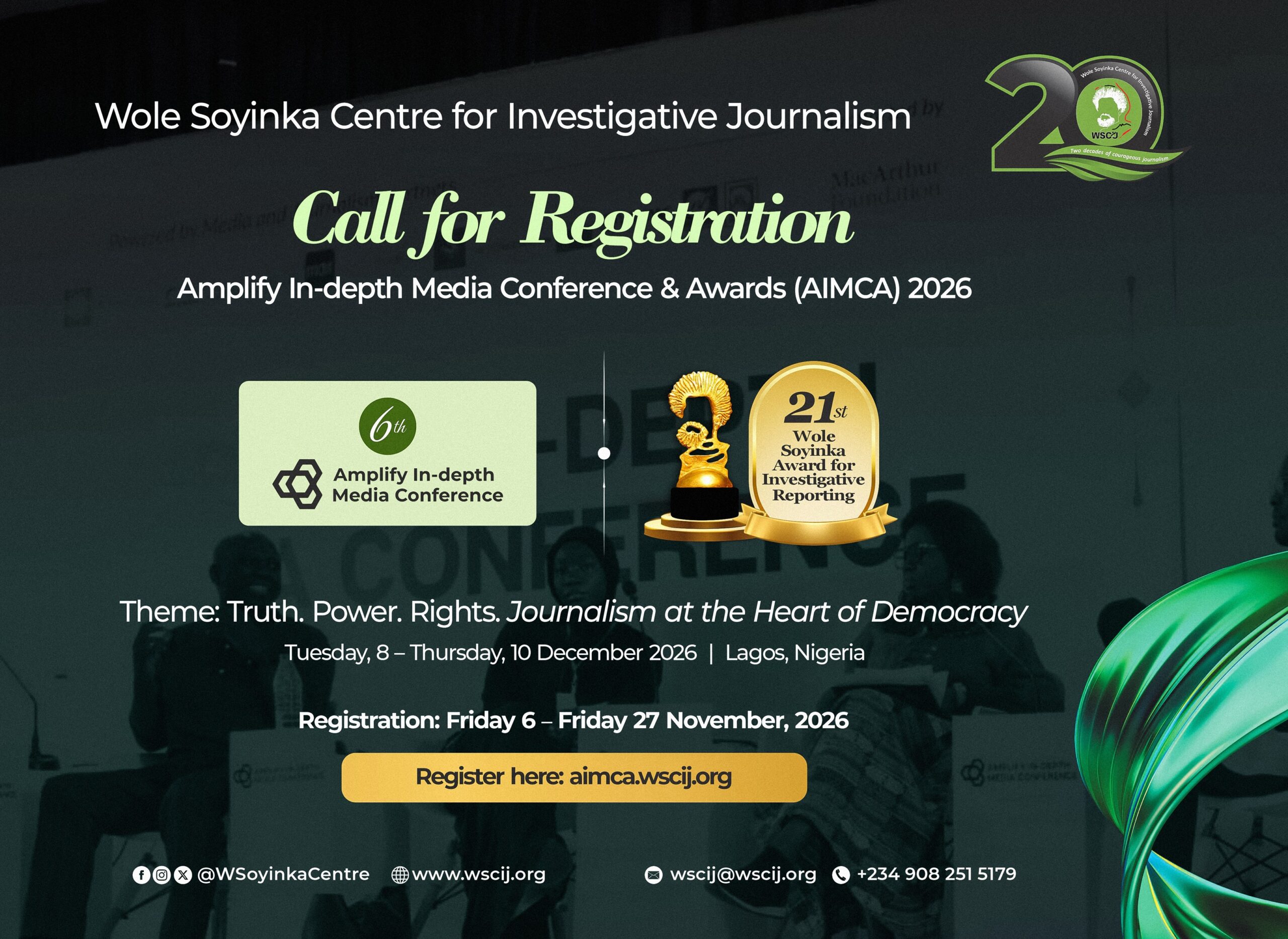
Registration runs from Friday, 6 November, to Friday, 27 November 2026, through, aimca.wscij.org. The annual gathering will bring together journalists, policymakers, academics, civil society organisations, government representatives and other stakeholders to examine journalism’s role in defending truth, interrogating power, protecting human rights and strengthening democracy in the digital age. Participants will engage with critical ideas, practical approaches and opportunities for collaboration to advance public-interest journalism.
WSCIJ Partners Women Radio to Celebrate Gender-Responsive Journalism
The Women Radio 91.7 FM in partnership with the Wole Soyinka Centre for Investigative Journalism (WSCIJ), is set to recognise media organisations and journalists advancing gender-sensitive reporting, amplifying women’s voices and promoting gender equality and inclusion through the 2026 ReportHer Awards.
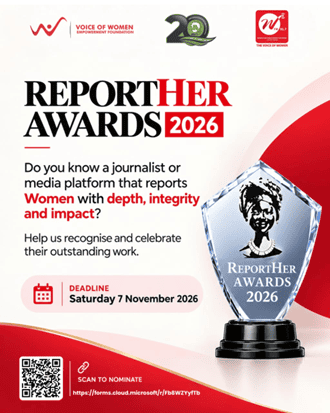
Scheduled for Friday, 27 November 2026 in Lagos, the awards celebrate media practitioners and organisations whose works have contributed to the visibility, representation and advancement of issues affecting women and girls in Nigeria. Through the partnership, WSCIJ and Women Radio 91.7 FM and WSCIJ reaffirm the importance of inclusive and gender-sensitive journalism in shaping public discourse, strengthening women’s representation and advancing gender equality in Nigeria.
Nominations are expected to highlight specific reports, investigations, programmes, campaigns and other journalistic initiatives that demonstrate meaningful contributions to reporting on sexual and gender-based violence (SGBV), as well as women in politics and leadership. You can apply for the award here.
Inside WSCIJ
Netherlands Embassy Delegation Commends WSCIJ’s Impact, Reaffirms Commitment to Partnership
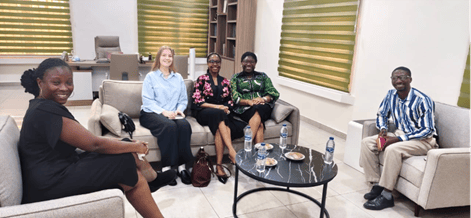
A delegation from the Embassy of the Kingdom of the Netherlands has commended the Wole Soyinka Centre for Investigative Journalism (WSCIJ) for its impact on investigative journalism and accountability in Nigeria and reaffirmed the importance of the longstanding partnership between both institutions.
The delegation, comprising Belle de Jonge, Second Secretary for Politics and Human Rights, and Jessica Odudu, Projects and Communications Officer, made the commendation during a courtesy visit to WSCIJ’s office in Lagos on Monday, 12 October 2026. They were received by the WSCIJ team led by Motunrayo Alaka, WSCIJ’s Executive Director/CEO.
Speaking on the purpose of the visit, Odudu explained that it was an opportunity to formally introduce de Jonge as the Embassy’s new Second Secretary for Politics and Human Rights, reflect on the outcomes and lessons from projects implemented in partnership with WSCIJ, and draw on the Centre’s institutional knowledge of Nigeria’s media landscape, particularly in the lead-up to the 2027 general elections.
WSAIR 2026: Panellists Urge Journalists to Prioritise Evidence and Public Impact Reporting
Investigative journalism must be judged by the evidence it establishes, the systems it exposes, and the difference it makes in people’s lives, rather than the volume of statistics it presents or the recognition it receives. This was the common position of panellists at the October edition of the Journalism & Society Conversations organised by the Wole Soyinka Centre for Investigative Journalism (WSCIJ).
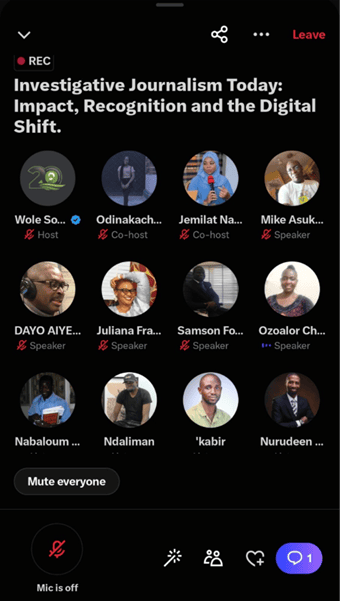
The conversation, held on Tuesday, 13 October 2026, on X Spaces, explored the theme, ‘Investigative Journalism Today: Impact, Recognition and the Digital Shift.’ It built on WSCIJ’s continuing efforts to strengthen accountability reporting through its various initiatives such as the Collaborative Media Engagement for Development, Inclusivity and Accountability (CMEDIA) project, which supports collaborative investigations, and its R.U.S.H. (Report Until Something Happens) approach to sustained reporting and follow-up.
WSCIJ, Education Stakeholders Call for Proactive Measures to Protect Schools
Stakeholders in the education and media sectors have called for coordinated, preventive measures to address attacks and abductions affecting schools across Nigeria, emphasising the need for stronger accountability, evidence-based reporting and collaboration among government, security agencies, school authorities and communities. The call was made at the seventh annual summit of the Education Writers’ Association of Nigeria (EWAN), themed “Schools Under Threat: From Reactive Responses to Sustainable Protection.”
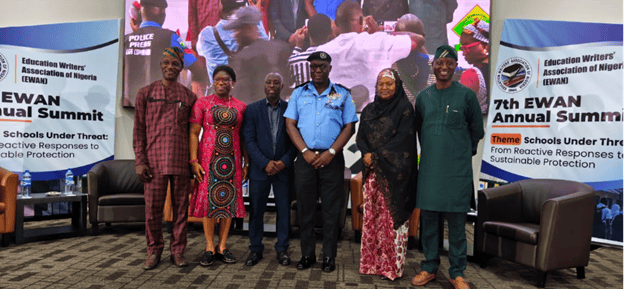
Speaking as a panellist, Motunrayo Alaka, Executive Director/CEO of the Wole Soyinka Centre for Investigative Journalism (WSCIJ), said Nigeria’s education challenges must be consistently reported down to the local level, describing the large number of out-of-school children as a blight on the nation.
WSCIJ, NBA Honour Barrister Abiodun Olowu’s Legacy of Mentorship and Service
The Wole Soyinka Centre for Investigative Journalism (WSCIJ), in collaboration with National Broadcast Academy, held a virtual memorial on Wednesday, 14 October 2026, to honour Barrister Abiodun Olowu, a resource person and former judge of the Wole Soyinka Award for Investigative Reporting (WSAIR), with colleagues, former students and family members remembering his contributions to journalism education, broadcasting and the lives he touched through mentorship and generosity.
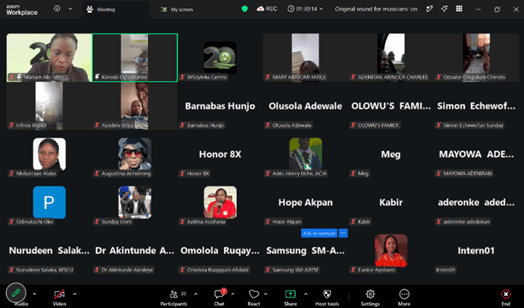
From providing shelter and opening doors for aspiring journalists to shaping journalism education and strengthening broadcasting, Barrister Olowu’s legacy was reflected in the lives of those who gathered to honour him. Their tributes painted a picture of a man whose professional contributions were matched by a deep commitment to helping others learn, grow and find opportunities.
40 Years After Dele Giwa’s Killing, WSCIJ Decries Enduring Impunity, Calls for Justice
The Wole Soyinka Centre for Investigative Journalism (WSCIJ) has expressed deep displeasure over the unresolved killing of renowned Nigerian journalist, Dele Giwa, 40 years after he was murdered through a letter bomb on October 19, 1986. Four decades later, the failure to bring those responsible to justice remains a troubling indictment of Nigeria’s commitment to press freedom, accountability and democratic governance, the Centre has said.
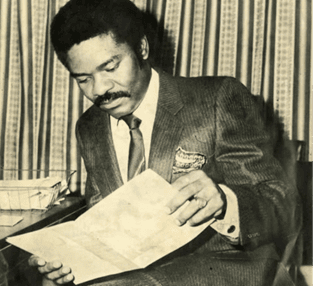
Giwa, a co-founder and first editor-in-chief of Newswatch magazine, was killed at his home in Lagos in an attack that remains one of the most notorious and unresolved cases of violence against a journalist in Nigeria. His death represents not only a devastating loss to Nigerian journalism but also a painful reminder of the dangers journalists face in the pursuit of truth and public accountability.
WSCIJ Holds First Virtual Journalists’ Time-out with Film, Games and Conversation
The Wole Soyinka Centre for Investigative Journalism (WSCIJ), in collaboration with Paradigm Initiative, has held its first virtual Journalists’ Time-out, creating an opportunity for journalists to step away from the demands of the newsroom, unwind and connect with colleagues beyond their professional responsibilities.
Held on Wednesday, 21 October 2026, the engagement was themed “Life Beyond the News Cycle” and brought together 27 early to mid-career technology and digital journalists from different states across Nigeria and countries including Zimbabwe, Kenya, Cameroon, India, Ghana and Malawi for an afternoon of film, games, informal conversations and reflection.
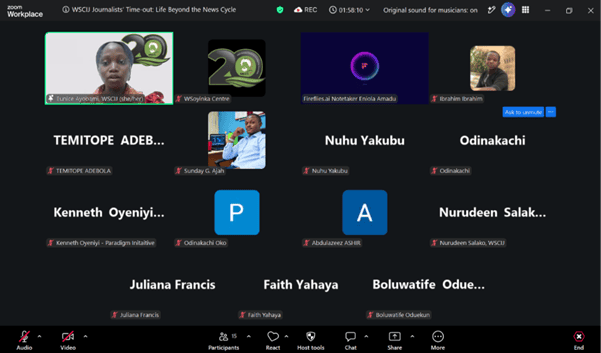
The October edition combined a technology-themed quiz, a screening of Undersight, a drawing and guessing game, and peer conversations to encourage participation and strengthen informal connections among attendees.
WSCIJ Joins Media Leaders to Celebrate Veteran Journalist, Lade Bonuola at 80
The Wole Soyinka Centre for Investigative Journalism (WSCIJ) joined media leaders and journalists on Thursday, 22 October 2026, in Lagos to celebrate veteran journalist, editor and columnist, Lade Bonuola, on his 80th birthday and the launch of LadBon: A Life in Print, a collection of essays documenting his career and contributions to Nigerian journalism.
Speaking at the event, Dapo Olorunyomi, founder of WSCIJ, acknowledged Bonuola’s enduring contributions to the profession, describing him as “perhaps the most remarkable of the most consequential editors of the late 20th century history of the Nigerian print press.”
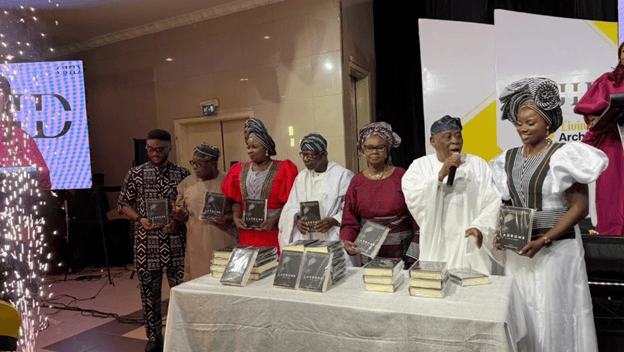
The Centre for Journalism Innovation and Development (CJID) also used the occasion to launch its Living Archives Initiative, aimed at digitising and preserving the works and legacies of individuals who have shaped journalism across Africa. Olorunyomi, who is also the publisher of PREMIUM TIMES and chief executive officer of CJID, said Bonuola was selected as the initiative’s first subject in recognition of his contributions and continued relevance to Nigerian journalism.
Migrants’ Perilous Sahara Journey in the Spotlight at Exhibition by Soyombo, Former WSCIJ Awardee
The travails of victims of human trafficking was put in the spotlight at Fisayo Soyombo’s Dessert from the Desert, an exhibition of photographs attended by Motunrayo Alaka, Executive Director, Wole Soyinka Centre for Investigative Journalism (WSCIJ), Motunrayo Alaka, on Monday, 26 October 2026, at Alliance Française, Ikoyi, Lagos. The exhibition by Soyombo, founder of the Foundation for Investigative Journalism (FIJ), documents the dangers faced by migrants travelling through the Sahara Desert in search of better opportunities abroad.
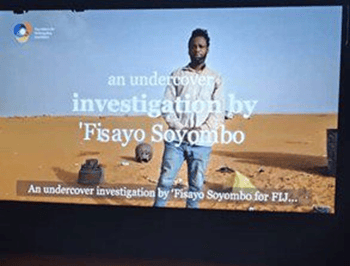
The exhibition draws on Soyombo’s three-part undercover investigation, Undercover: Europe Through the Sahara Desert and the Mediterranean Sea, for which he spent 47 days travelling along the route from Kano through Niger Republic and Libya. The investigation documents the harsh realities of irregular migration, including starvation, sexual violence, abductions, torture and forced labour.
WSCIJ Joins Other Stakeholders at Nigerian Human Rights Defenders Network’s First AGM
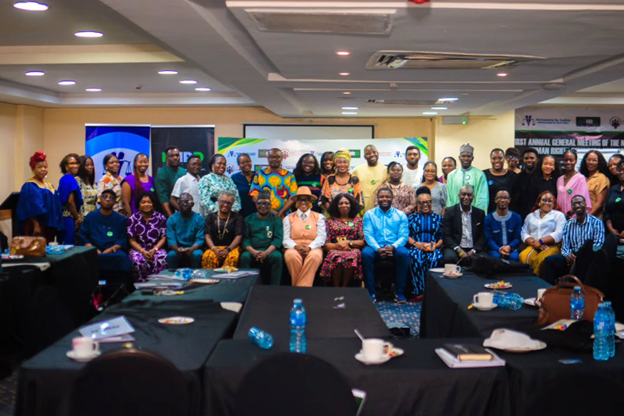
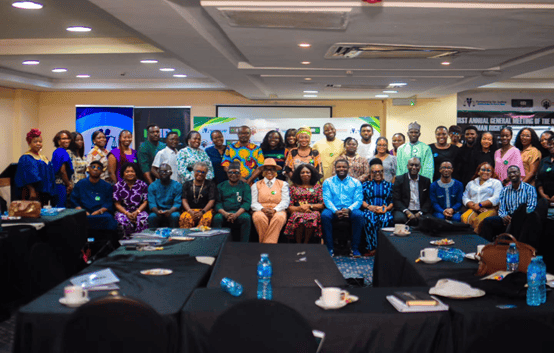
The Wole Soyinka Centre for Investigative Journalism (WSCIJ) joined other civil society organisations and human rights advocates at the first Annual General Meeting (AGM) of the Nigerian Human Rights Defenders Network (NHRDN), held on Wednesday, 28 October 2026, in Lagos.
Nurudeen Salako, Programme Officer at WSCIJ, represented the Centre’s Executive Director/CEO, Motunrayo Alaka, at the meeting, which brought together individual and organisational members from across Nigeria to strengthen collaboration and collective action towards the promotion and protection of human rights defenders.
WSCIJ Joins Stakeholders at Screening of Local Government Accountability Documentary
The Wole Soyinka Centre for Investigative Journalism (WSCIJ) joined media professionals, civil society organisations, academics and other stakeholders at the public screening of LG Billions in the Dark, an investigative documentary on local government governance in Osun State, produced by DevReporting.
Nurudeen Salako, Programme Officer at WSCIJ, represented the Centre’s Executive Director, Motunrayo Alaka, at the event held on Thursday, 29 October 2026 at the University of Lagos. The documentary examines the prolonged crisis over local government leadership in Osun State and its implications for public finance, accountability, and service delivery.

development.
Journalism Today
Ending Impunity: Protecting Journalists from Attacks and Intimidation
Every 2 November, the world marks the International Day to End Impunity for Crimes against Journalists, highlighting the need to protect journalists and hold perpetrators of attacks accountable. In Nigeria, threats to journalism go beyond physical violence to include harassment, arbitrary arrests, intimidation and the use of legal processes to silence critical reporting.
Through its Civic Space Guard project, the Wole Soyinka Centre for Investigative Journalism (WSCIJ) continues to monitor threats to civic freedoms and media practices. The Centre’s 2025 Journalism and Civic Space Status Report, Silenced Voices, Shrinking Space: Civic Freedoms Under Pressure, documented 245 incidents in 2025. State actors were involved in 219 incidents, while the Nigeria Police Force was identified in 118 cases. Although these figures cover broader civic space violations, they highlight concerns about the environment in which journalists and citizens exercise their rights.
The misuse of cybercrime laws to intimidate journalists and the use of strategic lawsuits against public participation (SLAPPs) can discourage public-interest reporting and make journalists think twice before investigating powerful interests. Laws should protect citizens and promote accountability and not be used to punish legitimate criticism or suppress freedom of expression.
WSCIJ’s monitoring, reporting, and stakeholder engagements continue to draw attention to these challenges and the need for stronger institutional accountability. Government and law enforcement agencies must investigate attacks on journalists, hold perpetrators accountable, respect press freedom and prevent the misuse of laws against legitimate journalism.
Ending impunity requires more than condemning attacks. It demands action to protect journalists, uphold the rule of law, and safeguard citizens’ right to information. Protecting journalism is essential to ensuring that those in power remain accountable to the public.
Investigative Stories
The Unseen Toll of Conflict on Women and Girls
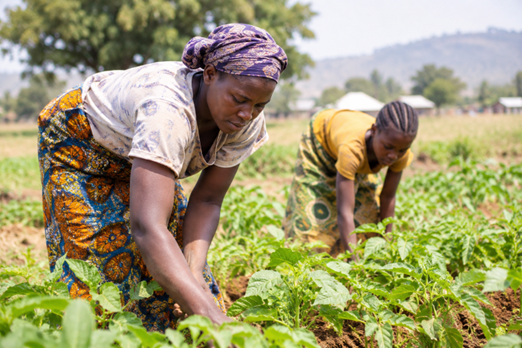
As we approach the 16 Days of Activism against Gender-Based Violence, beginning on 25 November, there is no better time to revisit this investigation into the experiences of women and girls living with sexual violence amid persistent conflict in Plateau State. The report was facilitated by the Africa Centre for Development Journalism (ACDJ) under its 2024 Inequalities Reporting Fellowship, supported by the MacArthur Foundation through the Wole Soyinka Centre for Investigative Journalism (WSCIJ).
Through the experiences of survivors and affected families, the investigation documents how attacks have exposed women and girls to rape, loss, displacement and lasting trauma. Yet, beyond the violence, it also captures their determination to rebuild their lives. Yeipyeng, who endured sexual assault and the stigma that threatened her marriage, hopes to establish a foodstuff business to regain her independence. Ladi, widowed during the 2023 attacks, returned to farming to provide for her children and dreams of learning tailoring as an alternative source of livelihood. Nankwat, who was shot while trying to protect her children, continues to call for the protection of her community and remains determined to return to a safer life in her home.
Their stories reveal both the strength of women navigating the aftermath of conflict and the burden placed on survivors when meaningful support is absent. The investigation highlights the lack of a Sexual Assault Referral Centre in Plateau State, limited access to psychological care, persistent stigma and the absence of clear evidence that perpetrators have been brought to justice. It underscores the need for more than recognition of survivors’ courage: government must strengthen protection, provide accessible recovery services and ensure that sexual violence is properly investigated and prosecuted.
Unsafe Medicines, Unprotected Consumers
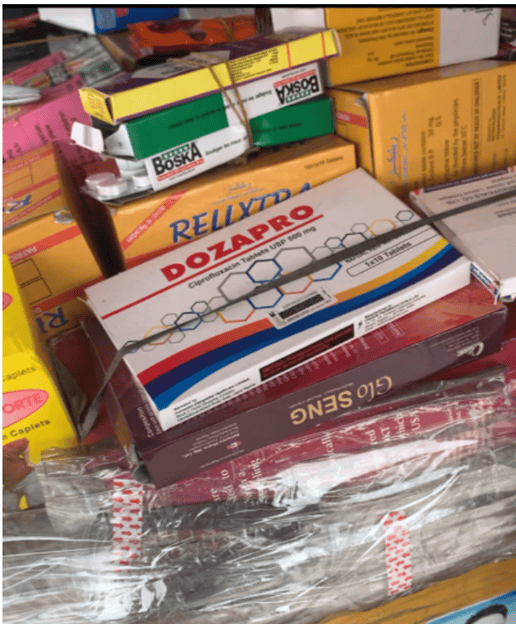
This investigation, published by the Foundation for Investigative Journalism (FIJ) through WSCIJ’s Collaborative Media Engagement for Development, Inclusivity and Accountability (CMEDIA) project, examines the informal roadside medicine trade in Lagos and the risks it poses to public health. It explores how medicines sold outside regulated pharmacy settings can leave consumers exposed to products whose quality, safety and authenticity may be difficult to verify.
The report investigates the activities of roadside medicine vendors and the regulatory gaps that allow informal sales to persist. The trade raises concerns about the conditions in which medicines are stored, the possibility of expired or substandard products reaching consumers, and the difficulty of tracing their sources.
The findings remain relevant amid renewed calls, including from The Cable newspapers, for the Federal Government’s stronger action against fake and substandard drugs in Nigeria by declaring a state of emergency on fake drugs and substandard consumables. The paper noted that, when unsafe products reach consumers, the consequences extend beyond individual purchases to public confidence in healthcare and the institutions responsible for protecting citizens.
Voices from the Field
Nanji Nandang, Investigative Journalist, The ICIR

Nanji Nandang reports on gender inequalities, human rights and the experiences of vulnerable communities, with particular attention to women and girls whose stories are often overlooked. She has also hosted Silent Voices, an educational radio programme that raises awareness about sexual and gender-based violence.
In “Sexual Violence Amid Conflict: The Silent War Crime in Plateau State, Nigeria,” published by Africa Prime News, Nanji documents the experiences of women and girls subjected to sexual violence in conflict-affected communities. Beyond exposing the abuse, her investigation highlights survivors’ efforts to rebuild their lives and the gaps in support, including limited access to psychological care and the absence of a Sexual Assault Referral Centre in the state. The report was facilitated under the Africa Centre for Development Journalism’s 2024 Inequalities Reporting Fellowship, supported by the MacArthur Foundation through WSCIJ.
As the 16 Days of Activism against Gender-Based Violence approaches, Nanji’s reporting draws attention to the need to protect survivors, ensure access to justice and strengthen support systems for women affected by conflict.
Olayide Soaga, Journalist, The Guardian

Olayide Soaga is a Nigerian journalist whose reporting explores health, gender, insecurity and development. Her work, which spans investigative and solutions journalism, has appeared in publications including The Guardian, The Continent, El País and The Africa Report. She was also runner-up in the Centre for Journalism Innovation and Development’s 2024 Best Solutions Journalism Award for West Africa.
While at the Foundation for Investigative Journalism (FIJ), Olayide authored “Pharmacy in a Basket: Inside Lagos’ Insidious Roadside Medicine Trade,” supported by WSCIJ under its Collaborative Media Engagement for Development, Inclusivity and Accountability (CMEDIA) project. The investigation examined how unlicensed medicine sellers operate outside regulatory standards, raising concerns about poor storage, unverified supply chains and the risk of substandard, expired or counterfeit medicines reaching consumers. It also explored how limited access to affordable healthcare drives people towards informal sellers.
With Nigeria still grappling with fake and substandard medicines, Olayide’s investigation highlights the importance of stronger regulatory oversight and accessible healthcare. It also reminds us that protecting public health requires attention to the informal markets where many Nigerians obtain medicines.
AI in Investigative Journalism
OSINT Tool of the Month: Wayback Machine

The Wayback Machine is an internet archiving tool that allows journalists to view previous versions of websites. It helps investigate deleted content, track changes to official statements, and verify how information appeared online in the past.
How to use it:
- Visit web.archive.org.
- Enter the website URL you want to investigate.
- Select a year and an available archived date.
- Compare the archived page with the current website.
- Save relevant findings and verify them before publication.