Keynote title:
Journalism, Democracy and the Future
Rebuilding a Free, Healthy and Vibrant Media Space
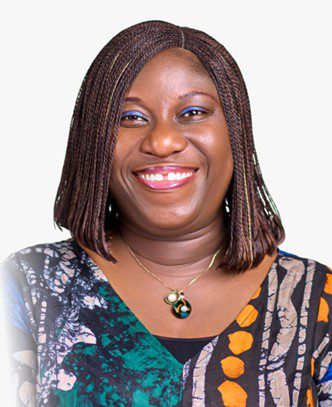
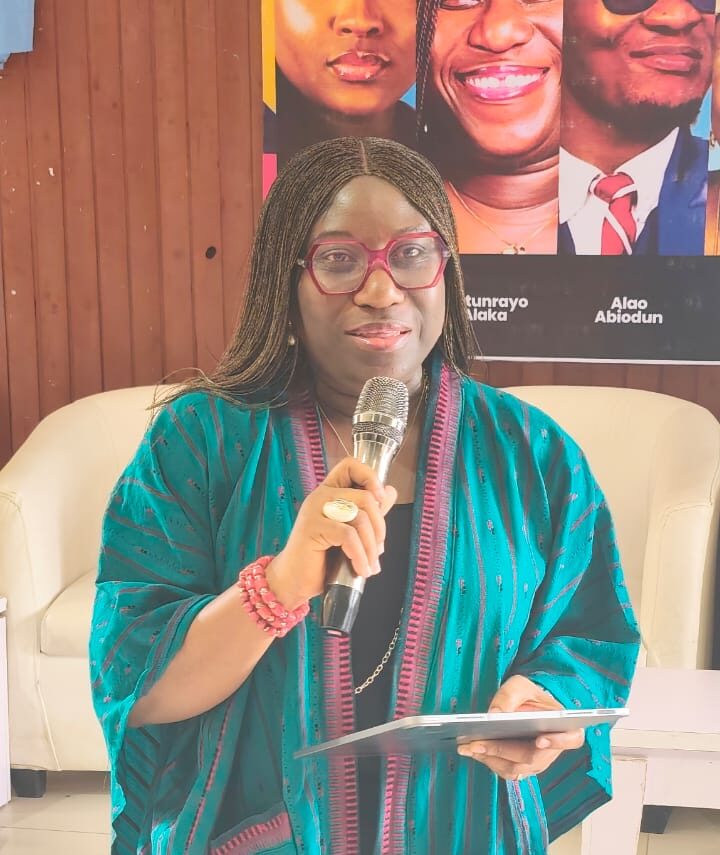
Keynote Address by Motunrayo Alaka
Executive Director/CEO, Wole Soyinka Centre for Investigative Journalism (WSCIJ)
Delivered at the 9th Ngozi Agbo Media Lecture and Summit, University of Lagos
Introduction
Vice-Chancellor, members of the University Management, distinguished faculty members of the Department of Mass Communication, members of the Press Club, colleagues in journalism and the media, invited guests, alumni, students, ladies and gentlemen, good morning.
Thank you for the invitation to deliver this keynote address at the 9th Ngozi Agbo Media Lecture and Summit. I consider this invitation both an honour and a responsibility.
This invitation carries special significance for me because the University of Lagos has been part of my own journey of learning, growth and discovery. I have had the privilege of earning two Master’s degrees from this great institution, and many of the ideas, questions and values that continue to shape my work today were refined within these classrooms and through interactions with faculty and fellow students. Standing before you this morning therefore feels like more than a professional engagement; it feels like a homecoming. I am grateful for the role this university has played in my development and honoured to contribute to a conversation taking place within a community that has invested so much in me.
Before I address today’s theme, permit me to acknowledge the woman whose name continues to bring us together. Many people work, fewer people build institutions, and even fewer build people. By all accounts, Ngozi Agbo belonged to that rare category of individuals who built people. Through CAMPUSLIFE, a nationwide campus journalism platform, she did far more than edit pages. She opened doors, discovered talent, nurtured confidence and gave young people permission to imagine themselves as journalists, communicators, public intellectuals and leaders.
Every journalist, editor, communicator, teacher, student and citizen whose life was influenced by Ngozi Agbo’s work is part of that monument. Nine years after her passing, her influence remains visible. That is a life well lived and a legacy worth celebrating. The fact that this lecture has reached its ninth edition tells us something important about the University of Lagos, the Department of Mass Communication, the Press Club and every individual who has sustained this initiative over the years. It tells us that this institution understands the importance of honour and memory. It understands that societies progress when they intentionally celebrate those whose lives expanded possibilities for others. There is something deeply admirable about an institution that chooses to remember.
Perhaps there is no better way to honour Ngozi Agbo than by reflecting on the future of the profession she loved, the democratic values she helped nurture and the need to commit to the development of young people to achieve this.
Journalism, Democracy and the Future
Rebuilding a Free, Healthy and Vibrant Media Space
The theme chosen by the organiser of today’s lecture – Press Freedom in Retreat: Rebuilding A Free, Healthy and Vibrant Media Space – is itself a verdict: Press Freedom in Retreat. It does not ask whether press freedom is retreating; it assumes that it is. Unfortunately, the evidence increasingly supports that conclusion.
My chosen title for today’s lecture, however, invites us to think about three ideas that are deeply connected: journalism, democracy and the future. Yet any honest conversation about the future must begin with a clear assessment of the present. And the present tells us that press freedom, in many parts of the world, is under significant pressure.”
There are moments when a society needs only to look around to know that its freedoms are under pressure. We see it in the questions journalists struggle to ask, the stories editors hesitate to publish, the sources who fear speaking and the growing number of journalists facing intimidation, harassment and legal threats. We see it in stories abandoned because pursuing them has become too dangerous and in the growing belief that silence offers greater safety than truth. Self-censorship is growing. That is where we are today.
As a child, I watched news reports and read stories about the military era. I learned about journalists who were arrested, detained, harassed and persecuted simply for doing their jobs. Over the years, I have had the privilege of working alongside journalists who lived through those experiences. I have listened to accounts of security operatives walking into newsrooms, confiscating materials, shutting down publications and intimidating reporters. It is deeply troubling that many journalists today recognise elements of those same realities within a democratic dispensation.
Press freedom is far more than a concept discussed in academic journals or conference halls. It is a lived condition that shapes what journalists can investigate, what media organisations can publish, what citizens can know and ultimately what societies can become. When we say press freedom is in retreat, we are speaking about shrinking civic spaces, increasing intimidation of journalists, growing economic pressure on independent media, the weaponisation of laws and regulations, digital surveillance, disinformation and the gradual cultivation of fear within the information ecosystem.
We should be alarmed when journalists are attacked. We should be even more alarmed when society begins to accept those attacks as normal. Whenever abnormality becomes normalised, freedom weakens.
Across the world, the evidence is difficult to ignore. According to the 2026 World Press Freedom Index published by Reporters Without Borders, press freedom has reached its lowest level in a quarter century. For the first time, more than half of the world’s countries now fall within the categories classified as difficult or very serious for journalism. Conditions for journalism declined in 100 countries assessed by the index. Journalists continue to face imprisonment, surveillance, harassment, attacks and, in some cases, death. Media organisations increasingly confront political interference, economic capture, strategic lawsuits, online abuse campaigns and sophisticated disinformation operations.
The challenge extends beyond authoritarian governments. Established democracies are also grappling with declining trust, newsroom fragility, economic uncertainty and deepening political polarisation. This is therefore far more than a media problem; it is a democratic challenge.
The global story is reflected locally. Nigeria ranked 112th out of 180 countries in the 2026 World Press Freedom Index, improving slightly from 122nd in 2025. Yet the country remains firmly within the category of environments considered difficult for journalism. Reporters Without Borders continues to describe Nigeria as one of the most challenging environments for journalists in West Africa, where monitoring, attacks and arbitrary arrests remain recurring concerns.
The Wole Soyinka Centre for Investigative Journalism’s 2024 Journalism and Civic Space Status Report paints a similarly troubling picture. The report documented 103 incidents of civic space violations reported 342 times within a single year. Journalists accounted for 57 of those incidents, making them the most targeted group. More concerning still, the report revealed that the Nigeria Police Force was implicated in over 65 per cent of the documented violations.
These numbers matter because behind every statistic is a human being: a reporter prevented from working, a citizen denied information, a community deprived of accountability or a democracy weakened by silence.
My own research on the safety of journalists during Nigeria’s 2023 elections revealed another dimension of this challenge. Journalists spoke about physical attacks, intimidation, restrictions on movement and hostility from political actors. Yet what stood out was the sophistication of digital interference. Several reporters described situations where security personnel who seized their phones appeared to know exactly where photographs, recordings and backup files were stored. The experience suggested a growing familiarity with digital surveillance and information extraction techniques.
The implications are profound. The threats confronting journalism today extend beyond physical safety. They include surveillance, digital security, data protection, source protection and the integrity of journalistic work itself. The risks facing journalists today are physical, digital, psychological, economic, legal and financial. Increasingly, many of the most effective attacks happen quietly through intimidation, strategic isolation, financial pressure, online abuse, legal harassment and uncertainty. The objective is often larger than preventing a single story from being published. The objective is to weaken journalism’s capacity to hold power accountable.
Yet, if we stop our analysis there, we tell only half the story.
One of the great paradoxes of our time is that this may simultaneously be one of the most challenging periods and one of the most promising periods to be a journalist. While press freedom faces mounting pressures, journalism itself continues to evolve, innovate and expand. Never before have journalists had access to so many tools. Never before have so many people been able to publish information instantly. Never before has collaboration across borders become so achievable. Investigative journalists now have access to satellite imagery, open-source intelligence, artificial intelligence, geolocation technologies, advanced data analysis platforms and global support networks.
Nowhere is this paradox more visible than in Nigeria. Over the last decade, Nigeria has experienced one of the most significant investments in journalism, accountability and media development in its history. Through the support of philanthropic institutions, particularly the MacArthur Foundation’s On Nigeria Programme and related initiatives, millions of dollars (MacArthur alone invested over $50million in the media), have been invested in strengthening investigative journalism, accountability reporting, newsroom sustainability, capacity development for students of journalism, anti-corruption reporting, civic engagement, sub-national news coverage and democratic governance.
These investments have strengthened institutions, expanded training opportunities including on campuses, supported investigative story projects, encouraged collaboration, built leadership capacities and enhanced newsroom resilience. For many of us working within the sector, the transformation has been remarkable. Investigative journalism, once largely isolated and under-resourced, has grown into a recognised force for accountability and governance reform. Newsrooms have become more collaborative, fact-checking organisations have emerged and expanded, data journalism has matured, cross-border investigations have increased, media innovation hubs have multiplied, and civic technology organisations now work alongside journalists to strengthen public accountability. Women are increasingly leading newsrooms, investigative reporting projects, media development organisations and innovation initiatives. Students can create massive body of work before they complete their schooling.
This progress matters. At the Wole Soyinka Centre for Investigative Journalism, we have witnessed first-hand how journalism can influence systems and improve lives. We have seen investigations expose corruption, reporting influence policy discussions, stories improve service delivery and journalism amplify vulnerable voices. We have seen a revolution of vibrant journalism by students. We have seen accountability reporting generate public conversations that governments could no longer ignore. One story can expose corruption, improve healthcare, protect vulnerable communities, improve governance and even save lives.
The digital revolution has also transformed journalism in remarkable ways. A generation ago, access to the public sphere was controlled by a relatively small number of gatekeepers. Today, a student with a smartphone can document events, build audiences, create content and participate in public conversations. This democratisation has expanded participation, amplified previously marginalised voices and lowered barriers to entry.
It has also created significant challenges. Misinformation travels quickly, disinformation spreads strategically, deepfakes are becoming more sophisticated and public trust is increasingly contested. Yet the same technologies that enable manipulation also strengthen accountability. The same digital tools used to spread falsehoods can be used to verify facts. The same internet that hosts disinformation also creates unprecedented opportunities for collaboration, learning, public engagement and civic participation.
We are also witnessing the emergence of a new dimension of press freedom. For much of the twentieth century, the primary concern was whether governments would allow journalists to publish. Today, another question has emerged: who controls visibility? A handful of technology platforms and algorithmic systems increasingly shape what billions of people see, read, share and believe.
Artificial intelligence can enhance investigations, accelerate research, improve verification and strengthen reporting. The same technologies can amplify misinformation, manipulate public opinion and distort public discourse at extraordinary scale. The future of press freedom therefore depends on constitutional protections and legal safeguards as much as it relies on transparency, accountability and responsibility within the digital platforms that increasingly mediate public conversation.
This reality requires a broader understanding of journalism itself. Journalism today is no longer merely a profession. It is an ecosystem, a public good and democratic infrastructure. Roads move people, electricity powers economies and water sustains life. Journalism sustains informed citizenship. Just as societies invest in physical infrastructure, democratic societies must invest in the information infrastructure that enables citizens to make informed choices, hold power accountable and participate meaningfully in public life.
That is why press freedom matters. That is why journalism matters. Democracy depends on citizens having access to reliable information, and reliable information remains one of the most valuable public goods any society can possess.
To understand why press freedom matters, it is useful to reflect briefly on the ideas that have shaped democratic thinking over centuries. The liberal tradition, represented by thinkers such as John Milton and John Stuart Mill, argues that societies advance when ideas compete freely in the marketplace of public debate. Social Responsibility Theory reminds us that freedom carries obligations to truth, fairness, accuracy and the public interest. Public Sphere Theory, associated with Jürgen Habermas, presents journalism as the arena where democratic conversations occur and where citizens engage with issues that affect their lives. Democratic-Participant Theory extends this thinking further by recognising citizens as active contributors to public discourse rather than passive audiences.
Yet the realities of our time require us to go one step further. Journalism should be understood as democratic infrastructure. We readily recognise roads as infrastructure because they connect people. We recognise electricity as infrastructure because it powers economies. We recognise water as infrastructure because it sustains life. Journalism deserves similar recognition because it sustains informed citizenship. Without reliable information, citizens struggle to make informed decisions. Without informed citizens, participation weakens. When participation weakens, accountability suffers. When accountability suffers, democracy itself becomes fragile.
This understanding helps explain why countries that perform well on press freedom indicators often perform better on broader human rights indicators. The same conditions that enable journalists to report freely frequently enable citizens to speak freely, organise freely and participate meaningfully in public life. Conversely, environments that suppress journalism often suppress dissent, civic participation and accountability. When journalists are silenced, victims lose witnesses. When information disappears, accountability often disappears with it. When scrutiny weakens, abuse flourishes.
Journalism therefore performs a profoundly human function. It gives visibility to those who would otherwise remain invisible. It amplifies voices that power would prefer unheard. It documents injustice. It records history. It creates evidence. It preserves memory. It connects communities. It strengthens accountability. At its best, journalism helps societies understand themselves.
If press freedom is under pressure, what exactly are we trying to rebuild? What does success look like? What kind of media ecosystem should future generations inherit?
My vision is captured in three words from today’s lecture topic: free, healthy and vibrant.
A free media space is editorially independent and financially independent. It operates without fear of censorship, intimidation or political capture. It enjoys legal protections that uphold freedom of expression, media independence and access to information. It allows journalists to pursue stories based on public interest rather than political convenience or commercial pressure.
A healthy media space is sustainable. It survives political transitions, economic shocks, technological disruptions and legal challenges. It is guided by ethics and strengthened by public trust. It protects journalists physically, psychologically and digitally. It supports continuous learning, professional development and institutional resilience. A healthy media ecosystem creates conditions in which journalism can flourish across generations.
A vibrant media space is diverse, innovative and inclusive. It contains multiple voices, perspectives and viewpoints. It reflects the youthfulness of our population and the fragility of marginalised voices. It reaches urban centres and rural communities alike. It includes strong local journalism, community journalism and specialised reporting. It tells stories in multiple Nigerian languages and serves audiences often overlooked by mainstream media. It embraces innovation and deploys technology creatively and responsibly. It uses data, artificial intelligence and emerging tools to strengthen storytelling and audience engagement. It welcomes young people, encourages experimentation and promotes collaboration across sectors and disciplines.
That is the media ecosystem we must build.
If rebuilding is our task, then the question becomes: where do we begin?
First, we must rebuild trust. Trust remains journalism’s most valuable currency. Audiences can forgive mistakes when organisations demonstrate transparency and accountability. They are far less forgiving when they perceive manipulation, bias or indifference to truth. Trust grows through consistency, accuracy, fairness, transparency and ethical conduct. Every newsroom, journalist, educator and media owner shares responsibility for strengthening public confidence in journalism.
Second, we must strengthen safety. Journalists should never have to choose between truth and survival. Safety today extends far beyond physical protection. It includes digital security, legal protection, psychological well-being and institutional support. Newsrooms must invest in safety protocols, digital hygiene, trauma awareness and legal preparedness. Governments must fulfil their obligation to protect journalists, investigate attacks against them and prosecute offenders. Professional associations, civil society organisations and development partners also have critical roles to play.
Third, we must build sustainability. Journalism cannot effectively serve the public when media organisations struggle to survive. Sustainable journalism requires stronger business models, diversified revenue streams, audience-supported approaches, philanthropy, innovation and partnerships that strengthen institutions while preserving editorial independence. Sustainability is no longer a luxury. It is a democratic necessity.
Fourth, we must embrace technology responsibly. Artificial intelligence, automation, data journalism, verification technologies and multimedia storytelling are reshaping journalism at extraordinary speed. The question before us is no longer whether technology will transform journalism. That transformation is already underway. The real question concerns how journalists, educators, policymakers and citizens choose to interrogate and deploy these tools. Technology should strengthen truth, deepen accountability and expand access to reliable information. Those who lead the technological transformation but equally be accountable.
Fifth, we must invest in young journalists. No media ecosystem can remain vibrant while neglecting its future. At the WSCIJ we launched our Pro Engage programme focused on students of journalism here on this campus in 2011. Young journalists require mentorship, opportunities, training, resources and support. They need spaces where curiosity is encouraged, experimentation is welcomed, and ethical values are reinforced. This responsibility belongs to universities, media organisations, professional associations and development partners alike. It is also one of the most powerful ways to honour the legacy of Ngozi Agbo, who dedicated so much of her life to opening doors for young people.
Sixth, we must strengthen local journalism. Democracy is experienced locally. Development is experienced locally. Accountability is experienced locally. The future of journalism depends on strong local reporting, community engagement and deeper coverage of issues affecting everyday lives. Communities deserve journalism that reflects their realities, amplifies their concerns and connects local experiences to national conversations.
Finally, we must defend freedom itself. Governments must respect constitutional freedoms and create enabling environments for independent media. Media owners must protect editorial independence. Civil society organisations must continue defending civic space. Academic institutions must continue nurturing critical thinking and intellectual inquiry. Citizens must recognise that attacks on journalism ultimately weaken democracy.
Permit me now to speak directly to the students in this room.
Many of you will become journalists and media owners. Others will become academics, lawyers, public relations leaders, corporate affairs stewards, entrepreneurs, technologists, public servants, philanthropists, policymakers, researchers or community leaders. Regardless of the path you choose, every one of you already participates in the information ecosystem.
Every post you share, every image you circulate, every video you upload, every claim you repeat and every conversation you shape contributes to the information environment that future generations will inherit. You are more than consumers of information. You are creators, distributors and interpreters of information. That reality carries responsibility.
Be curious. Be ethical. Be courageous. Learn continuously. Verify before sharing. Use technology intelligently. Support credible journalism. Ask difficult questions. Build communities. Collaborate across differences. Resist the temptation of easy falsehoods and convenient outrage. Never underestimate the power of local stories.
The future belongs to those who can combine technology with truth, innovation with integrity and speed with accuracy.
The future of journalism remains local, collaborative and digital. Local because democracy happens within communities. Collaborative because contemporary challenges often exceed the capacity of individual journalists and institutions. Digital because technology will continue to shape how information is produced, distributed and consumed.
The defining question facing your generation is not whether technology will change journalism. It already has. The question is whether your generation will use technology to deepen truth or deepen confusion.
Every generation inherits tools. The printing press was a tool. Radio was a tool. Television was a tool. The internet is a tool. Artificial intelligence is a tool and more…None of these technologies determines our future. Our values determine our future. Technology amplifies what already exists. If we choose truth, technology amplifies truth. If we choose integrity, technology amplifies integrity. If we choose accountability, technology amplifies accountability. If we choose courage, technology amplifies courage.
As I conclude, let us return to where we began.
The pressures facing press freedom are real. The threats are significant. The challenges are complex. Yet history offers an important lesson. Progress has never followed a straight line. Freedom advances, encounters resistance, regroups and advances again. Every generation receives the responsibility of deciding whether democratic values will weaken or strengthen under its watch.
I believe Nigeria possesses the talent to meet this moment. I believe Africa possesses the creativity to meet this moment. I believe young people possess the energy to meet this moment. And I believe journalism still possesses the power to illuminate, connect, challenge and transform.
The future of press freedom will be shaped by our choices, our values, our courage and our commitment to truth. The greatest threat facing journalism today extends beyond censorship. It is irrelevance. A society that stops valuing verified information becomes vulnerable to manipulation. A society that loses trust in evidence becomes vulnerable to extremism. A society that abandons accountability weakens democracy itself. The future therefore depends on more than protecting journalists. It depends on cultivating citizens who value truth.
Ultimately, the question before us is larger than press freedom. It is this: What kind of information society do we want to build? If we answer wisely, future generations will inherit a media space that is free, healthy, vibrant and worthy of their trust. Because when journalism thrives, citizenship thrives. When citizenship thrives, democracy thrives. And when democracy thrives, society flourishes.
As we leave here today, let us remember that the legacy of Ngozi Agbo was never merely about journalism. It was about believing in people, especially young people. It was about creating opportunities. It was about expanding possibilities. And perhaps that is the work before us now: to build a media ecosystem that expands possibilities for future generations of journalists and citizens alike.
Thank you.
God bless the University of Lagos Press Club.
God bless the University of Lagos.
God bless the Federal Republic of Nigeria.