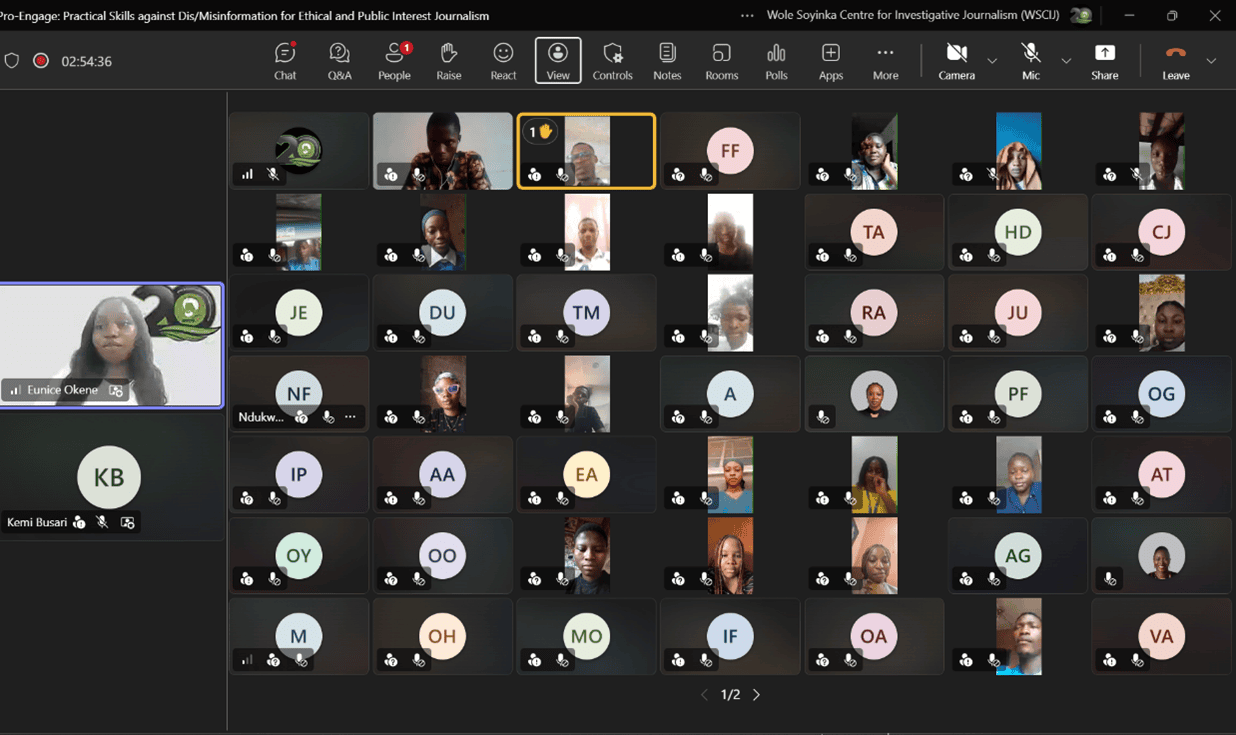
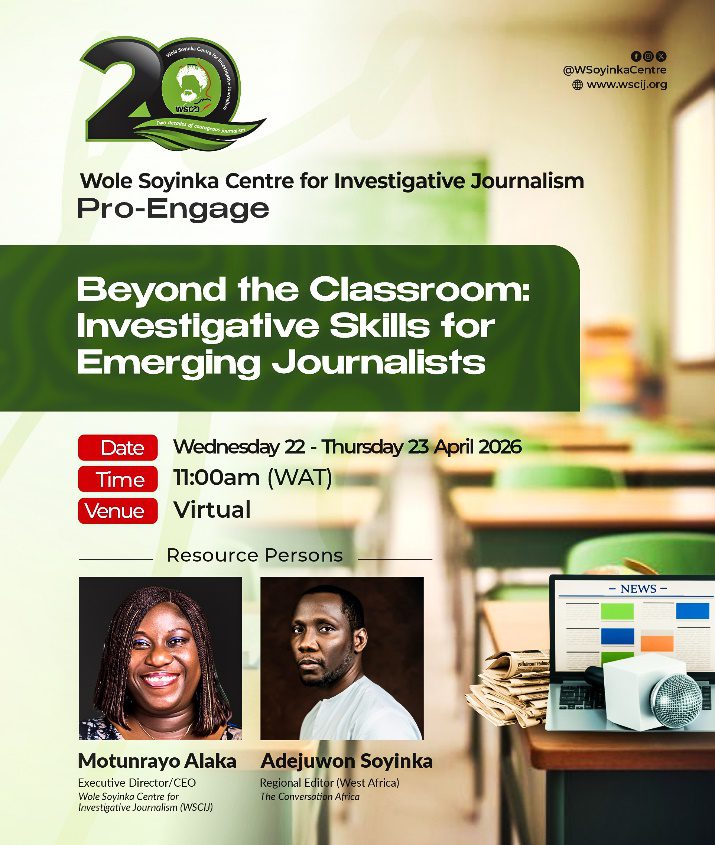
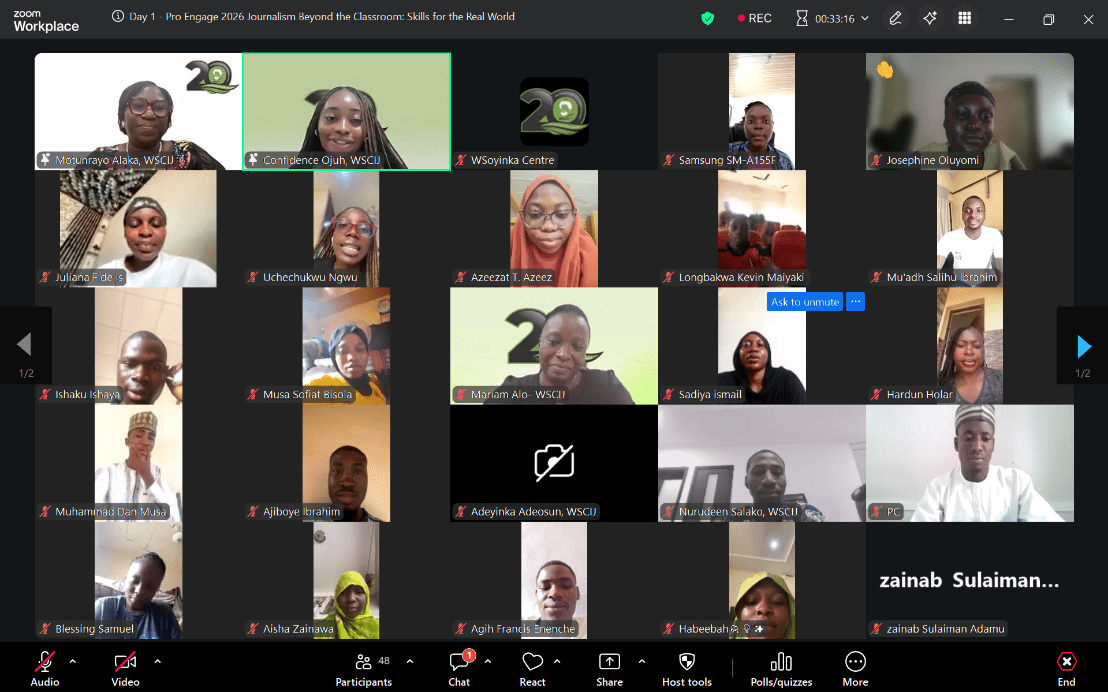
From ethics to storytelling, pitching and newsroom decision-making, over 62 young journalists from universities across Northern Nigeria participated in a two-day virtual Pro-Engage training organised by the Wole Soyinka Centre for Investigative Journalism (WSCIJ), held on Wednesday 22 and Thursday 23 April 2026. The training, themed ‘Beyond the Classroom: Investigative Skills for Emerging Journalists’, was designed to strengthen journalistic practice and deepen understanding of responsible journalism.
The programme brought together participants from the University of Abuja (UniAbuja), Abuja, University of Ilorin (Unilorin), Kwara State University, Malete (KWASU), both in Kwara State, Bayero University, Kano (BUK), Kano State, Federal University of Kashere (FUK), Gombe State, and Federal Polytechnic Bida (FEDPOBID), Niger State, creating a dynamic learning space where journalism was explored not just as a profession, but as a responsibility to truth, accountability, and public interest.
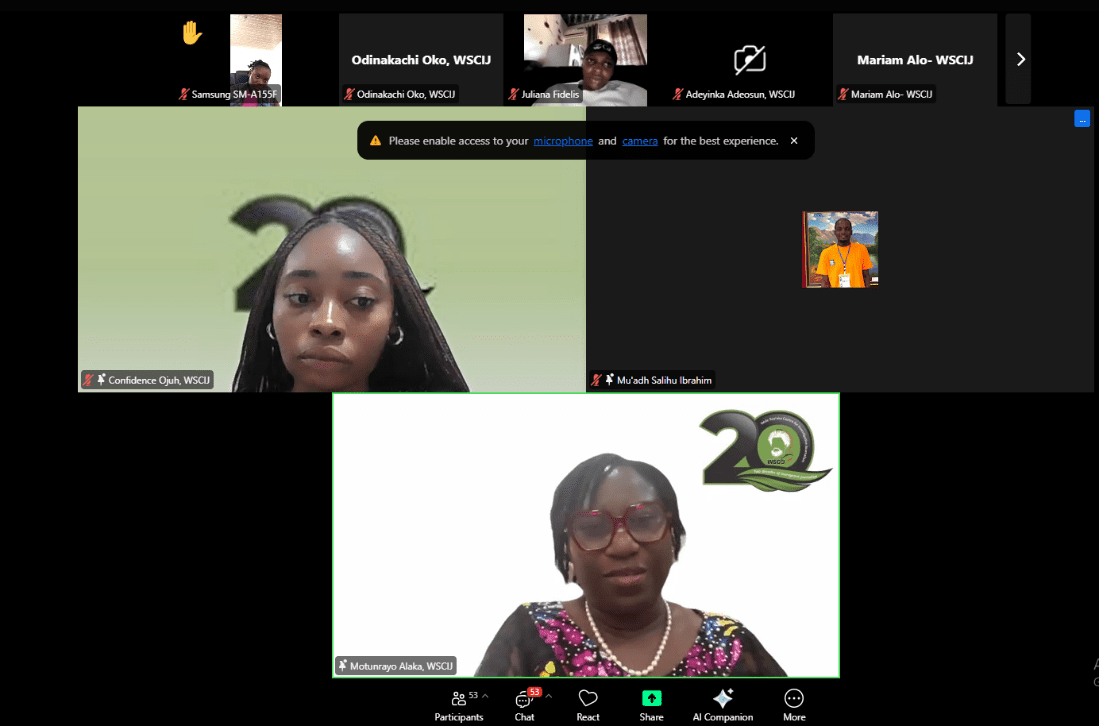
Day one opened with a grounding in ethical journalism, and was led by Motunrayo Alaka, Executive Director/Chief Executive Officer, WSCIJ, who challenged participants to rethink ethics beyond rules and regulations, framing it as the moral compass of journalism. She emphasised fact, accuracy, and balance as core pillars of reporting, while urging journalists to understand identity, manage bias, and prioritise accountability in their work.
She warned against the careless use of language in reporting, noting: “The use of language is a powerful tool in journalism. Some language can be inciting. As a journalist, do not be quick to use adjectives unless you have clear evidence. Stick to the bare facts.” Alaka also stressed that ethical decision-making in journalism requires judgement, not emotion, adding that, “There are never easy answers when it comes to ethics. Ethics is not driven by emotion, but by clear and deliberate judgement.”
Through interactive case studies and newsroom scenarios, participants engaged with real-life ethical dilemmas. A defining moment came during a breakout debate on the South Sudan “child and vulture” photograph by Kevin Carter, a South African photojournalist, which raised difficult questions around dignity, responsibility, and the limits of public interest journalism.
Split into opposing groups, participants argued the ethical tensions surrounding the publication. Faith Adama from UniAbuja maintained that journalists must report facts as they are, noting, “What would have happened if that picture was never taken?” Mu’adh Salihu Ibrahim, from BUK, defended the publication through the lens of impact, arguing that while compassion is essential, journalism’s duty is to expose reality and bring global attention to suffering.
On the opposing side, Blessing Samuel from UniAbuja stressed that humanity must come first, arguing that the photographer should have intervened, while Happy Ekwonye from UniAbuja reinforced that human life and moral responsibility outweigh professional detachment.
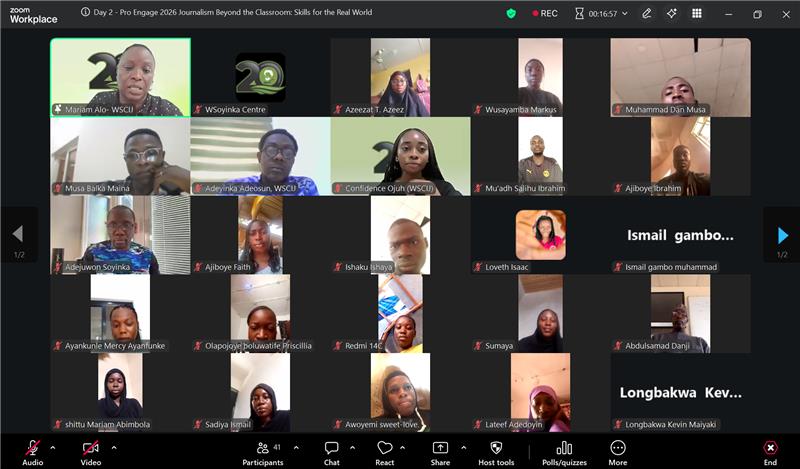
On the second day, the focus shifted to storytelling and pitching, led by Adejuwon Soyinka, Regional Editor (West Africa) at The Conversation Africa, who guided participants through the fundamentals of strong journalism, from story ideation to framing and audience relevance. “Story ideation begins with what you choose to notice.”
He challenged participants to see journalism as active observation rather than passive reporting, noting that strong stories often emerge from patterns, silence, and overlooked realities. On pitching, he emphasised clarity and precision, stating that: “If your story cannot be understood quickly, it is not ready. What is new? Why does it matter? How will it be reported?” Soyinka further reminded participants that impactful stories must be rooted in lived experience and accountability, built on trust and a clear sense of purpose.
A breakout pitching session saw participants develop story ideas across governance, health, education, power, and gender-focused issues, translating theory into practice. Representing group one, Ismail Muhammad from BUK, pitched on tracking budget spending at the local level. Mu’adh Ibrahim from BUK, presented group two’s pitch on wrong diagnoses in the health sector. Group three, represented by Shittu Abimbola from UniAbuja, focused on student mental health. Group four’s Loveth Isaac from FEDPOBID examined life in darkness and power challenges while group five’s Azeezat Azeez from Unilorin addressed violence against women.
Across both days, moderated by Mariam Alo, Programme Officer, and Confidence Ojuh, Communications Officer at WSCIJ, participants were guided to sharpen how they identify stories, structure narratives, and apply ethical judgement in reporting. The sessions reinforced the importance of specificity, human-centred storytelling, and editorial discipline. Participants were better equipped with technical skills, as well as critical thinking, confidence, and a stronger sense of responsibility in their journalism practice.
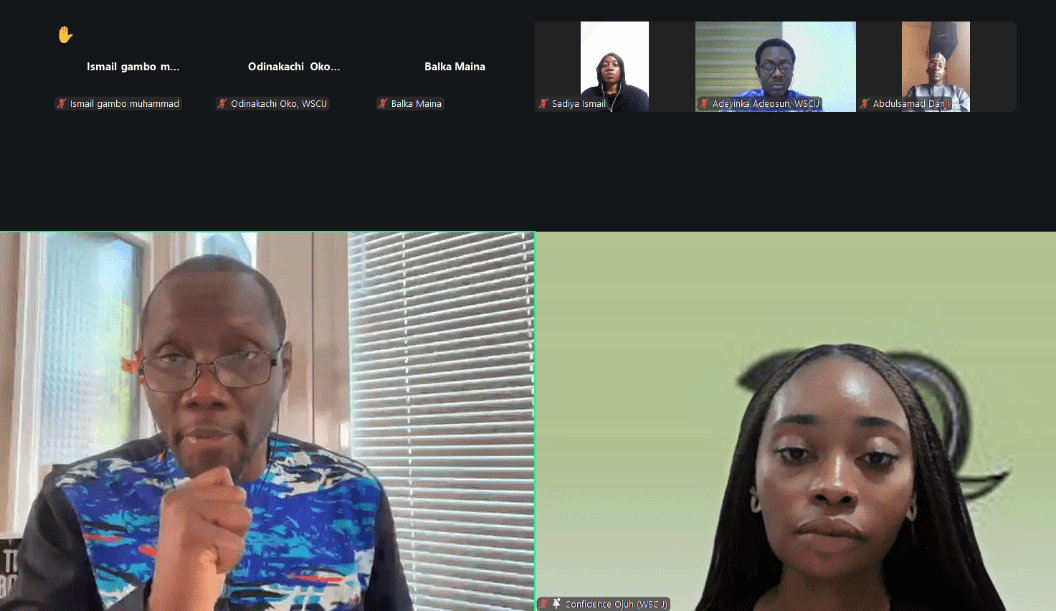
In a closing reflection from academia, Dr Balka Maina, Head of the Mass Communication Department, Federal University of Kashere (FUK), expressed appreciation to WSCIJ and Adejuwon Soyinka for the insightful session. He noted that there remains a gap between classroom learning and practical newsroom experience, adding that the training also provided him with valuable practitioner insights that will enhance his teaching in the classroom.
Launched in 2011, the Pro-Engage initiative remains part of WSCIJ’s broader commitment to nurturing a new generation of journalists who are ethically grounded, professionally equipped, and prepared to strengthen accountability in the public sphere.
Signed
WSCIJ Team