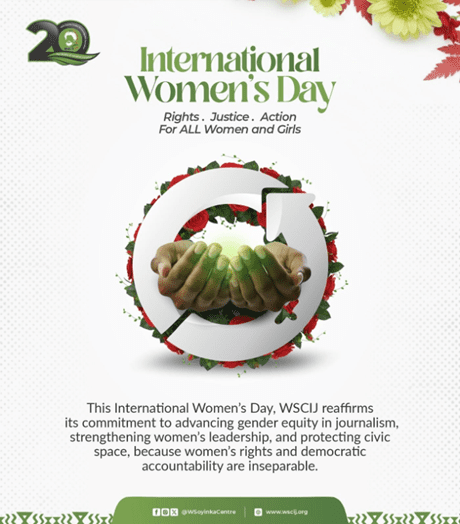
As the world marks International Women’s Day 2026 under the theme ‘Rights. Justice. Action. For ALL Women and Girls,’ the Wole Soyinka Centre for Investigative Journalism (WSCIJ) calls for urgent and deliberate action to close the gap between commitments to women’s rights and the realities faced by women and girls in Nigeria. Rights must not remain declarations; they must translate into justice, opportunity and leadership.
Globally, women continue to face structural barriers that limit their full participation in society. The United Nations reports that one in three women experiences physical or sexual violence in her lifetime, while disparities persist in political representation, economic participation and access to justice. These global realities mirror the Nigerian experience, where women and girls continue to confront sexual and gender-based violence, harmful practices, limited access to economic opportunities and persistent exclusion from political decision-making.
At the heart of these challenges is the question of access – access to safety, justice, education, economic opportunity and political power. Without these, rights remain theoretical. In Nigeria today, women remain severely underrepresented in leadership and decision-making structures, despite constituting nearly half of the population. This democratic deficit weakens governance, limits diverse perspectives in policymaking and slows national progress.
On this International Women’s Day, WSCIJ calls on the President of the Federal Republic of Nigeria to demonstrate national leadership by intentionally expanding the participation of women in political leadership and governance. This includes strengthening commitments to inclusive appointments, supporting reforms that remove structural barriers to women’s political participation, and championing policies that enable women’s access to education, economic opportunity and public leadership. The progress of women is beyond a women’s issue alone; it is a national development imperative.
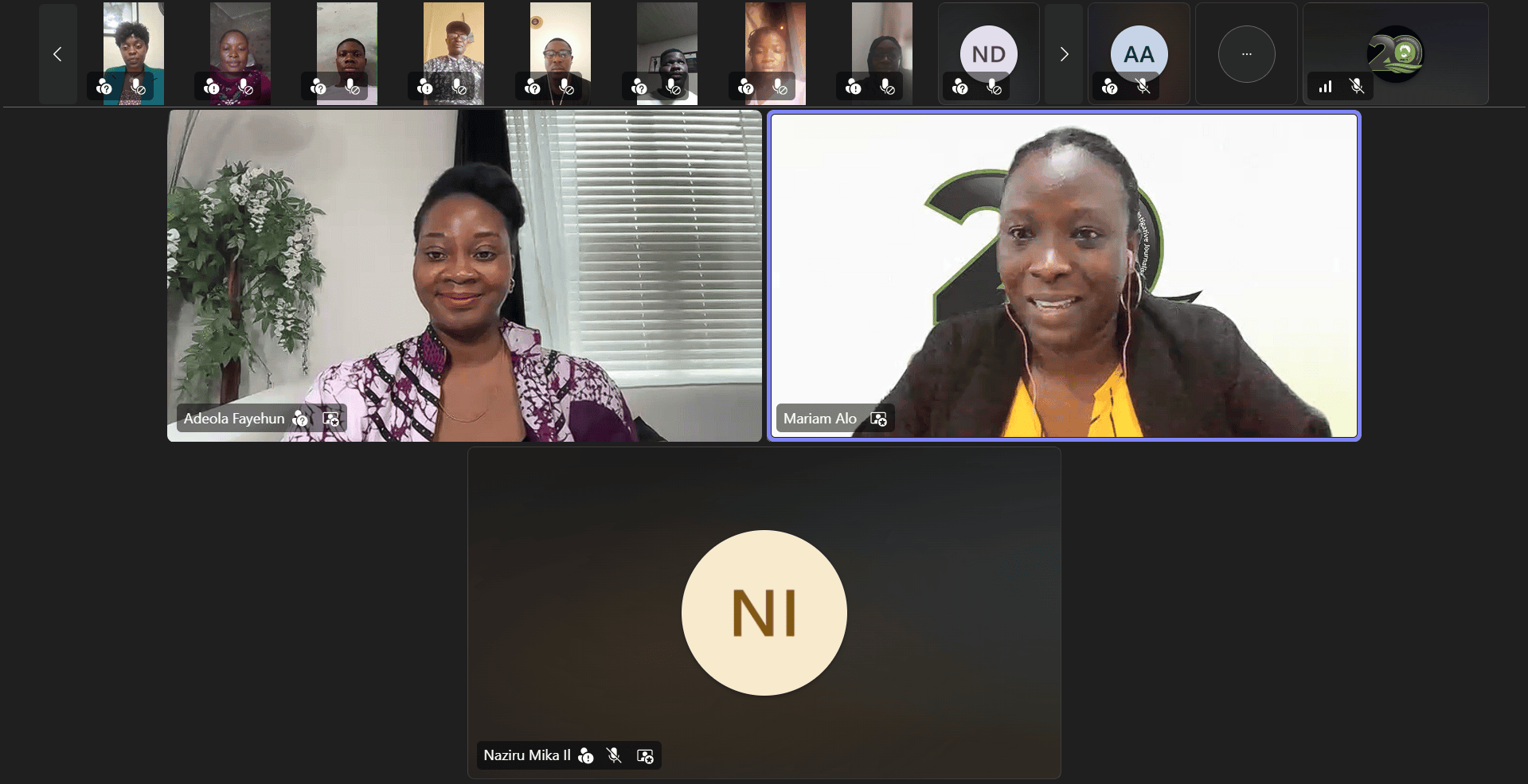
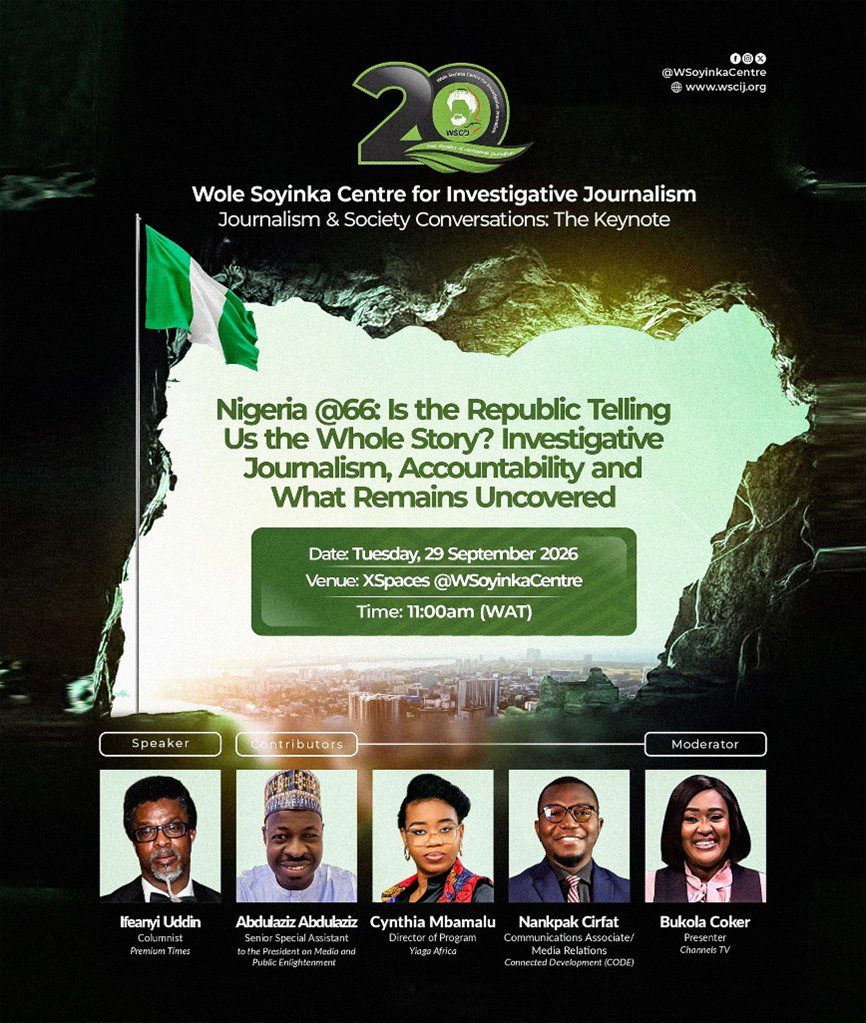
For over two decades, WSCIJ has worked to advance accountability journalism that exposes injustice and strengthens democratic participation. The Report Women! Programme, established by WSCIJ, focuses on two interconnected realities affecting women: access and abuse. Access refers to women’s ability to participate fully in political, economic, educational and social life, including the pathways that enable them to attain leadership and influence decision-making. Abuse refers to the systemic violence, discrimination and harmful practices that prevent women from achieving their full potential. Through journalism, research and leadership development, the programme interrogates both dimensions to promote a society where women can thrive.
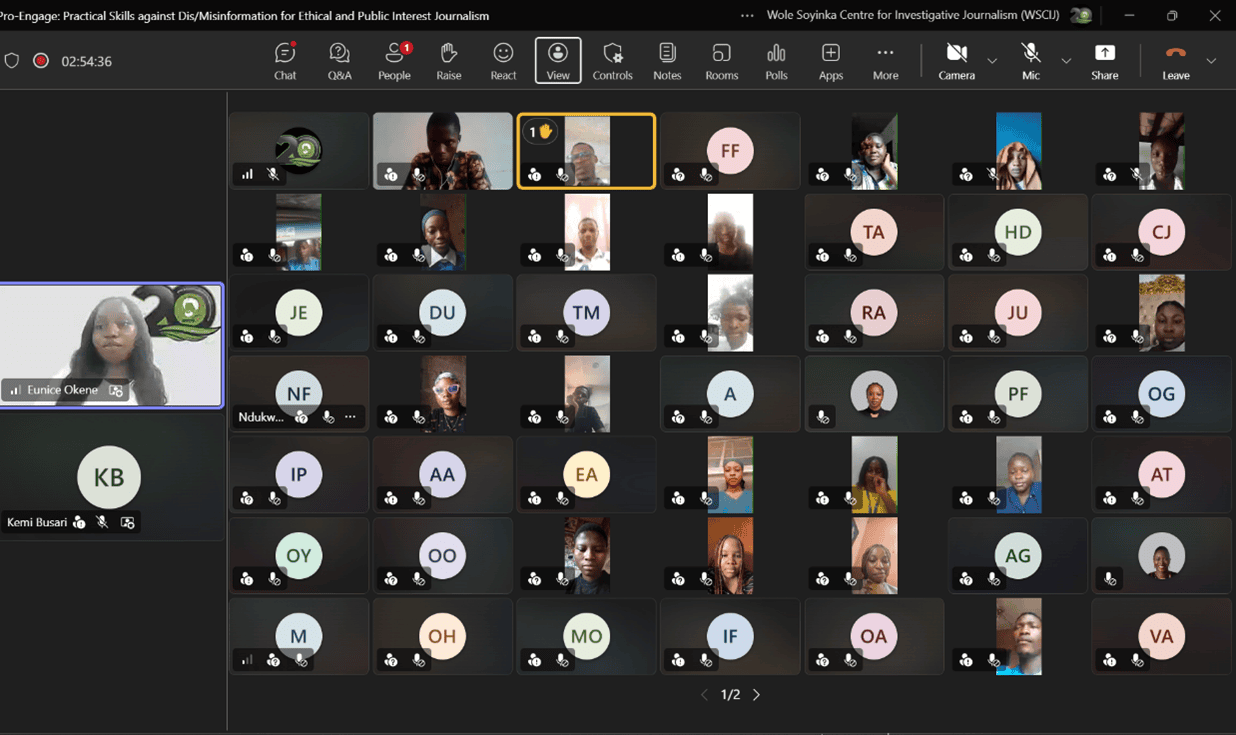
Through the Report Women! Female Reporters Leadership Programme (FRLP), WSCIJ has trained and mentored 98 women journalists, supporting the production of 148 investigative stories and 150 leadership projects that document abuses, challenge systemic inequality and advocate expanded access for women and girls. These stories have exposed gaps in justice systems, highlighted the persistence of harmful practices and brought attention to the structural barriers women face across sectors.
Last year, through the Report Women! Champion Building Edition, WSCIJ supported investigative stories exposing critical issues affecting women and girls. Hammad Abdulrasheed, a freelance reporter, in his investigation ‘Justice for Sale?’ examined how plea bargains and out-of-court settlements in rape cases enable perpetrators to evade accountability, exposing systemic weaknesses that deny survivors justice. In ‘VAPP On Paper, FGM In Practice,’ Issac Olufemi, senior news reporter at Splash 105.5 FM, highlighted the persistence of female genital mutilation in Oyo State despite the domestication of the Violence Against Persons (Prohibition) Act, a concern further explored in Juliana Francis’ three-part series, ‘Beyond the VAPP Act.’ Marie-Therese Nanlong, a reporter with Vanguard Newspaper, in ‘Abandoned by the System: Silent Crisis of Plateau Displaced Women and Girls,’ documented how conflict and institutional neglect deepen the vulnerabilities of displaced women and girls.
WSCIJ’s research also interrogates inequalities within the media itself. The 2024 report, ‘Who Leads the Newsrooms and News?’, shows that women occupy only 25.7% of newsroom leadership positions in Nigeria, reinforcing how gender imbalance shapes both newsroom leadership and public narratives. Increasing women’s representation in journalism is therefore about fairness and ensuring that public discourse reflects the experiences and expertise of all citizens.
The evidence is clear: when women lack access and face persistent abuse, societies lose talent, perspective and progress, the face and voice news is currently male. Conversely, when women have equal opportunities to lead, communities become more prosperous, institutions more accountable and democracies more resilient as the Global Human Development Index (HDI) shows.
On this International Women’s Day, WSCIJ calls for deliberate national action to expand women’s access to leadership including in the media, strengthen protections against abuse and ensure that rights are translated into justice and opportunity. Journalism will continue to play its role in documenting realities, demanding accountability and amplifying the voices of women and girls.
International Women’s Day must therefore be more than a commemoration. It must be a commitment to ensuring that every woman has the access she needs and the protection she deserves to reach her full potential.
Signed:
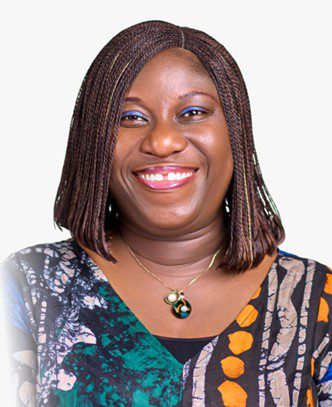
Motunrayo Alaka
Executive Director/CEO
Wole Soyinka Centre for Investigative Journalism (WSCIJ)