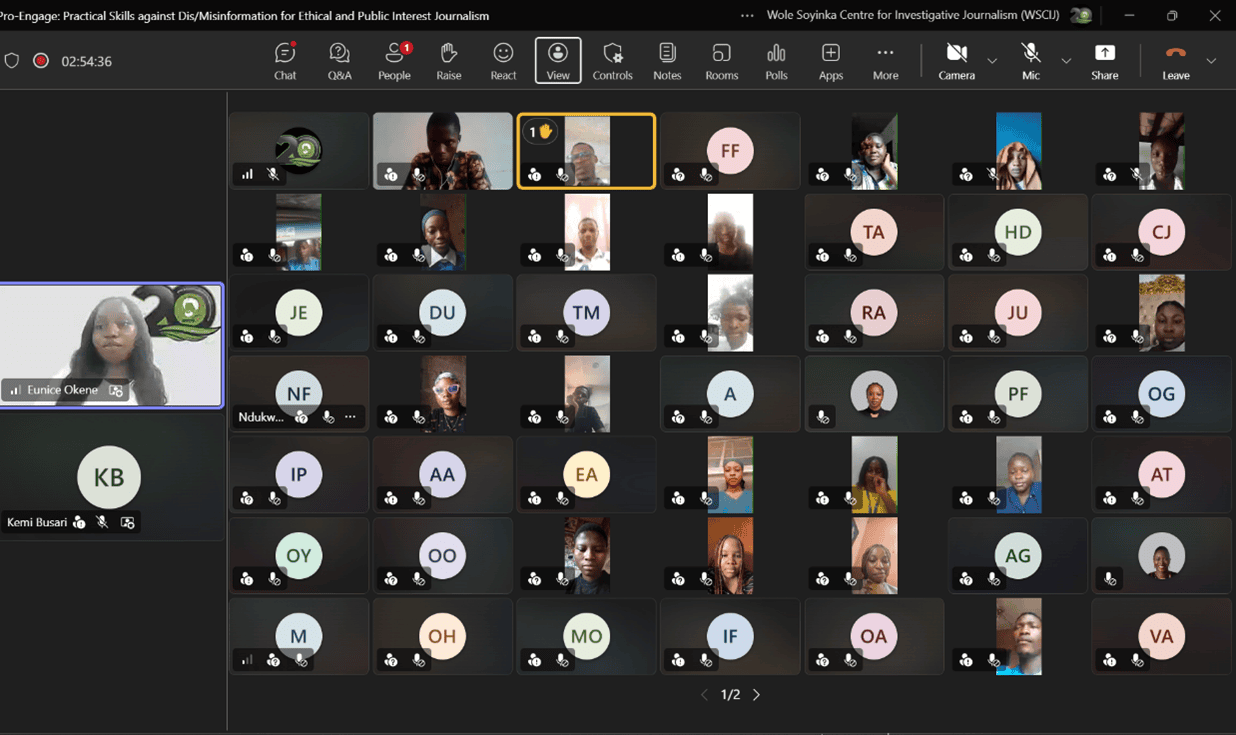
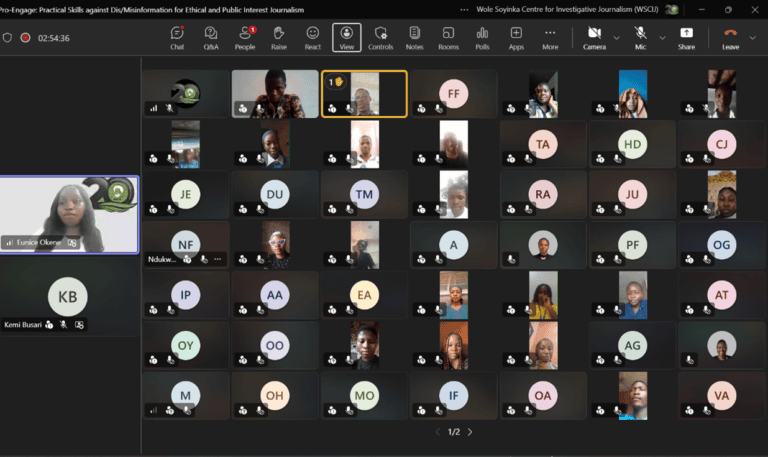
‘Getting it right before getting it out’ was the thread running through two days of Wole Soyinka Centre for Investigative Journalism’s Pro-Engage 2026 Western Edition, where 185 student journalists from 12 institutions across South-West Nigeria were challenged to approach journalism with the discipline to verify information, the judgement to report responsibly and the skills to navigate an increasingly complex information environment.
Held virtually on Thursday 17 and Friday 18 September 2026, the training was themed “Beyond the Classroom: Investigative Skills for Emerging Journalists,” with the sub-theme “Practical Skills against Dis/Misinformation for Ethical and Public Interest Journalism.” From ethical decision-making and the responsibility to avoid harm to fact-checking, digital verification, OSINT and AI, the training reinforced a simple but essential principle: what journalists put before the public must be accurate, responsible and supported by evidence.
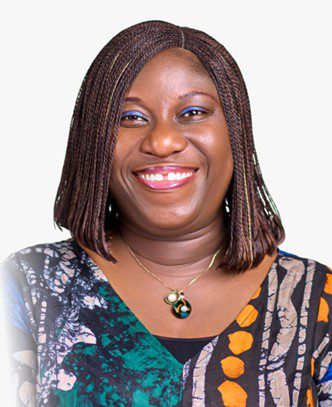
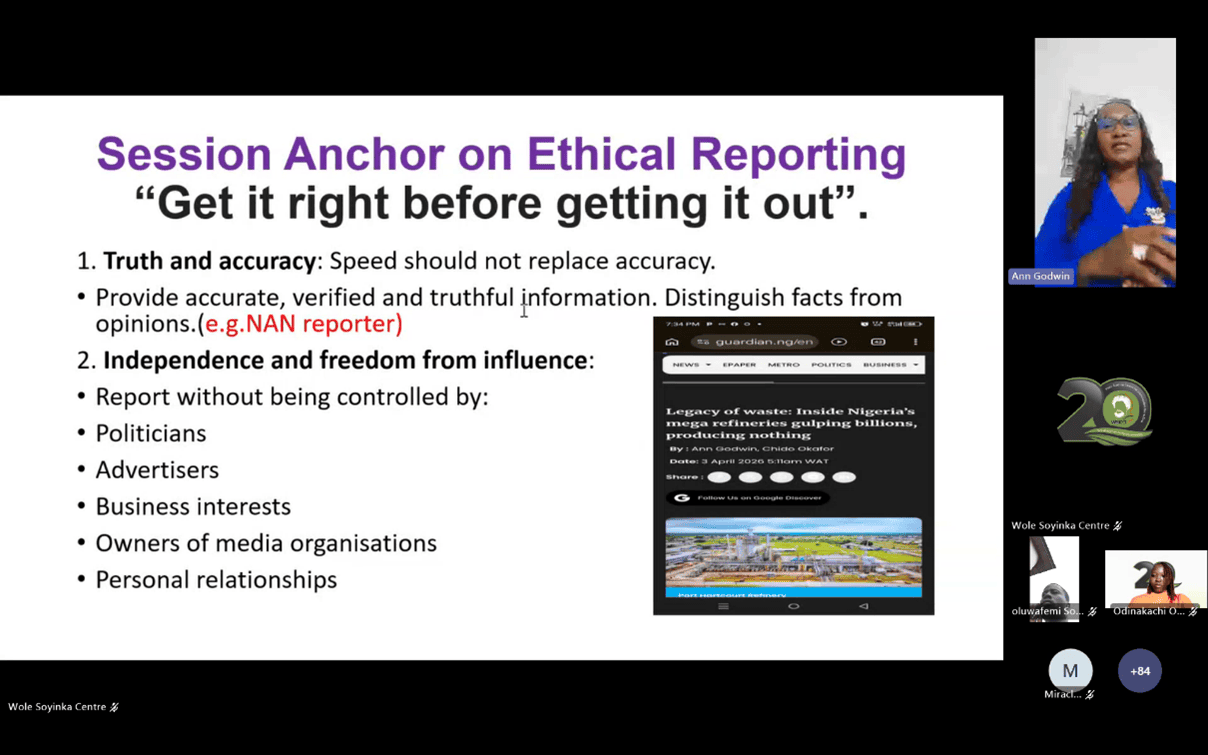
The training opened with “Ethics and the Social Responsibility of the Press,” led by Ann Godwin, South-South Bureau Chief of The Guardian Newspaper and a Fellow of WSCIJ’s Report Women! Programme. She challenged participants to see ethical journalism as more than knowing the rules, but as making deliberate choices about accuracy, fairness, independence and the potential consequences of what they publish.
Godwin stressed that responsible reporting is also about knowing what not to compromise. Journalists, she said, must remain independent, avoid becoming indebted to powerful people through favours, give people a fair opportunity to respond and protect privacy and human dignity. She further urged participants to consider three questions before publishing: “Is it true? Is it fair? Is it lawful, ethical and up to professional standards?” She also challenged the students to think beyond waiting for news to come to them. Curiosity, observation, documentation, interviews and follow-up reporting, she noted, can open a steady stream of accountability stories. When presenting those stories, she encouraged them to humanise the people affected, explain why the story matters, interpret data rather than simply present it, and seek expert or legal review where necessary.
Through discussions, questions and a practical exercise, participants examined difficult reporting choices and how journalists can balance accuracy, fairness, accountability, and public interest while protecting human dignity. Working in three teams, they reviewed three media materials: a viral image of an arrested woman in Anambra State discussing the money she made after posting her daughter’s pornographic image on social media; an image of the Aleto-Eleme Bridge in Rivers State where a vehicle had plunged over it; and a social media post that says, “So it’s over for Governor Sim Fubara”. The exercise challenged participants to consider the context, verification and ethical questions that should guide the publication of such materials.
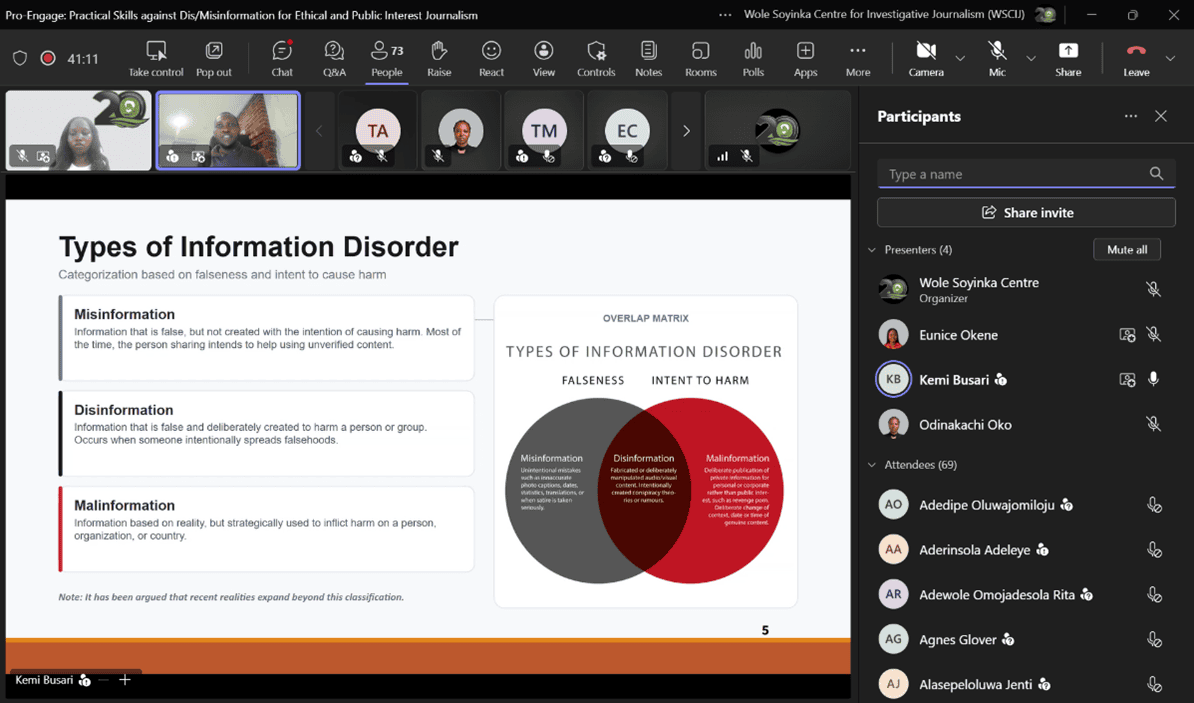
The second day turned to verification as award-winning investigative journalist and DUBAWA Editor, Kemi Busari, led a session on “Verification, Fact-Checking, OSINT and AI.” Busari introduced participants to information disorder ecosystem, examining misinformation, disinformation and malinformation and how each can distort the information available to the public. “For us as journalists, public interest is the most significant thing”.
Moving from understanding the problem to addressing it, Busari walked participants through the fact-checking process, from sourcing and researching a claim to writing, editing and distributing the final report. He emphasised that fact-checking goes beyond determining whether a claim is true or false; it requires journalists to distinguish credible information from unreliable content, identify misrepresentations, verify assertions and establish the accuracy and origin of information. He also stressed that journalists cannot rely solely on their instincts when verifying information, introducing participants to digital tools for image and video verification, source checking and identifying AI-generated or manipulated content. These included Google Images, Yandex, InVID, Google Earth, Wayback Machine, ScamAdviser, Hive Moderation, Image Whisperer and Hiya Deepfake Voice Detector.
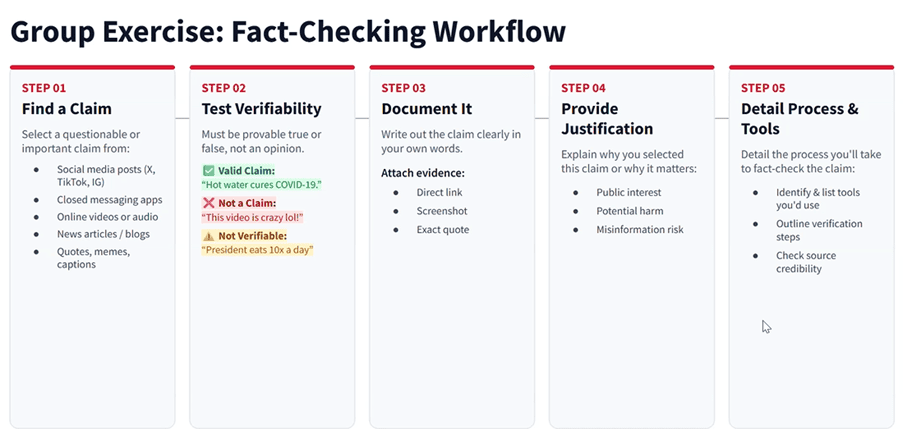
The session extended beyond verification to the writing, editing and distribution of fact-checks. Participants then worked in five groups through a fact-checking workflow, selecting a questionable or significant claim from social media or other sources, assessing whether it could be verified, and clearly presenting the claim in their own words. They also explained why the claim mattered and outlined the steps they would take to fact-check it. The exercise moved participants beyond learning about digital verification tools to applying them in a practical, newsroom-style setting.
The Western Edition brought WSCIJ’s 2026 Pro-Engage engagements to a close, following earlier editions in the Northern and South-Eastern regions. With students drawn from the University of Ibadan, Lagos State University, Babcock University, Crescent University, Yaba College of Education, Ladoke Akintola University, SouthWestern University, Bamidele Olumilua University, Augustine University, Achievers University, Pan-Atlantic University and Mountain Top University, the Western Edition further extended WSCIJ’s engagement with the next generation of Nigerian journalists. The two-day sessions were moderated by Odinakachi Oko, Programme Assistant, WSCIJ, on Day One, and Eunice Okene, Programme Assistant, WSCIJ, on Day Two.
Pro-Engage is WSCIJ’s flagship student engagement initiative, designed in 2011 to expose emerging journalists to practical knowledge, professional perspectives and skills that can strengthen their journalism beyond the classroom. The Western Edition reinforced the Centre’s commitment to helping student journalists develop the ethical judgement and investigative skills needed to produce accurate, evidence-based and public-interest journalism.