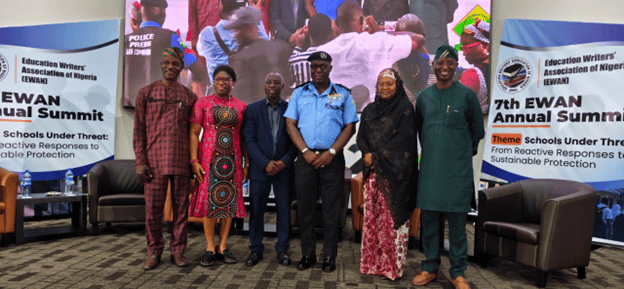
Stakeholders in the education and media sectors have called for coordinated, preventive measures to address attacks and abductions affecting schools across Nigeria, emphasising the need for stronger accountability, evidence-based reporting and collaboration among government, security agencies, school authorities and communities.
The call was made at the seventh annual summit of the Education Writers’ Association of Nigeria (EWAN), themed “Schools Under Threat: From Reactive Responses to Sustainable Protection.”
Delivering his welcome address, Mojeed Alabi, Chairman of EWAN, stressed that children cannot be considered safe until all schools are protected. He noted that persistent attacks and abductions continue to disrupt learning and endanger pupils, teachers and communities, urging stakeholders to make school protection a national priority.
Similarly, Prof. Oluwatoyin Ogundipe, Chairman of the Governing Board of the National Universities Commission (NUC), represented by Prof. Joseph Awoyinfa, Dean of the Faculty of Arts, University of Lagos, advocated a unified national framework to identify threats early, prevent attacks and ensure continuity of learning during crises. He called for functional emergency response plans, regular safety training for teachers and administrators, age-appropriate safety education for pupils, and increased investment in security infrastructure, safe transportation and psychological support for survivors.
In his keynote address, the Inspector-General of Police (IGP), Tunji Disu, represented by the Commissioner of Police, Lagos State Command, Tijani Fatai, called for stronger intelligence-led policing, improved emergency preparedness and collaboration among security agencies, school authorities, communities and the media.
Disu stressed the importance of identifying threats early, strengthening intelligence gathering and establishing effective channels for reporting security concerns. He noted that insecurity disrupts academic activities, traumatises families and communities, and threatens national development.
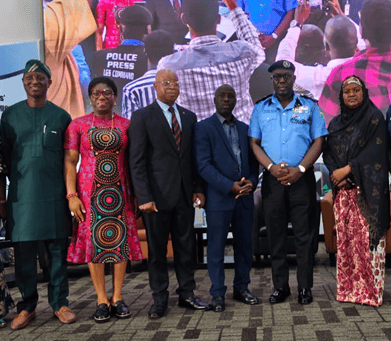
He reaffirmed the Nigeria Police Force’s commitment to crime prevention, intelligence-led operations and community engagement. He also urged journalists to investigate policy implementation, verify information before publication and protect the identities and dignity of children and other vulnerable people. He cautioned against sensationalism, misinformation and the disclosure of sensitive operational details that could compromise security efforts.
Speaking as a panellist, Motunrayo Alaka, Executive Director/CEO of the Wole Soyinka Centre for Investigative Journalism (WSCIJ), said Nigeria’s education challenges must be consistently reported down to the local level, describing the large number of out-of-school children as a a blight on the nation.
“Nigeria cannot be truly independent until it fixes the education of the Nigerian child holistically. We cannot talk about independence as a country without that,” she said.
Alaka highlighted WSCIJ’s support for education reporting, citing stories by Sharon Ijasan of Television Continental and Kayode Olanrewaju of New Telegraph on school safety and the state of basic education. She noted that such reporting should prompt government and society to take proactive steps to protect pupils and teachers.
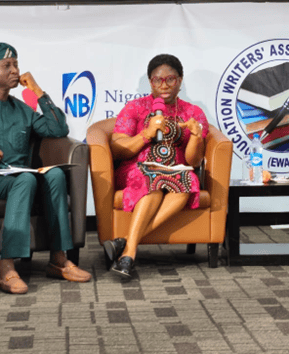
“The safety of a community determines the safety of schools in that community,” she said, urging journalists to go beyond reporting incidents to examine whether schools meet established safety standards.
According to Alaka, WSCIJ’s media monitoring under its Basic School Education project shows that some journalists lack adequate knowledge of the standards schools are expected to meet, including requirements for school design, perimeter fencing and security. She called for improved understanding of these benchmarks to help journalists identify vulnerabilities and hold responsible authorities accountable.
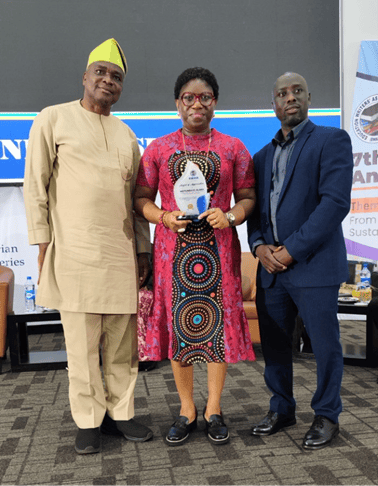
Alaka further urged stakeholders to ensure that findings from education reporting inform practical action. This, she said, requires tracking government commitments, assessing implementation and determining whether interventions improve access to education and protect learners.
“The real measure of sustainable protection is whether children can reach school, remain in school and learn without fear,” Alaka said, calling for commitments backed by clear responsibilities, timelines and verifiable outcomes.
Other panellists at the programme who also underscored the imperative of state provision of safe and affordable schools, for Nigerian children, included Halima Iliya, National Coordinator, Financing Safe Schools in Nigeria; Jamiu Alli-Balogun, Commissioner for Basic and Secondary Education, Lagos State; Dr. Robert Okorie, National President of the All Nigeria Confederated of Principals of Secondary Schools (ANCOPSS), represented by Maseyi Olusola, Lagos State Chairman of ANCOPSS; and Comrade Audu Titus, National President of the Nigeria Union of Teachers (NUT), represented by Akintoye Hassan, Chairman of the NUT, Lagos State Chapter.