As we step into March, a month dedicated to celebrating women’s achievements while advocating for greater equity, we do so in a world marked by deepening conflict, geopolitical tension, information warfare, and stress on democratic institutions. In such moments, the role of journalism becomes both more vital and more threatened. And within that space, women journalists are often disproportionately exposed to harm.
Across Africa and globally, women in media face targeted harassment, coordinated digital abuse, legal intimidation and physical threats that seek to silence them. According to UNESCO’s landmark global study, 73 per cent of women journalists (three out of four) have experienced online violence, the report features the harrowing experience of South African journalist Kgomotso Modise, whose investigative work on criminal justice triggered severe, sexualised cyber abuse and threats against her family.
But in this fractured world, female journalists are leading critical work. From uncovering global corruption in “The Coin Laundry” (ICIJ, 2025) – a cross-border investigation led by over 100 journalists, including significant female leadership, into how crypto platforms move illicit funds to documenting the human cost of military spending and conflict, women are at the forefront.
Here at WSCIJ, through the ReportWomen! Female Reporters’ Leadership Programme (FRLP), we have supported women to lead reporting that drives accountability and transparency. Stories like, Nowhere Safe: Femicide Online and Offline in Nigeria, by Gloria Attah of Clearview TV examines the rising threat of femicide facilitated by social media and digital platforms, highlighting how online abuse escalates real-world harm against women, while Agonies of Female ‘Gentlemen of the Press’ by Faith Yahaya of The Nation interrogates the sexual harassment, workplace discrimination, and structural barriers female journalists endure in the course of their work.
Today’s environment calls for more than recognition. Defending press freedom must also mean defending inclusion, safety, and equitable power within journalism itself. When women journalists are targeted or pushed to the margins, democracy itself suffers. A free press is not free if half the population is effectively excluded from shaping the stories that define our times.
Motunrayo Alaka
Executive Director/CEO, WSCIJ
Opportunities for Journalists
- Join CJID as a Campus Reporter Editor
- HumAngle Foundation Opens Applications for 2026 APSJ Workshop for Nigerian Journalists
- Tactical Tech Invites Investigators and Media Experts to Create Learning Resources and Conduct Training
- Apply for CJID’s Northern Nigeria OSINT Research Fellowship Application
- Follow the Money is Hiring: Data Journalist Wanted for Investigative Stories Exposing Corruption and Power Abuse
- Reporting on Business and the Economy? Apply for the 2026 McGraw Fellowship
- Apply for the AAOSI Fellowship Programme for Journalists
- Apply for the Safe Haven Fellowship for Journalists, Scholars, Artists, and Writers at Risk of War
- Journalists can apply for the International Media Studies Master’s Degree Scholarship Programme in Germany
- Apply Now: Senior Communications & Media Manager – Driving ONE’s Youth Impact
- Turn Your Investigative Idea Into Reality: Apply for McGraw Center Grants
- Entry submissions are open now for the 2026 Covering Climate Now Journalism Awards
- International Press Institute & International Media Support Call for Nominations for 2026 Press Freedom Awards
- News Central TV is seeking an experienced Social Media Manager to join its team
Explore more fellowships, awards, and opportunities for journalists here.
Coming Next at WSCIJ
Journalism & Society Conversations
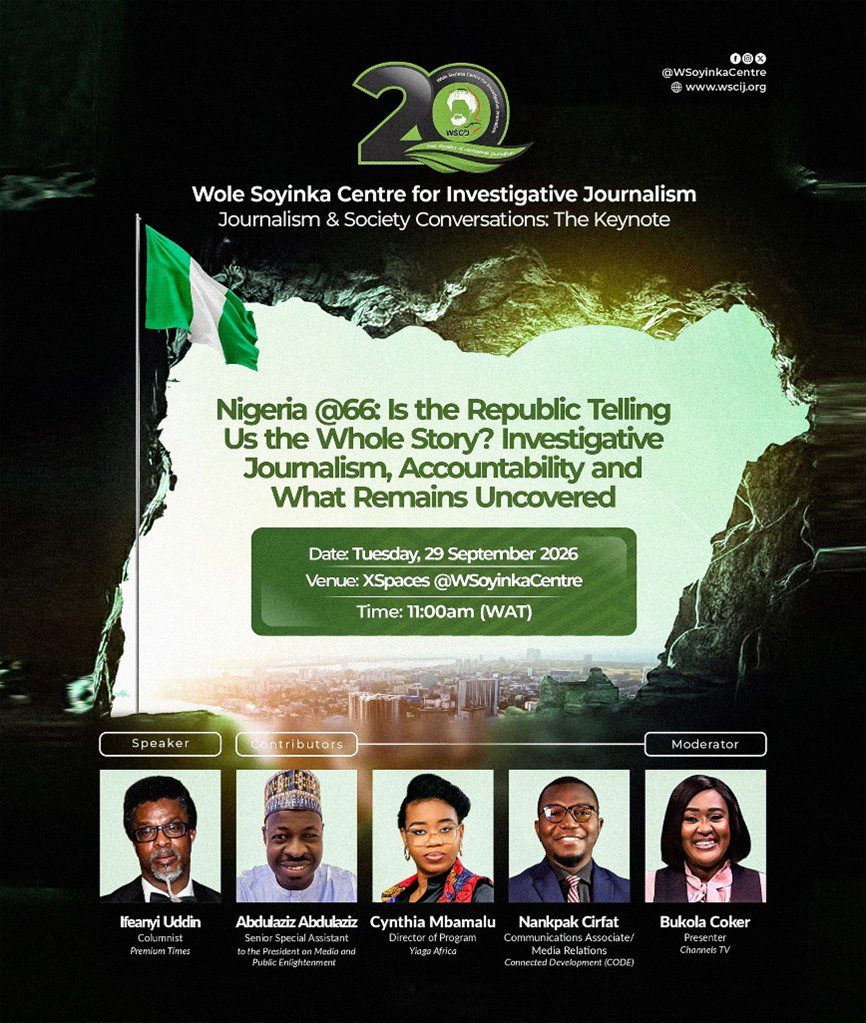
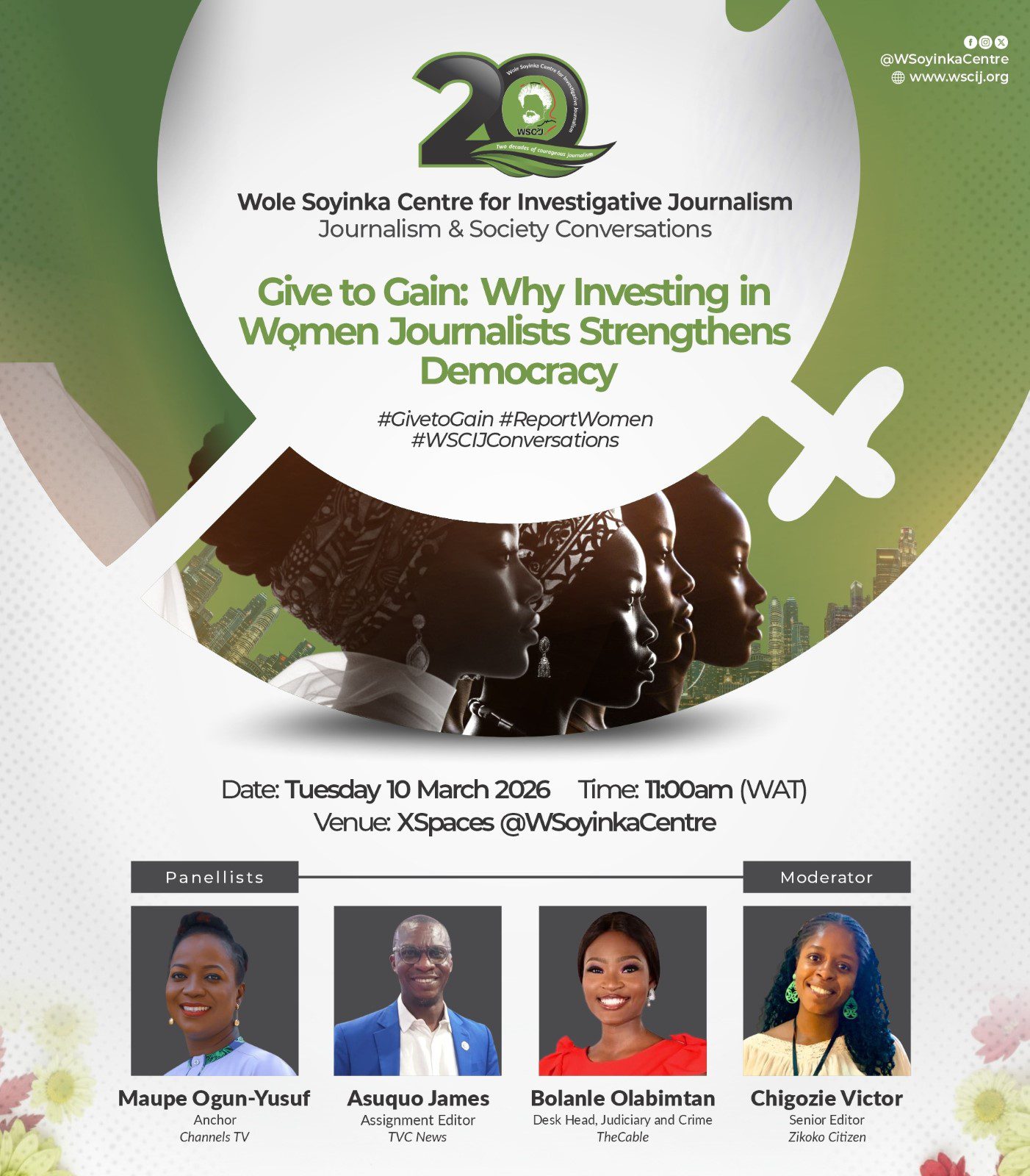
On 10 March 2026, join us by 11:00am (WAT) on WSCIJ’s X handle for this month’s Journalism and Society Conversations themed “Give to Gain: Why Investing in Women Journalists Strengthens Democracy” as we discuss newsroom leadership, policies, and what journalism stands to gain with more women as leaders in the newsroom.
Mental Health Workshop
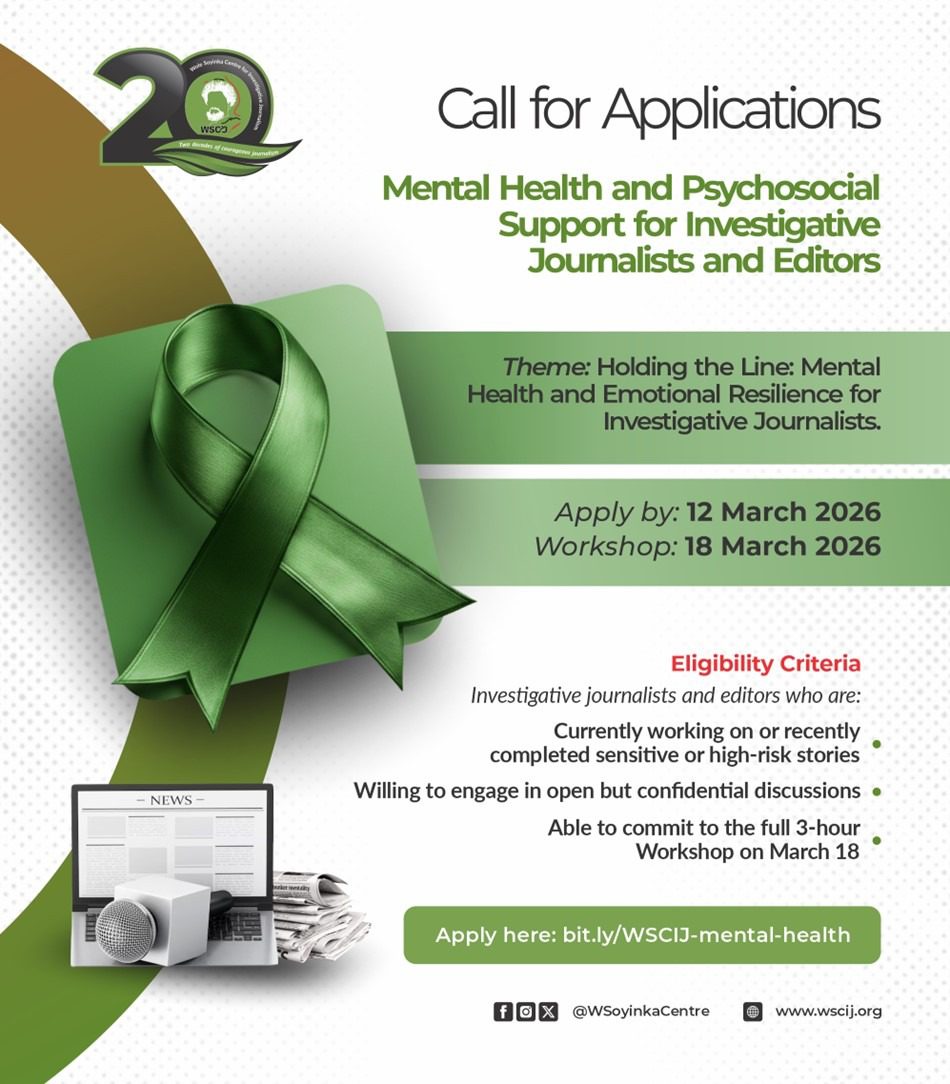
On Tuesday, 18 March, WSCIJ will convene a one-day virtual Mental Health Workshop for journalists- a safe, confidential and interactive space designed for open and honest conversations about the realities of the profession. The session will feature facilitators sharing practical insights drawn from both their professional work and personal journeys, alongside clinical perspectives on trauma and early warning signs of stress.
Female Journalists & Media Executives Timeout
We will be hosting female journalists and media executives, including our FRLP alumni and Soyinka Laureate, on 26 March 2026 for an evening of impactful conversations on leadership and the power of women’s voices in media.

Inside WSCIJ – How we Showed up in February
Biodun Jeyifo: A Legacy of Thought, Truth, and Enduring Impact
On Wednesday, 4 March 2026, we joined scholars, media leaders and the public to celebrate the life and works of Biodun Jeyifo during his burial at the International Conference Centre, University of Ibadan, where tributes reflected his enduring contributions to literature, public thought, and democratic engagement.
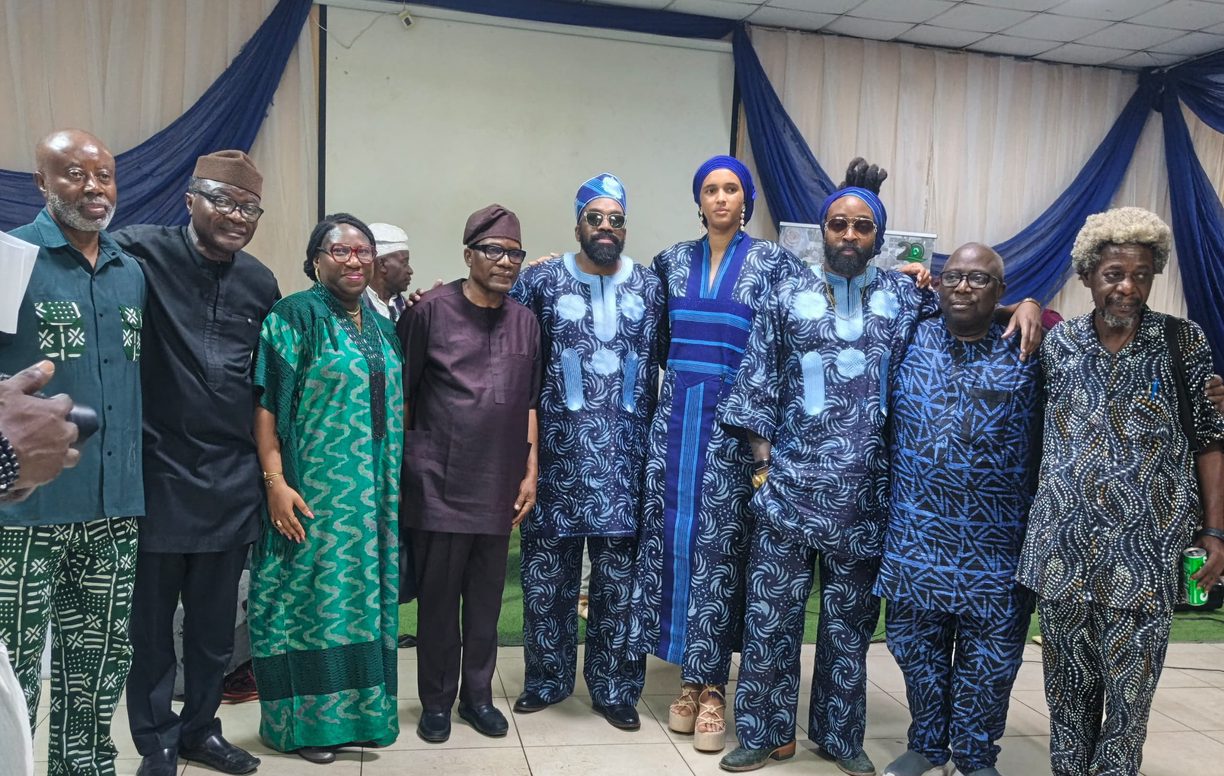
For the Wole Soyinka Centre for Investigative Journalism (WSCIJ), the moment was also one of gratitude, that his life and intellectual contributions were honoured during the symposium convened on Monday, 5 January 2026, to mark his 80th birthday.
Biodun Jeyifo (BJ) leaves behind a legacy of fearless scholarship, mentorship, and intellectual rigour. His insights on truth, culture, and justice continue to inspire journalists, scholars, and communities alike, reminding us that rigorous inquiry and compassionate teaching leave an imprint far beyond a lifetime. His life will continue to illuminate the pursuit of knowledge and critical thought.
AI in the Newsroom, Accountability at the Core.
As artificial intelligence reshapes modern newsrooms, one question takes centre stage: how can journalists innovate without compromising accountability? That focus defined the RUSH with AI training we convened on Thursday 26 February 2026, for radio and audio journalists across Nigeria and other African countries. The takeaway was clear: AI may enhance the workflow, but accountability, ethical judgement, and the duty to follow through remain firmly human responsibilities.
WSCIJ at the Africa Media Festival 2026
Our Executive Director/CEO, Motunrayo Alaka, participated in the fourth edition of the Africa Media Festival, held in Nairobi, Kenya, from 25–26 February 2026. She attended the festival in her capacity as a board member of Baraza Media Lab, the organisation that convenes the annual pan-African gathering of media and creative sector leaders.
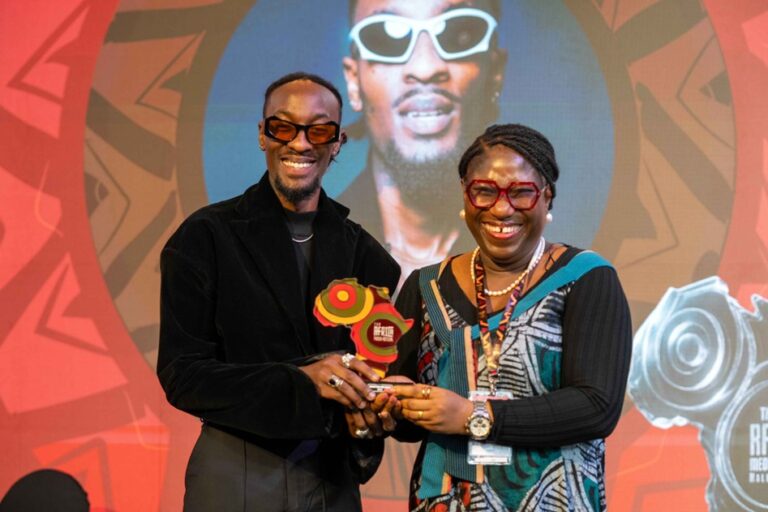
During the festival’s awards ceremony, she presented the inaugural Creator for Good Award to Ziya Africa, recognising the growing role of purpose-driven digital creators who use their platforms to promote civic engagement, social awareness, and accountability.
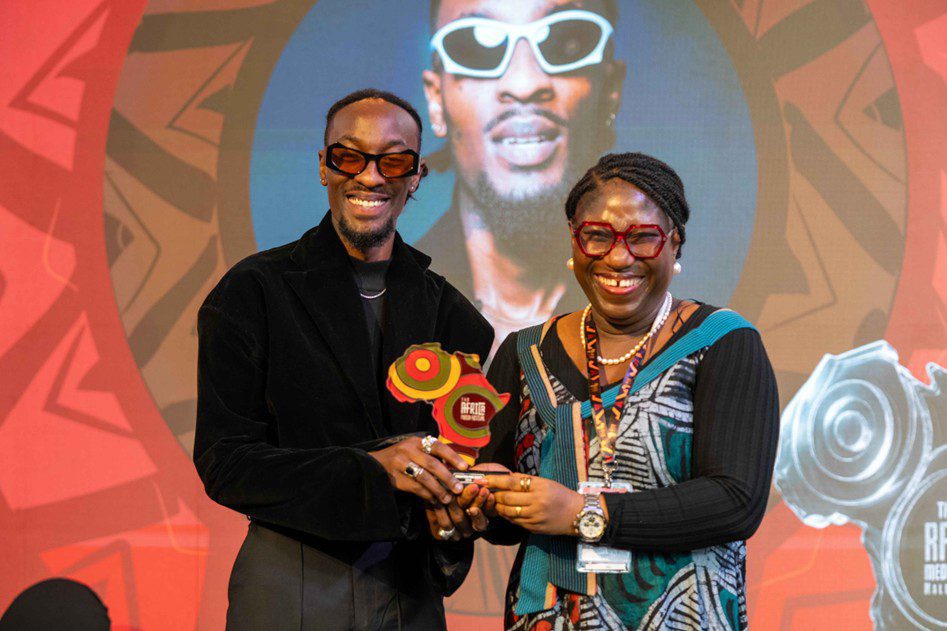
The festival brought together journalists, filmmakers, technologists, funders, and media innovators from across the continent, providing an important platform for dialogue, collaboration, and shared learning. WSCIJ’s participation reinforces our commitment to strengthening partnerships and advancing journalism across Africa.
Pause. Reflect. Protect Press Freedom.
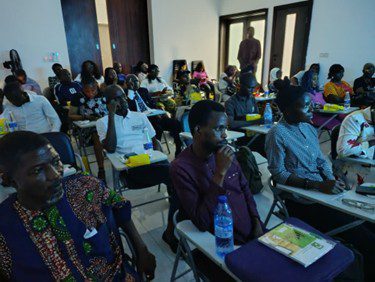
“Journalism is not a luxury in a democracy. It is its backbone.” That powerful charge from Motunrayo Alaka, Executive Director/CEO, WSCIJ, set the tone as the Centre convened over 30 journalists in Lagos for its 2026 Journalists’ Timeout on Wednesday 25 February 2026. Anchored by a compelling screening of The Legend of the Vagabond Queen of Lagos and a candid conversation on forced evictions and press freedom, the evening became more than a pause from headlines and deadlines. It was a moment of reckoning, a renewed commitment to safeguard journalists and to stand firmly with the communities whose stories must be told, especially when power would rather, they remain unheard.
WSCIJ Champions Safe and Inclusive Workplaces
To mark the World Day of Social Justice on 20 February 2026, we called on journalists to report on unsafe workplaces, gaps in social protection, and systemic neglect. Through investigative journalism, reporters can hold power accountable and help build safe, inclusive, and equitable work environments where everyone, especially women and young people, can thrive.
Trust Still Rules: Why Radio Remains Indispensable in the Age of AI
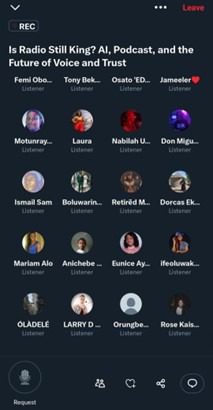
Amid AI, podcasts, and a flood of digital content, one truth stood out at WSCIJ’s World Radio Day conversation: trust is radio’s crown. At the special edition of our Journalism and Society Conversations on Friday, 13 February 2026 – ‘The Keynote, Femi Obong-Daniels, General Manager, CoolWazobiaInfo FM, Kids FM and Arewa Radios reminded participants, “AI should sit in the engine room, not behind the microphone.” Technology may evolve, but credibility, judgement, and the human touch remain irreplaceable, ensuring radio’s relevance today and for years to come.
Journalism as a Voice of Reason in a Time of Global Crisis
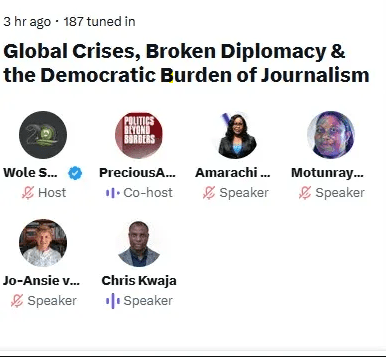
Research Professor of International Politics, University of South Africa, Pretoria, South Africa, Jo-Ansie van Wyk said it best at the February edition of our Journalism & Society Conversations: “Journalism must remain a voice of reason,” highlighting the urgent need for African perspectives amid global crises. Held on Tuesday, 10 February 2026, under the theme ‘Global Crises, Broken Diplomacy, and the Democratic Burden of Journalism’, the session gathered experts to discuss how journalists can go beyond reporting events, elevate Africa’s stories, and help citizens make sense of the forces shaping their lives.
Journalism Today
Rethinking Newsroom Sustainability
Today in journalism, global research shows that economic instability and shifting digital consumption patterns continue to threaten newsroom viability. The Reuters Institute for the Study of Journalism, in its recent Digital News Report, notes declining trust levels and fragmented audiences are forcing media organisations to rethink sustainability models. Through our Collaborative Media Engagement for Development, Inclusivity and Accountability (CMEDIA) programme supported by the MacArthur Foundation, we have sustained funding for continued local and collaborative journalism by providing a $5 million subgrant fund to 26 media and media support organisations. The project reduced the media organisations’ overreliance on unstable advertising markets and algorithm-dependent revenue streams.
Voices from the field
Justina Asishana – Niger State Correspondent, The Nation
As global crises deepen and conflicts over land and resources intensify, women journalists continue to report from spaces where pressure, risk, and silence intersect. In her investigation, “Travails of Farmers Forced off Their Farmlands by Miners and Herders in Niger,” Justina Asishana sheds light on how women farmers in Paikoro, Gurara, and Agaie communities are being pushed off their farmlands by the combined forces of mining interests, herder–farmer conflict, and weak protections for rural communities.
Her reporting captures the gendered consequences of resource conflict: women who once anchored local food systems now face displacement, insecurity, and economic uncertainty. In documenting these realities, Asishana reinforces the power of investigative journalism to protect under-reported voices and challenge systems that erase them. At a moment when press freedom is under strain and women journalists face heightened risks, her work stands as an example of how courage, evidence-based reporting, and community-centred storytelling sustain accountability and dignity.
AI in Investigative Journalism

Stay on top of online conversations with Hootsuite Insights, powered by Talkwalker AI. Monitor public mentions, track trends, flag spikes in negative sentiment, and get real-time AI-driven insights to respond faster and make data-driven decisions
Investigative reporting is the vital force for the restoration of human dignity. — Wole Soyinka