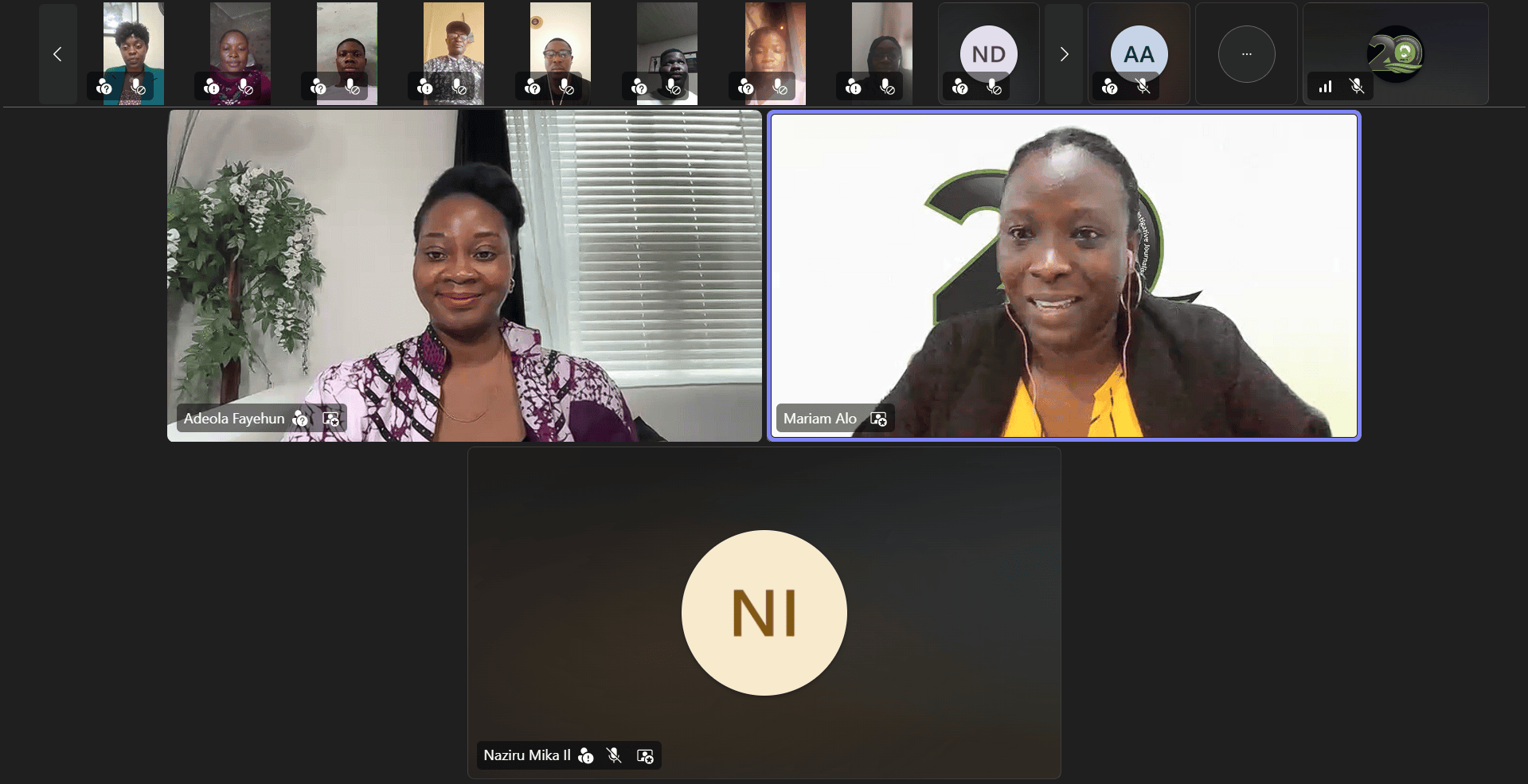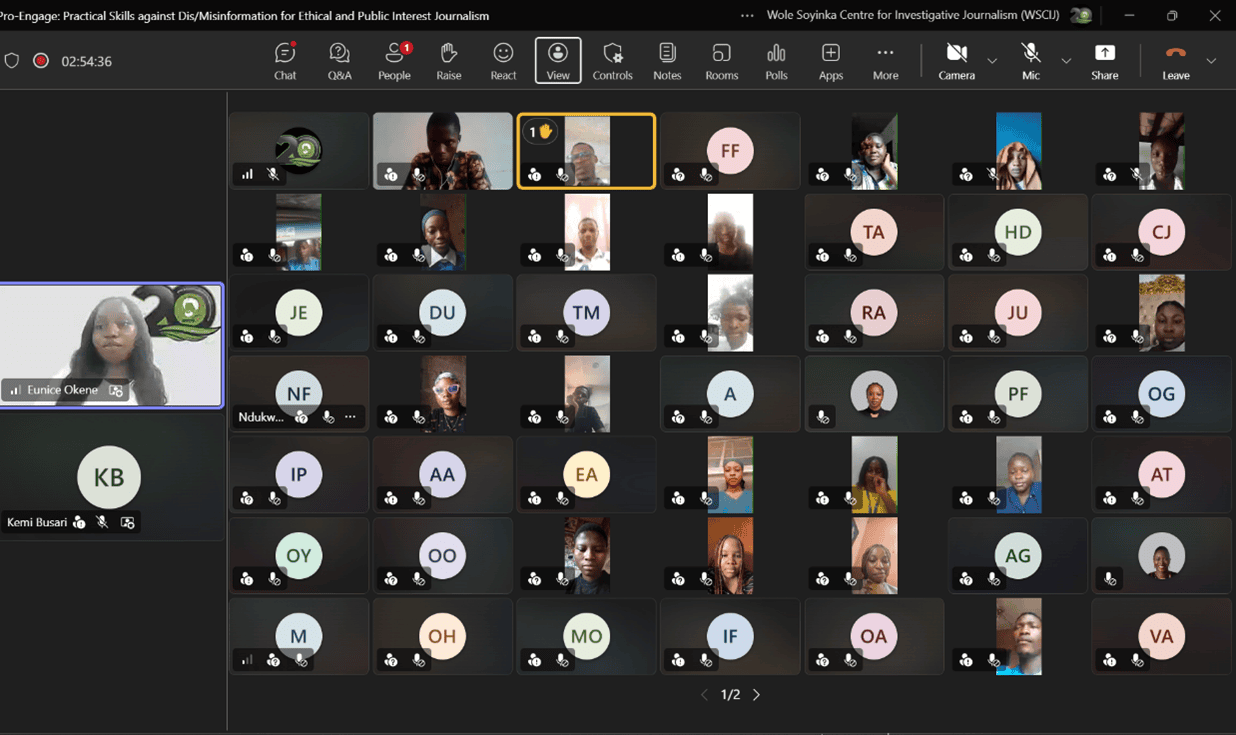
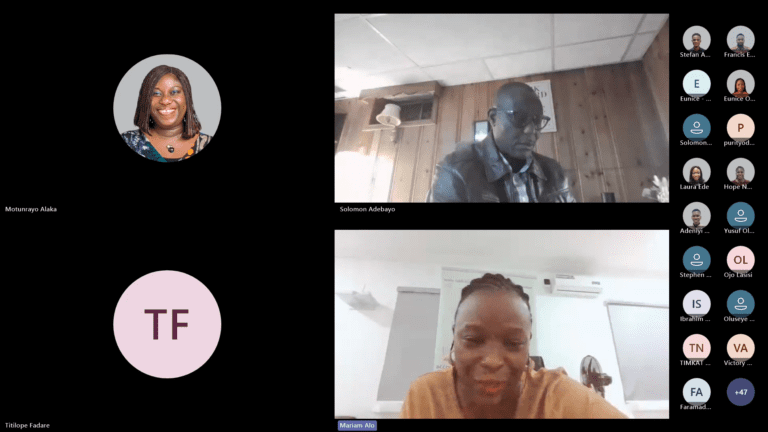
Radio and audio journalists from Nigeria and other African countries convened virtually on Thursday, 26 February 2026, for the RUSH with AI one-day training organised by the Wole Soyinka Centre for Investigative Journalism (WSCIJ). The training, part of the Collaborative Media Engagement for Development, Inclusivity, and Accountability (CMEDIA) initiative, aimed to strengthen accountability reporting by equipping audio journalists with practical skills to integrate artificial intelligence into investigative follow-up, ethical newsroom practices, and sustained public-interest storytelling beyond initial broadcasts.
During his session, media trainer Taiwo Obe, Founder/Director of The Journalism Clinic, took participants through a practical demonstration of how artificial intelligence can support journalists in sustaining stories beyond initial broadcasts. Using the AI summarisation platform SMMRY, he showed how reporters can quickly break down lengthy reports, news articles, and documents into concise summaries, key highlights, bullet points, and one-line briefs suitable for newsroom use.
Obe emphasised that as artificial intelligence becomes increasingly embedded within platforms such as Microsoft 365 and everyday newsroom technologies, journalists must adapt to evolving digital realities. According to him, the value of AI lies not in replacing editorial judgement, but in strengthening reporters’ ability to monitor developments, revisit unresolved stories, and ensure accountability reporting continues long after the microphone goes off.
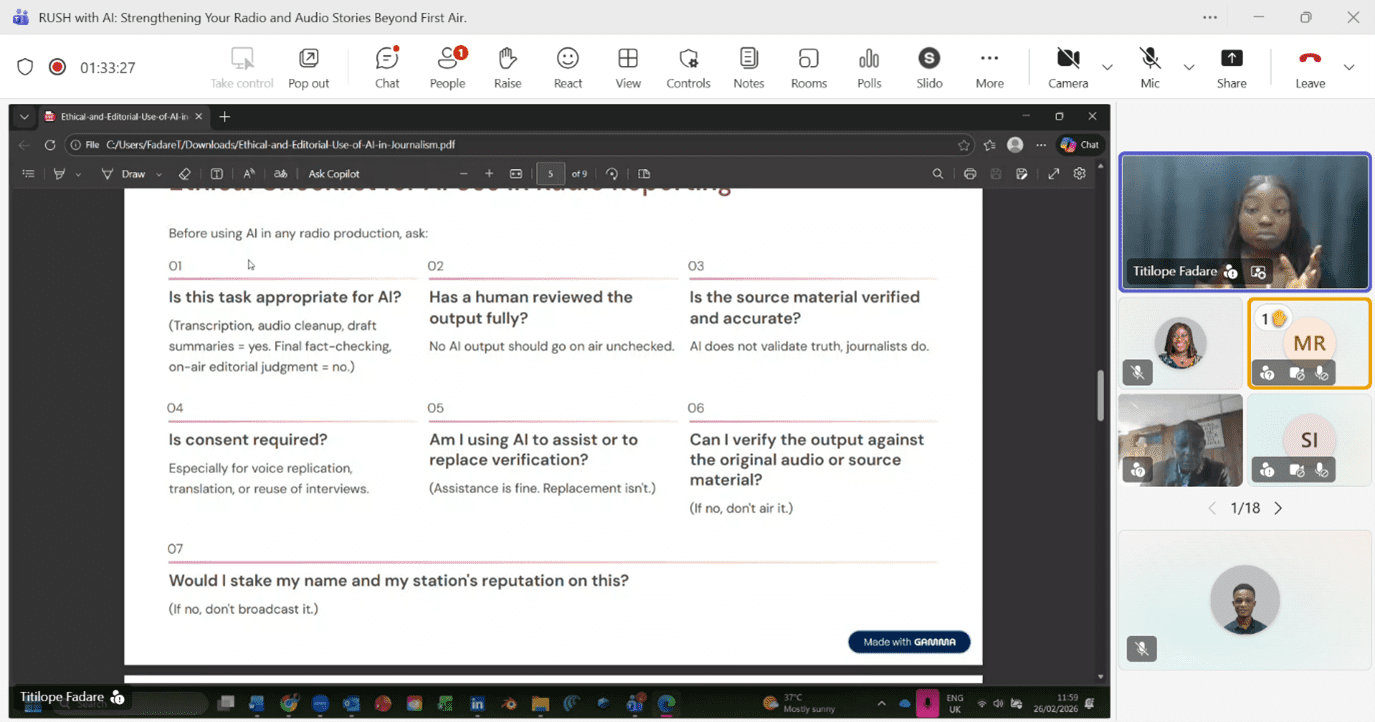
AI tools can significantly improve newsroom workflows, from transcription and translation of interviews into local languages to audio enhancement and content repurposing. Leading conversations on the ethical application of artificial intelligence in journalism, Titilope Fadare, Founder of Generative AI Journalism with Titi, reminded participants that innovation must always be guided by the core principles of journalism, noting that “AI should assist your reporting, not replace your editorial judgement.” She stressed that while AI can help suggest story angles, transcribe interviews, enhance audio quality, or support research and content development through platforms such as Adobe Podcast, DeepSeek, and Claude.ai, accuracy, accountability, consent, and transparency must remain non-negotiable.
Fadare cautioned participants about ethical risks associated with AI use in radio journalism, including misinformation, bias amplification stemming from Western-trained datasets, undisclosed voice cloning, and threats to privacy and source protection. She emphasised that AI-generated outputs must always undergo human verification, noting that such tools may confidently produce inaccurate information or fabricated details if left unchecked.
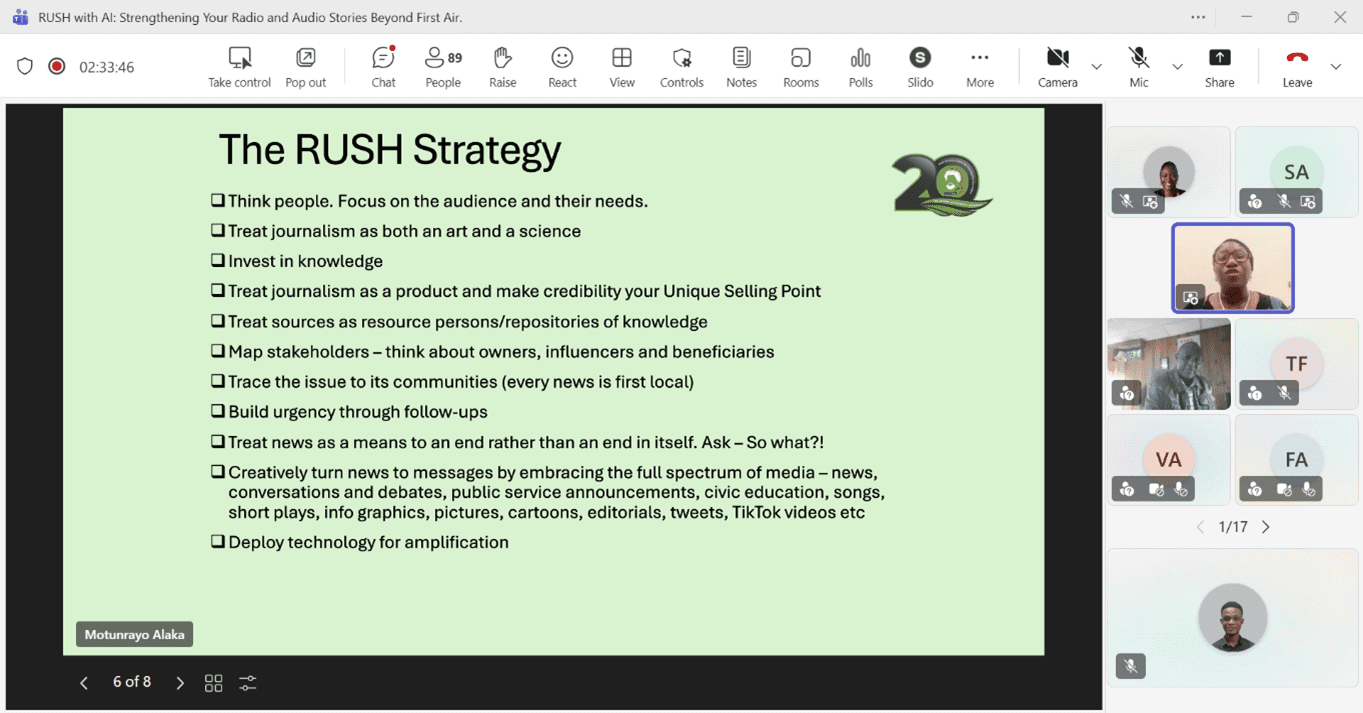
Setting the broader context for the training, Motunrayo Alaka, Executive Director/CEO, WSCIJ, introduced participants to the RUSH Model (Report Until Something Happens), which she developed about 15 years ago. She reminded journalists that AI should support, not replace, core reporting responsibilities, including fieldwork, fact-checking, community engagement, and accountability. She described the model as an impact-driven framework that promotes sustained storytelling through collaboration, localisation, amplification, and follow-up reporting.
Explaining that impactful journalism often sits at the intersection of communities of geography and communities of interest, Alaka emphasised the importance of local reporting, noting that “every story is first local,” and that AI cannot replace a reporter’s contextual understanding of communities. Drawing from the WSCIJ’s investigative interventions across Nigeria, including projects in the Niger Delta and underserved communities in Ikorodu, she stressed that journalism achieves real value when it delivers tangible impact on people’s lives, urging reporters to pursue stories beyond publication until meaningful change occurs.
Highlighting the unique demands of radio journalism, Solomon Adebayo, Former Head of Investigative Desk, Radio Nigeria, stressed that reporting for radio requires a depth and intensity distinct from print or television. “Unlike TV, where you can rely on visuals, or print, where readers pause and reflect, radio relies entirely on sound. Every story must be immersive, detailed, and humanised,” he said. He explained that radio journalists must go beyond the surface of events to uncover the broader impact of a story, understanding not just who is immediately affected, but how communities, families, and institutions experience the consequences of decisions and policies.
Adebayo emphasised that the first report on any issue is only an introduction. Real impact comes from follow-up stories that dig deeper, trace developments, and connect the dots for audiences. He encouraged reporters to continually engage sources, consult experts, and carry out independent research to ensure accuracy and context. “As journalists, we are not experts; our job is to ask, to probe, and to translate complex realities into narratives people can relate to,” he said.
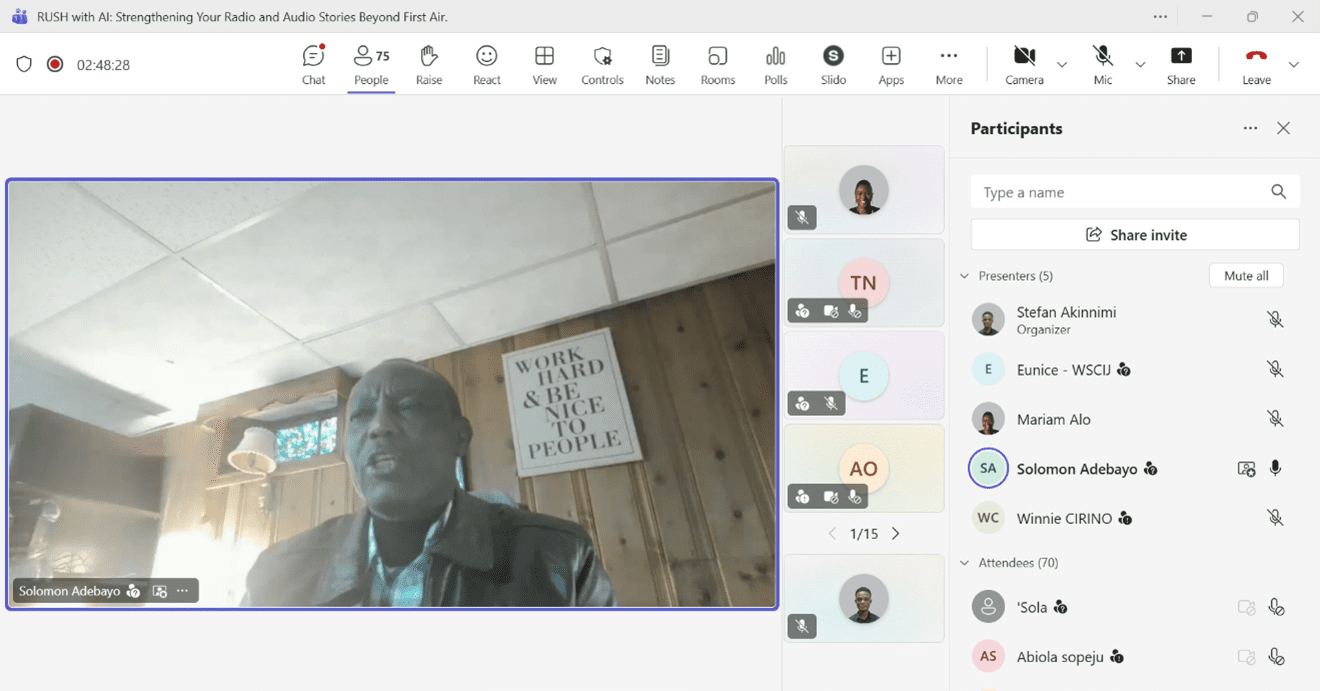
The interactive sessions, moderated by Mariam Alo, Programme Officer at WSCIJ, included live polls and Q&A segments, allowing participants to reflect on their newsroom workflows, share experiences, and explore the ethical and practical implications of AI in journalism. Participants explored how structured follow-through, editorial collaboration, and deliberate newsroom systems can transform investigative stories into measurable real-world impact. The session reinforced the importance of sustained coverage in ensuring that public-interest stories drive accountability outcomes.
The RUSH with AI training reflects WSCIJ’s continued commitment to equipping journalists with practical skills that enable sustained reporting, strengthen democratic accountability, and support innovation within evolving media ecosystems. By integrating artificial intelligence into accountability reporting processes, the training emphasised a central message: technology may reshape journalism tools, but the responsibility to pursue truth, follow stories through, and hold power to account remains firmly human.
The full RUSH with AI training conversation can be listened to here.