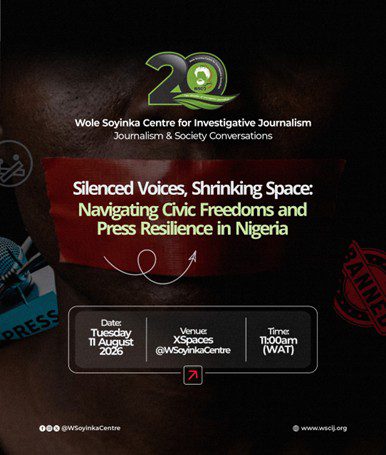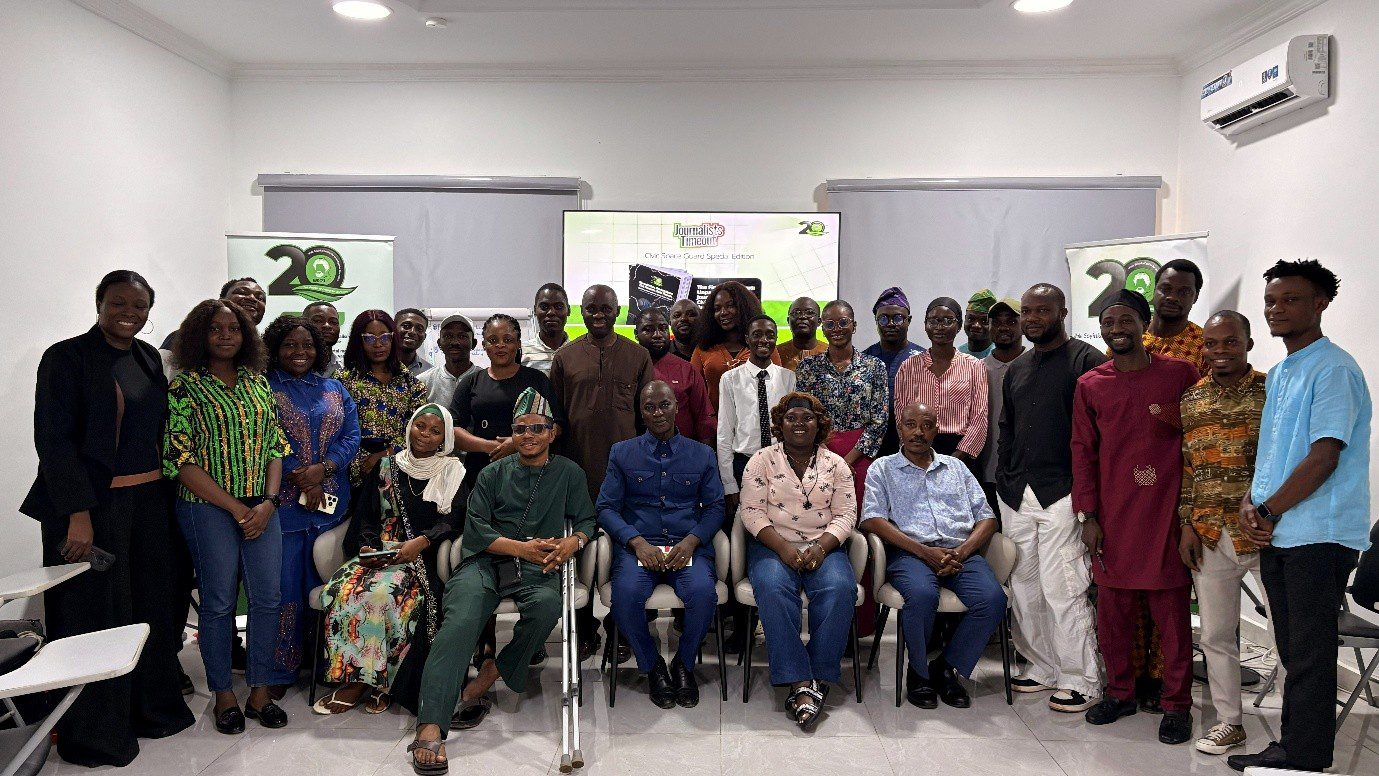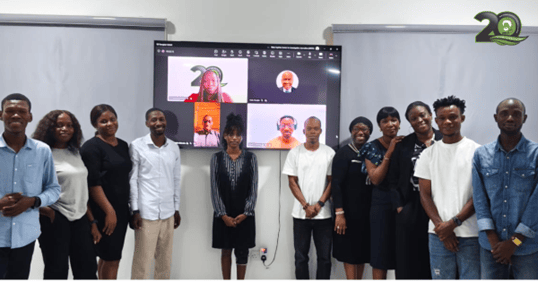
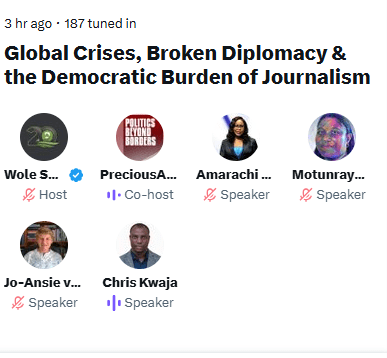
Amid an era of overlapping global crises and weakened diplomatic engagement, journalists are being called upon to shoulder greater democratic responsibility. This formed the focus of the February edition of the Journalism & Society Conversations, organised by the Wole Soyinka Centre for Investigative Journalism (WSCIJ) and held on X Space on Tuesday, 10 February 2026.
The discussion, themed ‘Global Crises, Broken Diplomacy, and the Democratic Burden of Journalism,’ brought together media professionals and policy experts to discuss the state of diplomacy in a world faced with rising tensions, conflicts and uncertainties in governance.
Opening the conversation, Motunrayo Alaka, Executive Director/Chief Executive Officer of WSCIJ, stated that the world is in a consistent crisis mode, where public trust is fragmenting and accountability struggles to keep pace with power. Reflecting on the Centre’s long-standing work on conversations around diplomacy, Alaka referenced the 2012 lecture titled; ‘Media and Civil liberties when the clouds of fear gather,’ where we warned the world about seeing strains in the media and liberty. She also referenced our 2018 lecture, where Ibrahim Gambari, then former Minister for External Affairs charged the media to get back into their role of preventing conflict and ending existing conflicts in the country. She noted that as WSCIJ celebrates two decades of work, the responsibility of journalism in global democratic discourse has never been more pronounced.
Speaking on the state of global diplomacy, Jo-Ansie van Wyk – Research Professor of International Politics, University of South Africa, Pretoria, South Africa observed that diplomacy has fundamentally changed in an era of global ruptures and information overload. She argued that state sovereignty is increasingly undermined, while power politics continues to dominate international relations. Against this backdrop, she stressed that journalism must remain a “voice of reason,” particularly as Africa navigates a world where its perspectives risk being marginalised.
Addressing the challenges facing journalists reporting global issues, Van Wyk noted that global news coverage remains uneven and largely undemocratised. She observed that conflicts in Europe often receive more attention than crises in Sudan or the Democratic Republic of Congo, despite their severity. While digital connectivity has improved information flow, she stressed that journalists on the continent continue to operate under extremely difficult conditions, making media literacy and civic education more critical than ever.
Offering a geopolitical perspective, Chris Kwaja, Professor of International Relations and Strategic Studies, Centre for Peace and Security Studies, Modibbo Adama University, Yola, Adamawa State, reflected on 25 years of studying international relations, noting that while global power struggles are not new, individuals and interest groups now play a more visible role in shaping state behaviour.
He urged African states to clearly define their interests beyond aid dependency, particularly in areas such as democracy, security and public health. He also referenced debates around United Nations funding, noting calls for greater financial responsibility among member states.
Turning to Nigeria’s foreign policy, Kwaja stressed what he described as a culture of lamentation rather than strategic engagement. He recalled a period when Nigeria commanded regional respect and funded up to 70 per cent of Economic Community of West Africa State (ECOWAS) Monitoring Group, ECOMOG operations, attributing that influence on relative domestic stability. He noted that Nigeria’s foreign policy capacity has weakened, citing gaps in ambassadorial appointments and representation at the United Nations.
Sharing a newsroom perspective, Amarachi Ubani, Head of Foreign Desk, Channels Television, said that while increased diplomatic engagements appear fascinating, other than overwhelming, they further signal a more permanent shift in global relations. She argued that smaller nations must regroup and strengthen regional alliances, warning that institutions such as ECOWAS have declined in relevance over the years, leaving young people increasingly disillusioned.
On sustaining coverage of global issues, Ubani stressed the importance of localisation. She explained that foreign stories resonate more when journalists clearly demonstrate how global developments affect Nigeria, citing examples such as grain supply disruptions linked to the Russia–Ukraine war and the evacuation of Nigerian students during conflicts in Sudan and Ukraine.
However, she identified limited official responses from Nigerian authorities as a major challenge, noting that it often takes days for government officials to comment on international crises. She contrasted this with other countries where leaders promptly return home to address security concerns.
The conversation concluded with a call for stronger, more consistent journalism that bridges global developments and local realities. Missed the conversation? Listen to the recording here.
To commemorate World Radio Day on 13 February 2026, WSCIJ is organising a special edition of the Journalism and Society Conversations, ‘The Keynote,’ themed ‘Is Radio Still King? AI, Podcasts, and the Future of Voice & Trust’ to recognise radio’s role in strengthening democracy, amplifying voices and sustaining public trust across communities worldwide. You can join us here