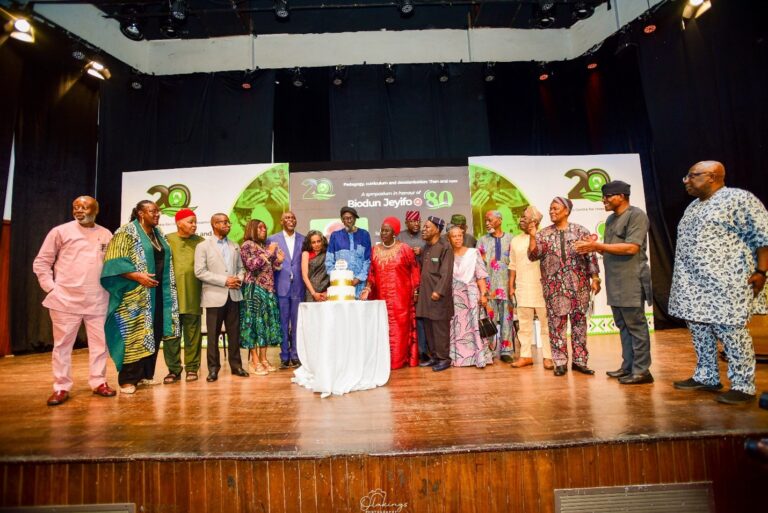
This was the opening question that set the tone for the celebration of Biodun Jeyifo (BJ) at 80. Convened as a public lecture and series of panel conversations under the theme ‘Pedagogy, curriculum and decolonisation: Then and Now,’ the symposium held on Monday, 5 January 2026, at the AGIP Recital Hall, MUSON Centre, Lagos, and compered by Nabilah Usman went beyond marking a milestone in age. It was an invitation to reflect on enduring struggles over knowledge, power, education, culture, and liberation: themes that have shaped BJ’s scholarship and public thought for over half a century, influencing generations of writers, journalists, and academics across the world. The gathering also gave young people a platform for engagement to ensure that the Global South becomes a better place.
In the coming days, WSCIJ will share a four-part series documenting the symposium held in honour of the 80th birthday of Professor. Read the first series below
Part 1: The 15-Year-Old Rebel and a Letter from 1969
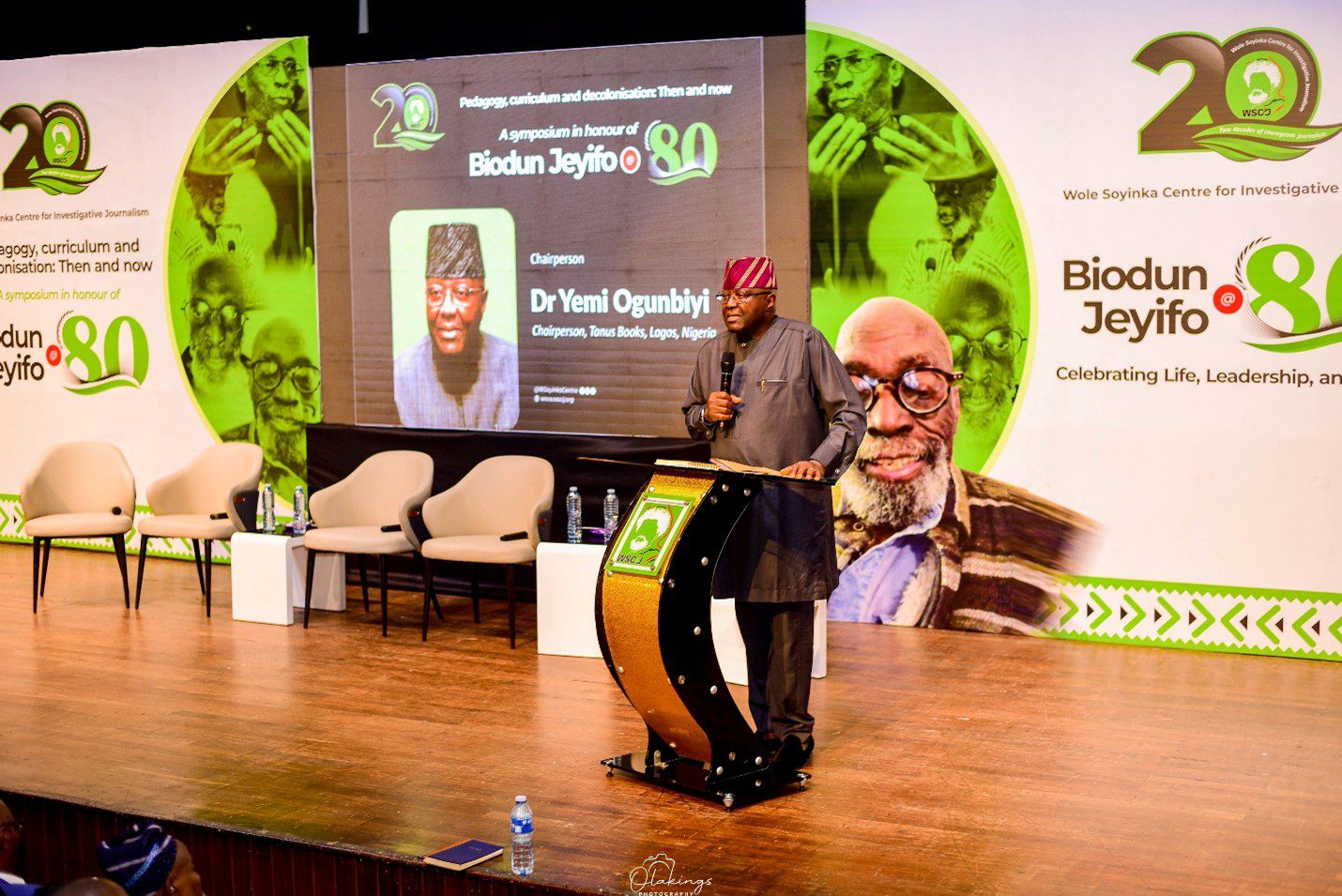
This first part of the series reflects on the formative years of Biodun Jeyifo through the recollections of Yemi Ogunbiyi (Dr.), who traced their 65-year relationship back to their teenage years.
One of the most intimate moments of the symposium came from Yemi’s reflections on their early friendship, which began in 1961 when both were 15-year-old boys bonded by a shared love for crime fiction. He revealed that even at that age, BJ was a “handful” who embodied “establishment non-compliance,” often finding himself in trouble with school authorities for refusing to comply with rigid rules.

Dr. Ogunbiyi shared a rare, handwritten letter BJ sent him in 1969, when the professor was only 23 years old and on his first trip to the United Kingdom. The letter offered a “gloomy picture” of race relations, where BJ observed that being Black reduced one to a “less than second-class citizen” fit only for “fourth-rate jobs” such as labouring, dishwashing, grave-digging, and morgue attendance.
In a profound reflection on the colonial condition, the young BJ wrote:
“One thing there is in the most complete imperialism in the history of the human race: they dominate us not only economically but in every area of life; our politics, our attitudes, our thoughts, even our psyche.”
Despite facing significant health challenges and the odds against his survival from birth, BJ’s life has served as a testimony to the human will to survive. Yemi noted that BJ did not just live a life, but one of “tremendous impact” as a radical intellectual and a preeminent authority in African literature.
This early consciousness of “complete imperialism” and the drive for institutional reform would later define BJ’s tenure as ASUU President, during which he fought for university autonomy and the right of institutions to appoint their own leaders, a struggle that almost cost him his life.
As we reflect on these foundational years of rebellion and intellectual awakening, the conversation shifts from personal history to the impact BJ had on the next generation of scholars.
In Part 2 of this series, we explored the “baptism of fire” experienced by BJ’s students and some of their shared timeless memories. Read story here