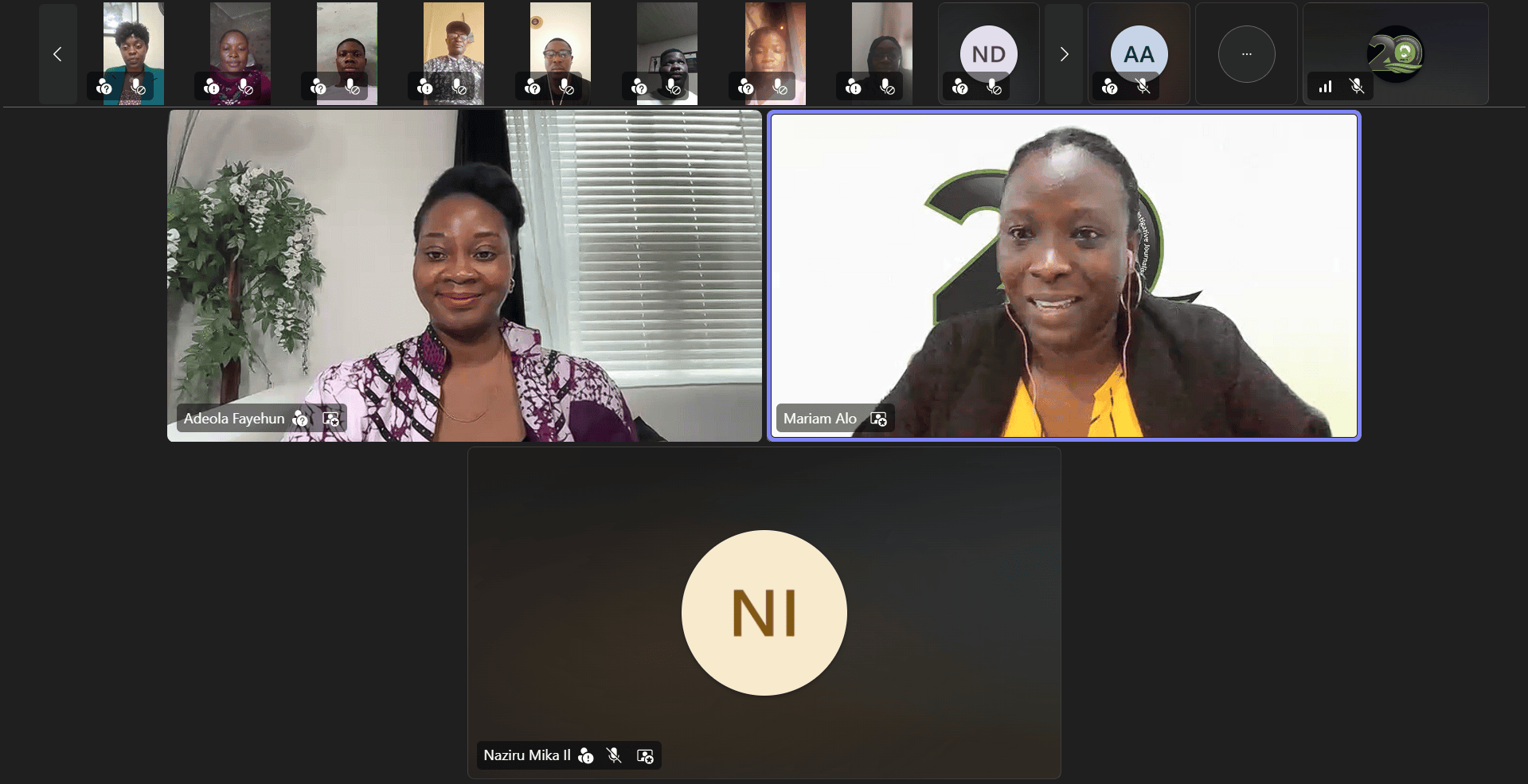
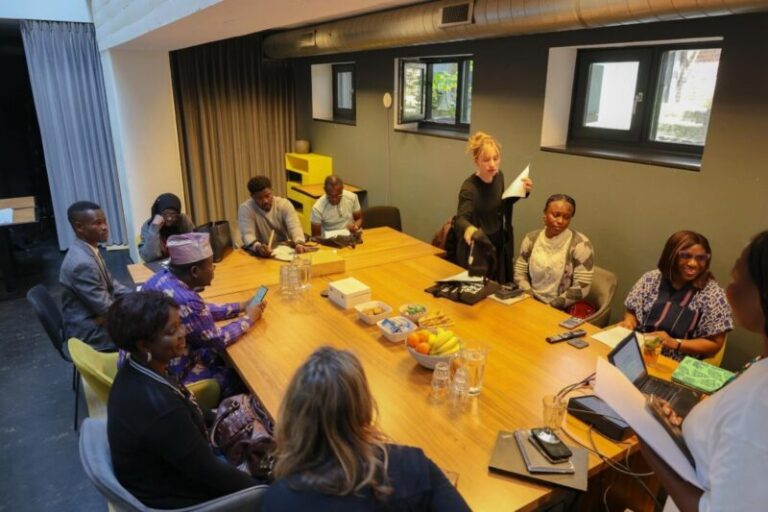
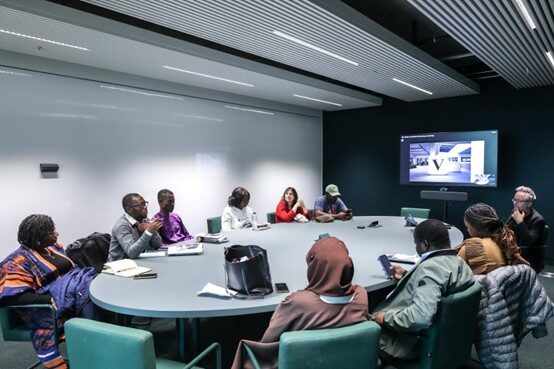
The international study tour for the eight Wole Soyinka Centre Laureates in the Netherlands, commenced with a meeting at the headquarters of the Free Press Unlimited (FPU), an organisation set up to enable free press and a partner of the WSCIJ. The group from the WSCIJ were received by a delegation from FPU, including Benthe Priester, Policy & Advocacy Officer; Gaelle Weigel, Senior Programme Officer; Fenke Elskamp, Team Leader, Africa, Europe & Asia and Evelien Wijkstra, Director of Policy & Advocacy. The discussion centred around safety of journalists, media sustainability, ethics and funding by government amongst others.
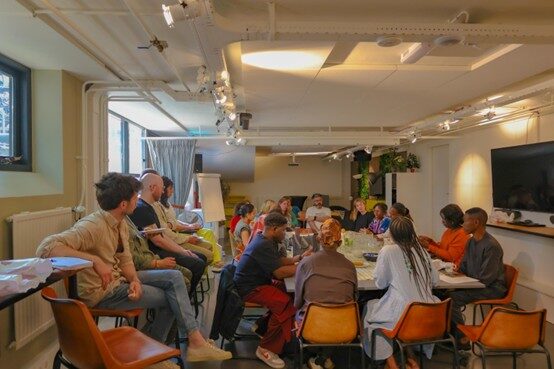
On 3 June, the engagement continued with a “lunch and learn” session at Free Press Unlimited (FPU), where the laureates met with members of the FPU team to share their stories, exchanged ideas on protecting press freedom, supporting journalists in repressive environments, increasing cases of Strategic Lawsuits Against Public Participation (SLAPP) and building resilience in the face of shrinking civic space.
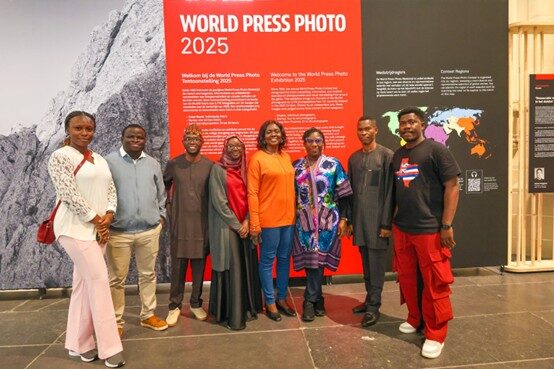
The tour included a visit to the premiere of the World Press Photo Exhibition at Nieuwe Kerk, Amsterdam, where the laureates reflected on the power of photojournalism to confront injustice, promote accountability, and evoke global empathy through visual storytelling.
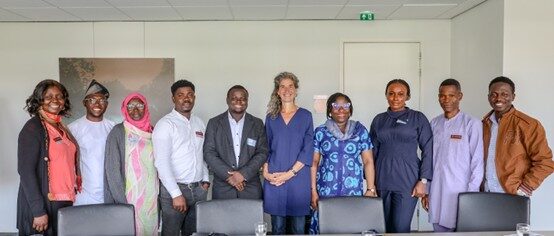
In The Hague, the delegation met with Danielle Hirsch, a member of the Dutch Parliament, for an extensive conversation on the role of journalism in deepening democracy, human rights, investigative reportage of the private sector, climate justice, and the fight against disinformation. The meeting also explored the shared responsibility of government, policymakers and the media in amplifying marginalised voices and strengthening governance.
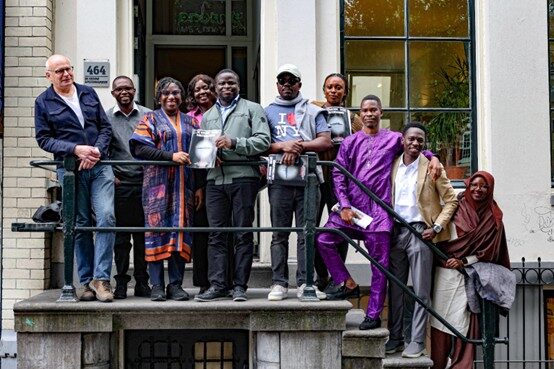
At De Groene Amsterdammer, Netherlands’ oldest independent weekly with a first issue in 1877, the laureates met with Evert de Vos, editor-in-chief of the newspaper and discussed the paper’s legacy of international reporting, critical commentary, and commitment to editorial freedom in an increasingly commercial media landscape. Evert de Vos attributed the sustainability of the publication to its focus on investigative reporting.
The laureates also participated in a practical newsroom workshop at De Volkskrant, one of the Netherlands’ most respected dailies founded in 1919. The session focused on data journalism, use of images for reporting, Open-Source Intelligence (OSINT), investigative reporting, source verification, and editorial ethics, offering insights into how the publication maintains its reputation for journalistic rigour and independence through technology and ethics.
The Wole Soyinka Centre for Investigative Journalism (WSCIJ) initiated the study tour in 2011, to deepen professional capacity of the investigative journalists, expose Wole Soyinka Award for Investigative Reporting (WSAIR) winners to peer learning among colleagues in news media, civil society, and government and related circles. The award, which will be 20 this year, has recognised 130 finalists, honoured 13 Investigative Journalists of the Year, and presented 31 honorary awards.