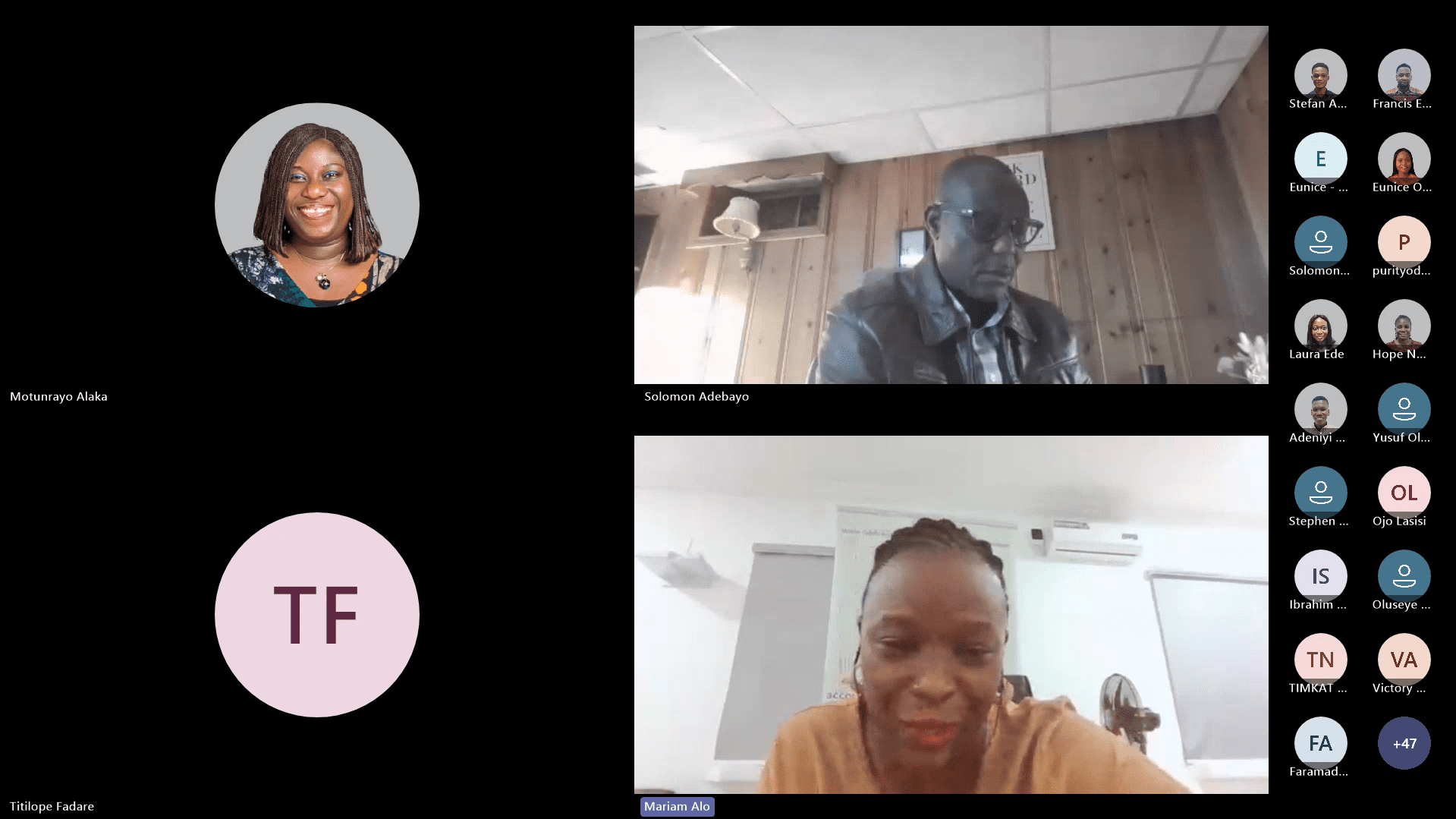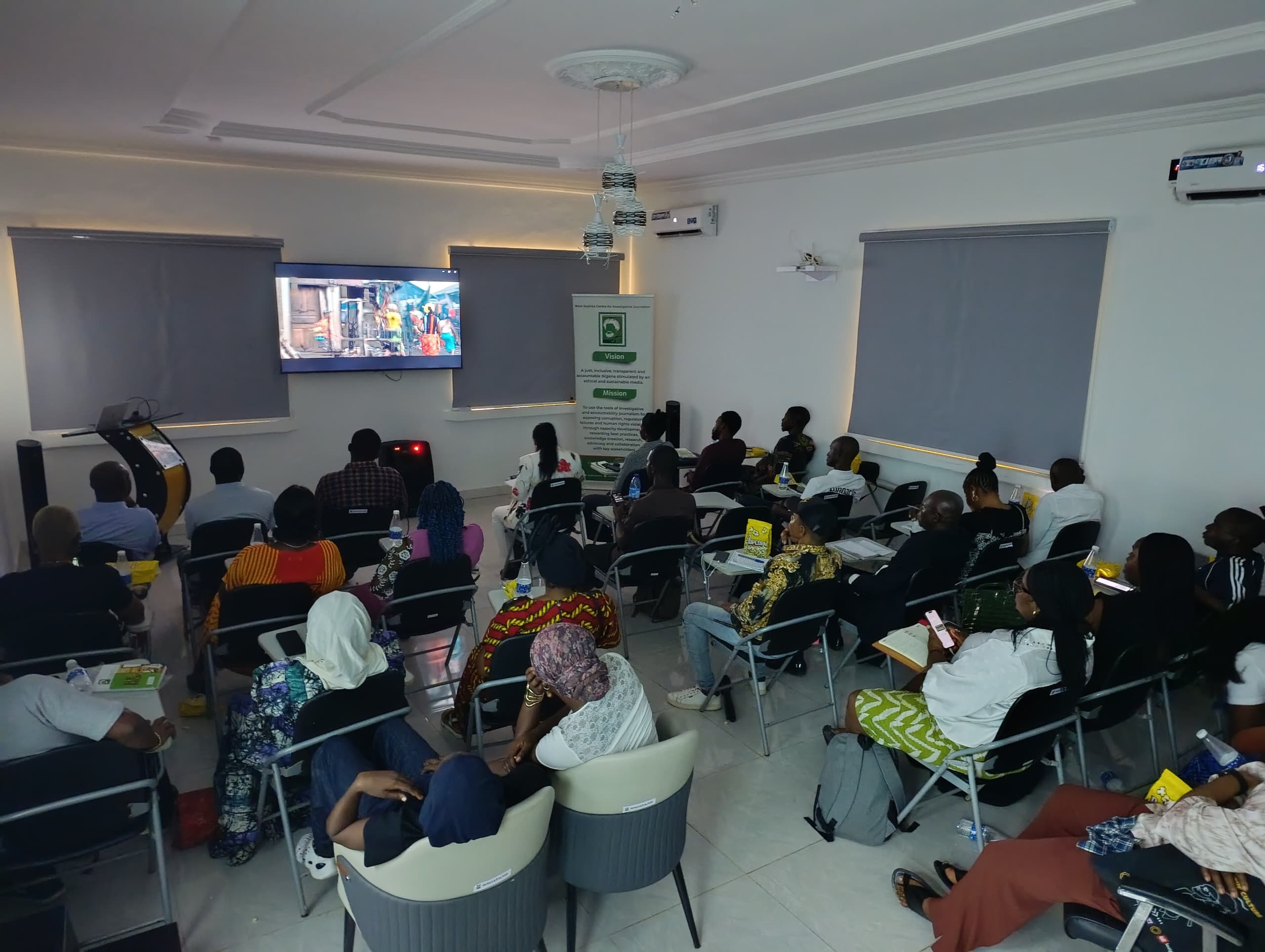

For two decades, the Wole Soyinka Award for Investigative Reporting (WSAIR) has championed accountability journalism, rewarding investigative journalists who ask the hard questions. At the September edition of the Journalism and Society Conversations, organised by the Wole Soyinka Centre for Investigative Journalism (WSCIJ), on Tuesday, 9 September 2025, panellists reflected on the award’s recognition, the critical role of investigative journalism in promoting democracy, the risks confronting journalists, and the future of the profession.
The conversation themed, ‘Wole Soyinka award rewarding best practices for two decades: Is investigative reporting worth it?’ brought together past winners of the WSAIR (Soyinka Laureates) and seasoned investigative journalists including Juliana Francis, Publisher, Security News Alert; Lami Sadiq, Former Head of Investigation, Media Trust; Mike Asukwo, Cartoon Editor, BusinessDay; Bukola Coker, Presenter, Channels TV and Ajibola Amzat, Africa Editor, Centre for Collaborative Investigative Journalism (CCIJ). Abosede Adeniran-Aderemi, a Newscaster and correspondent with TVC News moderated the conversation.
In her opening remarks, Executive Director of WSCIJ, Motunrayo Alaka, who was represented by David Lawal, Communications Manager at WSCIJ, noted that the award, since its launch in 2005, has recognised courageous journalists who dared to speak truth to power. “We have celebrated 131 finalists, honoured 67 Soyinka Laureates, and named 13 Investigative Journalists of the Year. We have also conferred 31 honorary awards on individuals and institutions who, in their own ways, have championed accountability,” she said.
Reflecting on the impact of the award on her career, Juliana Francis, first female single entrant to win the WSCIJ Investigative Journalist of the Year award in 2014 and also a 2022 winner of the award in the Print Category, said: “That singular award opened many doors of opportunity for me. It seriously impacted my career and introduced me to mentoring, which I was not aware of, even after 10 years in the field.” She spoke about the risks involved in investigative journalism, urging journalists to remain committed despite the dangers.
A two-time winner of the award in 2023 and 2024, Sadiq provided a sobering perspective on the challenges facing newsrooms today, including shrinking resources, increasing legal pressures, and the dangers of self-censorship. She urged investigative journalists to maintain integrity and courage in their work, stating that “investigative journalism is not just a profession but a calling”.
Underscoring the significance of the WSAIR, Mike Asukwo, a three-time winner in the Cartoon Category in 2012, 2013 and 2015, said: “It has emboldened people like us when we don’t really know the impact of what we are doing,” he said. Asukwo, whose powerful editorial cartoons have shaped public discourse, also stressed the importance of cross-collaboration between journalists in different media formats to strengthen storytelling.
Also speaking, Coker, a television journalist who won the award in 2020, highlighted how the recognition helped shape her career, strengthening her resolve to hold power to account. She called for a renewed commitment to investigative journalism, urging reporters to embrace new tools and approaches to expose institutional failures.
Stressing the necessity of investigative journalism, Ajibola Amzat emphasised the importance of transparency in government, noting that it is often characterised by secrecy and that citizens need access to information about its activities. Highlighting the value of collaboration in newsrooms and across different media organisations, Amzat urged newsrooms to consider setting up departments to work with Civil Society Organisations (CSOs) in advocating for their investigative reports.
During her closing remarks, Motunrayo Alaka, Executive Director/CEO, WSCIJ, highlighted that the awards have been instrumental in raising the profile of journalism in Nigeria and embedding investigative reporting as a culture. She added that the Centre has been able to normalise accountability, which is key to ensuring greater accountability in governance. Alaka also reiterated the responsibility of government to protect journalists and called on the authorities to provide a safer environment for the press.
The Journalism and Society Conversations by WSCIJ brings together stakeholders to discuss pressing issues that affect the media and society and the vital role of investigative journalism in holding the government accountable and contributing to nation-building.
Click here to listen to the conversation.
Signed
WSCIJ Team