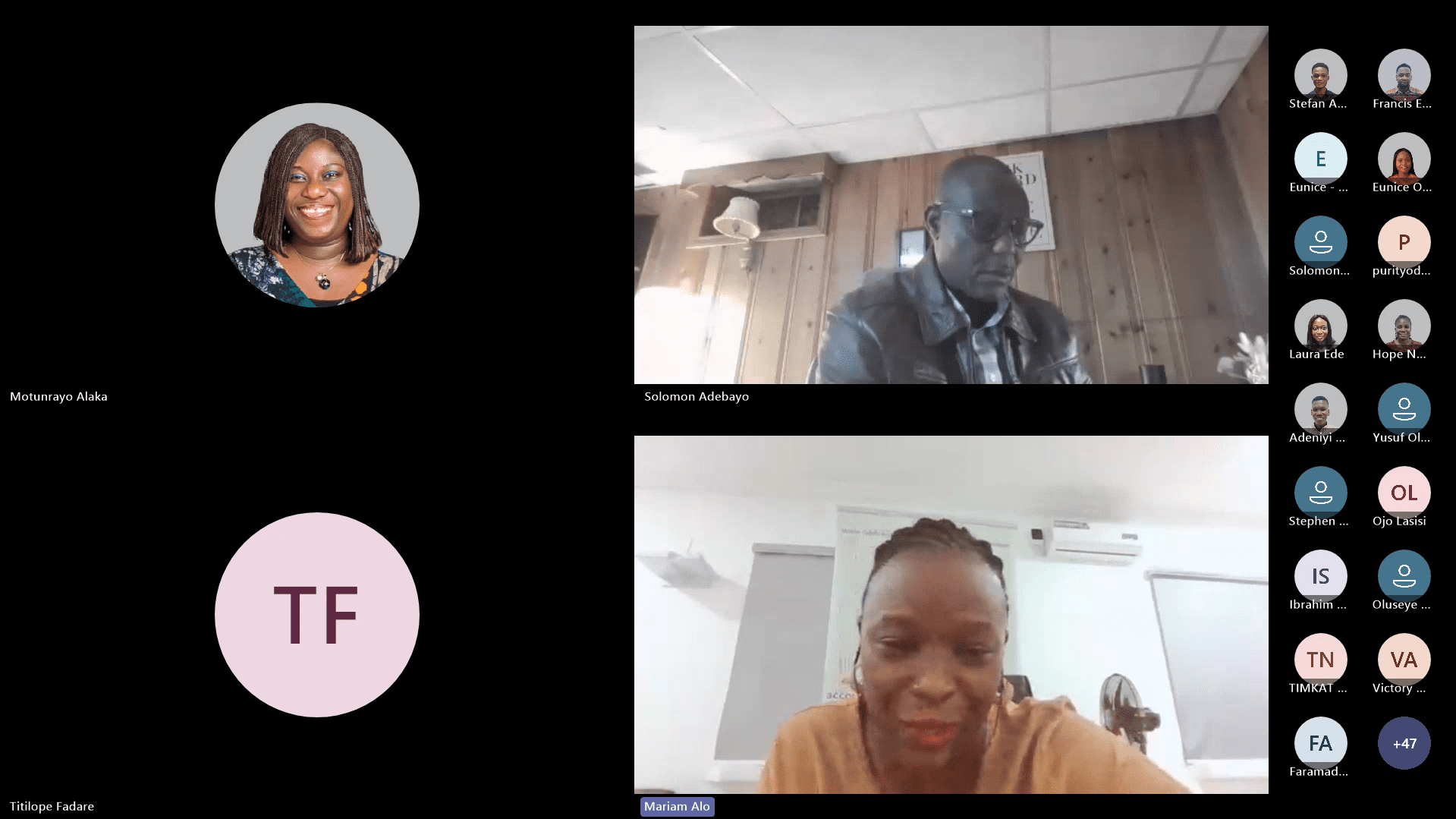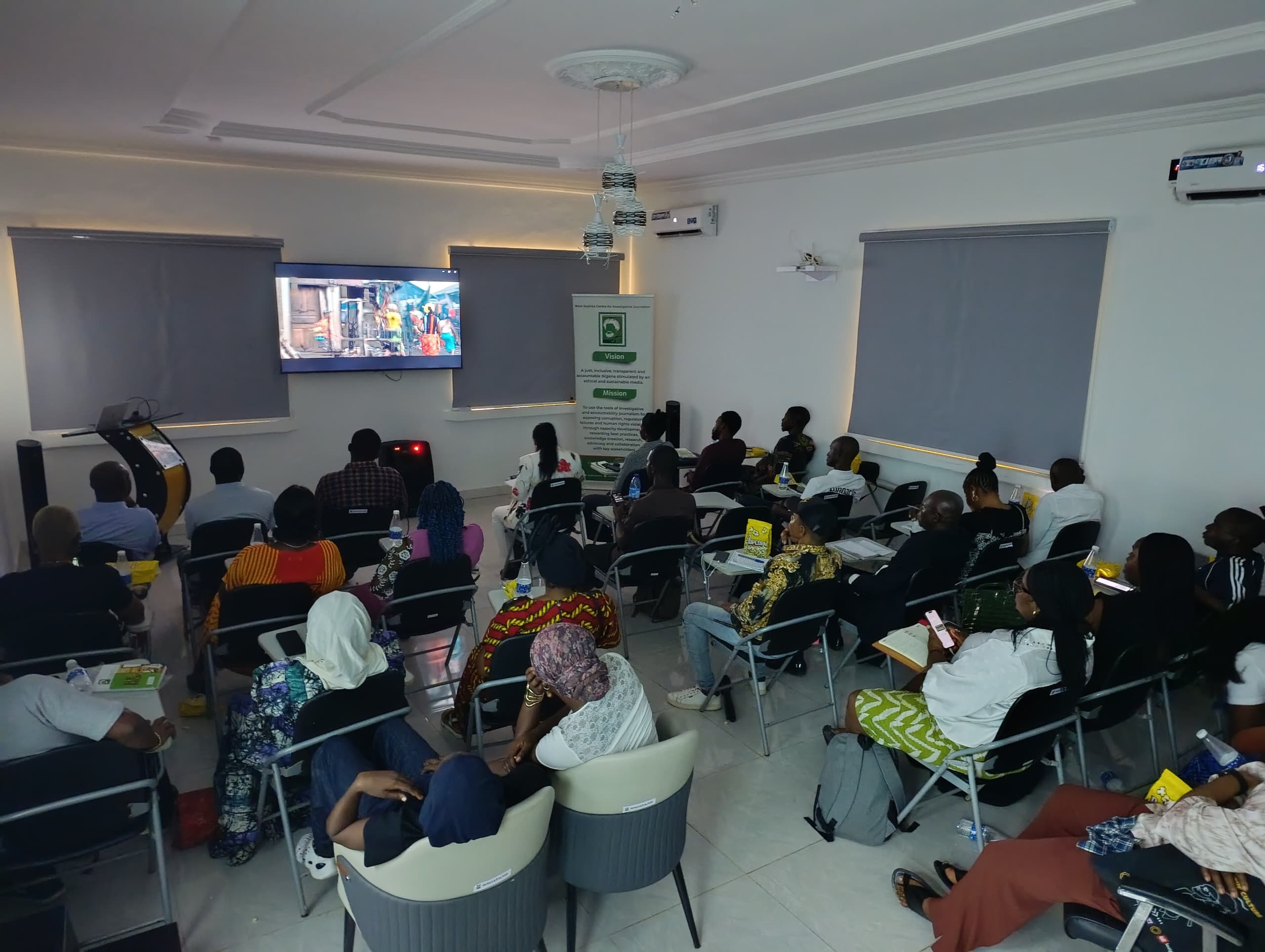
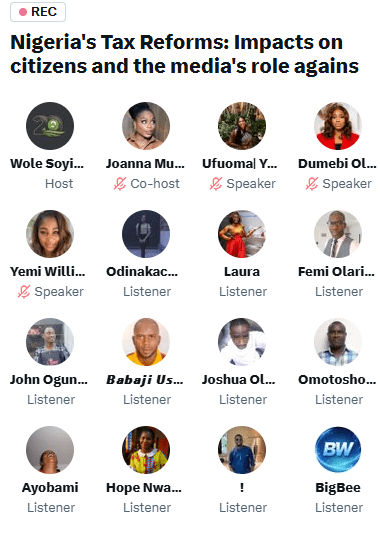
To address the growing need for public awareness and clarity around Nigeria’s tax reforms, the Wole Soyinka Centre for Investigative Journalism (WSCIJ) held its first Journalism and Society Conversations for 2026 on Tuesday, 27 January 2026. The session examined the impact of Nigeria’s Tax Reform Act and the role of the media in countering misinformation.
The conversation, hosted on X Space and themed ‘Nigeria’s Tax Reforms: Impacts on Citizens and the Media’s Role Against Misinformation,’ moderated by Joanna Mustapha, Senior Business Correspondent at News Central TV, brought together economists, tax experts, civil society actors, journalists, and members of the public.
In her opening remarks, Mariam Alo, Programme Officer at WSCIJ, noted that tax reform is no longer an abstract policy debate but a lived reality; reflected in prices, business decisions, household expenses, and everyday public discourse. Recalling WSCIJ’s longstanding advocacy, Alo stated, “We have long maintained that taxation is not just about revenue collection. It is about accountability, equity, and the social contract between the state and its citizens.” She added that as far back as 2016, during the Centre’s 8th Media Lecture Series, WSCIJ had called for tax education that is accessible, simplified, and firmly grounded in the public interest.
Panellists agreed that while the reforms aim to harmonise Nigeria’s tax system and simplify payments through a single framework, a significant public trust deficit remains a major challenge to effective implementation.
Dumebi Oluwole, Lead Economist at Stears, explained that the reforms are designed to reduce bottlenecks in tax collection and exempt small businesses earning under 100 million naira from company income tax, thereby improving productivity. She added that changes to capital gains tax and personal income tax are intended to encourage investment, boost national development, and enhance Nigeria’s credibility with global institutions.
Speaking on the objectives of the reforms, Olayemi Williams, Associate Director, Tax at PwC, noted that the changes are modernising Nigeria’s tax laws, many of which were enacted decades ago. She emphasised the importance of transparency, recommending accountability tools such as public dashboards that show how taxes are collected and spent. According to her, simplifying the tax system, widening the tax net, and easing the burden on low-income earners are central goals of the reforms.
Addressing concerns about how the reforms affect ordinary Nigerians, Olufemi Olarinde, Head of Fiscal and Tax Reforms Implementation at the Nigeria Revenue Service, acknowledged that trust remains a key obstacle. He addressed the role of the media in shaping public understanding of the reforms, cautioning against sensational reporting. “The media should not pick sensational or soft sell news because people often do not read beyond the headlines. We are committed to being part of sensitisation efforts because we want to fill the information space with accurate and responsible reporting.” He also noted that although the government publishes monthly reports on tax revenue and allocation, many citizens do not engage with them.
From a civil society organisation perspective, Ufuoma Nnamdi-Udeh, Executive Director of Enough is Enough (EiE) Nigeria, called for stronger accountability mechanisms to ensure that increased tax revenue results in improved public services. She stressed the role of citizens and civil society organisations in monitoring implementation and using the Freedom of Information Act to demand transparency.
Responding to questions from participants, Olarinde debunked the claim that the government automatically deducts money from defaulters’ bank accounts. He explained that banks place liens on bank accounts, not the government, and that this practice has existed “from time immemorial”. He reassured participants that the government does not arbitrarily access citizens’ accounts, noting that a lien is a debt recovery process often used to draw attention to unpaid tax obligations. Taxpayers, he added, retain the right to query the debt or request instalmental payments.
The monthly Journalism and Society Conversations continue to provide a platform for critical dialogue on public policy, reinforcing WSCIJ’s commitment to public interest journalism, government accountability, and civic education.
Missed the conversation? Listen here.