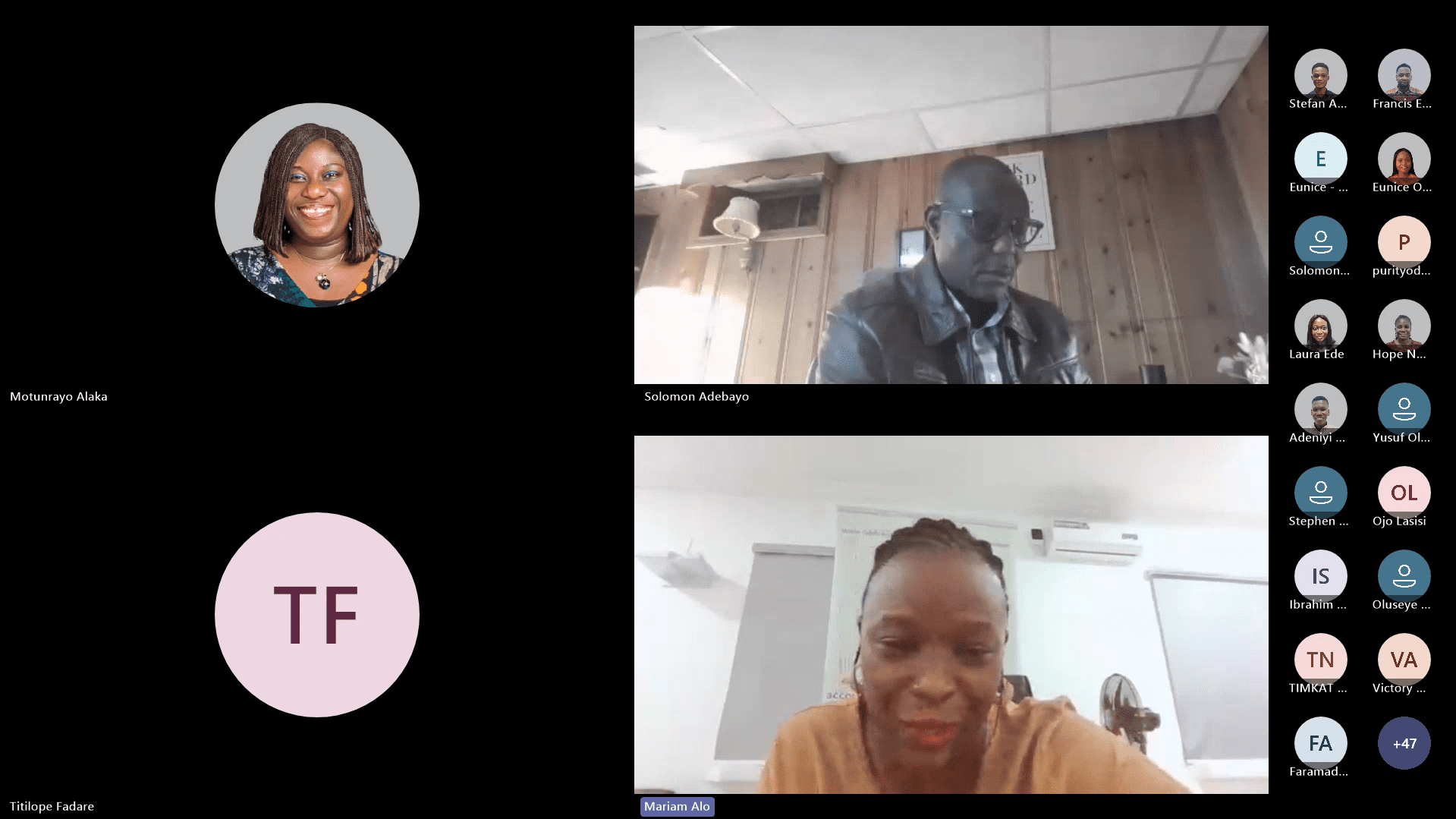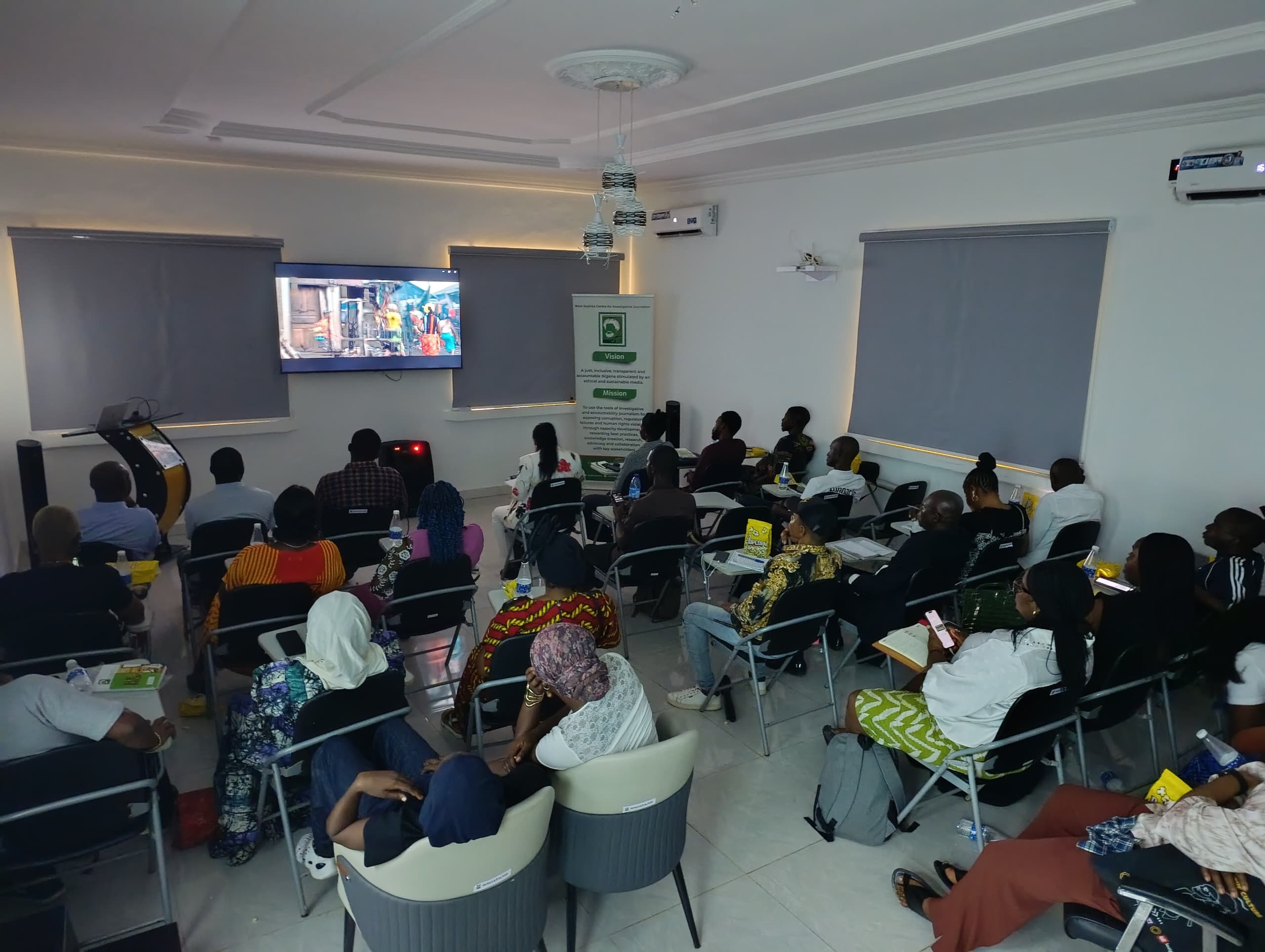
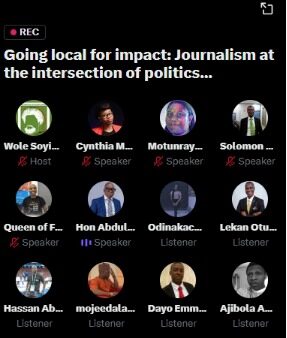
Debates on democracy and governance at the grassroots have long been central to local journalism and civic engagement discussions. At the August edition of the Journalism and Society Conversations, organised by the Wole Soyinka Centre for Investigative Journalism (WSCIJ) on Tuesday, 12 August 2025, panellists emphasised the critical role of local journalism in bridging the gap between citizens and government. They called for media organisations to adopt targeted coverage strategies for local and state governments, strengthen community reporting and ensure that governance conversations reflect the realities of all communities.
The discussion themed, ‘Going local for impact: Journalism at the intersection of politics and governance’, brought together panellists including Cynthia Mbamalu, Programme Director, Yiaga Africa; Honourable Abdullahi Olowa, Chairman, Ibeju-Lekki Local Government Area; Solomon Ajuziogu, Senior Correspondent, TVC News; and Motunrayo Alaka, Executive Director/CEO, WSCIJ. Zainab Sanni, Co-founder, Media Inno Tech, moderated the conversation.
Using the age-old chicken-and-egg analogy to illustrate the link between democracy and journalism, Motunrayo Alaka, Executive Director/CEO, WSCIJ, in her opening remarks said the Centre has consistently championed grassroots engagement, dedicating its 2012 annual lecture to local government and, in 2021, launching the Collaborative Media Engagement for Development, Inclusivity and Accountability (CMEDIA) to fund coverage of sub-national issues.
Drawing on observers’ reports that many citizens were unaware of the July local government election in Lagos, Mbamalu noted that young people, particularly, are increasingly distrustful of government, feeling unrepresented and disconnected from decision-making. She pointed to the overbearing influence of state governments on local councils, emphasising that local governments must be allowed to operate independently to engage citizens genuinely.
Speaking from his experience covering the council election, Ajuziogu stressed the lack of media representation at the grassroots, noting that larger organisations tend to focus on major cities while community issues are often ignored. He called for establishing more media houses at the local level, improved media literacy among communities and adopting a “think global, act local” approach to hold power accountable.
Reaffirming the low media coverage, Olowa urged stronger partnerships between journalism and grassroots governance, emphasising that local journalism can foster citizen engagement in decision-making and policy review. “We at the local government system are very ready to work with the media, and we look forward to an improved partnership,” he said.
Based on over 20 WSCIJ media monitoring reports, Alaka highlighted a persistent lack of strategy in how Nigerian media covers democracy and governance. While there are pockets of success, many newsrooms remain unclear about what they aim to achieve or how their journalism impacts citizens at the grassroots level. She emphasised the potential of an “adoption strategy,” urging media houses to dedicate consistent coverage to specific states or local governments to help reach communities beyond major cities, shifting the governance paradigm and ensuring that reporting genuinely serves the people.
The conversation also saw active participation from other attendees, including Bimbo Oloyede, Chief Executive Officer of Strictly Speaking Academy; Mojeed Alabi, Team Lead and Editor-in-Chief, DevReporting; Adeolu Adekola, Project Manager, Open Climate Reporting Initiative (OCRI), Centre for Investigative Journalism (CIJ); Ajibola Amzat, Africa Editor, Centre for Collaborative Investigative Journalism (CCIJ); Hassan Abdulsalam, Sports Journalist, Pulse Sports Nigeria; and Sekinal Lawal, former Assistant Editor, National Mirror. They asked questions and contributed to the discussion on strengthening local journalism and governance.
The Journalism and Society Conversations by WSCIJ brings together stakeholders to discuss pressing issues that affect the media and society and the vital role of investigative journalism in holding the government accountable and contributing to nation-building.
Click here to listen to the conversation.