Broadcasting Democracy: Truth, Accountability and the Public Interest
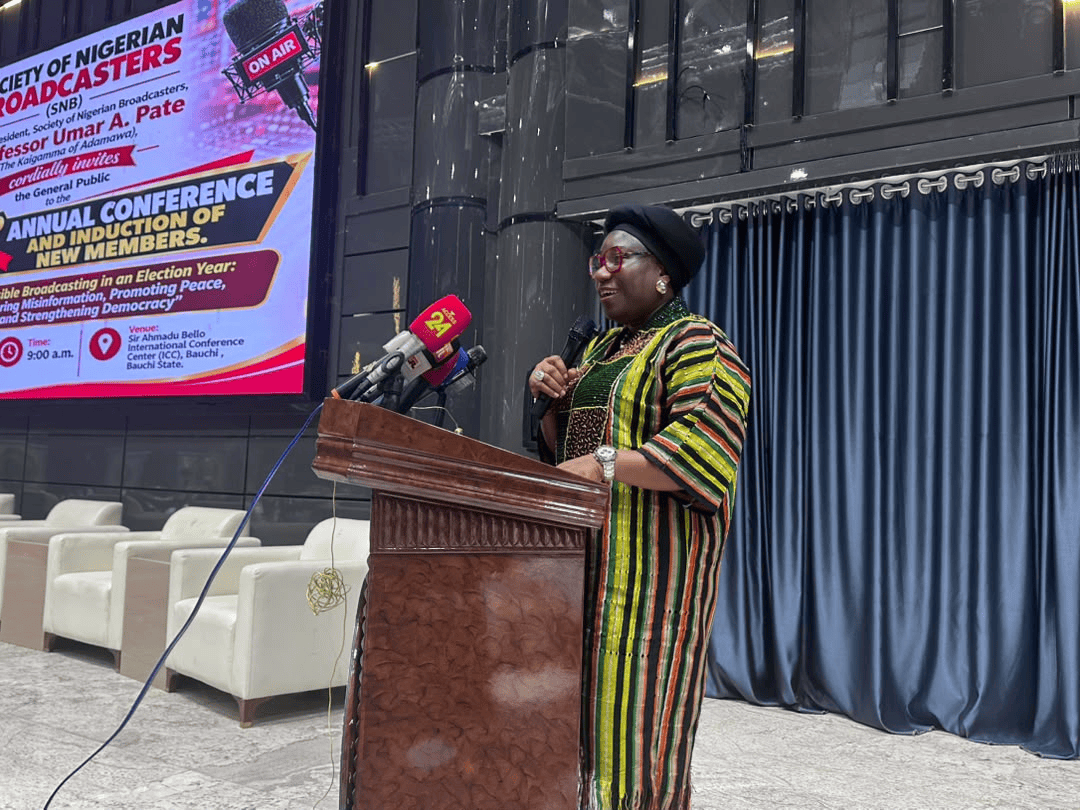
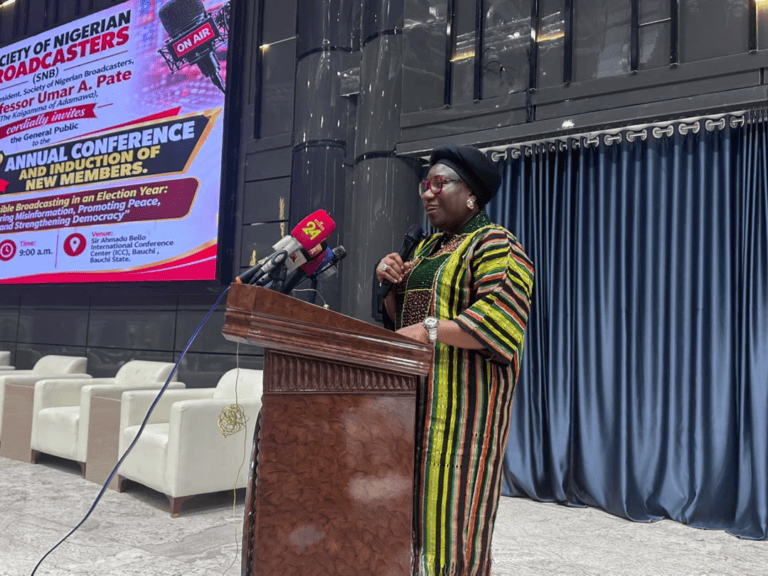
3rd Annual National Conference of the Society of Nigerian Broadcasters (SNB)
Bauchi State – Pearl of Tourism | Monday 28 September 2026
Theme: “Responsible Broadcasting in an Election Year: Countering Misinformation, Promoting Peace and Strengthening Democracy”
PART ONE: BROADCASTING AT A DEMOCRATIC CROSSROADS
Your Excellency, Senator Bala Mohammed, Executive Governor of Bauchi State; Your Excellency, Rt. Hon. Mohammed Auwal Jatau, Deputy Governor of Bauchi State; members of the Bauchi State Executive Council and other distinguished government officials present; the President of the National Executive Council of the Society of Nigerian Broadcasters, my board member and teacher, Professor Umaru Pate; distinguished executives and members of the Society of Nigerian Broadcasters; broadcasters from across Nigeria; our new inductees; distinguished guests; members of the diplomatic corps; representatives of government, academia, civil society and the media; students; ladies and gentlemen. Good day to you.
I am deeply honoured to be here today, and I am grateful to Professor Umaru Pate and the leadership of the Society of Nigerian Broadcasters for the confidence reposed in me by inviting me to deliver this keynote address.
Professor Pate, it is particularly meaningful to be invited by one’s teacher to speak to a professional community within which that teacher has made such an important contribution. Those you teach know that your lectures challenge us to think, interrogate assumptions, examine the relationship between media and society, and appreciate the power and responsibility that accompany the ability to shape public discourse. To stand before you today is therefore both an honour and a full-circle moment.
I am equally delighted to be back in Bauchi. Bauchi occupies a special place in my personal history. I came here in 2004 as a National Youth Service Corps member and served at Government Girls College, Tafawa Balewa, where I taught Government and English. I also conducted extra lessons for primary school students, to extend my impact beyond my primary place of assignment.
I remember that period with great affection because, Bauchi became one of the places where I began to understand more deeply what service could mean. I discovered sweet potatoes here, initially because they were affordable enough, and eventually because I came to appreciate their nutritional value and their potential contribution to food security and sovereignty.
At the end of my service year, I had an opportunity to remain in Bauchi. The government of the day offered corps members who wished to stay an opportunity for employment. It was a meaningful offer and accepting it may easily have taken my professional life in another direction. But I am a Lagosian at heart, plus, around the same period, Mr Dapo Olorunyomi, OON had invited me to join the Freedom House team in Lagos as a volunteer. I chose the latter.
At the time, that decision may have looked foolish because it offered no pay cheque. However, for me, it was calculated. Long before that, offer, my literature teacher, Mr Gbenga Omotunde, had become my first journalism mentor. Through the school press club of my secondary school, under his tutelage, I channelled my curiosity, my concern about justice and development, and my love for writing towards school journalism. By the time I left secondary school, I already knew that I wanted to do something connected to journalism and to making society better.
It brought to Mr Dapo Olorunyomi my mentor and leader, to the Wole Soyinka Centre for Investigative Journalism and another level of leadership. Looking back, I realise I was choosing a life of questions, to work in a space where the public interest mattered, where information could become a tool for accountability, and where journalism could help citizens understand, interrogate power and negotiate for better livelihoods. And, in one of life’s beautiful circles, it has brought me back to Bauchi, more than two decades later, to speak about the very profession that has shaped so much of my life.
That journey is part of why the theme of this conference resonates so deeply with me:
‘Responsible Broadcasting in an Election Year: Countering Misinformation, Promoting Peace and Strengthening Democracy.’
It is an important theme because Nigeria is already well into the political process that will culminate in the 2027 general elections. The Independent National Electoral Commission (INEC)’s current timetable places the Presidential and National Assembly elections on 20 February 2027, followed by the Governorship and State Houses of Assembly elections on 6 March 2027. The next few months will demand a great deal from the Nigerian broadcast profession.
I congratulate today’s inductees. You are joining the Society of Nigerian Broadcasters at a consequential moment. You are in a profession whose work influences how millions of Nigerians understand the choices before them, the people seeking public office, the institutions managing the electoral process, and the events unfolding around them.
My intention is to ground this conversation in evidence: what our monitoring at the Wole Soyinka Centre for Investigative Journalism has documented, what recent elections have taught us, what editors and fact-checkers have observed, what the regulator is concerned about, and what the evolving digital information environment means for the future of broadcasting.
The microphone, the camera, the studio, the transmitter and now the digital platform are instruments through which citizens encounter their country, its institutions and the people seeking to govern them. What happens on those platforms therefore has effects far beyond the programme itself.
Why Broadcasting Still Matters
Let me begin with an uncomfortable truth for anyone who assumes that Nigeria’s information battles are now fought entirely on X, WhatsApp, Facebook, TikTok and other digital platforms.
Radio and television remain significant to Nigeria’s information ecosystem. They cross geography, language, literacy and income. Nigeria’s linguistic diversity gives broadcasting an additional democratic responsibility. Responsible journalism in local languages through which Nigerians communicate is a question of inclusion. People should be able to access verified information, understand public issues and participate in democratic life in languages that are familiar to them. This becomes even more important where misinformation travels through community networks, local conversations and informal channels of communication. Local-language broadcasting can therefore be a powerful first line of defence against misinformation, while also bringing voices and experiences that may otherwise remain outside the national conversation into public view.
Radio and television reach people while they work, trade, travel, farm and go about their daily lives. A claim that begins on social media can quickly move to radio. A television interview can become a digital clip. A rumour circulating in a community can enter a studio and suddenly acquire national visibility. The boundaries between broadcast and digital media have become increasingly porous. We are operating in one converged information environment.
Increasingly, platforms and algorithms also shape what audiences encounter, making transparency, media literacy and editorial responsibility important beyond the newsroom itself. Responsible broadcasting prevents falsehood. In addition, it builds the information conditions in which citizens can participate, question power, make informed choices and hold institutions accountable.
Radio remains deeply embedded in everyday Nigerian life, while audiovisual storytelling carries power because people hear voices, see faces, interpret images and remember stories. The 2024 Nigeria Demographic and Health Survey confirms that radio and television remain widely accessed among Nigerians aged 15–49, with weekly radio exposure at 25 per cent among women and 32 per cent among men, and television exposure at 30 per cent among women and 32 per cent among men. At the same time, Nigeria had 107 million internet users at the beginning of 2025, demonstrating the scale of the digital environment alongside legacy media.
The question has moved from whether people are consuming broadcast or digital media. They are consuming both, often within the same information journey. Voice, image, participation, brevity, interaction and mobility increasingly determine how information travels. This convergence expands the responsibility of the broadcaster. Reach is no longer enough. The content must remain accurate, verified, fair and useful wherever it travels.
The regulatory environment reflects this reality. In April 2026, the National Broadcasting Commission (NBC) warned broadcasters about breaches of the Nigeria Broadcasting Code involving news, current affairs and political programming, including presenters presenting personal opinions as facts, intimidating guests and failing to provide fair hearing to opposing perspectives. The Commission’s intervention also included concerns around misinformation, hate speech and inflammatory material as the country approaches the 2027 elections.
This raises an important democratic question: how do we protect citizens from harmful, false and inflammatory information while protecting the professional independence that allows journalism to scrutinise power?
The regulatory intervention generated criticism from media freedom organisations and other stakeholders, including concerns about the potential chilling effect of broadly framed restrictions. Those are important policy and legal questions that deserve to be addressed through law, evidence and due process. For broadcasters, however, there is a professional answer that remains firmly within our control: build journalism that is so rigorous that its independence is strengthened by its own standards.
A newsroom that verifies thoroughly, provides fair hearing, distinguishes fact from opinion, corrects mistakes and documents its editorial processes is better positioned to exercise editorial freedom responsibly and defend that freedom when it comes under pressure. Responsible broadcasting therefore rests on professionalism, ethics and the quality of knowledge that enters the public sphere.
Broadcasting was Always more than Transmission
Broadcasting in Nigeria has a long history. Radio broadcasting began during the colonial period through a radio distribution system that relayed overseas broadcasts to listening points. Over time, broadcasting developed into a national institution, with regional services, national broadcasting and eventually a diverse commercial landscape.
The arrival of Western Nigeria Television in Ibadan in 1959 marked another significant moment in Nigerian broadcasting. The medium became deeply integrated into the social, political and cultural life of Nigerians. The traditional conception of broadcasting to inform, educate and entertain remains instructive. Alongside those responsibilities sits the constitutional role: to hold power to account.
Technology has changed enormously since those early years. The transistor radio has given way to sophisticated digital receivers. Television has moved from analogue transmission to digital platforms. A programme produced in Bauchi, Kano, Lagos, Adamawa, Abia or Abuja can reach audiences around the world within seconds. Yet the fundamental social purpose of broadcasting remains remarkably constant.
People need reliable information. People need explanations that help them understand complex issues. Communities need platforms through which their experiences can be heard. Citizens need opportunities to question those who exercise power. Democracy needs citizens who are sufficiently informed to participate meaningfully in public life. Broadcasting remains an institution of public significance.
Audience trust as the broadcaster’s real currency
For much of broadcasting’s history, the newsroom functioned as the principal gatekeeper of public information. Editors, producers, camera operators and reporters determined what entered the public conversation, what led the news and what received sustained attention.
Today, citizens encounter information continuously and from multiple sources. A political speech can be livestreamed directly by a candidate. A citizen can record an event on a mobile phone and circulate it within minutes. A claim can move from social media to radio, television and online news and return to social media in a completely different form. The broadcaster therefore operates within a much more complex information ecosystem.
Yet this complexity creates an important opportunity. Professional broadcasting can distinguish itself through something that remains enormously valuable, trust. A credible broadcaster can tell the public: this information has been verified; the relevant people have been contacted; documents have been examined; figures have been checked; competing claims have been represented; and this is what we know. That is the foundation of responsible broadcasting. In an environment where everyone can publish, professional broadcasting helps citizens know what to believe, question, contextualise and investigate.
There is also a professional identity question we should confront. The growing language of “On-Air Personalities”, or OAPs, reflects the changing media industry, but I worry when personality begins to overshadow profession. At the 50th anniversary celebration and book launch of veteran broadcaster Bimbo Oloyede in Lagos on 1 September 2026, I had a conversation with another veteran, Cyril Stober, about this very question: whether we should recover the language and ethic of calling ourselves broadcasters. A broadcaster is certainly a personality, but the profession carries a larger obligation. The microphone belongs to the public before it belongs to the personality holding it. The focus should therefore remain on the craft, the credibility of the information, the public interest and the responsibility that comes with being heard by millions. The evolution of platforms should deepen the profession, rather than turn broadcasting into a personality contest.
For broadcasting, trust is the real currency. Audiences may forgive a programme for being less entertaining, but they depend on broadcasters to give them reliable information for decisions about their lives, communities and country. Every unverified claim aired, every allegation presented as fact, every correction treated as an afterthought and every conflict of interest left unexplained draws down that currency. Trust takes years to build and moments to lose. In an election year, when citizens are deciding what to believe, whom to listen to and how to participate, protecting that trust is one of the broadcaster’s most important public responsibilities.
The Political Economy of Broadcasting
When we talk about broadcasting, we often concentrate on what audiences see and hear. Political economy invites us to look behind the content. Who owns the media organisation? How is it financed? What are its relationships with advertisers? How dependent is it on government advertising or political patronage? What interests are represented within its ownership structure? How are editorial decisions made? What resources are available to reporters? What pressures determine programming decisions?
Vincent Mosco’s political economy framework offers three useful concepts: commodification, spatialisation and structuration. Commodification draws our attention to the transformation of communication into something that can be bought and sold. Audience attention becomes commercially valuable. Spatialisation helps us understand the expansion of media across geographical and technological space. Structuration directs our attention to relationships of power and the ways ownership, authority, political influence and professional culture shape institutions and social practices.
This framework is relevant to Nigerian broadcasting because the public-interest mandate of journalism exists alongside commercial and political pressures. A station must remain financially sustainable. Advertisers seek visibility. Political actors seek access to audiences. Owners have interests. Regulators exercise authority. Journalists have professional obligations. Audiences demand entertainment as well as information. The challenge is to ensure that, within this ecosystem, commercial survival and institutional interests do not displace the public interest.
The economics of the newsroom ultimately affects the quality of journalism the public receives. An underfunded newsroom has fewer reporters in the field, less time for verification and fewer resources to pursue original stories. Over time, this can produce greater dependence on press releases, official statements and material already circulating on social media. The result is a newsroom that spends more time responding to information supplied by others and less time generating the evidence needed to hold power to account. This is why investment in journalism is an investment in the capacity of the media to investigate, explain and serve the public interest better.
One of the ways this challenge manifests itself is through the allocation of newsroom attention. A newsroom can produce many hours of content every day and still have insufficient time for deep reporting. A political programme can feature several guests without asking the questions citizens need answered. A news bulletin can report a policy announcement without returning later to examine whether the policy achieved its stated objective.
This brings me to something I consider fundamental to broadcasting: curiosity. Curiosity is one of journalism’s greatest assets. The curious journalist asks: What happened? Why did it happen? Who benefited? Who was affected? What does the evidence show? What happened before? What has happened since? And, ultimately, so what? When curiosity becomes institutionalised within a newsroom, broadcasting moves beyond transmission. It becomes a tool for media and civic literacy and a means of activating citizenship.
Broadcasting also has something to teach the wider journalism industry about sustainability. Radio and television have demonstrated that journalism can be built as a viable business by understanding audiences, developing compelling formats, creating diverse revenue streams and investing in content that people value. Print and online journalism can learn from that commercial discipline. But sustainability must always be balanced with ethics. The pursuit of revenue, audience and influence should strengthen journalism’s public value, without compromising its independence, accuracy or responsibility to the public.
PART TWO: FROM COVERING ELECTIONS TO COVERING DEMOCRACY
What the Evidence is Telling us
At the Wole Soyinka Centre for Investigative Journalism (WSCIJ), our Civic Space Guard work tracks the environment in which journalists and citizens exercise their rights and participate in democratic life. The evidence shows that journalists, including broadcasters, operate under significant physical, regulatory, legal and institutional pressures.
Our 2023 Hushed Voices in an Election Year report documented 134 civic-space infringements reported across 32 media organisations, including four broadcast organisations, during the election year. The pattern across the year is striking, February accounted for 23.88 per cent of documented incidents, March 20.90 per cent, and November 14.93 per cent. The three highest monthly concentrations therefore coincided with periods of electoral activity, with the February and March general elections followed by the November off-cycle governorship elections in Bayelsa, Imo and Kogi.
Violence accounted for 64 per cent of the documented incidents, including assaults, teargassing, abductions and shootings, with 17 fatalities recorded. Journalists were also arrested, obstructed from covering elections, and in some cases had equipment destroyed, phones confiscated, or footage deleted. Nine out of every 10 documented attacks on journalists occurred while they were performing their professional duties. Polling units and campaign grounds accounted for 19 of the 41 documented cases involving journalists in the line of duty, about 46 per cent.
The evidence tells us that the information environment becomes more contested precisely when citizens most need reliable information. That makes the safety, independence and professional judgement of broadcasters central to the quality of democratic participation.
The regulatory environment also matters. During the 2023 presidential election, the National Broadcasting Commission sanctioned 25 broadcast stations for alleged breaches of the Broadcasting Code. The Commission also issued final warnings to 16 others. Whatever the merits of the individual cases, the pattern demonstrates the range of pressures broadcasters can encounter during elections, from regulators and political actors to threats on the ground.
Our 2025 Silenced Voices, Shrinking Space report documented 245 civic-space incidents across 570 media reports from 54 media organisations. State actors were involved in 219 incidents, representing 89.4 per cent of the documented incidents. Importantly, 145 incidents, or 59.2 per cent, involved administrative, legal or institutional measures, showing that pressure on civic space increasingly operates through mechanisms beyond physical violence. Citizens were affected in 133 incidents, or 54.3 per cent, demonstrating that restrictions on civic space extend beyond journalists to the wider public.
These figures matter for broadcasters because responsible journalism requires an environment in which journalists can work safely, citizens can speak and participate, and public institutions can be scrutinised. The responsibility to provide accurate and peaceful information therefore sits alongside a responsibility to protect the conditions that make credible journalism possible.
Truth, Peace, Elections, Democracy and Development
The ultimate purpose of political leadership is twofold: the welfare and security of the people. Section 14(2)(b) of the Constitution of the Federal Republic of Nigeria provides that the security and welfare of the people shall be the primary purpose of government. Political accountability therefore reaches beyond office holders, policies and public expenditure. It matters that the exercise of public power is advancing the safety, dignity, welfare and quality of life of citizens. Responsible broadcasting keeps that fundamental obligation in public view.
Nigeria enters the 2027 election cycle against a significant security backdrop. Recent reporting, citing media reports, put violence-related deaths between January and May 2026 at 5,272, while Nigeria Watch’s database recorded 222,137 deaths across 46,182 violent incidents between 2006 and 2025. These figures require careful attribution and context because media-based violence databases often struggle to capture every incident, particularly where violence receives limited coverage due to various challenges.
The electoral authorities have also identified security as a major concern. INEC Chairman Professor Joash Amupitan has warned that the 2027 electoral process could become a ‘security trigger’, highlighting the convergence of social-media volatility, AI-driven disinformation, foreign information manipulation and logistical challenges with physical threats such as insurgency and communal strife.
For broadcasters, this has a direct implication. Some colleagues will report from difficult geographical terrain, displaced communities, places affected by banditry, communal tensions and political violence. Others will carry cameras, microphones and other equipment into contested polling environments where their visibility as journalists may itself make them vulnerable.
Field safety protocols should become an integral part of newsroom culture. A reporter entering a difficult environment needs preparation, reliable communication arrangements, clear escalation procedures, appropriate equipment, access to legal and institutional support and, critically, the authority to withdraw when circumstances become unsafe.
The experience of the 2026 Osun governorship election makes this concrete. TheCable reported that journalist Ayodele Oluwafemi was assaulted while documenting voting that continued into the evening at a polling unit in Ikire. Partisan actors confronted him for filming, slapped him repeatedly, seized his INEC-issued identity card, and pursued him as he fled the location.
When a journalist is prevented from documenting an event, citizens lose part of the evidence from which they might understand what happened. Journalist safety is therefore an occupational issue as well as a democratic issue.
Misinformation Is Attacking Truth, and Truth Is Struggling to Catch Up
As a child, I heard my parents repeat a Yoruba proverb many times:
“Bí irọ́ bá lọ lógún ọdún, ọjọ́ kan ṣoṣo ni òtítọ́ yóò bá.”
If a lie gets a twenty-year head start, truth needs only one day to catch up.
It is a beautiful expression of faith in the resilience of truth. But in the digital age, I increasingly find myself asking whether the proverb anticipated the speed and sophistication of today’s information environment.
Misinformation can travel at extraordinary speed. Algorithms can amplify emotionally powerful material. Artificial intelligence can produce increasingly convincing synthetic audio, images and video. Falsehood can now look remarkably like truth.
During the 2023 presidential election, a day before voting, an audio recording circulated purporting to capture Peoples Democratic Party (PDP) presidential candidate Atiku Abubakar, Delta State Governor and PDP vice-presidential candidate Ifeanyi Okowa, and Sokoto State Governor and PDP campaign Director-General Aminu Tambuwal discussing plans to rig the election. TheCable’s fact-check found that the recording had been assembled from previously recorded clips and that the purported conversation had never taken place. The lesson is profound. The voices can be genuine. The people can be real. The words can sound convincing. And the conversation can still be false.
By the 2026 Osun governorship election, the information ecosystem grew more complex with manipulated result sheets, recycled videos, and authentic footage weaponized out of context. For instance, FactCheckAfrica analysed a genuine video of a security incident in Modakeke and confirmed the footage was authentic, but found the viral claim attached to it remained completely unverified.
One of the most important lessons for broadcasting in the AI era is that Authenticity and truth are related, but they are different. A genuine video can be placed in a false context. A genuine photograph can be given a false date. A real voice can be assembled into a fabricated conversation. An AI-generated image can be presented as documentary evidence. A real event can be described in a way that creates a misleading impression. The responsibility of the broadcaster is therefore to verify the content, the context and the claim being made about the content.
When you receive a video, ask: When was it recorded? Where? Who recorded it? Who witnessed the event? What does it show? What does it leave out? Why? Who first published it? What independent evidence supports the claim attached to it? Has it been edited? Has old footage been presented as new? Does the evidence support the conclusion being drawn from it?
The same discipline applies to electoral results. A polling-unit result available for public viewing, a collation-stage figure, a media projection and a formally declared result are different things. The broadcaster’s job is to be accurate, and to explain what “accuracy” means.
False claims about results, attacks, ethnic groups, candidates or electoral malpractice can generate fear, anger and retaliation. A broadcaster who rushes an unverified claim to air can therefore contribute to consequences far beyond the newsroom.
Peace is More than the Absence of Violence
Journalism should involve more than avoiding inflammatory language. It should help audiences understand the human and structural dimensions of conflict. When reporting violence, we should ask: Who has been affected? What happened? Why did it happen? What preceded it? What are the consequences? What possibilities exist for preventing recurrence? Communities affected by conflict have histories, identities and aspirations that deserve to be understood.
A survivor has a name, a history and a future. A displaced family aspires beyond the circumstances that displaced them. A child affected by conflict is more than a number in a report. Responsible broadcasting gives people the dignity of being seen as whole human beings while helping society understand the systems and circumstances shaping their experiences.
This matters when reporting forced child marriage, displacement, communal violence, banditry, terrorism, youth unemployment, poverty, exclusion, competition over land and resources, political marginalisation and institutional failure. These can form part of the deeper story even when the immediate images of conflict are manchettes, guns, armour tanks and battered bodies. Journalism that explains these dimensions gives citizens a fuller understanding of conflict and gives society better information with which to address its causes.
Broadcast Newsrooms must Drive Development
Development is where the consequences of responsible broadcasting become visible over time. Citizens can only effectively hold public institutions and office holders accountable for education, healthcare, security, infrastructure, employment or public spending when they have reliable information about what government must do, what it has promised, what it is doing, what it has spent and what citizens are experiencing.
WSCIJ’s Collaborative Media Engagement for Development, Inclusivity and Accountability, CMEDIA, demonstrates what becomes possible when media organisations collaborate to connect public-interest journalism with development issues. Across its 2022–2024 cycle, CMEDIA involved 26 media partners, trained 3,790 journalists and 1,105 student journalists, and supported more than 844 grassroots stories through local media outlets.
One of the most important shifts we need to make while covering elections is to move from simply covering campaigns, rallies and results to covering the relationship between political promises and public outcomes. We must go beyond the repetition of campaign rhetoric. We move from asking political actors what they promise to asking them to explain the why, how and so what? We must move from covering elections to cover democracy.
There is also a need to focus on the work of journalism during elections and after them. Politicians have paid public relations officers whose responsibility is to communicate and advance their interests. Journalists have a different responsibility: to scrutinise those interests, test promises against evidence and continue asking questions after the votes have been counted. When journalism abandons that role, it leaves the public conversation increasingly shaped by those whose interests it is supposed to hold accountable.
That accountability must follow the money beyond election day. Journalism should ask who financed campaigns, what relationships were formed around political power, who gained access afterwards, and whether those relationships shape government contracts, procurement, appointments or other public favours. Following that trail helps citizens see the connection between political finance, public resources and the quality of governance they experience.
We also need to help Nigeria move beyond transactional politics, where votes, patronage and citizens’ most urgent needs can become commodities in political exchange. Democracy should give citizens more than a transaction at election time; it should give them a continuing voice in how public resources are raised, allocated and used.
Why is this policy necessary? How will it work? How much will it cost? Who will implement it? What evidence supports it? What could prevent it from succeeding? What measurable difference will it make in the life of an ordinary citizen? This is how manifestoes become instruments of accountability. It is also how citizens understand that an election provides a mechanism for choosing public leadership, while governance is the longer process through which the consequences of those choices are experienced in everyday life. The work of journalism therefore continues after the votes have been counted. And citizens must remain at the centre of the story.
For me, the ultimate test of public leadership to makd the vulnerable more comfortable. Can a child from a poor household access quality basic education? Can a young person find meaningful work and build a dignified life? Can a woman participate fully in political and economic life to the highest level possible for her male counterparts? Can a farmer live and work in safety? Can families access healthcare when they need it? Can citizens move around their communities without fear? Can persons with disabilities participate fully in society? Can public institutions respond to the people they are established to serve?
These are the lived dimensions of democracy. Truth gives citizens reliable information. Peace creates the conditions in which citizens can participate. Elections provide a mechanism for choosing leadership. Democracy creates the framework for participation and accountability. Development is reflected in whether governance improves people’s lives. Broadcasting and indeed journalism sits at the intersection of all five. That is why the microphone and camera in your hand are more than pieces of equipment. They are instruments of public trust.
PART THREE: INVESTIGATIVE JOURNALISM AND THE OPPORTUNITY OF AI
Investigative Journalism Must Thrive in Broadcast News Media
At the Wole Soyinka Centre for Investigative Journalism, our experience through the Wole Soyinka Award for Investigative Reporting has given us a privileged window into the strengths, challenges and possibilities of Nigerian journalism. Established in 2005, the Award has, over two decades, recognised outstanding investigative journalism across television, radio, print, online, photography, editorial cartooning and other categories. Its purpose is larger than celebrating individual journalists. It demonstrates what journalism can do when curiosity is matched with courage, evidence, persistence and commitment to the public interest.
Broadcasting has produced remarkable examples. One of the earliest is Deji Badmus, now founder and executive director of TV360. In the inaugural 2005 Award, Badmus won the broadcast category for ‘Makoko Demolition,’ an investigation into a demolition exercise involving mobile policemen and its impact on residents who were rendered homeless by Channels Television. In 2008, he won the television category and Nigerian Investigative Journalist of the Year for ‘In the Name of the Police,’ broadcast by Channels Television. The investigation exposed the diversion of funds intended for police development, and the Award record notes the threats that followed to his freedom of expression and movement.
Radio possesses a different but equally powerful investigative vocabulary. Radio has proximity, language, mobility and community. It can take a complex policy question into a local language, bring public officials into direct conversation with citizens and reach people who may never read a newspaper or visit a news website. It can also return to a story months later and ask the question that accountability journalism should always ask: What happened after we broadcast this?
We see this tradition across generations of Nigerian broadcasting. Solomon Adebayo of the Federal Radio Corporation of Nigeria (FRCN), for example, used concealed recording devices in his three-part investigation, ‘Extortion in the Prisons’, to expose systemic corruption and the intimidation of inmates’ visitors across nearly 300 prisons in Nigeria. The investigation won him the 2009 Award.
The tradition continues. In 2022, Babatunde Okunlola of Diamond FM won the radio category for ‘Gold Rushes & Landgrabs’, investigating illegal gold mining, land acquisition and displacement in Ijesaland, Osun State. That same year, Abdulaziz Abdulaziz of Trust TV won the television category for ‘Nigeria’s Banditry – The Inside Story’, examining the realities and deeper dimensions of insecurity.
Sharon Ijasan of Television Continental TVC provides another powerful example of what sustained broadcast investigation can achieve. Her 2018 investigation, ‘Funding Basic Education in Nigeria’, examined a 58-year-old public primary school in Ikorodu North, Lagos, where children were learning under trees and basic infrastructure had badly deteriorated. The Award record notes that the investigation was followed by seven months of construction work by the Lagos State Government through the State Universal Basic Education Commission.
Her subsequent investigations examined child labour and the death of a 14-year-old factory worker, child sexual exploitation, and human trafficking. In one case, the reporting drew the attention of the Lagos State Safety Commission, after which a factory was inspected and sealed. In another, the Award record notes that a location associated with child sex trade in Kaduna was demolished following the broadcast. In 2023, her investigation into trafficked Nigerians in Libya traced trafficking routes, examined the networks involved and uncovered a sex camp where Nigerian girls were being exploited.
The same principle is visible beyond the national broadcast networks. Under the CMEDIA initiative, SolaceBase investigated the consequences of poor investment in primary healthcare in Benue State, while Albarka 89.9 FM in Kwara used subnational accountability programming to investigate community water neglect. Following one Albarka FM investigation, a federal lawmaker donated a solar-powered borehole to the Ago Oja community.
In 2025, Muslim Muhammad Yusuf of Trust TV won the television category for Inside Abuja’s Drug Problem, using undercover filming, exclusive interviews and field reporting to examine the illegal drug trade in Abuja. These stories demonstrate the distinctive power of broadcast journalism.
The Award results are hardly a complete account of investigative journalism produced by Nigerian broadcasters. They are, however, a signal of what becomes possible when curiosity is matched with resources, editorial courage and institutional support. They should also prompt us to examine the pipeline, capacity, resources, legal support, editorial culture, collaboration and institutional backing available for sustained investigative work in broadcast newsrooms.
Importantly, the newsroom must expect journalists to investigate. If the institutional expectation is simply to fill the bulletin, meet the hourly news cycle and generate enough content to keep audiences engaged, investigative journalism will struggle for space.
Investigation requires returning to the same institution or community, examining the evidence and pursuing the unanswered question. This is where the political economy of broadcasting becomes important. What gets investigated is influenced by what gets funded, what gets airtime, what attracts audiences, what advertisers tolerate, what owners permit and what newsroom leaders reward.
Nigeria needs more investigative television. Nigeria needs more investigative radio. We need broadcasters who will follow the money, question the official version, examine regulatory failure, investigate abuse of power, expose exploitation and return to stories after the headlines have disappeared.
The challenge before this generation is to make the works, I have referenced less exceptional.
On misinformation – Let us move to proactivity
The misinformation challenge requires a shift in our thinking. Fact-checking is essential, but the strongest response to misinformation begins even earlier through proactive public-interest journalism. If citizens are likely to misunderstand an electoral procedure, explain it before the misunderstanding spreads. If there are recurring misconceptions about accreditation, voting, collation or results, address them before election day. If a false claim begins circulating, quickly establish what is known, what is unknown and what the evidence shows. I encourage broadcasters to embrace pre-bunking as part of their election strategy. This strengthens citizens’ capacity to recognise and resist misinformation before it becomes a crisis.
This is also where media and civic literacy become essential. The democratic citizen does more than consume information. She or he is an active participant in judging its credibility, context and consequence. Broadcasters can help build that capacity by explaining how information is produced, how claims can be verified and how citizens can recognise manipulation.
Artificial Intelligence: The Challenge and the Opportunity
There are legitimate concerns about deepfakes, synthetic propaganda, impersonation, manipulated audio and video, automated misinformation and the erosion of trust in authentic content. But AI also presents significant opportunities for broadcasting.
In 2025, TVC Communications introduced AI-enabled news anchors delivering bulletins in English, Yoruba, Hausa, Igbo and Pidgin. The organisation said the AI anchors were designed to complement human journalists, expand coverage and communicate with diverse audiences in languages they understand, with human editorial verification and oversight and watermarking among the safeguards it was developing.
What should human journalists now be freed to do because AI can assist with some routine work? AI can support transcription, translation, archive searches, data organisation, monitoring, research assistance and the production of explainers. It can help understaffed newsrooms work more efficiently, produce multilingual content and transform complex information into accessible formats. It can potentially free journalists to spend more time on the work that gives journalism its human value: building relationships, understanding communities, cultivating sources, exercising judgement, verifying claims and investigating power.
I see enormous possibilities here. Imagine broadcasters using AI-assisted production to create high-quality educational content on Nigerian history, culture, science, civic education, agriculture, financial literacy, youth development and public policy. Imagine programmes that explain subjects taught in schools in accessible language. Imagine explainers that help citizens understand the national budget, public procurement, legislation, electoral procedures or how government policy affects everyday life. Some of this is of course already happening. Tingo AI Radio 102.5 FM in Lagos, for instance, has been described as Africa’s first fully AI-powered radio station. Whatever label we attach to it, developments of this kind show how quickly the boundaries of broadcasting are changing.
These are interesting developments that we must interrogate carefully, seeking greater clarity while ensuring that ethics remains central as we adapt and innovate.
PART FOUR: A NEW COMPACT BETWEEN BROADCASTING AND DEMOCRACY
What Responsible Broadcasting Should Look Like
Based on what our monitoring has shown, what recent elections have taught us and what the current information environment demands, I would ask every broadcaster to make a professional commitment to five things.
First, verify before you air, particularly when a story confirms what you already believe. The most persuasive misinformation is often the claim that fits neatly into an existing political, ethnic, religious or ideological narrative. That is precisely when professional scepticism becomes most important. Fact-checking organisations can support newsroom verification, but verification must ultimately remain a newsroom discipline.
Second, protect your people (journalists) in the field. Every station sending reporters, correspondents, camera operators or producers into the field during this election cycle should have a documented safety protocol. It should include communication and check-in arrangements, emergency contacts, legal support, basic risk assessment and clear guidance on when a journalist should withdraw. Safety should be treated as part of the cost of professional journalism.
Third, give citizens meaningful access to information about political choices. Fairness is more than allocating airtime. It means giving citizens enough information to understand candidates, their records, their policies, their priorities and their plans. It means asking comparable questions of people seeking comparable offices, examining manifestoes, checking claims, allowing candidates to respond and helping audiences distinguish political promises from demonstrated evidence.
Fourth, distinguish news, analysis and opinion clearly. Commentary has a legitimate place in broadcasting. Analysts have a legitimate place. Presenters can have perspectives. What matters is clarity. Audiences should know when they are receiving verified news, informed analysis, expert interpretation or opinion. That distinction strengthens trust.
Fifth, and perhaps most importantly, follow the story after election day. At WSCIJ, our RUSH framework, Reporting Until Something Happens, which I was honoured to create, emerged from the recognition that Nigerian journalism can cover an issue intensely while it is newsworthy and then move on before the promised action takes place. We must follow up until the people have it better.
Nigerian journalists remain resilient despite challenges
Some evidence I shared is sobering. Civic space is under pressure. Journalists face risks. The information environment is becoming more complex. Technology is making the production and circulation of false information easier. The regulatory environment is demanding greater professionalism while generating important debates about the boundaries of regulation and media freedom.
Yet the evidence also shows something else. Journalists continue to report from difficult places. Investigative reporters continue to expose wrongdoing. News media organisations and fact-checkers continue to verify claims. Broadcasters continue to create platforms for public conversation. Newsrooms continue to innovate. Across Nigeria, citizens continue to seek information that helps them understand their lives and their country.
The Broadcaster as a Bridge
Broadcasting remains so powerful despite the extraordinary disruption brought by digital media because it can reach people where they are. A farmer can listen to radio. A trader can listen while working. A driver can hear a discussion on the road. A young person can watch a programme on a phone. A community can gather around a radio set. A family can watch television together. Broadcasting can bring information to people across levels of literacy, geography, language and income. This makes broadcasting one of the most accessible communication technologies ever created.
The broadcaster is a bridge. A bridge between citizens and institutions. Between policy and lived experience. Between power and accountability. Between conflict and dialogue. Between information and understanding. Between the present and the historical memory of a people. And, ultimately, between the citizen and democracy.
Returning to Bauchi
Governor Bala Mohammed, Professor Umaru Pate, distinguished broadcasters, colleagues and friends, I return to where I began. When I came to Bauchi in 2004, I was a young woman serving the nation, teaching in a school and trying to understand what the future might hold. I could not have known then that more than two decades later I would return to speak to people shaping the future of Nigerian broadcasting. Life has a way of connecting moments that seem unrelated when we first experience them.
And perhaps this is also where I should say that Bauchi’s development story deserves the full attention of its broadcasters. We need to ask how are we improving the education and prospects of our children and young people; how are families experiencing healthcare, nutrition, water and livelihoods; how are public resources reaching communities; and what difference are government policies and investments making in people’s everyday lives? These are questions responsible broadcasting must ask, because the promise of Bauchi must ultimately be measured in the lives of its people and communities.
On Friday 25 September 2026, I was in Abeokuta, Ogun State, to celebrate a deeply personal milestone. My first journalism teacher, coach and mentor, Mr Gbenga Omotunde, retired meritoriously from the Ogun State Broadcasting Corporation after a distinguished career, most recently as Deputy General Manager, Programmes Services. I began this journey because someone took the time to recognise curiosity, and channel a young person’s interests towards journalism. His retirement reminds me that every broadcaster has a responsibility beyond the programme, bulletin or shift. We must deliberately create pathways for the next generation through press clubs, inter-school debates, truth clubs, campus broadcasting, newsroom mentorship and opportunities for young people to ask questions, verify information, tell stories about their communities and sustain this work.
I am grateful for the people who opened doors. I am grateful for the journalists who have demonstrated that courage and excellence can coexist. I am grateful for the institutions that continue to insist that journalism can serve the public interest. And I am grateful for every broadcaster who wakes up each day believing that the work they do can make a difference. That belief matters because Nigeria needs broadcasting that is confident about its leadership role in society.
So, as the Society of Nigerian Broadcasters gathers here in Bauchi under the theme, ‘Responsible Broadcasting in an Election Year: Countering Misinformation, Promoting Peace and Strengthening Democracy,’ I invite us to see this moment as an opportunity to renew our commitment to the highest possibilities of broadcasting, and to the responsibility that comes with being heard by millions.
God bless the Society of Nigerian Broadcasters.
God bless Bauchi State.
And God bless the Federal Republic of Nigeria.
Thank you.
Selected References
Constitution of the Federal Republic of Nigeria, 1999 (as amended). Sections 14(2)(b) and 22, concerning the security and welfare of the people as the primary purpose of government and the responsibility of the press, radio, television and other mass media to uphold the fundamental objectives of government and the accountability of government to the people. Constitution of the Federal Republic of Nigeria, 1999 (as amended) — Federal Ministry of Justice
FactCheckAfrica. Verification of Viral Footage from the 2026 Osun Governorship Election, distinguishing authentic footage of the Modakeke incident from the unverified claim attached to it. FactCheckAfrica — Osun Election Viral Video Verification
Independent National Electoral Commission (INEC). Full Election Calendar & Timetable, current 2027 schedule, including the 20 February 2027 Presidential/National Assembly election and 6 March2027 Governorship/State House of Assembly elections. INEC — Full Election Calendar & Timetable
Independent National Electoral Commission (INEC). Remarks by the Chairman, Professor Joash O. Amupitan, SAN, at the 2nd Annual Lecture of the Alumni Association of the National Institute for Security Studies (AANISS), 2026. INEC — Chairman’s Remarks at the AANISS Annual Lecture
Mosco, Vincent. (2009). The Political Economy of Communication (2nd ed.). SAGE Publications. SAGE — The Political Economy of Communication, 2nd Edition
National Broadcasting Commission (NBC). April 2026 guidance concerning broadcaster professionalism, accuracy, fairness, balance, presenter conduct and divisive or inflammatory content, as reported by contemporary Nigerian media. TheCable — NBC Warning on Broadcast Code Violations Channels Television — NBC Broadcast Code Warning Ahead of 2027 Elections
TheCable. Reporting on the Assault of Journalist Ayodele Oluwafemi During the 2026 Osun Governorship Election. TheCable — Journalist Assaulted During Osun Election TheCable — Reporter’s Diary on the Osun Election Assault
TheCable Fact Check. (24 February 2023). Viral Audio of Atiku, Tambuwal and Okowa Plotting to Rig Election Is Doctored. TheCable Fact Check — Doctored Atiku, Tambuwal and Okowa Audio
TVC Communications. (30 April 2025). TVC News Debuts First AI Enabled Anchors in Five Languages. TVC News — AI-Enabled Anchors in Five Languages
Wole Soyinka Centre for Investigative Journalism (WSCIJ). Collaborative Media Engagement for Development, Inclusivity and Accountability (CMEDIA): Programme Records, 2022–2024. Including records on 26 media partners, 3,790 trained journalists, 1,105 student journalists and more than 844 grassroots stories. WSCIJ — CMEDIA Reaches 31 Million Individuals
Wole Soyinka Centre for Investigative Journalism (WSCIJ). Hushed Voices in an Election Year: A 2023 Nigeria Journalism & Civic Space Status Report. WSCIJ — Hushed Voices in an Election Year, 2023 Report
Wole Soyinka Centre for Investigative Journalism (WSCIJ). Silenced Voices, Shrinking Space: Civic Freedoms Under Pressure: 2025 Journalism & Civic Space Status Report. WSCIJ — Silenced Voices, Shrinking Space, 2025 Report
Wole Soyinka Award for Investigative Reporting. Award Records and Winning Works, including investigative reporting by Deji Badmus, Sharon Ijasan, Babatunde Okunlola, Abdulaziz Abdulaziz and Muslim Muhammad Yusuf. Wole Soyinka Award for Investigative Reporting — Official Award Records