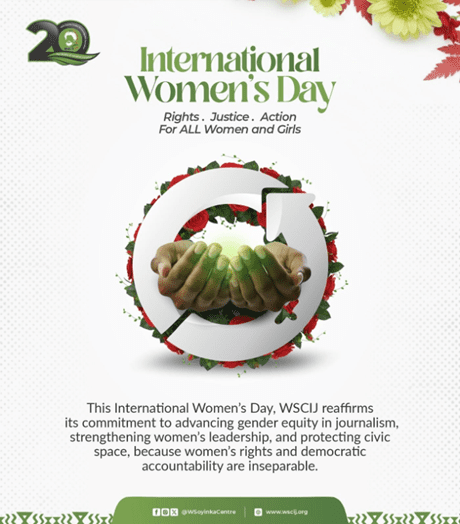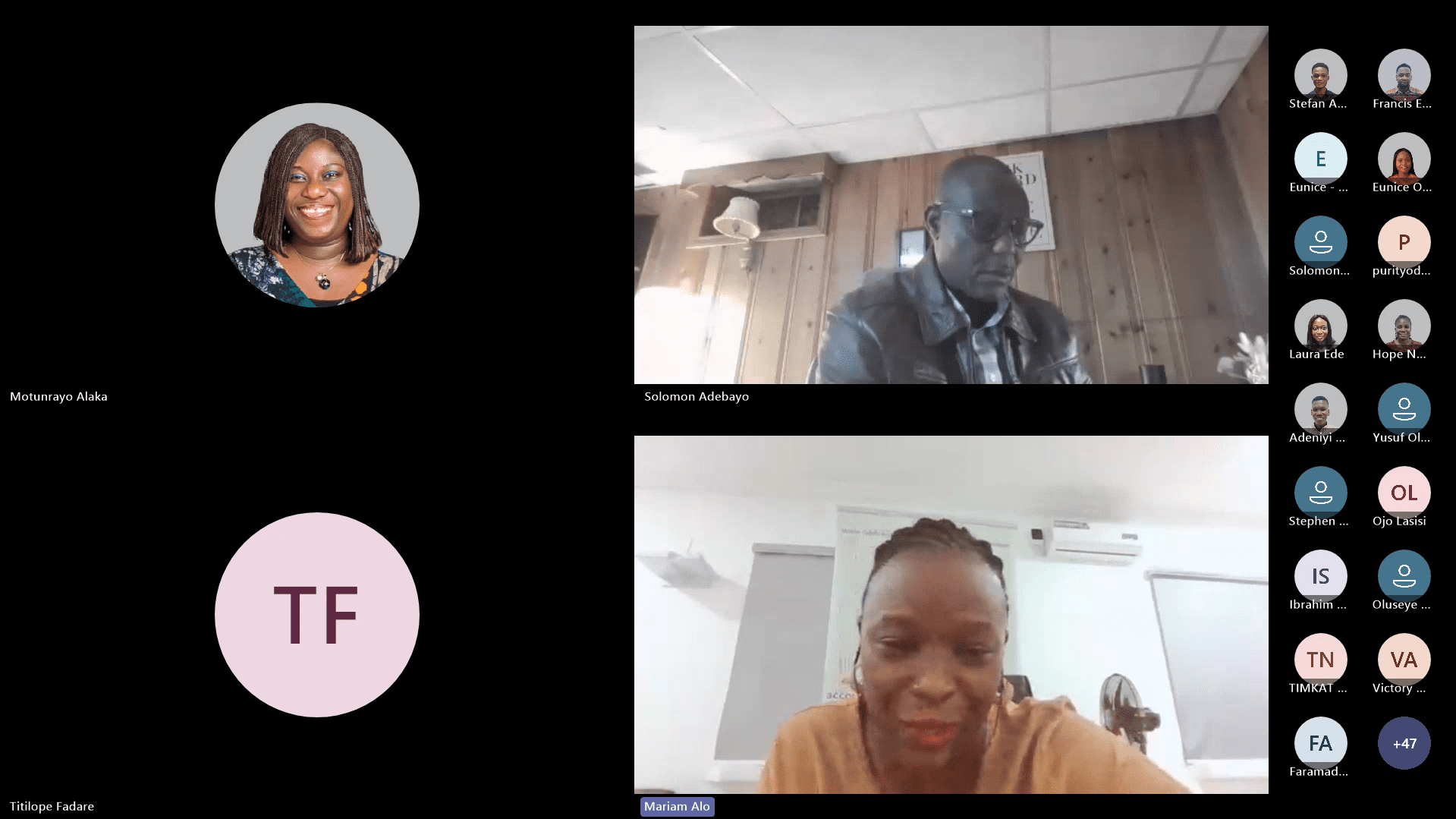

Newsrooms remain critical sites for shaping democratic accountability, yet women continue to face structural barriers to leadership and influence within the media ecosystem. According to the Who Leads the Newsroom and News? report, published by the Wole Soyinka Centre for Investigative Journalism as part of the Report Women! Newsroom and News Engagement programme, women occupy only about 25–26 per cent of newsroom leadership positions in Nigeria. Against this backdrop, the Centre convened its March edition of the Journalism & Society Conversations on Tuesday, 10 March 2026, on X Spaces, to interrogate a central question: what must be given to women journalists for them to fully contribute to strengthening democracy? The discussion aligns with the United Nations’ International Women’s Day theme, ‘Rights. Justice. Action. for All Women and Girls,’ while engaging with the campaign framing of ‘Give to Gain,’ which emphasises investment in women as a pathway to institutional and societal progress.
Moderated by Chigozie Victor, Senior Editor at Zikoko, the conversation themed, ‘Give to Gain: Why Investing in Women Journalists Strengthens Democracy,’ brought together media professionals and stakeholders to examine the forms of institutional support, newsroom reforms, and societal investments required to enable women journalists thrive and to strengthen journalism’s role in advancing democracy.
In her opening remarks, Motunrayo Alaka, Executive Director/CEO of WSCIJ, described the conversation as critical, not only within the context of International Women’s Day but as part of broader efforts to strengthen democratic institutions and human development. “This conversation is not just about women development; it is about human development,” she said, noting that societies that prioritise gender equity often record higher human development outcomes.
Alaka emphasised that achieving equity in the media ecosystem requires deliberate and sustained investment in women’s capacity and leadership. She said, “If we must approach society with equity, we must also demonstrate equity within our institutions,” adding that intentional support systems are necessary to enable women journalists fully contribute to accountability reporting.
On newsroom culture and editorial policy, Hamza Idris, Deputy Editorial Director (Print) and Chairman of the Editorial Board at Daily Trust, emphasised the importance of deliberate recruitment and retention strategies in promoting gender inclusion.
He explained that Daily Trust has implemented policies designed to make the newsroom more supportive for women journalists, enabling them to occupy key editorial and managerial roles within the organisation. “Women are competing favourably within our organisation,” he said, citing examples of female editors and managers across several desks and departments.
He highlighted the organisation’s deliberate editorial recruitment strategy. He explained that for nearly two decades, Daily Trust has maintained a policy of offering automatic employment to Best Graduating Students from select universities in northern Nigeria, irrespective of gender.
Idris noted that women who choose journalism tend to pursue it with exceptional determination and resilience. “If we recruit ten graduates, four women and six men after five years, we often find that more women remain in the organisation than their male counterparts,” he said. According to him, women journalists tend to endure workplace challenges with a long-term mindset, gradually attaining leadership positions and contributing significantly to the newsroom’s output and institutional growth.
From a broadcast journalism perspective, Maupe Ogun-Yusuf, anchor at Channels Television, highlighted how investing in women journalists can strengthen democratic engagement by expanding the range of voices contributing to public discourse.
“When women are supported to pursue serious reporting areas such as investigative journalism or political coverage, they bring a unique lens to stories,” she said. “That perspective enriches the way issues are reported and understood.”
Ogun-Yusuf also noted that visible representation of women journalists discussing governance and politics could inspire greater civic engagement among women audiences. “If more women see women journalists analysing political issues on major platforms, it can encourage them to participate more actively in democratic processes,” she added.
Reflecting on newsroom evolution over the years, she acknowledged that while progress has been made, sustained institutional reforms are necessary to ensure women remain in the profession and advance into leadership roles.
Addressing concerns about assigning women journalists to high-risk stories, Asuquo James, assignment editor at TVC News, said editorial decisions in his newsroom are driven primarily by competence, experience, and passion for the work.
“I don’t usually look at gender when assigning stories,” he said. “What I look for is capacity and the drive to deliver.”
James noted that many women journalists in the organisation have excelled on demanding beats and have contributed significantly to award-winning reports. He added that newsroom structures such as open communication channels, mentorship, and access to professional training are essential investments that help women journalists succeed.
“We maintain an open-door policy where reporters can discuss challenges and seek guidance,” he explained. “When women journalists feel supported, they are able to give their best.”
Speaking on the role of women in strengthening accountability journalism, Bolanle Olabimtan, judiciary correspondent at TheCable, noted that democratic systems benefit when diverse perspectives shape public discourse. According to her, assigning women journalists to key accountability beats enriches coverage and deepens civic engagement.
“Democracy functions best when we have different voices and perspectives contributing to the conversation,” she said. “When women are assigned to important beats like the judiciary, they are often able to bring deeper context and a broader perspective to issues.”
Olabimtan added that newsroom leaders must be intentional about identifying women journalists with the interest and potential to cover such beats while providing the institutional support necessary for them to thrive.
Participants in the conversation also highlighted the importance of continuous training, mentorship, and institutional funding to sustain the pipeline of women journalists entering the profession. The conversation concluded with a shared recognition that strengthening democracy requires deliberate investments in women’s leadership, safety, and professional development within the media ecosystem.
The Journalism & Society Conversations is a WSCIJ initiative designed to examine critical issues shaping journalism and democratic accountability in Nigeria, bringing together journalists, media leaders, and stakeholders to explore solutions to challenges within the media landscape.