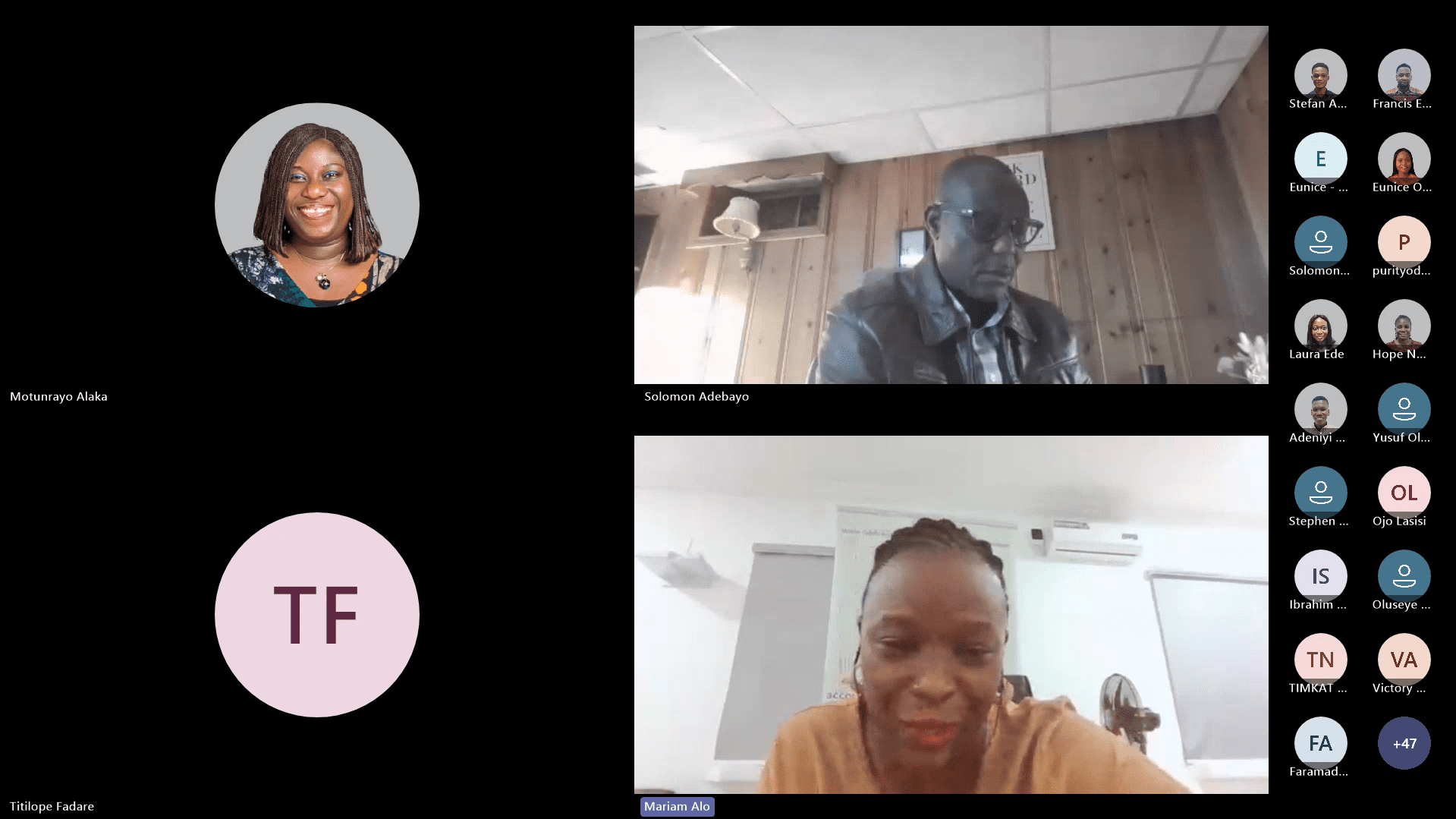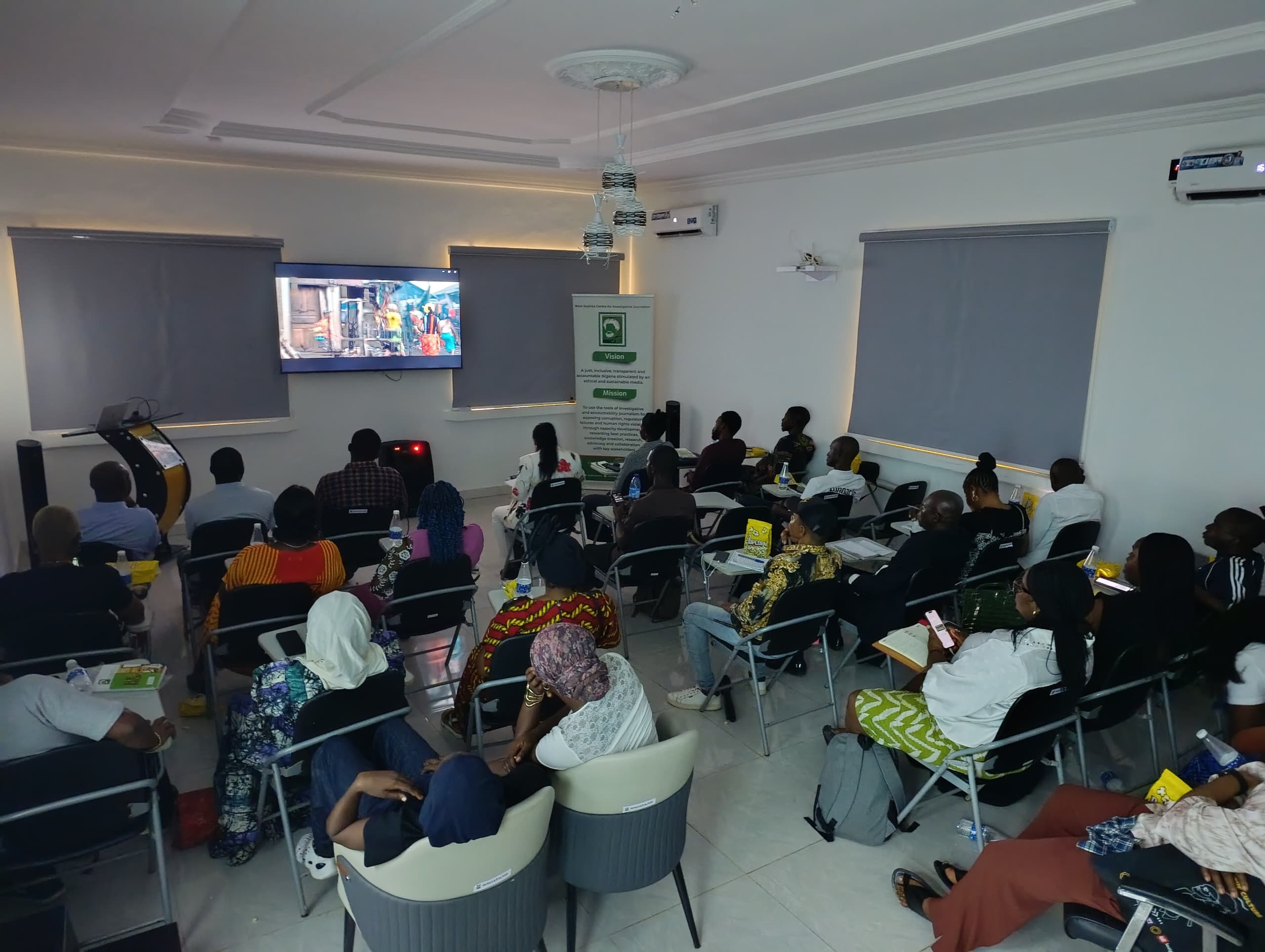
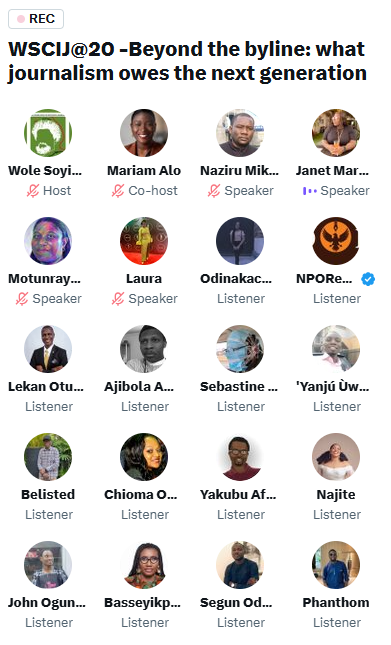
At a time when journalism is being reshaped by technology and challenged by declining public trust, speakers at the November edition of the Journalism and Society Conversations, hosted by the Wole Soyinka Centre for Investigative Journalism (WSCIJ), reflected on what the profession owes its future. The conversation, themed ‘WSCIJ@20 – Beyond the Byline: What journalism owes the next generation,’ explored how the media can uphold ethics, embrace responsible use of artificial intelligence, and prepare young journalists to carry forward the values of credibility and accountability.
The discussion formed part of activities marking the 20th Wole Soyinka Award for Investigative Reporting, the anniversary celebration, and the fifth Amplify In-depth Media Conference. It featured panellists including Naziru Abubakar, former Editor-in-Chief, Daily Trust; Najite Atirene, Head of News, Yanga FM; and Janet Mark-Ayangbemi, Head of News and Current Affairs, Crest FM, Ibadan, who moderated the session.
Setting the tone for the conversation, Motunrayo Alaka, Executive Director/CEO, WSCIJ, called on journalists to go beyond the byline by reimagining their work as an act of public stewardship. Reflecting on WSCIJ’s maiden award on 18 October 2005, Alaka reaffirmed the organisation’s commitment to mentoring the next generation of journalists and tackling the evolving threats to democratic practice. “How do we ensure that our journalism takes care of the world’s democracy, that the world’s child today will be better off tomorrow because of our journalism?” she said.
Describing the hurdles confronting the media industry as challenging, Abubakar emphasised the urgent need for media organisations to strike a balance between producing quality content and ensuring financial sustainability, all while upholding ethical journalism. On the growing role of artificial intelligence, he stressed that newsrooms must adopt clear, written AI policies to guide its responsible use and preserve public trust. “Whatever legacy we leave behind for the future must be a legacy of an independent media,” he said, highlighting the importance of building resilient, credible institutions capable of navigating technological disruption and safeguarding the profession for the next generation.
On her part, Atirene highlighted the underrepresentation of female reporters outside Lagos and Abuja, noting that very few women cover critical beats such as insecurity in the northern states. “Statistics show that the number of female reporters is still quite low,” she said, stressing the need for targeted mentorship and training opportunities in states like Nasarawa, Plateau, and Kogi. To address this, she called for the development of local models relatable to these regions, collaboration with NGOs like WSCIJ, private organisations, and educational institutions, and the promotion of female leadership within newsrooms to ensure more women are empowered to tell stories across the country.
Adding to the conversation, Lekan Otufodunrin, Executive Director, Media Career Development Network, emphasised that while technology is crucial for modern journalism, ethical considerations remain equally important. He warned that quality control mechanisms in newsrooms are disappearing, often driven by financial pressures. “In the quest for financial independence, the media must not compromise credibility and public trust,” he said. He called for increased investment in training and urged media leaders to mentor reporters on ethics to maintain credibility and quality journalism.
Also speaking, Ajibola Amzat, Africa Editor, Centre for Collaborative Investigative Journalism (CCIJ), emphasised that current approaches often fail to ensure long-term stability on funding. Rather than providing restrictive grants tied to specific stories, funders could explore ways to generate sustainable revenue – such as investing in government bonds or other financial instruments. This approach, he said, would allow newsrooms to maintain independence while securing financial continuity.
Re-emphasising the heavy usage of AI, Yanju Uwala, a reporter with National Record, called for the need for greater guidance and orientation for young journalists, as well as the creation of platforms where they can develop their skills responsibly.
WSCIJ will host the fifth Amplify In-depth Media Conference on Monday, 8 December, and Tuesday, 9 December 2025, beginning at 11:00 a.m. (WAT). The events will culminate on Tuesday evening, 9 December, with the 20th Wole Soyinka Award for Investigative Reporting (WSAIR) and anniversary celebration. In her closing remarks, Laura Ede, Associate Director of Programmes, WSCIJ, noted the evening will feature a live red-carpet event at 4:00 p.m. (WAT), followed by the award ceremony at 5:00 p.m. (WAT). She described this milestone as one that perfectly aligns with the next phase of journalism and reaffirms the Centre’s continued commitment to advancing media excellence.
The November edition of Journalism and Society Conversations marks the conclusion of the monthly series for 2025. The platform offers a vital space for journalists and thought leaders to examine how the media shapes and serves the public interest. By fostering open dialogue on governance, accountability, and trust, the initiative reaffirms our commitment to cultivating a media ecosystem that empowers citizens to think critically, engage actively, and hold those in power accountable.
Click here to listen to the conversation.
Signed
WSCIJ Team