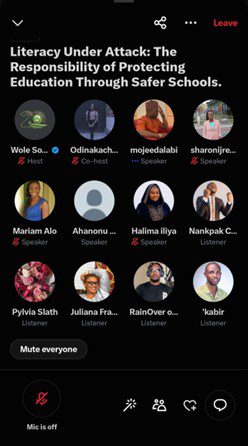
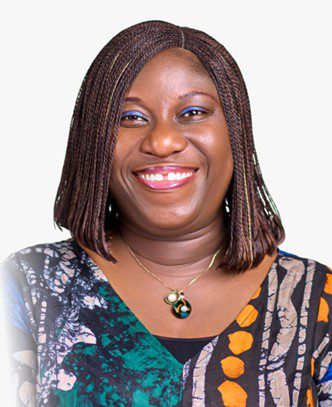
As Nigeria continues to grapple with attacks on schools, Wole Soyinka Centre for Investigative Journalism (WSCIJ) Executive Director Motunrayo Alaka asks a critical question: What has changed? The question is particularly pertinent as the world marks International Literacy Day and the International Day to Protect Education from Attack. What does the right to education mean when children cannot safely reach, remain in or learn in school?
For too many Nigerian children, that question is no longer theoretical. In June, 36 students and a staff member were abducted from Government Day Secondary School in Lassa, Borno State, during examinations. Earlier this year, more than 30 students and a teacher were abducted in attacks on schools in Oyo State.
These incidents are deeply disturbing, but they are not where this story begins. For years, the safety of schools and the systems responsible for protecting education have been the subject of investigation. Through WSCIJ’s Regulators Monitoring Programme (REMOP), initiated in 2017, 56 investigative stories on basic education have been supported across 21 states and the Federal Capital Territory, examining issues ranging from funding and infrastructure to school safety, insecurity and regulatory accountability.
Some of those investigations remain particularly relevant today. In 2021, “Kidnapping: A Nation Weighed Down by Out-of-School Children” examined the impact of student abductions across Zamfara, Niger and Kaduna, highlighting the reluctance of some students to return to school without visible security measures. The same year, “School Safety: Lack of Security Measures as Albatross” examined vulnerabilities in schools across several states, including inadequate fencing, weak security arrangements and schools disrupted or closed because of insecurity. Another WSCIJ-sponsored investigation, “School Children, Teachers Bear Brunt of Insecurity Across Nigeria,” further documented the impact of insecurity on learning and on those responsible for teaching.
These stories were published years ago. So, what has changed? The question is not simply about whether another policy has been introduced or another commitment has been made. It is about whether those commitments are translating into safer schools and better protection for children.
Nigeria has made commitments. Policies have been developed. Institutions have been established. Yet schools continue to face threats, and children continue to bear the consequences.
This raises difficult but necessary questions. What happens between a policy on paper and protection on the ground? Who is responsible when a school is vulnerable? Are resources reaching where they are most needed? What happens when commitments do not translate into safety? These are not questions for government alone. They are questions for all of us who care about education, accountability and the future of Nigerian children.
School safety cannot be treated as an issue that becomes important only after an attack. Protecting education requires sustained attention to the systems, resources, infrastructure, institutions and decisions that determine whether children can learn safely.
It also requires communities to be recognised as important partners in protecting schools. Government institutions, schools, communities, civil society organisations, security actors and the media all have roles to play. The responsibility for keeping children safe cannot rest on one institution or intervention.
For journalism, the responsibility is equally clear. At WSCIJ, we believe journalism must continue to follow the trail — not only when a school is attacked, but before, during and after the failure. That means asking what warnings were available before an incident. It means examining whether policies were implemented, whether resources were provided and whether institutions performed the responsibilities assigned to them. It means following up when promises are made and returning to stories when the problems they exposed remain unresolved.
Investigative journalism must therefore look beyond the immediate incident. The story is not only that a school was attacked or that children were abducted. The deeper story may lie in the gaps that allowed a school to remain vulnerable, the resources that did not reach their intended destination, the commitments that were not implemented or the institutions that failed to act.
This is why the question “What has changed?” matters. It asks us to look beyond announcements and commitments and examine results. It asks whether lessons from previous investigations have informed action. It asks whether children are safer today than they were when these concerns were first documented.
The answers must be found in evidence. As Nigeria seeks to protect its children’s right to education, safer schools cannot remain an aspiration. They must become an accountability priority — one that is measured not by the number of policies developed, but by whether children can enter classrooms, remain in school and learn without fear.
And journalism must remain there to ask the questions, follow the evidence and keep the trail alive.
Signed
Motunrayo Alaka,
Executive Director/CEO, WSCIJ