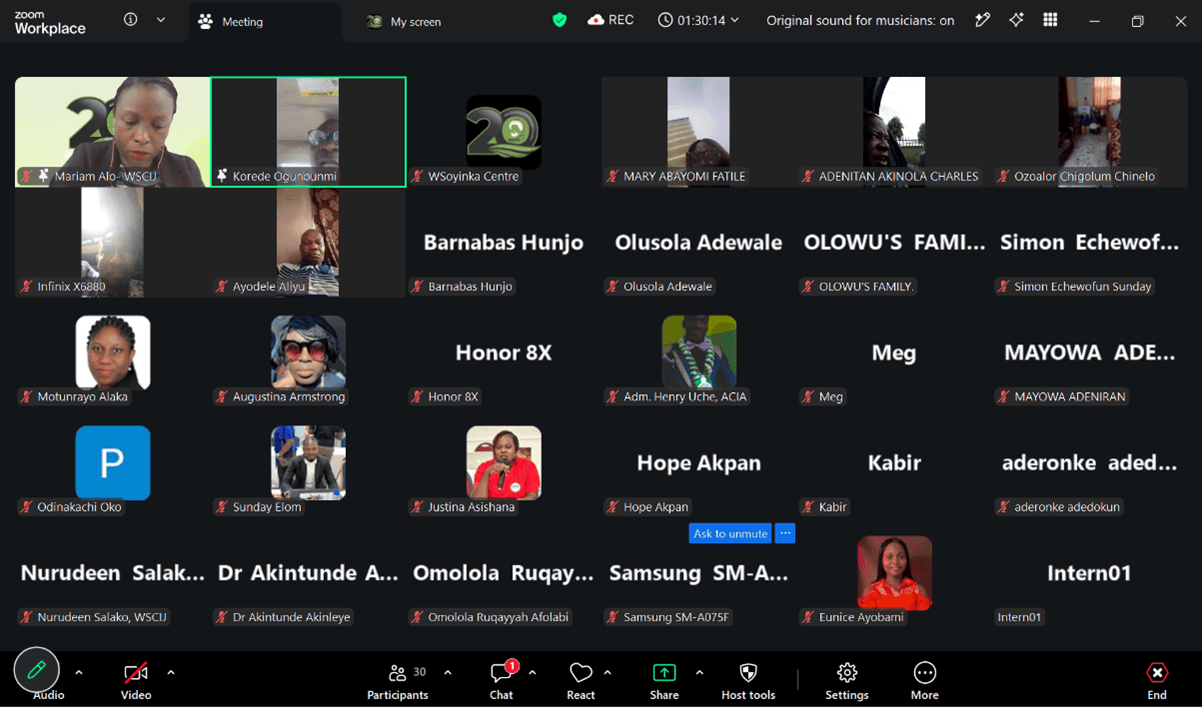
In its effort in addressing shrinking of civic space freedom in Nigeria, the Wole Soyinka Centre for Investigative Journalism (WSCIJ) joined other stakeholders including civil society organisations, media, policymakers to demand accountability and deliberate on the strategic response to the police killing in Effurun, Delta State.
The event themed “Strategic Consultation on Response to Police Killing in Effurun”, organised by the Sheu Musa Yar’Adua Foundation on Wednesday, May 13, 2026, assessed the circumstances and implications of the killing of a 28-year-old man, Mene Ogidi, an unarmed civilian in Effurun, and situate it within broader patterns of unlawful use of force and police accountability deficits in Nigeria.
Andrea Kwen, Programme Manager at the Shehu Musa Yar’Adua Foundation, stated that the consultation was designed to develop a coordinated multi-stakeholder response strategy encompassing advocacy, legal action, media and institutional engagement to pursue accountability and justice in relation to the incident. She added that the meeting was to
Speaking at the event, Motunrayo Alaka, Executive Director/Chief Executive Officer, WSCIJ, who was represented by Nurudeen Salako, commended the Shehu Musa Yar’Adua Foundation for the crucial conversation at this vital period, noting that the Centre through its strategic civil space guard programme has continued to document the shrinking freedom of civic space, and engage relevant stakeholders to address this situation.
On the strategic approach, Nurudeen stressed that journalists and media organisations must be involved in spearheading the advocacy and holding security operatives accountable through their investigative reports including editorials, special report, opinions, etc. He also emphasised the need to apply the Report Until Something Happens (RUSH) framework until relevant authorities take concrete action and further adopt stakeholder engagement with the authorities to dialogue and get their commitment in calling their officers to order.
In addition, he recommended strategic litigation, which is to hold Nigerian Police Force and other security agencies to account, and lawfully demand justice for extra-judicial killing.
Similarly, Okechukwu Nwanguma of the Rule of Law and Accountability Advocacy Centre ( maintained that class action is important in cases of extrajudicial killing, noting that it will enable victim’s families and affected communities to seek justice collectively, especially where abuses are widespread and systemic. Such action, he stated, would strengthen the voices of victims, reduce the financial and emotional burden of individual litigation, and increase public pressure for accountability and institutional reform.
He further noted that in addressing patterns of abuse rather than isolated incidents, class action will help expose impunity within security agencies, promote enforcement of the constitutional right to life, and support broader reforms which are aimed at preventing future violations and ensuring effective remedies for victims.
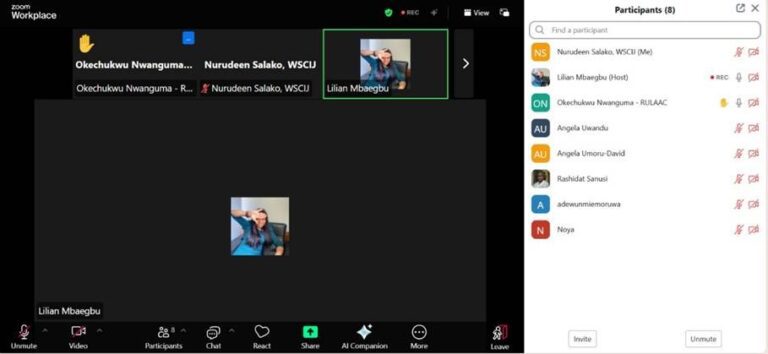
Other participants from the consultative meeting, such as Adewunmi Emoruwa of Gatefield mentioned that the organisation will support the campaign with digital campaign materials and narrative framing as well. Angela Umoru-David from HumAngle is ready to work on a story in relation to other stories on human rights and accountability gaps, intending to frame the story along those lines.
Noya Sedi, Programme Manager, Global Rights, further pledged support with data and media engagement. “We have data on extrajudicial killings across Nigeria over the years. This will support narrative framing.” The meeting was attended by civic society organisations to deliberate the best approach to demand accountability and seek an end to extra-judicial killings.
The meeting concluded with resolutions to circulate an updated action plan and timeline document among coalition members to guide coordinated implementation efforts. Participants also agreed to sustain communication and collaboration around the proposed six-month action plan to ensure continued advocacy, accountability, and strategic engagement on issues of extrajudicial killings and police reform in Nigeria.