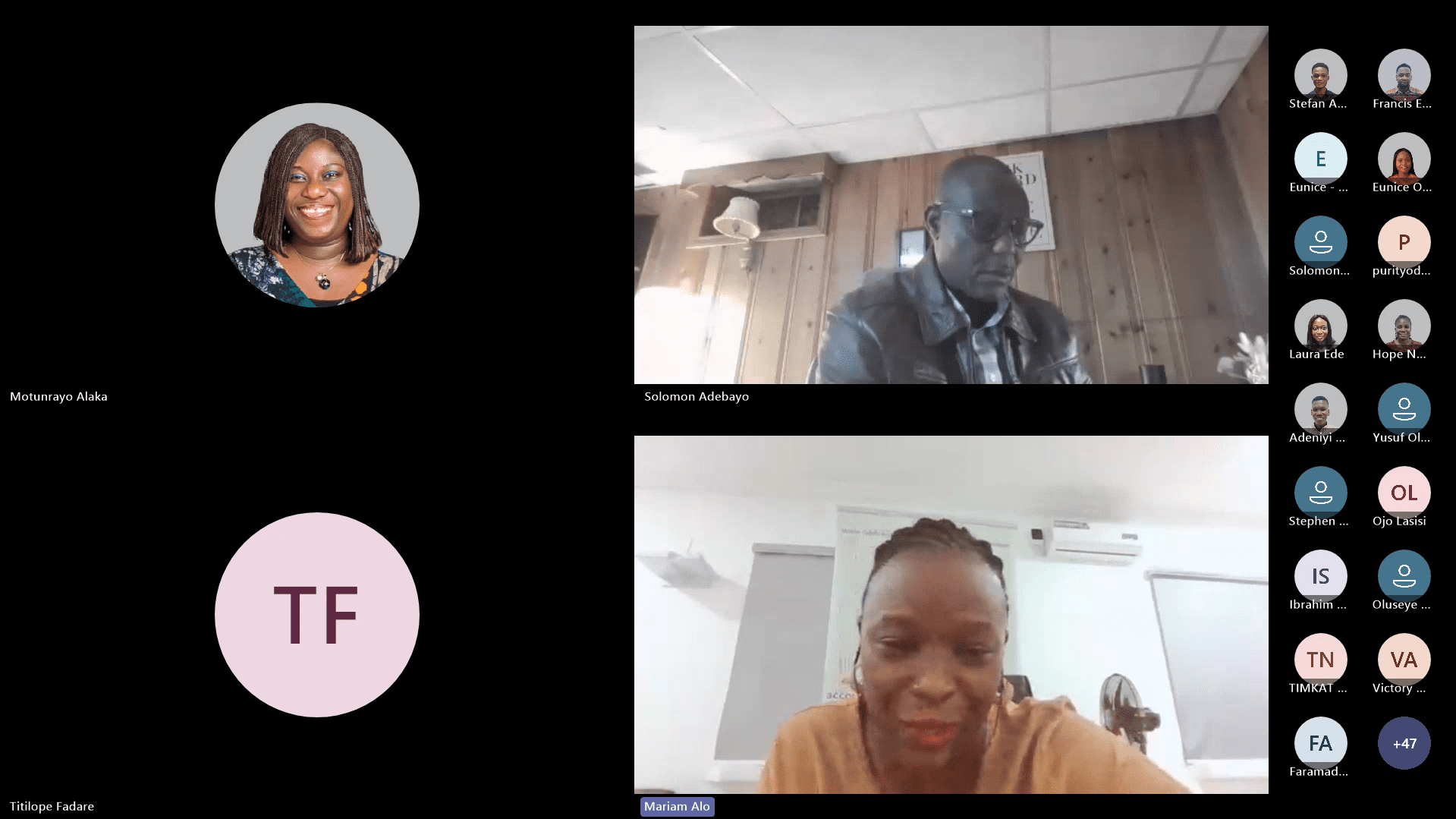
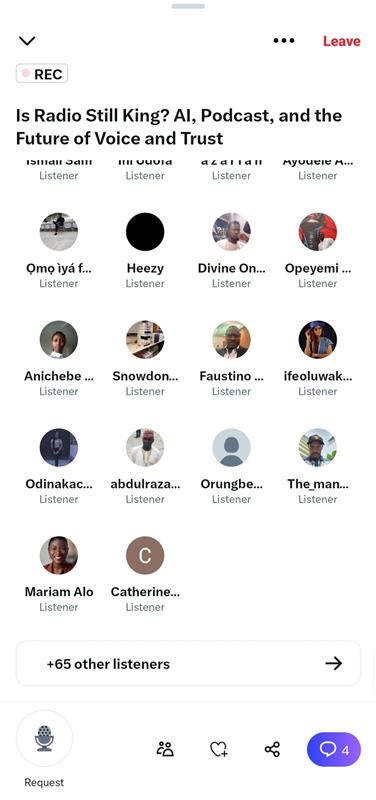
As the global community marked the 15th edition of World Radio Day, the Wole Soyinka Centre for Investigative Journalism (WSCIJ) convened stakeholders for the maiden edition of ‘The Keynote’, a special edition of its monthly Journalism and Society Conversations to commemorate World Radio Day. Themed, ‘Is Radio Still King? AI, Podcasts, and the Future of Voice & Trust,’ the virtual conversation explored radio relevance amid the rapid rise of artificial intelligence and digital audio platforms with Sarah Ofonedu, OAP at Inspiration FM, as moderator.
Opening the session, WSCIJ Executive Director, Motunrayo Alaka, reflected on radio’s historic role in civic engagement and accountability in Nigeria. She spoke on the Centre’s longstanding engagement with broadcast journalism through the Wole Soyinka Award for Investigative Reporting (WSAIR), recalling how the radio category was introduced in 2007 following limited entries in earlier editions. Motunrayo also questioned whether the medium still serves as a powerful tool for holding power to account or risks becoming merely another commercial platform in a crowded digital marketplace.
Drawing from his extensive leadership across some of Nigeria’s most influential radio brands, Femi Obong Daniels, General Manager, CoolWazobiaInfo FM, Kids FM and Arewa Radio, and the keynote speaker at the conversation argued that radio’s greatest strength is trust. According to him, while technology continues to evolve, audiences still seek credible human voices, especially in times of crisis. He described radio as a platform that creates shared, live experiences and noted that despite advancements in countries such as the United Kingdom and the United States, radio culture remains strong.
On the rise of podcasts, Daniels described them not as a threat but as “radio unbundled”; an extension rather than a replacement. He said convergence between traditional broadcasting and digital audio presents opportunities to reach younger audiences while maintaining radio’s authenticity.
Addressing artificial intelligence, Daniels maintained that AI would not replace radio professionals but that those who effectively deploy AI tools may replace those who do not. He stressed that AI can support production but cannot replicate judgement, nuance, credibility, and accountability. ‘AI should sit in the engine room, not behind the microphone,’ he said, adding that journalism is defined not by speed but by editorial judgement.
Serving as a contributor in the conversation, Tony Bekederemo, General Manager, Brila Media, offered a contrasting view, noting that radio no longer monopolises attention in the digital age. However, he conceded that when it comes to shared national experiences, particularly live sports and breaking news, radio retains a unique advantage. Concluding his thoughts, he shifted the audience’s attention to rephrasing their question to what kind of king radio is?
Also contributing, Rose Yusuf-Kaisar, Programmes Manager at Women Radio, shared how her station has experimented with AI through “Nimi AI,” an on-air assistant designed to enhance programming and encourage women to leverage emerging technologies. She described AI as a tool that, when responsibly deployed, can strengthen rather than weaken radio’s impact.
Similarly, Nabilah Usman, General Manager of Radio Now also contributed, emphasising radio’s imaginative power, its ability to stimulate the auditory senses and ‘paint pictures’ in the minds of listeners. While acknowledging that many Nigerian stations are yet to develop formal AI policies, she stated that Nigeria still has a large population that has not embraced podcasts or AI which serves as a potential advantage for Radio in the country.
Across the discussion, speakers returned to a central theme: in an age of synthetic voices and algorithm-driven content, credibility remains invaluable. While AI will become smarter and podcasts will grow, audiences value authentic human connection. The consensus was clear; radio will not only remain relevant but indispensable provided it adapts responsibly to technological change.
Missed the live conversation? Click here to listen.