WSCIJ supports seven journalists to produce investigative stories and leadership projects on Women and Girls’ Rights across Nigeria
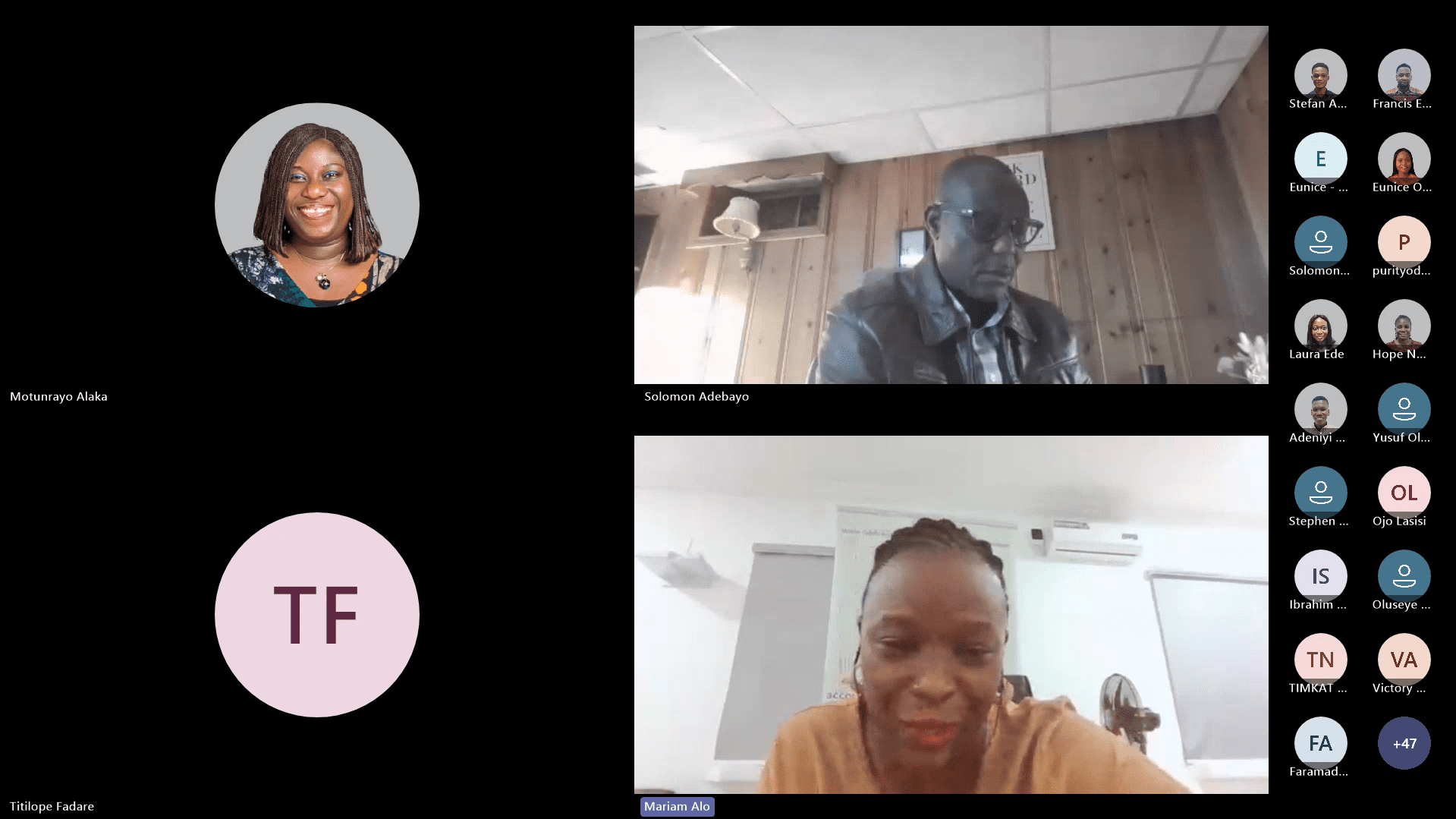
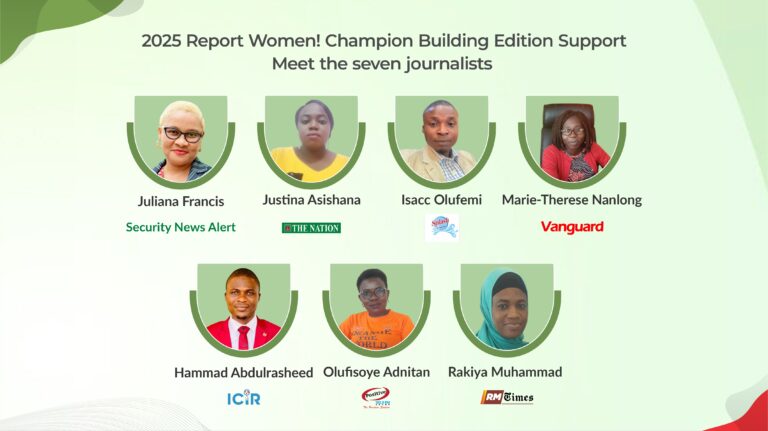
As part of the Report Women! Champion Building edition support, WSCIJ onboarded seven journalists on Monday, 25 August 2025, to produce an investigative story and leadership project on women and girls’ rights. Of the 7 journalists, 6 worked on an investigative story centered on women and girls in Nigeria, while one worked on a leadership project. The Champion Building project is part of the Report Women! News and Newsroom Engagement Programme, which the Gates Foundation has supported since its launch in 2021, aimed to improve parity between men and women in news and newsroom leadership.
1. Olufisoye Adenitan
Olufisoye Adnitan, a Senior News Editor, Radio Nigeria (Positive FM), Akure, story ‘LEFT BEHIND AT THE BALLOT: Gender Disparities in Ondo and Osun Politics and Governance’ investigates why women remain sidelined in politics in Ondo and Osun States, despite making up nearly half of the electorate. Through the experiences of aspirants like Funmilayo Waheed-Adekojo and Jumoke Anifowose, it exposes how party politics, financial barriers, patriarchy, and cultural norms block women from leadership. The report also highlights civil society advocacy, proposed legislation like the Reserved Seats for Women Bill, and global comparisons, showing Nigeria’s urgent need to bridge the gender gap in political representation
2. Rakiya Muhammad
Rakiya Muhammad, Multimedia Journalist, RM Times report ‘Zero Presence in Elective Positions: Inside Women’s Struggle for Political Representation in Sokoto’ explores the stark absence of women in elective offices in Sokoto State, despite their active participation as voters and aspirants. It follows the experiences of figures such as Hon. Ubaida Muhammad Bello and Hajiya Salamatu Abdullahi Isah, showing how cultural norms, party exclusion, and structural bias have left women without elected representation across state and federal seats in the 2023 polls, where women made up only about 2 % of candidates and won none of the 45 available positions. The investigation highlights persistent barriers within party systems and societal attitudes, while advocates call for reforms, including reserved seats for women and capacity-building, to ensure women’s voices and leadership are reflected in Sokoto’s political landscape.
3. Marie-Therese Nanlong
Marie-Therese Nanlong, a reporter with Vanguard Newspaper, produced the report ‘Abandoned by the System: Silent Crisis of Plateau Displaced Women, Girls.’ Drawing from field investigations across multiple local government areas in Plateau State, the report sheds light on the daily struggles of displaced women and girls, including hunger, illness, disrupted education, and insecurity. By combining first-hand accounts with institutional data, the story exposes systemic neglect, delayed government response, and the absence of sustained humanitarian planning.
4. Hammad Abdulrasheed
Hammad Abdulrasheed, a Freelance journalist, International Centre for Investigative Reporting (ICIR), worked on a special report, Justice for Sale? How Nigeria’s plea bargain system, out-of-court settlement, help rapists escape due punishment. The investigation examines how plea bargaining and out-of-court settlements are increasingly used in rape and defilement cases across Nigeria, allowing perpetrators to evade the full weight of the law. Drawing on court records, survivor testimonies, legal analysis, and case studies from Lagos, Abuja, and other states, the report exposes systemic failures within the justice system, weak safeguards for victims, and how legal loopholes undermine accountability for sexual violence.
5. Issac Olufemi
Isacc Olufemi, senior news reporter, Splash105.5 FM work on the story, ‘VAPP On Paper, FGM In Practice: Oyo’s Failed Promise to Girls and Women’. The report examines the persistence of female genital mutilation (FGM) in Oyo State despite the domestication of the Violence Against Persons (Prohibition) Act and other protective laws. Drawing on survivor testimonies, court records, interviews with traditional birth attendants, law enforcement officials, and health practitioners, the investigation exposes weak enforcement, low reporting, institutional failures, and how harmful traditions continue to override consent, science, and the law.
6. Juliana Francis
Juliana Francis, Publisher, Security News Alert, with support from WSCIJ, produced a three-part investigative series ‘Beyond The VAPP Act: How Widows Still Face Systemic Failures, Cultural Harm, Broken Promises’. The report examines the lived realities of widows navigating legal, social, and cultural barriers in Nigeria. Despite the existence of the Violence Against Persons (Prohibition) Act (VAPP) and other protective laws, widows continue to experience systemic neglect, exploitative practices, and limited access to justice.
The series draws on survivor testimonies, court records, interviews with legal experts, law enforcement officers, civil society actors, and community leaders to illuminate gaps between legislation and enforcement. It highlights how entrenched cultural practices, weak institutional response, and societal pressure compound the challenges widows face, leaving many without protection or redress.
Part I explores widows’ personal stories, detailing the social and emotional consequences of neglect and cultural practices. Part II examines institutional failures, including law enforcement and judicial bottlenecks, and the practical limitations of existing legal frameworks. Part III analyses the broader systemic issues, from policy gaps to enforcement weaknesses, and proposes pathways to strengthen protection, accountability, and survivor support.
7. Justina Asishana
Justina Asishana, Niger State Correspondent, The Nation Newspaper, through her leadership project, led a one-day workshop at IBB Pen House, Minna, Niger State, on gender-sensitive reporting and on advocacy in the newsroom for the creation of the Gender Desk.
During the training, Asishana emphasised the importance of drawing journalists’ attention to gaps in everyday reportage where women’s perspectives are often underrepresented. She advocated for gender-sensitive reporting as a tool to ensure narratives are inclusive, accurate, and reflective of diverse experiences. The workshop also highlighted practical strategies for maintaining career-family balance, upholding ethical principles, and understanding legal responsibilities in reporting sensitive issues.
As part of her leadership project, Justina Asishana visited five media organisations in Niger State to advocate for the creation of dedicated gender desks and support female journalists in producing balanced reporting. The organisations visited included Niger State Radio Corporation (Radio Niger), Prestige FM, Search FM, Ultimate FM, and Lina TV. These visits resulted in commitments to establish gender desks or assign dedicated personnel for gender-sensitive reporting. The engagements also reinforced the importance of gender-balanced storytelling and the vital role female journalists play in amplifying women’s voices in the media.